Hackaday Events: NY, LA, SF, LA

We are doing a lot this spring to get people elbow-deep in hardware hacking. We have so many live events coming up that we’re going to be doing Saturday morning recaps to keep you informed. Here are the upcoming events should be planning to attend if you’re nearby.
nyc-hackationToday! NYC Hardware Hackathon

We hope you didn’t miss our announcements about the Hardware Hackathon we’re putting on in New York. It starts this afternoon and runs all night and into Sunday. If you really want to get in on the hacking we might be able to help you out (hit us up on Twitter). But you can also show up on Sunday to see the results live. Tickets for that are available here.

thp-worldwide-laMay 9 & 10 Hackaday Prize Worldwide: Los Angeles

Next weekend we open up the Hackaday Design Lab of Pasadena, California for a workshop, talks, and a day of hacking. This is the Hackaday Prize Worldwide: Los Angeles. Start out on Saturday with the Zero to Product workshop which will discuss getting from design to production. Interspersed with this are a set of talks from amazing presenters before a bit of social time at night. On Sunday we open our doors for Free Build and hope to see a ton of people working on their Hackaday Prize entries. RSVP now!

2015-05-01_BAMF-meetupSaturday, May 16 BAMF Meetup

Seeing everything at Bay Area Maker Faire means a lot of time on your feet. By the end of the day the Hackaday Crew is ready to take a load off and toss back a tasty beverage. We invite you to join us on Saturday, May 16th starting at 7pm. All the cool kids will be there so please RSVP now.

It’s not compulsory, but a lot of people bring hardware they’ve been working on to show off at this meetup and you should too!

layerone-logoMay 23 & 24 LayerOne Conference

Every year our friends from NullSpace Labs organize the LayerOne Conference in Los Angeles. This is LA’s premier hardware security conference. This year Supplyframe is sponsoring the badges and Hackaday will be camped out at the Hackaday Hardware Villiage.

[Brian Benchoff] and [Mike Szczys] will be hacking their own badges while looking for awesome hacks other people are pulling off. We’ll bring plenty of swag and want to get everyone there to try at least some level of badge hack.
3D Printed Headgear Turns You Into A Sim

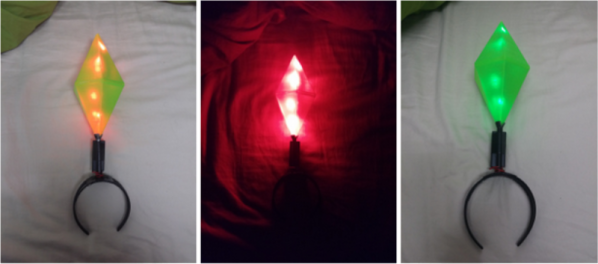
Stop what you’re doing and dust off that 3D Printer, you’re going to want this headgear for your next party. [Daniel Harari] has created the perfect start of a phenomenal The Sims costume with this Bluetooth-enabled plumb bob.

The iconic crystalline shape will be familiar to anyone ever exposed to the game. It served as a handle and indicator for each virtual character in the popular life-simulation video game. On a short build deadline (a party), [Daniel] found a model of the shape he wanted on Thingiverse. He printed it in translucent green PLA so that LEDs inside would make it glow.

A headband and an aluminum pipe connect this to the wearer. Inside the printed enclosure is a an intricately packaged set of electronics that include an Arduino pro mini, low-side transistors to control six RGB LEDs, and an HC-05 Bluetooth module to connect to his phone. Batteries were mounted on the side of the pipe but we bet a bit of head scratching could re-imaging the battery type and get it inside the enclosure as well.

[Daniel] muses about adding brainwave sensing to control the LEDs. For this build he didn’t even need to write an app; he was able to get an already available color-picker to work. We’d like to see this combined with sentiment; a concept starting to gain popularity which samples social media and ascertains mood to change the display base what is found.

You realize what’s missing from his writeup? We couldn’t find any pictures of him wearing the thing!

Review: HUZZAH Is The ESP8266 WiFi Setup You Need

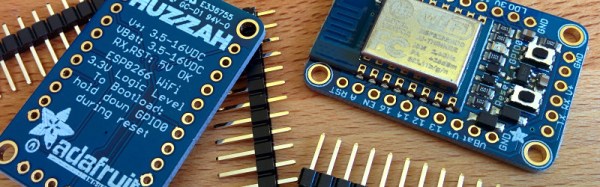
A little board that adds WiFi to any project for a few hundreds of pennies has been all the rage for at least half a year. I am referring to the ESP8266 and this product is a marrige of one of those WiFi modules with the support hardware required to get it running. This week I’m reviewing the HUZZAH ESP8266 Breakout by Adafruit Industries.

If you saw the article [cnlohr] woite for us about direct programming this board you will know that a good chunk of that post covered what you need to do just to get the module into programming mode. This required adding a regulated 3.3V source, and a way to pull one of the pins to ground when resetting the power rail. Not only does the HUZZAH take care of that for you, it turns the non-breadboard friendly module into a DIP form factor while breaking out way more pins than the most common module offers. All of this and the price tag is just $9.95. Join me after the break for the complete run-down.

Continue reading “Review: HUZZAH Is The ESP8266 WiFi Setup You Need”

3D Printing An Arcade Controller

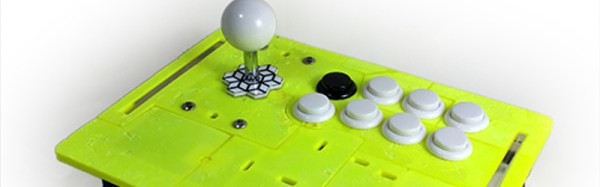
A keyboard and mouse simply can’t stand in for games originally meant to be played with a joystick and buttons. We are of course thinking of coin-op here and building your own set of arcade controls is a great project to give back some of the thrill of those classics. But these are not trivial builds and may push your comfort zone when it comes to fabrication. Here’s one alternative to consider: 3D printing an arcade controller housing.

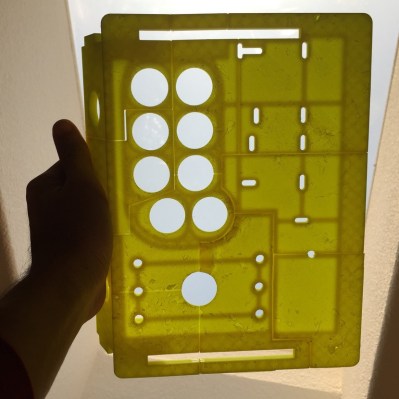
3d-printed-arcade-controller-thumb[Florian] already had experience building these using laser cut acrylic and MDF. This is his first foray into a 3D printing build method for the controller body. The top is too large to easily produce as a single piece on inexpensive printers. He broke it up into sections; eleven in total. When the printing is complete he chemically welds them together using a slurry of acetone and leftover ABS.

We think one possible extension of this technique would be to build a mounting system that would allow you to swap out segments (instead of welding them all) while you dial in the exact placement that you want for each component. You know, like when you decide that rectangular button pattern doesn’t fit your hand. That said, this looks like a beautiful and functional build. At the least it’s a great way to practice your 3D printing skills and you end up with a wicked controller at the end of it.

More Hackathon Tickets Just Made Available

We had a number of people tell us they weren’t able to get tickets to our Hackathon in New York on Saturday. A block of tickets was just made available. Head on over and grab yours right now!

We’re bringing a mini-van-load of hardware along with us for this one. Our hope is to see a hardware hacker claim the top prize of $5000, but we do have other prizes just for the teams that create something with hardware. You can team up with other creative hackers from the area, all while being wined and dined (well, fed and hydrated anyway) through the entire thing. We can’t wait to see what you can get working with just twenty-hours of build time! You can find out a bit more about the hardware we’re supplying and what we have planned over on our event page.

That’s on Saturday, but the fun actually starts this evening. Join us at 7pm this evening at Antler Wine & Beer Dispensary. We’d appreciate a quick RSVP if you’re coming, and don’t forget to bring some hardware you been working on lately. See you there!

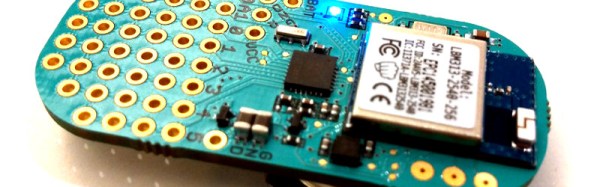
$50k In Play: Giving Away 50 LightBlue Bean This Week

This week we’re awarding a LightBlue Bean board to 50 projects entered in The Hackaday Prize.

We love this little board so much we put it in our store. It brings a microcontroller that has plenty of room and peripherals (and is quite well-known… the ATmega328) with the connectivity of Bluetooth Low Energy. If you’re planning on building something that needs processing power and connectivity with smartphones this is a good place to start. And this week you might just score one as part of the 2015 Hackaday Prize.

We’ll be looking for entries that are getting ready for the physical build and need connectivity. The best way to let us know your project should be one of the fifty winners is to post a new project log with your construction plans and how the Bean (or BTLE) would fit into that plan. Submit your build by next Wednesday (5/6) and you’re in the running!

We’re giving away $50,000 in prizes, 1/10 of the total Hackaday Prize pool during the build phase going on right now.

Last Week’s 30 Winners

OSHpark-coupon-prize

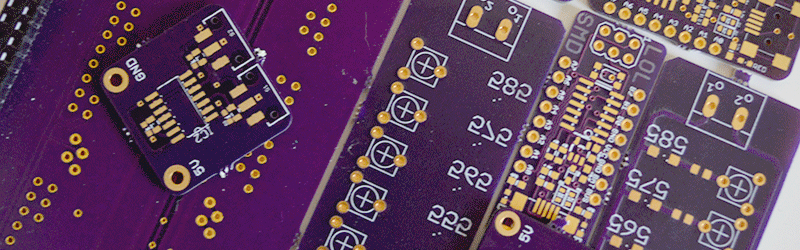
Last week we were looking for great entries in need of circuit boards and boy, did we find a lot of them. Judging is super hard. We looked at all the entries and ended up with these 30 winners. Each will receive $50 to use for custom PCB manufacturing from OSH Park. We expect to see a lot more purple boards popping up on entry pages in the coming weeks! Congratulations to all winners. Each project creator will find prize info as a message on Hackaday.io.


The 2015 Hackaday Prize is sponsored by:

DOTS Uses Paint To Control Raspberry Pi 2

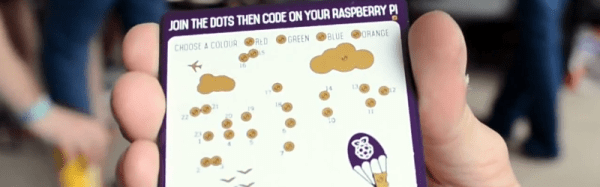
Two tables down from us at SXSW Create the Raspberry Pi foundation had a steady stream of kids playing Minecraft on Raspberry Pi, and picking up paint brushes. The painting activity was driven by a board they spun for the event that used conductive paint to control the Raspberry Pi 2.

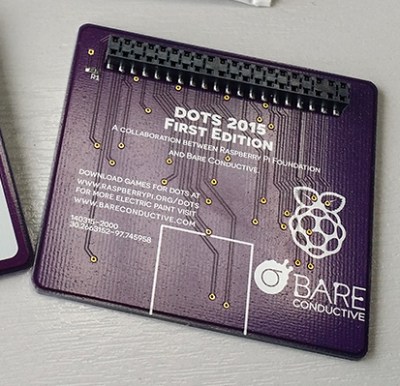
rear-of-the-raspberry-pi-2The board uses the HAT form factor which it a fancy name for a shield (also a clever one as it stands for “Hardware Attached on Top”). You can see the back side of the board in this image. It utilizes an extremely low-profile surface mount pin socket.

The front side exposes several circular pads of copper which build up a “connect-the-dots” game that is played by painting conductive ink on the surface. This results in an airplane being pained on the board, as well as displayed on the computer. There is a set of pads that allow the user to select what color is painted on the monitor.

We like this as a different approach to education. Kids are more than used to tapping on a touchscreen, clicking a mouse, or pounding a keyboard. But conductive ink provides several learning opportunities; the paint simply connects the inner circle with the outer circle; one of these circles is the same on every single dot (ground); anything that connects these two parts of the dot together will result in input for the computer. Great stuff!

The foundation is taking the boards to Maker Faire Bay Area next month so stop by to see these in action. You can read about the production process for the DOTS board on the Raspberry Pi website. They’re giving away a few boards to software developers who want contribute to the project. And our video interview with [Matt Richardson] is found after the break.

Continue reading “DOTS Uses Paint To Control Raspberry Pi 2”