I inadvertently started a vigorous debate a few weeks ago with the Time for the Prize post about a shower feedback loop. That debate was on the effect of curbing household water since households make up a relatively small percentage of total use. I think we should be thinking of solutions for all parts of the problem and so this week we’ll be looking for ideas that can help conserve water in large-scale use cases. Primarily these are agricultural and industrial but if you know of others feel free to make your case.
According to the United States Department of Agriculture, about 80% of all ground and surface water is used in agriculture. I’m not particularly interested in hearing a debate on water rights and the like (there’s a rather interesting article here if you want more on that). The agriculture industry produces food, and employs a lot of people. The conflict is of course long growing season versus lack of water compounded by severe drought. Even if we could move our food production elsewhere it would be a monumental undertaking to also relocate the infrastructure supporting it. Of course we need to look to the future, but can we leverage our engineering prowess now to conserve the water that is being used right now?
Enter with an Idea
Write down your ideas for agricultural and industrial water conservation as a project on Hackaday.io. Tag the project 2015HackdayPrize. Do this by next Monday and you’re in the running for this week’s awesome prizes.
You aren’t necessarily committing yourself to finishing out the build. At this point we want to get the idea machine rolling. One good idea could spark the breakthrough that makes a real difference in the world.
This Week’s Prizes
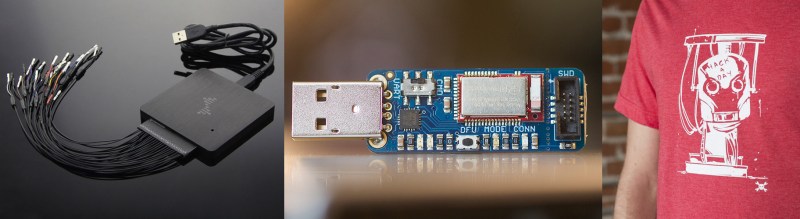
We’ll be picking three of the best ideas based on their potential to help alleviate a wide-ranging problem, the innovation shown by the concept, and its feasibility. First place will receive a DSLogic 16-channel Logic Analyzer. Second place will receive a an Adafruit Bluefruit Bluetooth Low Energy sniffer. Third place will receive a Hackaday robot head tee.
The 2015 Hackaday Prize is all about solutions to problems affecting a large number of people, and aging touches everyone. This week we were on the lookout for the entries best addressing the problem of Aging in Place. This means being able to live in your home and community independently and comfortably as one ages. It is as important to the aging as it is to their friends and family; a topic well worth your hacking skills and engineering brilliance.
Monitor Warning Signs
There were several entries that focused on monitoring for out-of-the-ordinary behavior. The Personal Medical Assistant seeks to leverage the sensor array and computing power of smartphones combined with ancillary data harvesting from things like an ECG chest band or a pulse oximeter watch. The idea is to watch for a series of precursors to health emergencies and warn both the person being monitored and their support network of family or caretakers.
The whimsically title Ye Oldie Monitor focuses on a similar idea with a more passive role. The concept suggests a base-station and a series of remote monitors throughout the living area, like PIR motion sensors, to alert for notable variations on a person’s normal day-to-day activities. In a similar vein the LiteHouse project would retrofit the household lighting fixtures with motion detectors. These automatically light each area to help prevent low-light accidents like falls, while also monitoring for signs of duress.
Solving the Communication Barrier
Watching out for each other is complicated by distance. We saw a few entries that try to alleviate that, like the Being There with Pi project. Smartphones and computers are a great way to communicate, until you need help making your smartphone or computer work in order to do so. This project looks at developing a dedicated video conferencing system based around the Rasperry Pi. The point is to develop an excruciatingly simple, robust form of live video communications.
Continuing on the note of simplified communications is Julia’s Speakerphone project. [Julia] is living with multiple sclerosis that has resulted in her being bed bound for almost a decade. Making phone calls has been both rare and leaves us wondering why this sort of solution isn’t already in wide adoption. The solution is a combination of a Bluetooth hands-free calling module, Android tablet, Skype a pay-as-you-go cellphone, and an interesting button hack for [Julia] to activate the hand’s free. It is crafted with leaf switches and polymorph and worn as a bracelet. The proof of concept is there and we can’t wait to see this evolve into a more robust and extensible solution.
It doesn’t work and we’re not surprised considering the can of worms that comes with RAM addressing. Right off the bat we assume timing problems due to variance in the trace lengths and EM issues. But you have to hand it to [cyandyedeyecandy] for even trying. The self-proclaimed upgrade seeks to readjust how the DIMM works without changing the edge pinout.
The stick shown here is a 512 MB module that, because of the computer using it (unspecified in the post), is only allowing access to 256 MB. The added chips and free-form circuit make up an AND for the chip-select line, and flip-flop for the bank address.
The post is a gorgeous cry for help. We already weighed in from the peanut gallery at the top (seriously, that’s somewhat baseless guessing) so step up to the computer-engineering plate and let us know what needs to be done to make this most-awesome-of-non-working hacks actually work.
Once you’ve figured this out, here’s another one to scratch at your brain with.
On April 1st the Magic Lantern team announced a proof of concept that lets you run Linux on a Canon EOS camera. Because of the date of the post we’ve poured over this one and are confident it’s no joke. The development has huge potential.
The hack was facilitated by a recent discovery that the LCD screen on the camera can be accessed from the bootloader. In case you don’t recognize the name, Magic Lantern is an Open Source project that adds features to these high-end cameras by utilizing the bootloader with binary files on the SD card. It’s long been a way of hacking more features in but has always been complicated by the fact that you must figure out how to play nicely with the existing firmware. Commanding the LCD was the last part of the hardware that had previously not been driven directly from Magic Lantern.
Now that the Linux kernel is in the picture, ground-up features can be built without dealing with the stock firmware in any way (and without overwriting it). We’re excited to see where this one goes. Currently it’s just a proof that you can boot Linux, it’s not actually functional yet. Here’s your chance to polish those kernel porting skills you’ve been holding in reserve.
Hackaday, we have a problem. Supplying fresh, healthy food to the world’s population is a huge challenge. And if we do nothing, it will only get more difficult. Rising water prices and (eventually) rising fuel prices will make growing and transporting food more costly. Let’s leverage our collective skill and experience to chip away at this problem. We hope this will get you thinking toward your entry for the 2015 Hackaday Prize.
There are big science breakthroughs that have taken us this far. For instance, The Green Revolution developed wheat with stronger stalks to support the weight of higher kernel yields. If you’re equipped to undertake that kind of bio-hacking we’d love to see it. But the majority of us can still work on ideas to make a difference and (heartwarming moment approaching…) feed the world.
As with the shower feedback loop and electricity monitoring installments of We Have a Problem, I’ll start you off with an uber-simple idea. It’s up to you to think further and wider to get at solutions that are worth more exploration.
Can Technology Give Me a Green Thumb?
We see it all the time around here, people are building projects to monitor and control their own gardening projects. The one shown here couldn’t be simpler, it’s a hot-box which lets your gardening continue through the winter. It uses heat tape to keep the soil warm, and features a motorized lid which actuates to regulate humidity and temperature.
This concept is a good one. It doesn’t take up a lot of space and it tackles the easy part of automation (how hot is it? how wet is it?). But does it have the potential to make an impact on the source of your household’s food? Maybe the concept needs to be applied to community garden areas so that you can achieve a larger yield.
Robots
Perhaps robots are an answer to a different problem. This little bot, already entered in the 2015 Hackaday Prize, is an experiment with automatic weed elimination versus the use of herbicides.
But it does get us thinking. One of the problems you need to overcome when trying to achieve wide adoption of local food supply is that not everyone enjoys the work that goes into it. Do you have an idea of how your mad robot skills can do the work for us?
Stepping back onto the side-track of changes to industrial farming, let’s take a look at one of the way-out-there-ideas from last year. A huge amount of water usage is in food production. What if we turned entire farms into greenhouses in order to capture and reuse water that is normally lost into an all-to-dry atmosphere? Domes my friends, domes. A swarm of 3D printing robots given locomotion and unleashed to print out translucent covers over the fields on the kilometer-scale. Hey, doesn’t hurt to dream (and do some back of the envelope calculations to gauge how wild that idea actually is).
Your Turn
That should be enough to get the conversation started. Toss around some ideas here in the comments, but don’t let the brainstorm stop there. All it takes to enter the Hackaday Prize is an idea. Write it down as a project on Hackaday.io and tag it “2015HackadayPrize” to get your entry started.
Aging in Place is a growing issue facing the world. As the population begins to live longer, healthier lives we need to continue developing assistive technologies that will facilitate independence and safe living long into our twilight years. That is the topic of this week’s Time for the Prize. Enter your idea for Aging in Place by starting a project on Hackaday.io and tagging it 2015HackadayPrize. Do this by next Monday and you’re in the running for this week’s awesome prizes.
What is Aging in Place?
I use the “define:” search term on Google all the time and for Aging in Place it turns up the Center for Disease Control’s definition:
“the ability to live in one’s own home and community safely, independently, and comfortably, regardless of age, income, or ability level.”
I love this definition. How easy is it to get behind the concept of better quality of life for all as we age? Still not getting the thought process flowing? After listing the prizes I’ll illustrate a couple of projects that will give you a good idea of what people are working on.
This Week’s Prizes
We’ll be picking three of the best ideas based on their potential to help alleviate a wide-ranging problem, the innovation shown by the concept, and its feasibility. First place will receive a RE:load Pro programmable constant current load. Second place will receive a Sparkfun Microview. Third place will receive a Hackaday CRT-android head tee.
Hacks that Help
The easiest examples I can think of relate to medicine. A lot of the time people can be independent and high-functioning as long as they take the right medicine at the right time. The simplest way to ensure this is to use technology that helps track medication schedules. Pill reminders can monitor a pill case, sending reminders to you if you miss your schedule, and alertimg family or caretakers if you don’t respond to the reminder.
We’ve also seen technology built right into the cap of the prescription bottle. These caps have a timer that resets to zero every time the bottle is opened. But anyone who has taken several medicines on different time schedules can tell you that this can still be very confusing. We wonder if anyone can prototype a system that would use computer vision to verify and log the pills each time you take them?
Of course the prescription reminders are just one of a multitude of low-hanging fruit. Safety is another aspect. Here’s an entry that seeks to give peace of mind that the stove is off for those dealing with Alzheimer’s or memory issues.
Now you see what we’re getting at. What ideas do you have that can move the goal of Aging in Place forward?
Last week we challenged you to post your idea on environment-related solutions for the 2015 Hackaday Prize. We’ve gone through every entry and have chosen this week’s winners. What a tough process, there are so many interesting ideas to consider that we’ve done a round-up of some that held our attention.
Bosch Haber Process
Energy Saving
Conservation was at the center of these projects and [Peter Walsh] is thinking large scale to improve the Bosch-Haber process. This process is used as a source of nitrogen for fertilizers and consumes 1% of all energy worldwide. Even small efficiency advances could have a huge effect.
From profound to whimsical, [TomaCzar] has an alarming solution to leaving the lights on. We enjoy his preamble about his family moving to Earth from a planet with unlimited energy (hence their habit of leaving the lights on). He plans to add an audible alarm to any light that is switched on for more than 10 minutes.
Energy Production
Those huge solar farms that use arrays of mirrors to focus the sun’s light on a central tower leverage a techique called Concentrated Solar Power. Traditionally they store heat in a pool of liquid salt for generating power around the clock. [PUNiSH3R] has a plan to build his own on a micro-scale. The Portable Micro-CHP will use similar concepts (less the molten salt) in a package small enough to be transported by a single human.
Undeveloped parts of the planet have huge problems when it comes to bootstrapping an electrical grid. [hickss] thinks blimps might be one way to alleviate the problem. The DayBreaker project will tether blimps to the ground, with a hydrogen feed supplied through electrolysis which keeps them afloat. While high in the air they can catch higher winds using a turbine and transfer the electricity back to the ground using the same tether.
Rounding out energy producing examples is the Domestic Geothermal Stirling Power Unit. We’ve seen geothermal systems that use heat exchangers to heat or cool your home. [Shrad] ponders the idea of also using the loops of circulating fluid to feed a Stirling engine that could help supply power to the home.
Way Out There Ideas
Is this parking lot a power plant waiting to happen?
There were a number of interesting concepts that we think are well worth considering and debating. It’s hard to say if these are all feasible, but tossing the ideas around is just the kind of interaction that could lead to a big breakthrough. For instance, the image seen here is a freshly paved and painted asphalt parking lot. Asphalt Heat Harvesting imagines the Peltier effect being used on a large scale by embedding metal networks between layers of the pavement. A heat differential between the surface and the base layer could produce electricity.
We’re at a loss for understanding how the Open Source Modular Absorption Refrigeration Unit actually works. It seeks to supply refrigeration using a heat source instead of electricity. The diagram looks promising and we think OSMARU is a solid acronym!
Remember The Hunt for Red October? If so, you certainly remember the caterpillar drive which made the submarine virtually silent. [N-Monkeys] wants to use that and ocean water as a generator rather than a locomotive device. Check out Project InchWorm.
Congratulations to all three! We think it’s important to mention we are judging the idea on its ability to solve something affecting a wide range of people, its level of innovation, and the feasibility of the concept. There is no requirement at this point to have built anything or completed the documentation. Don’t be afraid to write down your own brainstorm… it might just win you a prize!
Next Week’s Theme
We’ll announce next week’s theme a bit later today. Don’t let that stop you from entering any ideas collection of entries may have inspired.
Coming up with that killer concept is a matter to thinking in different ways and interacting with other Hackers, Designers, and Engineers to help make the mental leap to greatness!








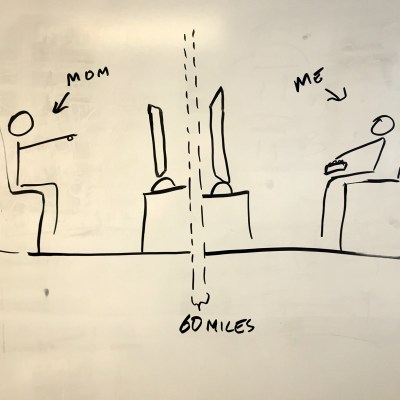 Watching out for each other is complicated by distance. We saw a few entries that try to alleviate that, like the
  Continuing on the note of simplified communications is



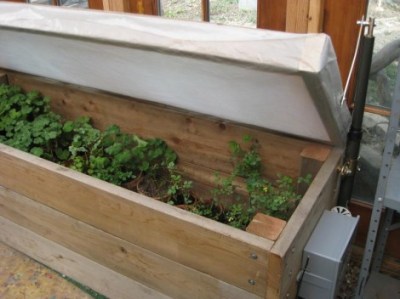 We see it all the time around here, people are building projects to monitor and control their own gardening projects.
 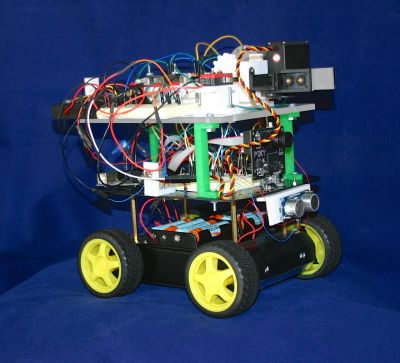 Perhaps robots are an answer to a different problem.
  Stepping back onto the side-track of changes to industrial farming, let’s take a look at one of the way-out-there-ideas from last year. A huge amount of water usage is in food production. What if we turned entire farms into greenhouses in order to capture and reuse water that is normally lost into an all-to-dry atmosphere?


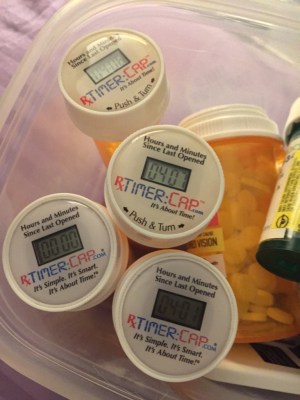 The easiest examples I can think of relate to medicine. A lot of the time people can be independent and high-functioning as long as they take the right medicine at the right time. The simplest way to ensure this is to use technology that helps track medication schedules.