Heart-shaped Project Takes No Shortcuts

heart-shaped-project

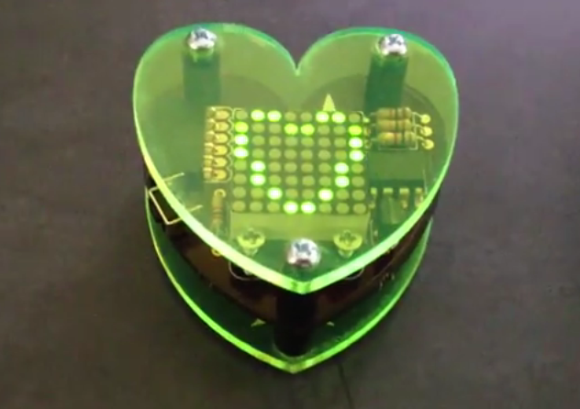
If all [Blake] wanted to do is scroll “Blake loves Kim” on some LEDs he could have stopped with the breadboard version of the project. Or hastily craft a cardboard heart around the marquee. But he really just used this heart-shaped electronics project as an excuse to get his feet wet with several different types of manufacturing.

The project started as a simple scrolling message pendant. Something along these lines. His very small LED module was being driven by an ATtiny85. He planned to run it from battery which is a perfect excuse to learn how to use the sleep functions built into the chip.

The initial design worked so well he decided to lay out his own circuit board. This made it quite simple to add in a side-positioned button to wake from sleep, and a coin cell battery holder on the back. He used OSH Park for board manufacturing — good thing they allow creative board outlines. To protect the circuitry he also ordered laser-cut acrylic plates that work in conjunction with stand offs to form a case.

He mentions he missed his Valentine’s Day delivery date by a long shot. But that’s how these sort of things go, right?

Continue reading “Heart-shaped Project Takes No Shortcuts”

Sony SmartWatch Running Arduino Sketches

sony-smartwatch-arduino-sketches

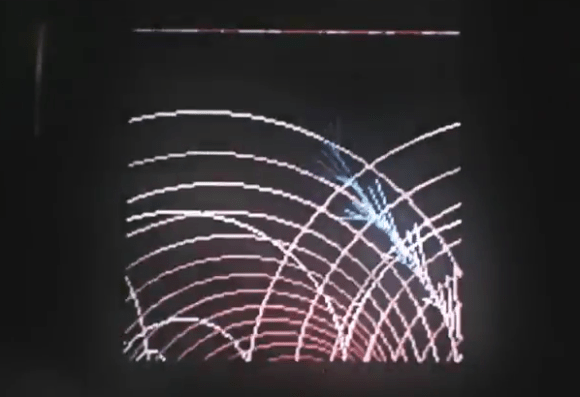
Well that didn’t take long. We just heard last week about the Sony inviting firmware hacks for their SmartWatch and here’s an early example. This image above is an animation running on the watch. It was written as an Arduino sketch which runs on a custom firmware image. [Veqtor] wrote the sketch, which is just a couple of nested loops drawing lines and circles. The real hack is in the firmware itself.

[Veqtor] took part in a workshop (translated) put on by [David Cuartielles] which invited attendees to try their Arduino coding skills on his firmware hack for the watch. It implements an Android parser, but the development is in very early stages. Right now there’s zero information in his readme file. But the root directory of the repo has a huge todo list. Dig through it and see if you can fork his code to help lend a hand.

Learn more about the SmartWatch firmware from the original announcement.

Continue reading “Sony SmartWatch Running Arduino Sketches”

Wetlev 2 Water Jet Pack Marginally Less Lethal Than Prior Version

wetlev2-test-run

You’ve got to admit the thought of tooling around the lake on your own personal water jetpack is a seductive proposition. This is the second summer in which [Toby Gardner] has been trying to work out the kinks on his build. Last year he got out of the water, but the jetpack was pretty hard to control. Over the winter he redesigned the nozzles of the water jets and they seem to be doing quite a bit better.

The fact that the build will be in frequent contact with water makes it a bit harder. They need to have parts that won’t corrode but can stand up to the pressure. Stainless steel was the obvious choice, and for the refinements they were able to get quite a few off the shelf parts to start from. He built a mold for forming the backpack and took it out for a spin. We don’t get a great look at the new version from afar. But watch the videos below and you’ll see last year it tried to drown him, this year it seems to float.

Why is he building rather than buying? Have you seen the price of the original version?

Continue reading “Wetlev 2 Water Jet Pack Marginally Less Lethal Than Prior Version”

3D Scanning By Calculating The Focus Of Each Pixel

calculating-focus-to-generate-depth-map

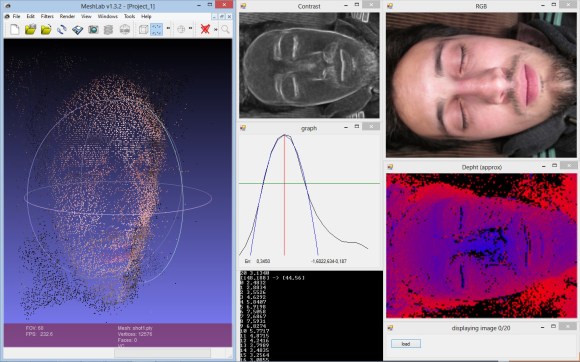
We understand the concept [Jean] used to create a 3D scan of his face, but the particulars are a bit beyond our own experience. He is not using a dark room and laser line to capture slices which can be reassembled later. Nope, this approach uses pictures taken with several different focal lengths.

The idea is to process the photos using luminance. It looks at a pixel and it’s neighbors, subtracting the luminance and summing the absolute values to estimate how well that pixel is in focus. Apparently if you do this with the entire image, and a set of other images taken from the same vantage point with different focal lengths, you end up with a depth map of pixels.

What we find most interesting about this is the resulting pixels retain their original color values. So after removing the cruft you get a 3D scan that is still in full color.

If you want to learn more about laser-based 3D scanning check out this project.

[Thanks Luca]

Giving A Crank Flashlight A Super Capacitor Overhaul

crank-flashlight-supercap-overhaul

[Caleb] was given a tiny LED flashlight which has a crank used to charge it. Unfortunately it wasn’t holding a charge, and constant cranking didn’t work very well either. He cracked it open to find a single lithium button cell. Instead of using a drop-in replacement he soldered in his own super capacitor.

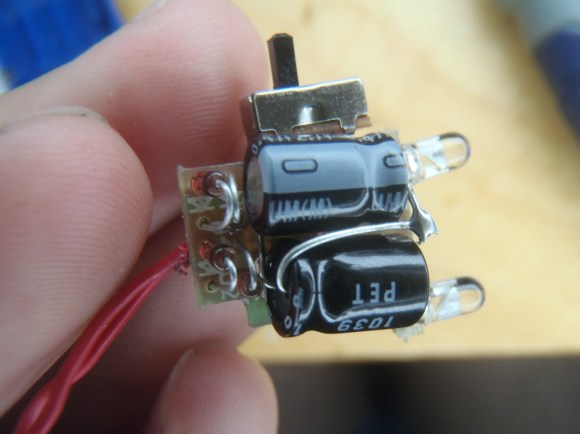
The stock device is remarkably simple. It uses a standard DC motor as the generator. It’s connected to the crank using a set of gears, with the two red wires seen above connecting it to the control board. Four diodes make up a bridge rectified and apparently feed directly into the battery. No wonder that cell went kaput!

But this orientation isn’t bad for using capacitors. They can be charged directly and the switch which attaches the LEDs to voltage doesn’t interfere with their operation. The last problem was making room for them in the case. [Caleb] considered a few different approaches, but ended up just heating the plastic enclosure until it could be deformed to make room for the additional parts.

Hacking A Medion WiFi Streaming Radio Found At Aldi

hacking-medion-streaming-wifi

On a shopping trip at Aldi [Aaron Christophel] came across this Medion streaming device which connects to your home network via WiFi and works as an Internet radio. He couldn’t resist buying one, and managed to do quite a bit of hacking on the device (translated) once he got it home.

His first order of business was a hardware teardown. An inspection of the board showed what was obviously an unpopulated footprint for a USB mini jack. He added the component, thinking it would allow him to connect it to a computer, but that didn’t work. To investigate the issue further he connected to the device’s serial port using the hard-to-guess credentials root and password. It’s running a Linux kernel and the lsusb command revealed that the USB is enabled as host mode. This mean you can attach mass storage… sweet!

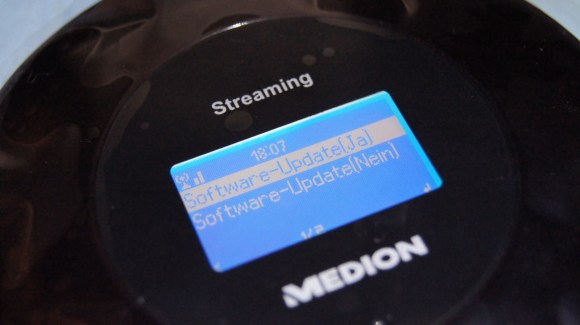
He also did some firmware hacking. Above is the confirmation screen for flashing his altered image file. This resulted in a custom splash screen when it boots up.

Solar Powered Hovercraft

SONY DSC

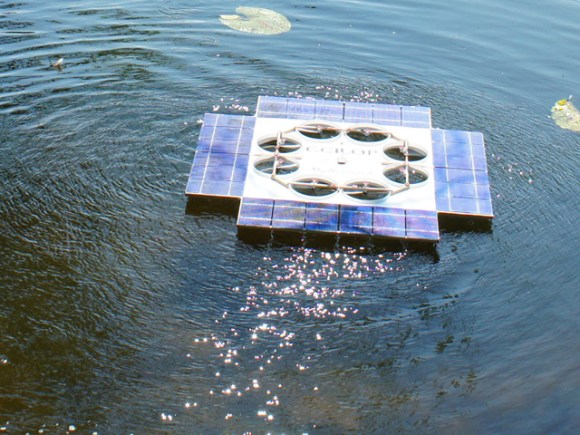
It looks a little bit like an octocopter, but this solar-powered hovercraft is distinctly different from its free-flying brethren. It depends mostly on ground effect for operation and to get it just a bit into the air you need a pretty large reflective rig nearby.

The vehicle needs to be even lighter than traditional quadcopters in order to function. It doesn’t carry any battery at all which presents a problem when trying to program the microcontroller board. For this it is connected to an external battery, which is removed before flight so that the control can be powered from the solar array.

What’s not shown in the image above is a mirror array used to focus more intense sunlight on the panels to bump up the available electricity. Not much is said about this, but there is one image on the project page which shows the creator standing in front of the set of four mirrors (perhaps sheets of mylar?) strung up between a couple of trees.

Alas, we couldn’t find a video of the aircraft in action. With such a delicate balsa wood frame we’re sure this thing is affected by every air current that passes its way.

[Thanks Laimonas]