Thermochromic Imaging

F1XEKFDHPBPOP21.LARGE

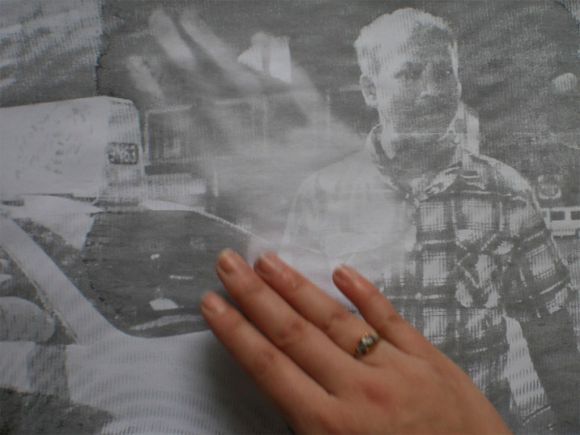
[clarii_d] is currently finishing up her thesis project on thermochromic pigment to silkscreen receipts. The idea behind it is that when a receipt is touched, part of it fades revealing a hidden message.

As you can guess, thermochromic paint is a type of substance that changes color when introduced to heat — or in this case, fades altogether. Remember when mood rings were all the rage? Same thing.

In her project she is using silkscreening to transfer text onto the back of receipt paper using regular ink. Once dried, she silkscreens an image over top of the message, this time using a thermochromic pigment. The result is a slightly obscured image, but after holding it for a few seconds, it disappears and only the text remains.

Color-changing anything is a bit gimmicky, but we think [clarii_d’s] project is a pretty cool and unique application of it. A few years ago we shared another interesting project utilizing thermochromism; a color-changing clock face that utilized the heat given off by resistors!
Custom Rostock 3D Printer Makes Use Of IKEA Components

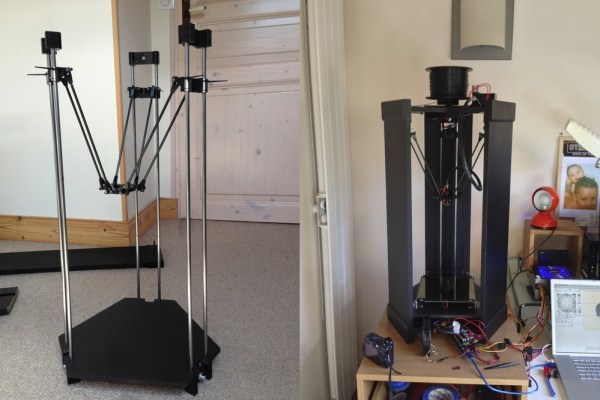
After discovering 3D printers, [Turi] had to make one. This past summer he did, and it looks fantastic.

He chose the Rostock design not only because it can print big parts quickly, but also because of its mesmerizing operation. 3D printers are generally fun to watch for the first few minutes, but Rostocks tend to have an even more robotic appeal in the motion of its end effector (robotics lingo for tool head).

The cool part of this build is [Turi’s] choice of enclosure. He had an IKEA cabinet collecting dust in his basement, so he decided to make use of its drawers for the main structure of the Rostock. A bit of wood work and some matte black spray paint later, and he has one great looking enclosure! The rest of the build was pretty standard, making use of 3D printed parts, a RAMPS 1.4 control board mounted on an Arduino Mega, and a computer power supply. He did make his own control arms using carbon fiber arrows, though!

To see it up close and in action, check out the quick video after the break.

Continue reading “Custom Rostock 3D Printer Makes Use Of IKEA Components”

Cryophone: A Dry Ice-Powered Musical Installation

cryophone

[Dmitry] is a bit of an industrial artist / hacker, and he’s recently finished this interesting and interactive audio exhibit called the Cryophone.

As you know, dry ice is terribly fun. When placed in water, it sublimates from its solid to gaseous phase rapidly, releasing carbon dioxide gas and causing a drastic (and sometimes violent) temperature change. [Dmitry’s] project attempts to amplify the sounds of these reactions and create music(?) using data from sensor inputs in the system. He uses piezo elements, temperature sensors, and an Arduino to generate an algorithmic composition from the various sensors, which a Mac Mini then synthesizes and outputs as audio in 6 channels.

The result is an eerie collection of noises that would do well in a haunted house or a horror movie. Take a listen for yourself after the break, and if you missed it, check out another unique, audio-based art installation: ‘conus.’

Continue reading “Cryophone: A Dry Ice-Powered Musical Installation”

Hacking A Heating Pad

HeatingPadBreadboardS

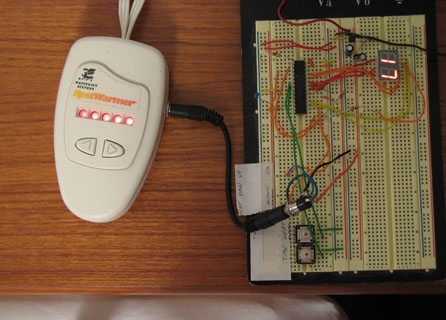
[Bob] and his wife use a bed heating pad. In the winter, they typically turn it on about an hour before bedtime so the bed is nice and warm. The problem is, if they accidentally leave it on, they’ll wake up a few hours later: overheated. What they needed was an advanced timer system.

A normal outlet timer wouldn’t fit his needs: most of the year the pad should shut off after a slight delay, but in the winter they prefer to leave the heating pad on at a much lower temperature. [Bob] decided to create a custom timer with a microcontroller to provide adjustable duration and heating levels.

The circuit is simple. It consists of a microcontroller, a 2-digit LED display, two buttons, and two wires that connect to the heating pad’s original controller. The final build allows you to set the time the pad turns on, turns off, and/or down a few levels. It’s a fantastic hack, and you can see how the interface works in the video following the break.

Continue reading “Hacking A Heating Pad”

Aluminum Bitcoin Keychain

mVCyX2K

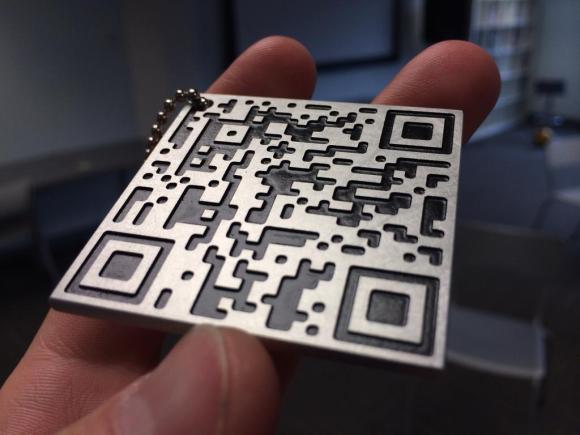
Here’s a cool way to bring a physical presence to your Bitcoins: a custom CNC milled QR code Bitcoin address!

[ch00f], one of our occasional writers here at Hack a Day, has just finished this slick aluminum Bitcoin QR code keychain. He started by creating a vanity Bitcoin address using a program called OCLVanitygen, consisting of his dad’s first initial and last name at the beginning, followed by a random string of numbers. It only took his Radeon HD6790 6 hours to solve, which amounted to approximately half a trillion guesses in order to find the address! 

He then took his shiny new Bitcoin address and created a QR code from it using an web-based generator. [ch00f] then increased the resolution of the image in Photoshop and imported it into a CNC program called CamBam. A converted CNC Taig mill got to work tracing out the code with a 0.049″ carbide end. The total milling time was just over 2 hours. A bit of black spray paint, some sanding, and a few layers of clear coat later and the keychain is done!

[via Reddit]

A New Way To Heat People

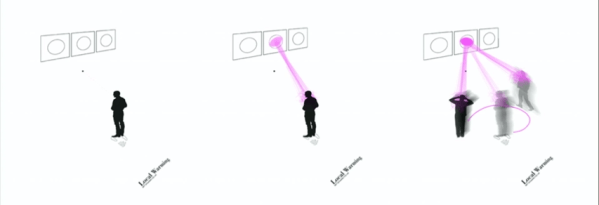
[Leigh Christie] is a researcher at MIT, and he’s developed an interesting solution to heating people, not buildings.

His TEDx talk, “Heating Buildings is Stupid,” demonstrates the MIT SENSEable City Laboratory’s efforts to tackle energy issues. Their research focuses on finding an alternative to the staggering waste of energy used to heat large spaces. Although TED talk articles are a rarity at Hackaday, we think this idea is both simple and useful. Also, [Leigh] is the same guy who brought us the Mondo Spider a few years ago for the Burning Man exhibition. He’s a hacker.

Anyway, what is it? The system he’s devised is so simple that it’s brilliant: a person-tracking infrared heat spotlight. Using a Microsoft Kinect, the lamp follows you around and keeps the individual warm rather than the entire space. [Leigh] has grand plans for implementing what he calls “Local Heating” in large buildings to save on energy consumption, but smaller-scale implementations could prove equally beneficial for a big garage or a workshop. How much does your workspace cost to heat during the winter? Hackerspaces seem like the perfect test environment for a cobbled-together “Local Heating” system. If anyone builds one, we want to hear about it.

Check out the full TEDx talk after the break.

Continue reading “A New Way To Heat People”

LEDmas Tree

led christmas tree

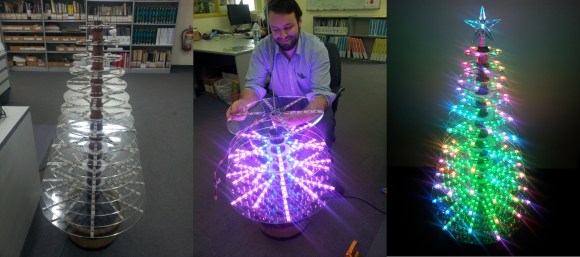
[Nick] is a bit of an LED fanatic. So when his boss asked him to help make an LED Christmas tree for work, he jumped at the opportunity!

It’s a beautiful build, making use of laser(?) cut plexiglass disks, wooden “trunks” made using a lathe, and a TON of RGB LEDs. Unfortunately—because it turned out so nice—the company is thinking of selling it as a product next year, so [Nick] isn’t allowed to divulge much more information behind the build. Regardless, it looks fantastic , and we’re sure you could hack your own.

He was allowed to take a video of it though, so check it out after the break! He also has a ton of other very cool LED projects on his blog at www.hownottoengineer.com

Continue reading “LEDmas Tree”