Virgin Galactic Cautiously Returns To Flight

After Richard Branson delivered some inspiring words from his seat aboard SpaceShipTwo Unity, he unbuckled himself and started to float around the vehicle’s cabin along with three other Virgin Galactic employees. Reaching an apogee of 86 kilometers (53 miles), the passengers enjoyed four minutes of weightlessness during the July 2021 flight that was live-streamed over the Internet to an audience of millions. After years of delays, SpaceShipTwo had finally demonstrated it was capable of taking paying customers to the edge of space. As far as victories go — it was pretty impressive.

Yet despite the spectacle, weeks and months went by without an announcement about when commercial flights of the world’s first “spaceline” would finally begin. Now, nearly two years after Branson’s flight, Unity has flown again. Except instead of carrying the first group of customers, it performed the sort of un-powered test flight that Virgin Galactic hasn’t performed since 2017. Clearly, something didn’t go to plan back then.

Richard Branson aboard Unity

The company is being as tight-lipped as ever, saying only that this test flight was necessary to “evaluate the performance of the spaceship…following the modification period.” The exact nature of these modifications is unclear, but for some hints, we could look at the New Yorker article from September 2021. It alleged that, unwilling to derail Branson’s highly publicized flight, Unity’s pilots decided not to abort their ascent despite several warning lights in the cockpit alerting them that the vehicle’s trajectory was deviating from the norm. Virgin Galactic later denied their characterization of the event, but the fact remains that Unity did leave its designated airspace during the flight, and that the Federal Aviation Administration grounded the spacecraft until an investigation into the mishap could be completed. Continue reading “Virgin Galactic Cautiously Returns To Flight”

E-Bike Battery Tapped For Off-Grid Laptop Power

If you’ve travelling via bike, you’ll know there’s a certain advantage to packing light. But what if you need to take your beefy desktop-replacement laptop with you on one of these trips? These power hungry machines can’t go far without their chargers (or a place to plug them in), which generally makes them poor traveling companions.

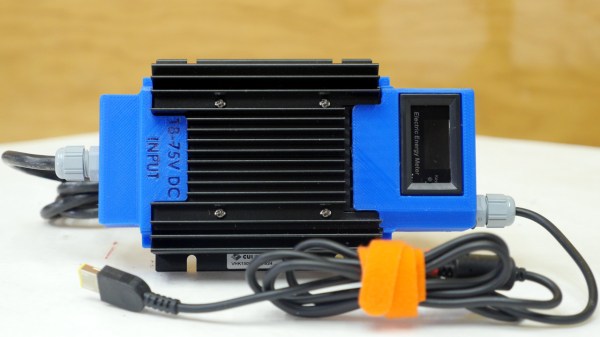
Luckily, [transistor-man] came up with a solution to this particular problem by reusing his e-bike’s battery pack as a mobile power source for his Lenovo laptop. The energy demands of this particular computer are too high for USB-C Power Delivery, and as such, he had to hack up a way to feed it 20 volts DC via its proprietary square power connector. His bike’s battery puts out between 30 and 42 VDC depending on charge, so at least on paper, it should work out fine. Continue reading “E-Bike Battery Tapped For Off-Grid Laptop Power”

ESA’s Jupiter-bound Probe Hits Antenna Snag

While the few minutes it takes for a spacecraft’s booster rocket to claw its way out of Earth’s gravity well might be the most obviously hazardous period of the mission, an incredible number of things still need to go right before anyone on the ground can truly relax. Space is about as unforgiving an environment as you can imagine, and once your carefully designed vehicle is on its way out to the black, there’s not a whole lot you can do to help it along if things don’t go according to plan.

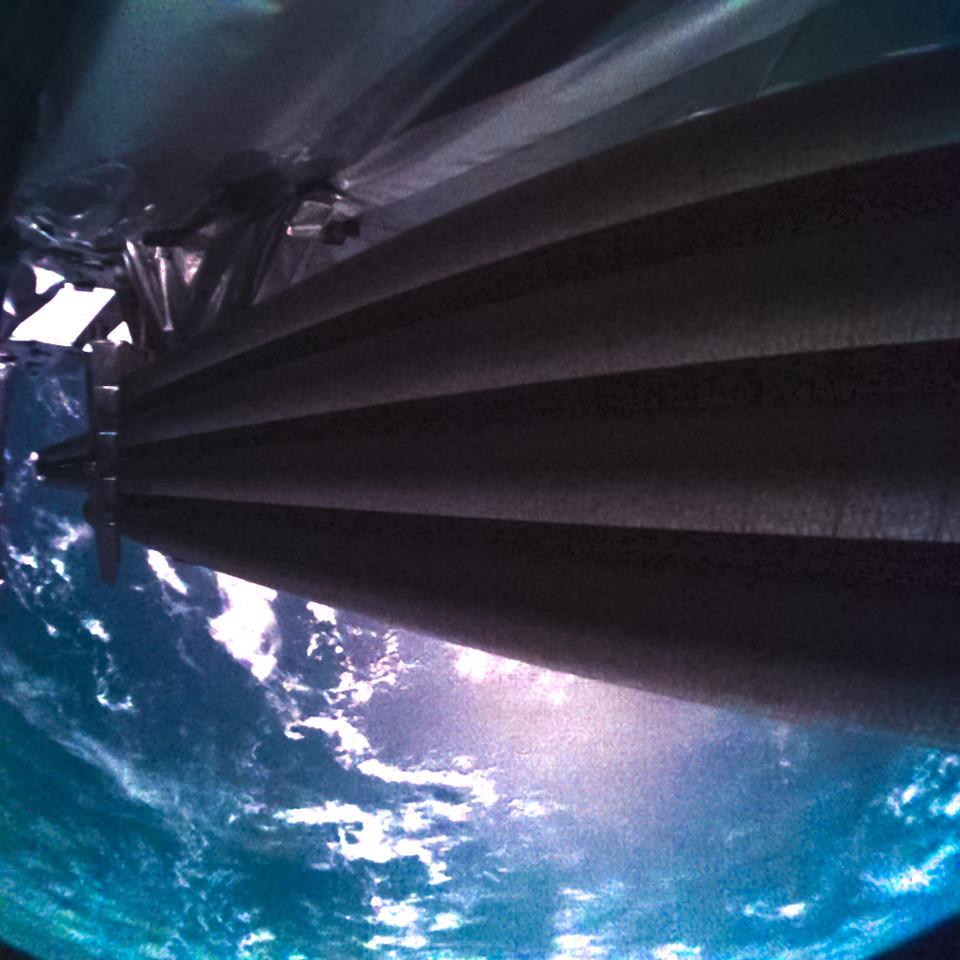
That’s precisely where the European Space Agency (ESA) currently finds themselves with their Jupiter Icy Moons Explorer (Juice) spacecraft. The April 14th launch from the Guiana Space Centre went off without a hitch, but when the probe’s 16 meter (52 foot) radar antenna was commanded to unfurl, something got jammed up. Judging by the images taken from onboard cameras, the antenna has only extended to roughly 1/3rd its total length.

An onboard view of the antenna.

The going theory is that one of the release pins has gotten stuck somewhere, preventing the antenna from moving any further. If that’s the case, it could mean jiggling the pin a few millimeters would get them back in the game. Unfortunately, there’s no gremlins with little hammers stowed away in the craft, so engineers on the ground will have to get a little more creative. Continue reading “ESA’s Jupiter-bound Probe Hits Antenna Snag”

Cocoa Press Chocolate 3D Printer Offered As DIY Kit

Ultimately, the goal of Hackaday is to shine a light on the incredible projects coming from the hardware hacking community. In the vast majority of cases, said projects end up being one-off creations — a clever solution that solved a specific problem for the creator, which may or may not be directly applicable to anyone else. But occasionally, perhaps one in every few thousand projects, we see an idea that’s compelling enough to become a commercial product.

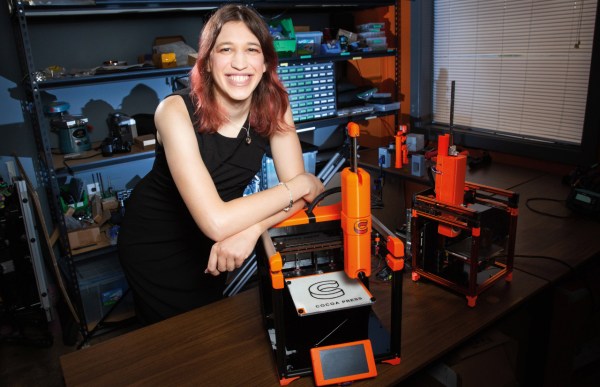
Today, we’re happy to add the Cocoa Press to that list. Creator [Ellie Weinstein] has recently unveiled a commercialized version of the chocolate 3D printer she’s been working on for several years, and true to the maker spirit, it’s being offered as a DIY kit. You can currently put a $100 USD deposit on the final product, which is expected to ship before the end of the year. Assembly time is estimated to be around 10 hours and no previous experience with building 3D printers is required, though we’re sure it wouldn’t hurt.

Continue reading “Cocoa Press Chocolate 3D Printer Offered As DIY Kit”

VCF East 2023: Adrian Black On Keeping Retro Alive

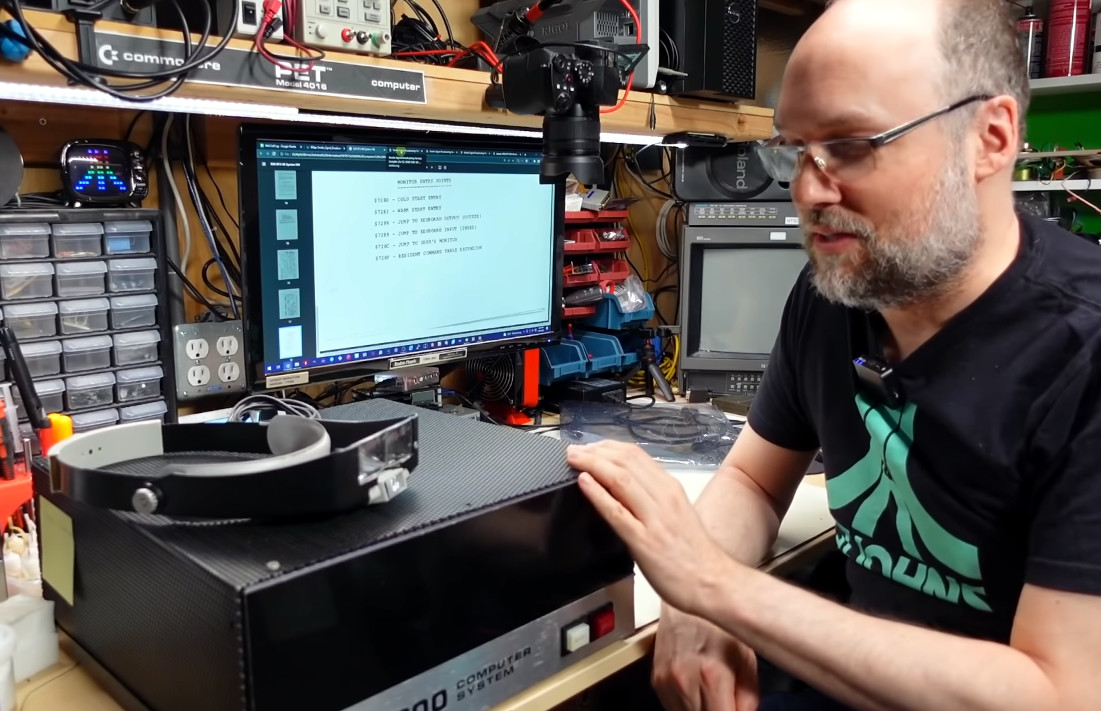
While roaming the halls of Vintage Computer Festival East 2023, we ran into [Adrian Black], who was eager to talk about the importance of classic computing in his own life and how his experience hosting the YouTube channel Adrian’s Digital Basement has impacted him these last few years.

On his channel, [Adrian] spends most of his time repairing vintage systems or exploring little-known aspects of hardware from the early days of desktop computing. His exploits have brought him to the pages of Hackaday in the past, most recently just last month, when we covered his work to add an RGB interface to a mid-1990s Sony Trinitron CRT display. But in talking to him, you quickly realize he’d be working on the very same projects whether the camera was rolling or not. He’s not out to game the YouTube algorithm; he’s just having a good time in the basement poking around with the sort of old gear that at one time would have been completely out of reach.

Exploring a rare SWTPC 6800 computer

In fact, it’s this sense of nostalgia that [Adrian] believes is responsible not just for the growing popularity of his channel but for the retrocomputing community as a whole. For many who grew up with these machines, they were far too expensive or complex to ever crack open (literally and figuratively) when they were new. Now, decades later, people like himself finally find themselves able to buy and enjoy these once-coveted objects.

Critically, they now also have the skills to do them justice, not to mention access to a worldwide community of like-minded folks who are still producing hardware and software that can be used with these classic machines. For those of a certain age, it’s literally a dream come true.

[Adrian] was just one of the retro aficionados we got a chance to talk to during VCF East 2023. We already brought you the chat we had with [Andy Geppert] about magnetic core memory and his Core64 device, but there’s plenty more to come. Stay tuned.

Continue reading “VCF East 2023: Adrian Black On Keeping Retro Alive”

Hackaday Prize 2023: The Assistive Tech Challenge Starts Now

We’d all love to change the world and make it a better place, but let’s be honest…that’s a pretty tall order. Even the best of ideas, implemented perfectly, can only do so much globally. But that doesn’t mean the individual can’t make a difference — you just need to think on a different scale. If improving everyone’s life is a bit out of reach, why not settle for a smaller group? Or perhaps even just one person?

That’s precisely what we’re looking for in the Assistive Tech Challenge of the 2023 Hackaday Prize. In this Challenge, we’re asking the community to come up with ideas to help those with disabilities live fuller and more comfortable lives.

Whether you help develop an improved prosthesis that could benefit thousands, or design a bespoke communication device that gives a voice to just a single individual, it’s hard to imagine a more noble way to put your skills and knowledge to use.

Looking to lend a hand? You’ve got from now until May 30th to enter your Assistive Tech project. It doesn’t matter what kind of impairment it focuses on — so long as it helps somebody work, learn, or play, it’s fair game to us.

The ten finalists for this Challenge will be announced around June 12th, but you’ll have to wait until Hackaday Supercon in November to find out which projects take home their share of the more than $100,000 in cash prizes graciously provided by sponsors Digi-Key and SupplyFrame.

Continue reading “Hackaday Prize 2023: The Assistive Tech Challenge Starts Now”

Vintage Computer Festival East Was A Retro Madhouse

The Vintage Computer Festival East took place last weekend at the InfoAge Science and History Museum in New Jersey, and by any metric you care to use, it was a phenomenal success. Everyone you spoke with, from the the exhibitors and attendees, to the veteran volunteers who put this incredible show together, all said the same thing: they’d never seen a turnout like this before.

Of course, such success is not without cost. The exhibit rooms were so packed that moving through them was a challenge, the line to get food or browse the consignment area occasionally stretched outside the building, and at one point the event’s electronic payment system buckled under the pressure.

Some things are worth the wait.

Yet even the folks who waited the better part of an hour to rummage through boxes of dusty treasures, only to find themselves left standing with armfuls of heavy gear they couldn’t pay for until the technical issues were resolved couldn’t really complain. I should know, I was one of them. It would be like going to a concert and getting upset that the music was too loud — the event was advertised as a festival, and that’s exactly what it was.

No matter where you went, you’d find throngs of excited people who were eager to chat about the golden age of computing. So even if you were stuck in a long line, or had to step outside of the exhibit area to get some fresh air, you were always in excellent company. Seeing such a large and diverse number of people come out for what’s ultimately a niche event was exceptionally gratifying. At the end of the day, if the price we have to pay for this kind of community response is a few long lines and tight squeezes, it’s well worth it.

Each time I cover an event like this for Hackaday, I do so with the caveat that there’s really no substitute for being there in person. No matter how many articles you read and YouTube recaps you watch, you’ll never be able to see all the things you would have had you been able to walk the show floor yourself. It’s a bit like exploring the Moon or Mars: remotely controlled robots are capable of capturing terabytes of data and beaming it back to Earth, but even still, there’s the potential to learn so much more by putting boots on the ground.

The same is true of VCF East 2023 — what I bring you here is just the tip of the iceberg in terms of what was on display at this year’s event. On the other hand, you have the advantage of being able to peruse these images without having to stand in line. Is it worth the trade? Only you can be the judge of that. But for my money, I’ll gladly get back in line when VCF East 2024 rolls around.

Continue reading “Vintage Computer Festival East Was A Retro Madhouse”