3D Print Your Best Friend A Wheelchair

We all know that 3D printing has been a boon for people with different life challenges. But the Ford Motor Company in Mexico wants to help dogs that need mobility assistance. They’ve designed and released P-Raptor (we presume the P is for perro), a wheelchair for pooches with rear leg issues. The web page is in Spanish, and translating it didn’t seem to work for some reason, but if you have any Spanish, you can probably work it out or cut and paste just the text into your favorite translator.

The design is modular to adapt to different size dogs and different problems. It contains an electric motor in the tires. The tires themselves are oversized to help your friend cover rugged terrain. Dogs want to look cool, too, so a grill with lighting is included.

Continue reading “3D Print Your Best Friend A Wheelchair”

If The Shoe Doesn’t Fit, Print It!

Usually when we talk about flip-flops here we mean the circuit. But in this case, it is [Jeandre Groenewald’s] 3D-printed shoe design called Sloffies. The shoes use TPU, and the matching package prints in PLA. Of course, you have to pick the size to fit your feet, and there’s an OpenSCAD file that allows you to customize the strap.

Unlike some 3D apparel we’ve seen, these look like a commerical product. Of course, the cool product packaging doesn’t hurt any. Are they comfortable? We don’t know, but our guess is it is no worse than other similar shoes that are made of one material.

Continue reading “If The Shoe Doesn’t Fit, Print It!”

Metal Forming With A 3D Printer

How do you use a 3D printer to bend metal? One way would be to take it to a machine shop and offer to trade the owner your printer for some time in their shop. A smarter way is to do like [Jaba 3D], and print dies using the printer. You can then use those dies in a press to make the shapes you want.

In the case of [Jaba], the Harbor Freight press uses a hydraulic cylinder to develop about 6 tons of pressure. We don’t think Harbor Freight carries this particular press, but for between $150 and $250, you can get a 12-20 ton press, and, of course, there are other suppliers, as well.

The target object, in this case, was an automotive bracket. The process of grabbing an image, converting it to an SVG, and then creating a 3D part has many uses. Apparently, PLA is sufficient for this purpose, although the print uses ten top and bottom layers along with 80% infill. That does make the prints take a long time.

As you might expect, the dies don’t last very long. In this case, they needed two shots, and they got them, but PLA is probably not the right material if you wanted to go for mass production.

Metal forming does occur at large scales, too. If you want to make your own press-forming tools, we have advice for you.

Odd Retrocomputer Had A Graphics Coprocessor

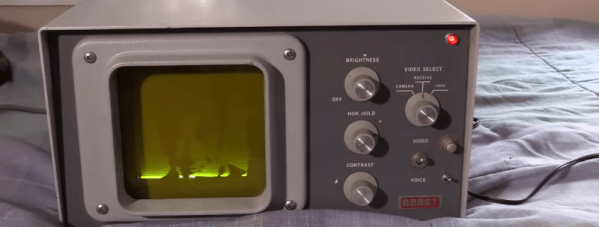
[Noel’s Retro Lab] scored an unusual 1980s vintage computer sold in Japan and Spain. The Seconinsa FM-7 appears to be a popular Fujitsu Japanese computer altered to fit the Spanish market. They seem to be pretty rare, at least in our part of the world. The outside appearance was very nice for the time, with a large keyboard and plenty of expansion ports. But the board has an unusual feature considering the era — dual CPUs. One 6809 executed your program, and another 6809 handled graphics output. You can see the machine in the video below.

There are two 32K ROMs, but the machine specifications claim only 48K. After dumping the ROMs, it turns out one of the ROMs has two copies of the same data. You can imagine they might not want to decode the entire address space. It could be that they needed 16K of space for other devices.

It wasn’t just the ROMs. The video RAM is pretty strange, too, as [Noel] explains. There are even some static RAMs the computer doesn’t claim. It appears these act as communication pipes between the two CPUs. In fact, it turns out that even the keyboard has its own 4-bit CPU, so the machine actually has a total of 3 CPUs!

This was a heavy-duty design for the time it was built. [Noel] wanted to fire it up, but he had to figure out the cables since the computer didn’t have any with it. Some clever repurposing of stock cables provided monochrome video output. Color display was a bit more complicated, but not impossible.

[Noel] winds the video up with some history of the companies behind the machine. The Spanish government wanted to use the FM-7 in the classroom, but the program failed to materialize. Want to see what it was like to program the thing? Here’s the Basic reference manual (in Spanish). Most of the documentation for the machine is either in Spanish or Japanese.

While this certainly is a rare computer, at least there’s a record of its existence. If you want to see what a Japanese computer looked like a few decades earlier, check out the FACOM 128B.

Continue reading “Odd Retrocomputer Had A Graphics Coprocessor”

Let’s Listen To A Tape — Paper Tape

These days, data is as likely as not to be “in the cloud.” Otherwise, it’s probably on a USB flash drive or SD card. But in the old days, paper tape was a widespread way to store and retrieve data. A common way to start the day at the office was to toggle in a few dozen bytes of bootloader code, thread a bigger bootloader tape into your TeleType paper tape reader, and then get your coffee while the more capable bootloader clunked its way into memory. Then you could finish your brew while loading the tape with your compiler or whatever you wanted. [Scott Baker] has a Heathkit H8 and decided using a paper tape machine with it and some of his other gear would be fun.

Instead of a TeleType, [Scott] picked up a used paper tape machine from FANUC intended for the CNC industry. They are widely available on the surplus market, although a working machine might run you $500. [Scott] paid $200, so he had some work to do to make the unit operational.

Paper tape had a few varieties. For computer work, you usually had a tape that could hold eight holes across, one for each bit in a byte. However, there are also 6-bit and 5-bit tapes for special purposes or different encodings (old TeleTypes used 5-bit characters in Baudot). The paper choice varied too. You could get plain paper, oiled paper, which maybe didn’t jam as often, and Mylar, which is less likely to shred up when it does jam.

To make things even more difficult, the machines all worked a little differently as well. Sure, punches almost all use solenoids. But the tape transport was sometimes a pinch roller and sometimes a sprocket-style drive. Reading the holes could be done with mechanical contacts or optically. Some punches left little “hanging chads” on the tape, so you didn’t have to empty a confetti box to throw away the chad.

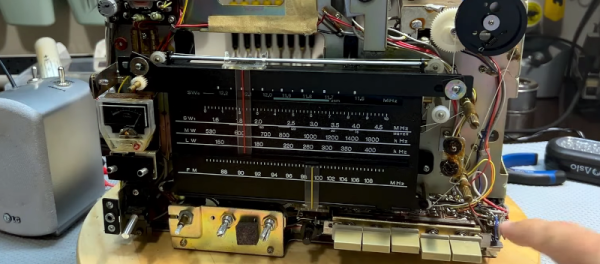
The repair job was interesting. Inside the machine is an 8051 microcontroller. There was no clock, and the circuit used two custom modules. One was simply a crystal, and the other was an oscillator. Removing both allowed a modern can oscillator to replace both modules. The next problem was a fried serial output driver. Replacing that got things working except for random resets due to a faulty brown-out reset circuit. That was easy to fix, too.

Of course, if you are really cheap, it is easy to make a paper tape reader from 8 phototransistors, and pulling tape through by hand isn’t unheard of. It can even talk USB. We’ve even seen a conference badge that can read tapes.

Continue reading “Let’s Listen To A Tape — Paper Tape”

Kalman Filters Without The Math

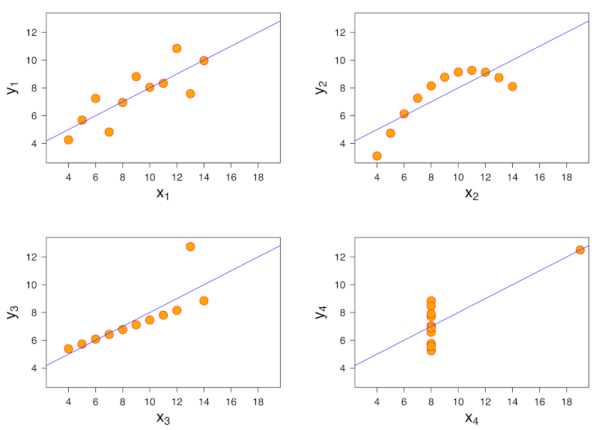
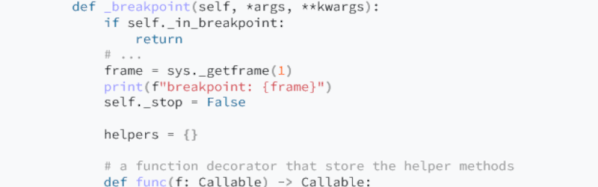
If you program using values that represent anything in the real world, you have probably at least heard of the Kalman filter. The filter allows you to take multiple value estimates and process them into a better estimate. For example, if you have a robot that has an idea of where it is via GPS, dead reckoning, and an optical system, Kalman filter can help you better estimate your true position even though all of those sources have some error or noise. As you might expect, a lot of math is involved, but [Pravesh] has an excellent intuitive treatment based around code that even has a collaborative Jupyter notebook for you to follow along.

We have always had an easier time following code than math, so we applaud these kinds of posts. Even if you want to dig into the math, having basic intuition about what the math means first makes it so much more approachable.

Continue reading “Kalman Filters Without The Math”

The AI Engine That Fits In 100K

Running your own AI models is possible, but it requires a giant computer, right? Maybe not. Researchers at NVidia are showing off Perfusion, a text-to-image model they say is 100KB in size and takes four minutes to train. The model specializes in customizing a photo. For example, the paper shows a picture of a teddy bear and a prompt to dress it as a wizard. In all fairness, the small size and quick training are a little misleading, we think, because the results are still using the usual giant model. What’s small and fast is the customization of the existing model.

Customizing models is a common task since you often want to work with something the model doesn’t contain. For example, you might want to alter a picture of your face or your pet, which probably isn’t in the original model. You can create a special keyword and partially train the model for what you want using something called textual inversion. The problem the researchers identified is that creating textual inversions often causes the new training to leak to unintended areas.

They describe “key locking,” a technique to avoid overfitting when fine-tuning an existing model. For example, suppose you want to add a specific dog picture to the model. With typical techniques, a special keyword like dog* will indicate the custom dog image, but the keyword has no connection with generic dogs, mammals, or animals. This makes it difficult for the AI to work with the image. For example, the prompts “a man sitting” and “a dog sitting” require very different image generations. But if we train a specific dog as “dog*” there’s no deeper understanding that “dog*” is a type of “dog” that the model already knows about. So what do you do with “dog* sitting?” Key locking makes that association.

Continue reading “The AI Engine That Fits In 100K”