As Europe Goes To LEDs, Scientists Worry

There was a time when street lighting means someone had to go light the lamps. Electricity changed that, but street and outdoor lighting has been quietly going through a new revolution: LEDs. The problem, though, is that LEDs provide what scientists call “broad white” light and there are concerns about the impact the unnatural lighting will have on ecosystems, including people and animals.

Of course, the first step in worrying about something is to measure it. You would think that satellites would have a bird’s-eye view of the nighttime lighting landscape, and, of course, they do. But most of the imagery isn’t suitable for looking at the spectrum of wavelength data scientists need to quantify what they call ALAN — Artificial Light at Night.

The ISS imaging is, however, sufficient. Using special data techniques, they were able to track the adoption of LEDs over sodium lights and other technologies between 2012-2013 and 2014-2020 across Europe. For example, in the title image, you can see Belgium with an orange tint indicating low-pressure sodium lights. The Netherlands, France, and the UK have a more yellow hue, indicating high-pressure sodium lamps. Germany is more of a blue color due to fluorescent and mercury vapor bulbs.

Continue reading “As Europe Goes To LEDs, Scientists Worry”

Solar Flare Quiets A Quarter Of The Globe

In the “old” days, people were used to the idea that radio communication isn’t always perfect. AM radio had cracks and pops and if you had to make a call with a radiophone, you expected it to be unreliable and maybe even impossible at a given time. Modern technology,  satellites, and a host of other things have changed and now radio is usually super reliable and high-fidelity. Usually. However, a magnitude 7.9 solar flare this week reminded radio users in Africa and the Middle East that radio isn’t always going to get through. At least for about an hour.

It happened at around 10 AM GMT when that part of the world was facing the sun. Apparently, a coronal mass ejection accompanied the flare, so more electromagnetic disruption may be on its way.

The culprit seems to be an unusually active sunspot which is expected to die down soon. Interestingly, there is also a coronal hole in the sun where the solar wind blows at a higher than usual rate. Want to keep abreast of the solar weather? There’s a website for that.

We’ve pointed out before that we are ill-prepared for technology blackouts due to solar activity, even on the power grid. The last time it happened, we didn’t rely so much on radio.

Continue reading “Solar Flare Quiets A Quarter Of The Globe”

TRS-80 Model II Lives Again

A lot of people had a Radio Shack TRS-80 Model I. This was a “home computer” built into a keyboard that needed an external monitor or TV set. Later, Radio Shack would update the computer to a model III which was a popular “all in one” option with a monitor and even space for — gasp — floppy disks. But the Model II was not nearly as common. The reason? It was aimed at businesses and priced accordingly. [Adrian] got a Model II that was in terrible shape and has been bringing it back to life. You can see the video of how he’s done with it, below.

The Model II was similar to the older “Trash 80” which had been used — to Radio Shack’s surprise — quite often by businesses. But it had more sophisticated features including a 4MHz CPU — blistering speed for those days. It also had an 80×25 text display and a 500K 8-inch floppy drive. There were also serial and printer ports standard.

There were a few interesting features. The floppy drive’s spindle ran on AC power and if the computer was on, the disk was spinning. In addition, there was bank switching so you could go beyond 64K and also you didn’t have to share your running memory with the video display. In theory, the machine could go beyond 64K since half the memory was bank switchable. In practice, the early models didn’t have enough expansion space to handle more than 64K physically.

Continue reading “TRS-80 Model II Lives Again”

Vintage Tube Tester Teardown

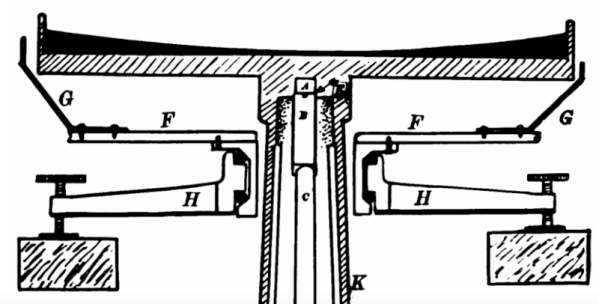
[Mr. Carlson] has an old-style 1940-era radio tube tester, the kind that used to inhabit grocery and drug stores. It is in amazing condition and he was kind enough to tear it down for us. The tester is a Model X from the Radiotechnic Laboratory in Evanston Illinois and, like [Mr. Carlson], we were amused that one of the indicators on the device is a Ouija board-like “doubtful” reading. When it lights up, it looks amazing.

This is much older than the old “TV tube testers” we remember as a kid, but the idea is the same: you have a bad radio or TV with tubes in it, it is a fair bet that the problem is a tube. Even if you don’t know much about electronics, you can carefully remove the tubes, drive over to the drugstore, test your tubes and buy a replacement for any that are bad. Uniquely, this tester even had a speaker you could use to listen to the tube’s output while testing.

Continue reading “Vintage Tube Tester Teardown”

Robot: Will Draw For Food

Biological systems often figure out the best ways to get what they need to survive. Now a robot created by researchers at Worcester Polytechnic Institute, Imperial College London, and the University of Illinois Urbana Champaign can make the same claim. The robot operates in front of a plate that has electrical terminals on one end and various obstacles between those terminals and the robot.

The robot can pick up and rearrange some of the items on the plate and then draws paths to the terminals using conductive ink. The effect is the robot gets to “eat” if it solves the connection puzzle.

Continue reading “Robot: Will Draw For Food”

C23 Programming For Everyone

Here’s a history quiz: What architecture did the first C++ compiler target? Of course, it is a trick question. The original C++ — known then as C with classes — compiler wrote out standard C code that you then compiled for whatever your target was. This has a lot of advantages since C compilers are everywhere. Now we are seeing a similar approach to bring C23 to the world with Cake. Cake can translate C23 or other versions to C99 which you can then compile with normal compilers.

While the old C++ compiler, cfront, needed special steps to compile (since it was built using C++), you can build cake for Windows or Linux easily. However, it can also be built with emscripten and you can try it yourself in your web browser.

Continue reading “C23 Programming For Everyone”

Resin Cleanup: A Sticky Situation

We’ll admit it. We like the results of resin 3D printing, but we don’t always care for the mess. We aren’t alone, and a common issue is to have drips of resin on your LCD screen — a potential disaster. You ought to have a screen protector, but yeah… you should back up hard drives, too. [Jessy] has the same problem and he has heard that you can easily clean cured resin from the screen using wood glue. Does it work? Check out the results of three glues in the video below.

We winced to see glue going on the screens. [Jessy] cured some resin on the screens deliberately for a test. He used Elmer’s wood glue, Gorilla wood glue, and Titebond II wood glue. While there is a bit of a price difference between the options, they are all fairly inexpensive.

Continue reading “Resin Cleanup: A Sticky Situation”