Linux Fu: Easy VMs

It wasn’t long ago that we looked at easily creating Docker containers from the command line so you could just easily spin up a virtual environment for development. Wouldn’t it be nice if you could do the same for virtual machines? You can. Using Multipass from Canonical, the makers of Ubuntu, you can easily spin up virtual machines under Linux, Mac, or Windows. Granted, most of the virtual machines in question are variations of Ubuntu, but there are some additional images available, and you can create your own.

Once you have it installed, starting up a new Ubuntu instance is trivial. If you have a set configuration, you can even set up predefined setups using a YAML file.

Continue reading “Linux Fu: Easy VMs”

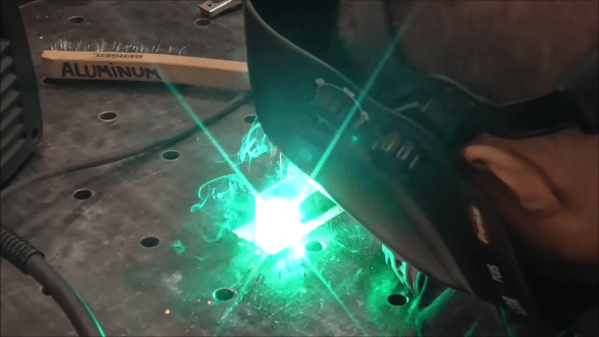
Welding Aluminum With A MIG Welder

Steve Martin had a bit that was like a fake infomercial where he says, “You can be a millionaire and never pay taxes!” The instructions were, “First, get a million dollars. Then,…” [Brandon’s] instructions for how to convert your MIG welder to do aluminum for under $25 is not quite like that, but you do need the right kind of MIG welder to make it work. In particular, you need an actual MIG welder that has a provision to connect external gas. The instructions show a Hobart Handler 140 that meets the criteria and has sufficient power to handle aluminum.

The main task is to replace the liner for the torch. The stock liner is steel which is fine for its intended purpose, but it is too rough for aluminum wire. A PTFE liner is inexpensive and will work fine with the aluminum wire. If you want to do normal welding later, you’ll need to put the original liner back in.

Continue reading “Welding Aluminum With A MIG Welder”

3D Printer Slicing In The Manufacturing World

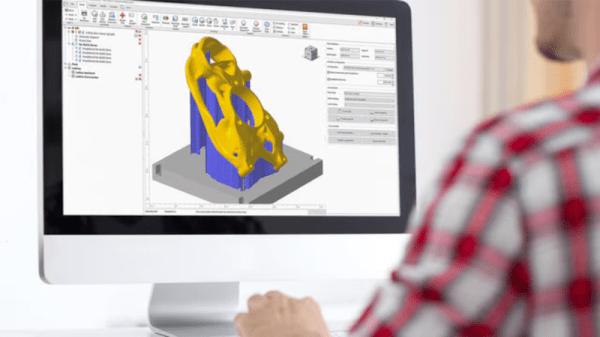
It is no secret that the way you build things in your garage is rarely how big companies build things at scale. But sometimes new techniques on the production floor leak over to the hobby builder and vice versa, so it pays to keep an eye on what the other side is doing. Maybe that was the idea behind [Carolyn Schwaar’s] post on All3DP entitled “Beyond Cura Slicer: 3D Printing Build Prep Software for Pros.” In it, she looks at a few programs that commercial-grade 3D printers use for slicing.

The differences in the software we typically use and those meant to work with a dedicated high-end machine are pretty marked, but maybe not in the way you would expect. While you might expect them to have tight integration with their target machine, you might not expect that they usually offer less control over parameters than a product like Cura. As a quote in the post points out, Cura has over 400 settings. Commercial 3D printers don’t have time to tweak those settings endlessly. So the emphasis is more on canned profiles that just work.

Not all of the programs are tied to machines, though. Commercial CAD offerings are becoming more capable with 3D printers and can sometimes slice and send jobs to printers directly. Regardless of software type, though, everyone needs certain functions: design, repair, simulation, build plate layout, and more.

If you are looking for a hobby-grade slicer other than Cura, we’ve been using SuperSlicer which is a fork of PrusaSlicer, which is a fork of Slic3r lately.


A Steam Engine For Empty Beer Cans

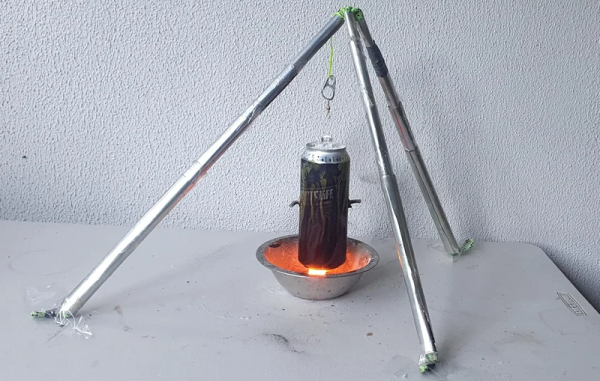
If Hero — the ancient Greek inventor — had been able to enjoy a beer after work, he might have pulled a trick like [BevCanTech] did: use it to create a simple steam engine. Of course, we aren’t sure why it has to be a beer can, but even with a soda can there is a fundamental problem: the can is open, assuming you’ve already enjoyed the beverage.

A pressure vessel with a big gaping hole in it isn’t much of a pressure vessel. The resealing process was actually quite simple. First, you bend back the tab to close up the opening as best you can. Next, you use cyanoacrylate glue and baking soda to seal up what’s left. We wondered if you could use epoxy, hot glue, or UV-curable resin. The top might get too hot for hot glue to last, but we aren’t sure.

Continue reading “A Steam Engine For Empty Beer Cans”

Computing Fluidly

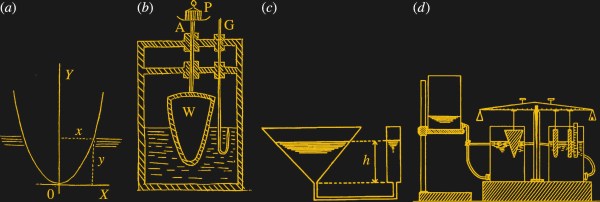
Computers come in many forms, depending on your definition. We’ve seen computers and computer gates built out of things as diverse as marbles, relays, and — of course — transistors. However, there are logic gate systems that use a property of moving fluids to form logic gates and a bistable element. That’s all the pieces you need to build a working computer.

It may sound far-fetched, but there have been general-purpose computers built using this technology. It is also used in specialized applications where fluids are already flowing, like shower heads, automotive transmissions, and in places where electronics are prone to misbehave. Many think the field will see a resurgence when we need to build logic at the molecular level for nanotech applications, too.

Basics

In its most basic form, a fluidic gate uses flow as a logic 1 and less flow to be a logic 0. Merging two streams together provides an OR gate. Using a supply stream that you can divert with a control stream provides a NOT function. Given enough inverters and OR gates, you can build everything else.

Continue reading “Computing Fluidly”

Cat9 And LASH Want To Change Your Linux Command Line

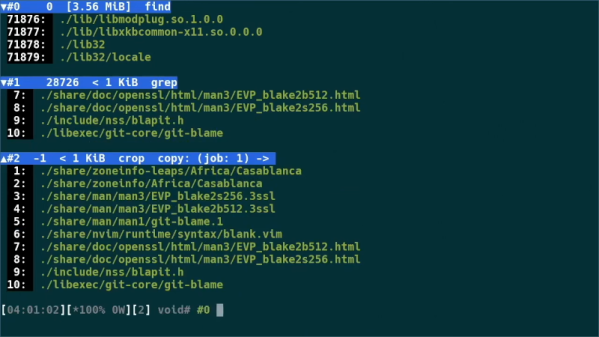
It is no secret that to be a true Linux power user you have to deal with the command line. Many people actually prefer to use the command line. However, the shell — the program that provides that command line — is mired in a back history which means it has to work with existing things no matter how modern it tries to be. However, a new set of projects wants to replace most of your user interface stack starting with the shell. At the top of that stack is Cat9 which is technically a shell, but not in the way you probably imagine a shell.

A traditional shell lets you run programs one at a time, feed them input, and observe their output. Sure, you can stash the output away for later use. You can run programs in the background or in parallel, but that requires special attention. In Cat9, everything is asynchronous and results stay around until you deliberately drop them. It is trivial to grab data from a previous command or, for example, to switch to a directory that was in use by an earlier task.

Continue reading “Cat9 And LASH Want To Change Your Linux Command Line”

3D Printing Gets Small In A Big Way

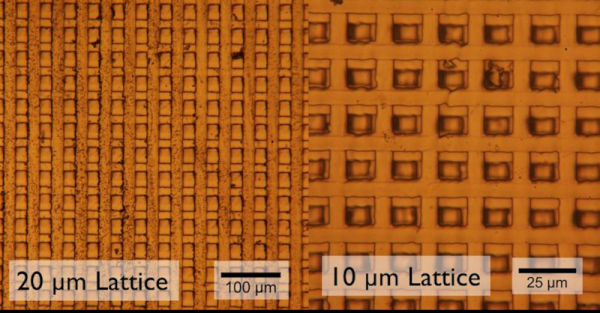
If you have a 3D printer in your workshop, you probably fret more about how to get bigger objects out of it. However, the University of Amsterdam has a new technique that allows for fast large-scale printing with sub-micron resolution. The technique is a hybrid of photolithography and stereolithography.

One of the problems with printing with fine detail is that print times become very long. However, the new technique claims to have “acceptable production time.” Apparently, bioprinting applications are very much of interest to the technology’s first licensee. There is talk of printing, for example, a kidney scaffold in several hours or a full-sized heart scaffold in less than a day.

Another example application is the production of a chromatography instrument with 200 micron channels and 20 micron restrictions. This requires a printer capable of very fine detail. There are also applications in semiconductors and mechanical metamaterials. Of course, we always take note of photolithography processes because we use them to make PC boards and even integrated circuits. A desktop printer that could do photolithography might open up new ideas for producing electronic circuitry.

If you want to play with photolithography today, [Ben Krasnow] has some advice. Of course, there are several ways to produce PC boards, even with a garden-variety 3D printer.