Linux Fu: Superpowers For Mere Mortals

You can hardly mention the sudo command without recalling the hilarious XKCD strip about making sandwiches. It does seem like sudo is the magic power to make a Linux system do what you want. The only problem is that those superpowers are not something to be taken lightly.

CC-BY-NC-2.5 by [XKCD]
If you are surfing the web, for example, you really don’t want to be root, because if someone naughty takes over your computer they could do a lot more harm with your root password. But still, there are times when you want to run certain commands that are normally root-only and don’t want to bother with a password. Luckily, sudo can handle that use case very easily.

Why?

As a simple example, suppose you like to shut your computer down at the end of the day. You run the shutdown command from the terminal but it doesn’t work because you aren’t root. You then have to do it again with sudo and if you haven’t logged in lately, provide your password. Ugh.
Continue reading “Linux Fu: Superpowers For Mere Mortals” →

Quiet Wings, With Shape Memory Alloy

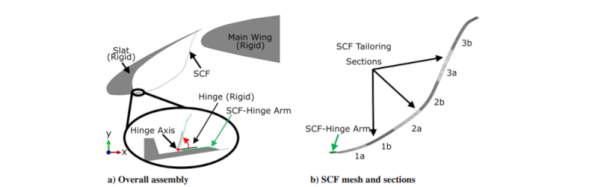
It’s a fact of operating an aircraft, that the make noise. If you’re an aviator you might want to quiet your craft to avoid annoying people nearby, or you might even want to operate in stealth mode. It turns out that there are different sources of noise on a plane depending upon the phase of flight. A NASA study found that when landing, a gap between the wing and leading edge slats causes air to cavitate causing unnecessary noise. Blocking that hole would allow for quieter landings, but there was no material suitable for both normal flight and the landing. That is, until Texas A&M researchers devised a way to use a shape memory alloy to do it.

In addition to two different shape memory alloy configurations, the study looks at a more conventional fiberglass composite, although this would only work for a limited number of wing configurations.

Continue reading “Quiet Wings, With Shape Memory Alloy” →

Solder Bridges Aid Desoldering

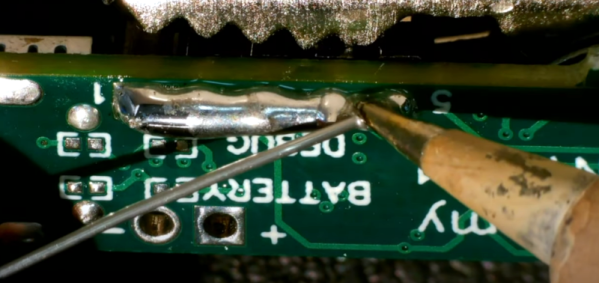
As our own Elliot Williams laid out, many people think that soldering is a key skill for electronics, but we don’t as often think about desoldering. Even if you are perfect in your technique, there’s always the chance you’ll put in a bad part or have a part fail later and it will need replacement. [Robert] has a short video showing his method for removing through-hole components and you can see it below.

This isn’t the first time we’ve seen it, of course. In fact, it is very much like using hot air, although it doesn’t require hot air, just extra solder and a regular iron. Of course, if we knew that connector was bad, we’d have been tempted to cut each pin apart and remove them one at a time. Heating a joint and then slamming your hand on the bench can work wonders.

We always think desoldering pumps are a good idea, but the electric ones tend to be anemic. The ones with the springs are usually better, but still have limitations. In the end, we’ll stick with using hot air, but if all you have is an iron, this method is worth checking out. You might also be interested in the needle method.

Continue reading “Solder Bridges Aid Desoldering” →

What Kind Of GPU Are You?

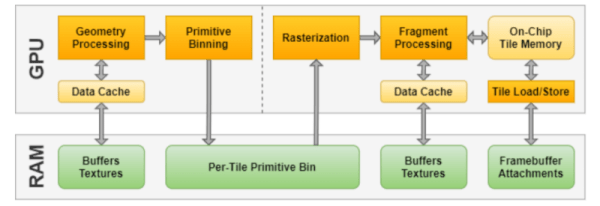
In the old days, big computers often had some form of external array processor. The idea is you could load a bunch of numbers into the processor and then do some math operations on all of the numbers in parallel. These days, you are more likely to turn to your graphics card for number crunching support. You’ll usually use some library to help you do that, but things are always better when you understand what’s going on under the hood. That’s why we enjoyed [RasterGrid’s] post on GPU architecture types.

If you can tell the difference between IMR (immediate mode) and TBR (tile-based) rendering this might not be the post for you. But while we knew the terms, we found a lot of interesting detail including some graphics and pseudo code that clarified the key differences.

Continue reading “What Kind Of GPU Are You?” →

Who Flew Across The Atlantic First? The Airborne Boats Of 1919

Aviation history is a bit strange. People tend to remember some firsts but not others and — sometimes — not even firsts. For example, everyone knows Amelia Earhart attempted to be the first woman to fly around the globe. She failed, but do you know who succeeded? It was Jerrie Mock. How about the first person to do it? Wiley Post, a name largely forgotten by the public. Charles Lindbergh is another great example. He was the first person to fly across the Atlantic, right? Not exactly. The story of the real first transatlantic flight is one of aviation hacking by the United States Navy.

Continue reading “Who Flew Across The Atlantic First? The Airborne Boats Of 1919” →

Miller (Effect) Time

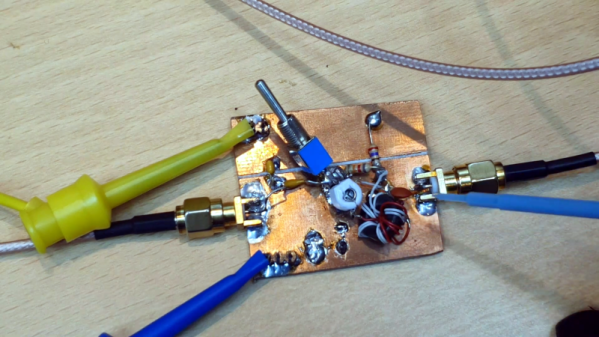
While the Miller effect might sound like fun, it is actually the effect of parasitic capacitance in amplifiers. What do you do about it? Watch the video below the break from [All Electronics] and find out. We like how the test circuit it uses has a switch to put the mitigation circuitry in and out of the test for comparison purposes.

Actually, the Miller effect can refer to any impedance but in practice that is most often parasitic capacitance because of the construction used for tubes and transistors. The sometimes tiny capacitance gets multiplied by the inverting gain of the stage and increases the amplifier’s input impedance. This, in turn, reduces the bandwidth of the stage.

Continue reading “Miller (Effect) Time” →

Injection Molds From Your 3D Printer

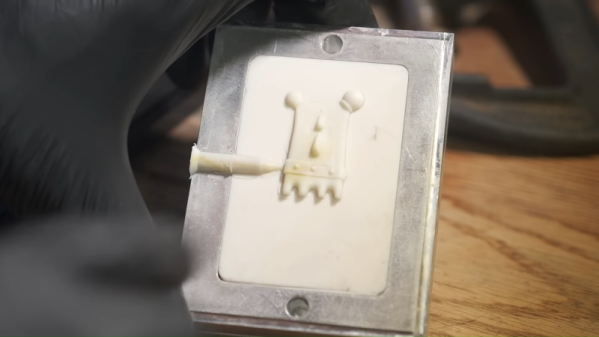
Last time we checked in with [CrafsMan] he had bought a benchtop injection molding machine. This time, he shows off how to 3D print molds. If you have ever had to spend to make tooling for injection molding, you’ll appreciate being able to make molds relatively inexpensively.

To test his workflow, [CrafsMan] created a little 3D figurine and brought it into TinkerCad. From there he created a mold and used Lychee Slicer to print it using resin.

Continue reading “Injection Molds From Your 3D Printer” →