What Rhymes With Spice And Simulates Huge Circuits?

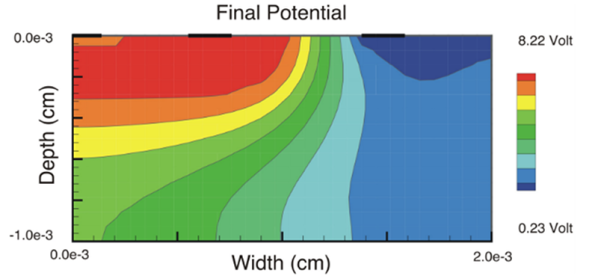
Most of us have computers on our desk that would have been considered supercomputers not long ago. We always wonder how many of them get any actual workout other than decoding video. If you want to simulate circuits you may very well start chewing up significant CPU time, so you might consider Xyce, an open source high-performance analog circuit simulator from Sandia National Labs. As you’d expect from a giant government lab it is able to support large scale parallel computing, but will also work on common desktop systems. On Linux, it will do what they call “small-scale parallelism.” In addition, it can deal with simulations of things as diverse as neural networks and power grids.

The code is open source, but oddly you do have to register to download it. Xyce has been around for a bit, but version 7.0 just arrived in April. Many of the changes are to improve compatibility with other Spice programs, notably HSpice.

Continue reading “What Rhymes With Spice And Simulates Huge Circuits?”
Home Assistant Get Fingerprint Scanning

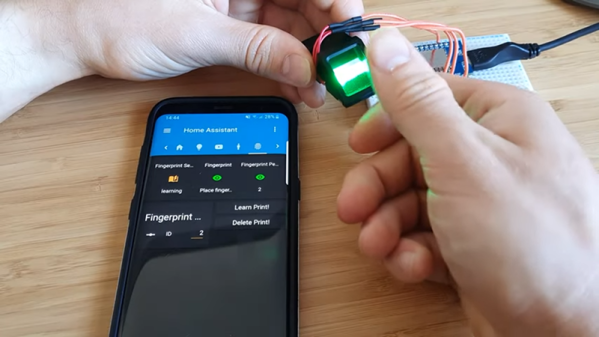
Biometrics — like using your fingerprint as a password — is certainly convenient and are pretty commonplace on phones and laptops these days. While their overall security could be a problem, they certainly fit the bill to keep casual intruders out of your system. [Lewis Barclay] had some sensors gathering dust and decided to interface them to his Home Assistant setup using an ESP chip and MQTT.

You can see the device working in the video below. The code is on GitHub, and the only thing we worried about was the overall security. Of course, the security of fingerprint scanners is debatable since you hear stories about people lifting fingerprints with tape and glue, but even beyond that, if you were on the network, it would seem like you could sniff and fake fingerprint messages via MQTT. Depending on your security goals, that might not be a big deal and, of course, that assumes someone could compromise your network to start with.

Continue reading “Home Assistant Get Fingerprint Scanning”

Ewon Is An Expressive Robot With Google Assistant

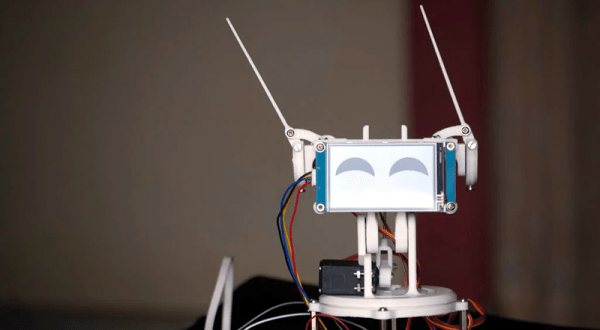
Had too much self-quarantine? [Sharathnaik] had, so he decided to build a robot companion named Ewon. Using a Raspberry Pi, Ewon isn’t a robot that moves around, but rather an expressive Google assistant. Using some servo-driven ears and a display, Ewon reacts to you based on keywords you use in your queries. For example, it might perk up and smile at the mention of ice cream. Or look unhappy if you mention sadness.

The project is simple because of the Google Assistant API. However, we liked the 3D printed body and some of the additional features the robot adds.

Continue reading “Ewon Is An Expressive Robot With Google Assistant”

Boot Your Pi Over USB

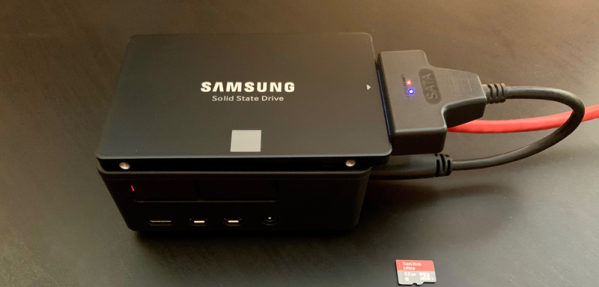
Historically, booting a Raspberry Pi required an SD card. However, if you follow [tynick’s] instructions, you can get a Pi 4 to boot from the USB port. Combine it with a small solid state disk drive, and you’ll get great performance, according to his post.

The caveat is this depends on a beta bootloader and, of course, you’ll still have to boot from an SD card at least once to load that bootloader. If you were deploying something serious, you’d probably want to make sure the bootloader is suitable for your needs.

Continue reading “Boot Your Pi Over USB”

Secret Knock Unlocks Door

Watch any movie about the years of prohibition, and you’ll probably see character gain admittance to a speakeasy by using a secret knock on the door. In the old movies, a little sliding door would open so the doorman could check you out and let you in. With [IsmailSan’s] electronic lock, the secret knock automatically unlocks the door. You can see a video of how it works, below.

(Ed Note: Grrr…GitHub repo got pulled between writing and publication. Go check out the in-links in the bottom paragraph if you’re interested in knock-detectors.)

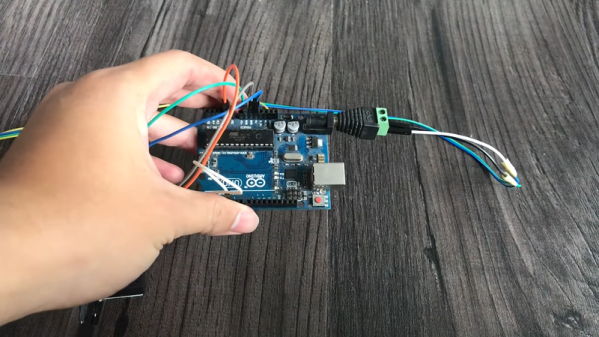
The device uses a piezoelectric speaker to detect the knocking. A speaker is a transducer and like many transducers, it will work — to some extent — in either direction. A servo motor manages the deadbolt. An Arduino runs the whole thing.

Continue reading “Secret Knock Unlocks Door”

Hacking The Road: Roundabouts

If you are from the US, you might be surprised at how prevalent roundabouts are in most of the world. Outside of Carmel, Indiana which has 125 roundabouts, these are pretty unusual in the United States though have been gaining in popularity over the past decade. It turns out, that while a modern roundabout is safer and more efficient than other intersection types, roundabouts got a bad rap early on and so the typical US driver still has a lot of anxiety when approaching one.

Prior to 1966, traffic circles were a spotty thing. In some cases, they were just big circular junctions. In others, the right-of-way rules were difficult to figure out or there were traffic lights and stop signs that did not lead to a better or safer driving experience.

Enter Frank Blackmore. In the UK, he introduced the “Priority Rule” which — simply — mandates that traffic entering a circle must give way to traffic already in the circle. Blackmore worked out that this method increases traffic flow by 10%. Although this kind of roundabout became law in the UK in 1966, the US was slow to adopt, primarily due to negative public opinion. In 2016, there were about 4,800 modern roundabouts in the U.S while France and the UK have roughly 55,000 combined.

So what are the virtues of the modern rounabout, and where did it come from? Let’s take a look.

Continue reading “Hacking The Road: Roundabouts”

Finding RF Cable Impedance

At DC and low frequency, we can pretend wires are perfect conductors. At radio frequencies, though, there are many effects that you need to take into account for wires and cables. One of these is characteristic impedance. If you have a marked cable, you can look it up on the Internet, of course. But what if you don’t know what kind of wire it is? With help from [The Offset Volt], you can measure it as he shows in the video below.

This is one of those things that used to take exotic test equipment like an LCR bridge, but these days meters that measure inductance and capacitance are commonplace. The trick is simple: measure the capacitance and then short one end of the cable and measure the inductance.

Continue reading “Finding RF Cable Impedance”