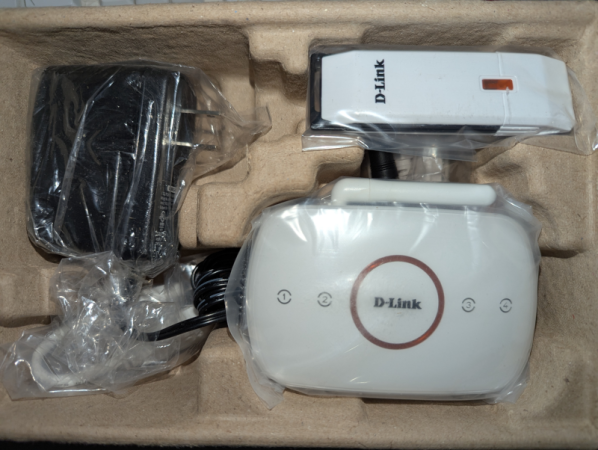
Wireless USB Autopsy

It might seem strange to people like us, but normal people hate wires. Really hate wires. A lot. So it makes sense that with so many wireless technologies, there should be a way to do USB over wireless. There is, but it really hasn’t caught on outside of a few small pockets. [Cameron Kaiser] wants to share why he thinks the technology never went anywhere.

Wireless USB makes sense. We have high-speed wireless networking. Bluetooth doesn’t handle that kind of speed, but forms a workable wireless network. In the background, of course, would be competing standards.

Texas Instruments and Intel wanted to use multiband orthogonal frequency-division multiplexing (MB-OFDM) to carry data using a large number of subcarriers. Motorola (later Freescale), HP, and others were backing the competing direct sequence ultra-wideband or DS-UWB. Attempts to come up with a common system degenerated.
Continue reading “Wireless USB Autopsy”

Tracking The Sun? Nah!

If you want solar power, you usually have to make a choice. You can put a solar panel in a fixed location and accept that it will only put out the maximum when the sun is properly positioned. Or, you can make the panels move to track the sun.

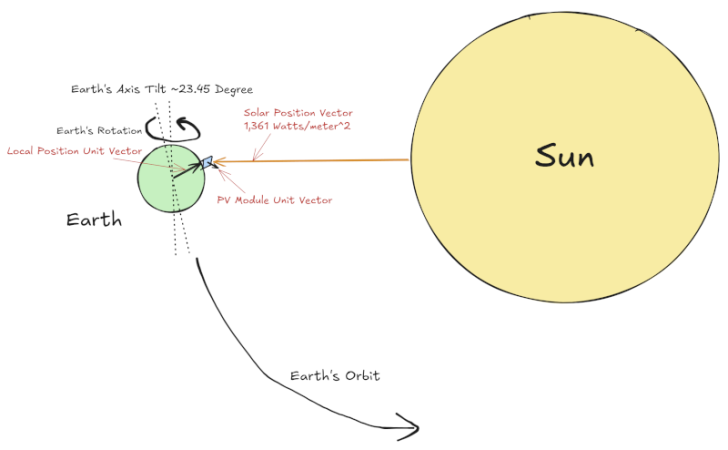
While this isn’t difficult, it does add cost and complexity, plus mechanical systems usually need more maintenance. According to [Xavier Derdenback], now that solar panels are cheaper than ever, it is a waste of money to make a tracking array. Instead, you can build a system that looks to the east and the west. The math says it is more cost effective.

The idea is simple. If you have panels facing each direction, then one side will do better than the other side in the morning. The post points out that a tracking setup, of course, will produce more power. That’s not the argument. However, for a given power output, the east-west solution has lower installation costs and uses less land.

Continue reading “Tracking The Sun? Nah!”

DIY Penicillin

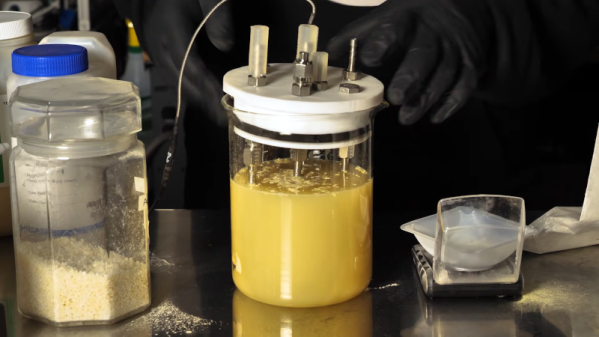
We don’t often consider using do-it-yourself projects as a hedge against the apocalypse. But [The Thought Emporium] thinks we should know how to make penicillin just in case. We aren’t so sure, but we do think it is a cool science experiment, and you can learn how to replicate it in the video below.

If you want to skip the history lesson, you need to fast-forward to about the six-minute mark. According to the video, we are surrounded by mold that can create anti-bacterial compounds. However, in this case, he starts with a special strain of mold made to produce lots of antibiotics.

Continue reading “DIY Penicillin”

Five Oddest Op Amp Applications

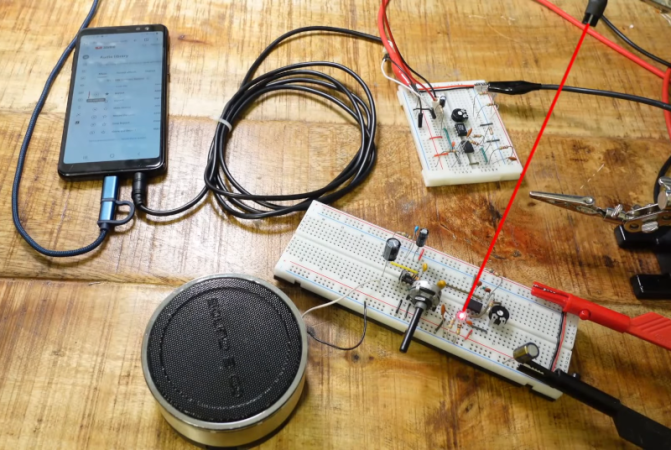
You think of op amps as amplifiers because, no kidding, it is right in the name. But just like some people say, “you could do that with a 555,” [Doctor Volt] might say, “you can do that with an op amp.” In a recent video, you can see below, he looks at simulations and breadboards for five applications that aren’t traditional amplifiers.

Of course, you can split hairs. A comparator is sort of an amplifier with some very specific parameters, but it isn’t an amplifier in the classic sense.

Continue reading “Five Oddest Op Amp Applications”

AI Brings Play-by-Play Commentary To Pong

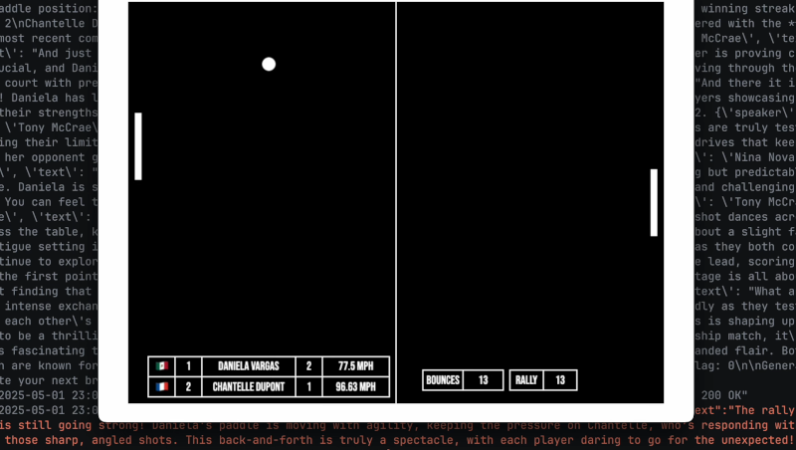
While most of us won’t ever play Wimbledon, we can play Pong. But it isn’t the same without the thrill of the sportscaster’s commentary during the game. Thanks to [Parth Parikh] and an LLM, you can now watch Pong matches with commentary during the game. You can see the very cool result in the video below — the game itself starts around the 2:50 mark. Sadly, you don’t get to play. It seems like it wouldn’t be that hard to wire yourself in with a little programming.

The game features multiple AI players and two announcers. There are 15 years of tournaments, including four majors, for a total of 60 events. In the 16th year, the two top players face off in the World Championship Final.

There are several interesting techniques here. For one, each action is logged as an event that generates metrics and is prioritized. If an important game event occurs, commentary pauses to announce that event and then picks back up where it left off.

We really want to see a one- or two-player human version of this. Please tell us if you take on that challenge. Even if you don’t write it, maybe the AI can write it for you.

Continue reading “AI Brings Play-by-Play Commentary To Pong”

Layout A PCB With Tscircuit

Most of us learned to design circuits with schematics. But if you get to a certain level of complexity, schematics are a pain. Modern designers — especially for digital circuits — prefer to use some kind of hardware description language.

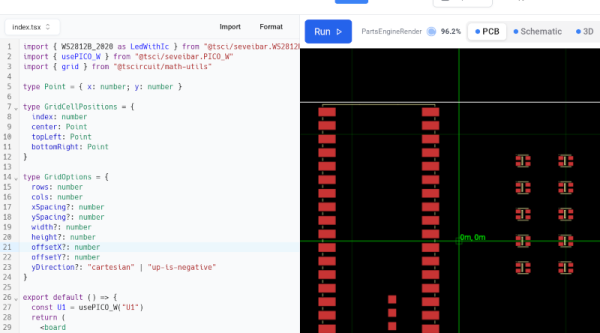
There are a few options to do similar things with PCB layout, including tscircuit. There’s a walk-through for using it to create an LED matrix and you can even try it out online, if you like. If you’re more of a visual learner, there’s also an introductory video you can watch below.

Continue reading “Layout A PCB With Tscircuit”

The DIY 1982 Picture Phone

If you’ve only been around for the Internet age, you may not realize that Hackaday is the successor of electronics magazines. In their heyday, magazines like Popular Electronics, Radio Electronics, and Elementary Electronics brought us projects to build. Hacks, if you will. Just like Hackaday, not all readers are at the same skill level. So you’d see some hat with a blinking light on it, followed by some super-advanced project like a TV typewriter or a computer. Or a picture phone.

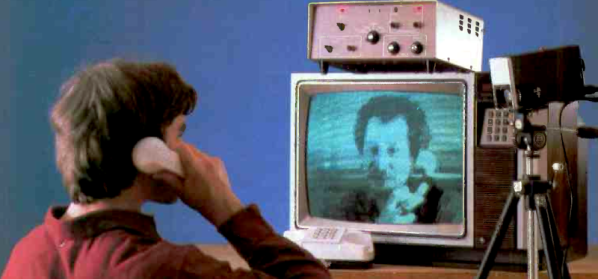
In 1982, Radio Electronics, a major magazine of the day, showed plans for building a picture phone. All you needed was a closed-circuit TV camera, a TV, a telephone, and about two shoeboxes crammed full of parts.

Like many picture phones of its day, it was stretching the definition a little. It actually used ham radio-style slow scan TV (SSTV) to send a frame of video about once every eight seconds. That’s not backwards. The frame rate was 0.125 Hz. And while the resulting 128 x 256 image would seem crude today, this was amazing high tech for 1982.

Continue reading “The DIY 1982 Picture Phone”