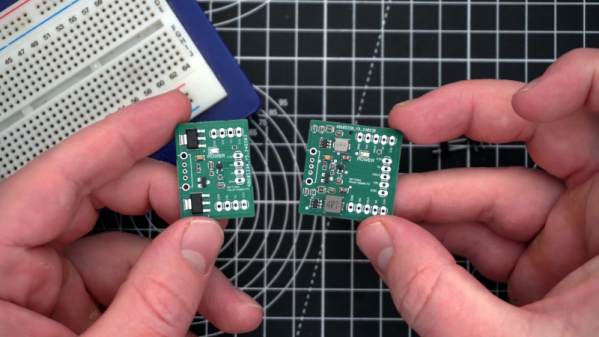
We’ve often heard you should do everything twice. The first time is to learn what you need to do, and the second time is to do it right. We bet [Ian Carey] would agree after taking his old linear power supply PCB and changing it to a switching regulator design. You can see more about the project in the video below.
The first power-up revealed a problem with the 3.3V output. We’ve often thought it is harder to troubleshoot a new design than it is to repair something that is known to have worked at one time.
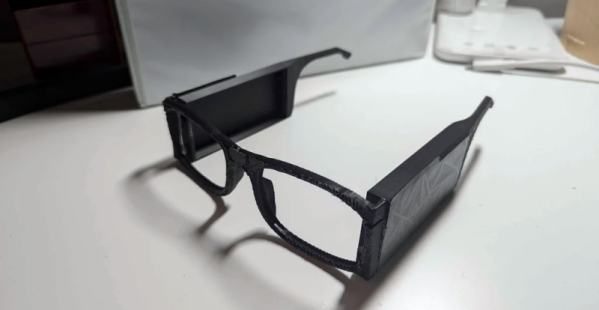
You normally think of smart glasses as something you wear as either an accessory or, if you need a little assistance, with corrective lenses. But [akhilnagori] has a different kind of smart eyewear. These glasses scan and read text in the user’s ear.
This project was inspired by a blind child who enjoyed listening to stories but could not read beyond a few braille books. The glasses perform the reading using a Raspberry Pi Zero 2 W and a machine learning algorithm.
If you get an inexpensive diode laser cutter, you might have been disappointed to find it won’t work well with transparent acrylic. The material just passes most of the light at that wavelength, so there’s not much you can do with it. So how did [Rich] make a good-looking sign using a cheap laser? He used a simple paint and mask technique that will work with nearly any clear material, and it produces great-looking results, as you can see in the video below.
[Rich] starts with a piece of Acrylic covered with paper and removes the paper to form a mask. Of course, even a relatively anemic laser can slice through the paper covering with no trouble at all. He also cuts an outline, which requires a laser to cut the acrylic. However, you could easily apply this to a rectangular hand-cut blank. Also, most diode lasers can cut thin acrylic, but it doesn’t always come out as cleanly as you’d like.
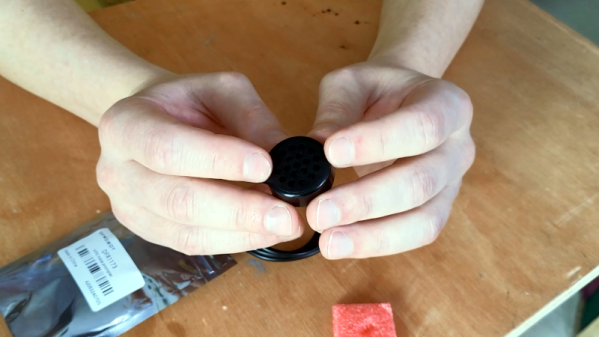
You want to add voice, music, or sound effects to your project. What do you do? Sure, it is easy enough to plug a Raspberry Pi or some other tiny computer, but that’s not always desirable from a power, space, or cost point of view. [Mellow_Labs] shows a module that makes it simple to add sound to any project. The little board is just big enough to house a speaker and doesn’t cost much. Check it out in the video below.
The device allows you to preload tracks as MP3 files. There are two ways to control it: via a serial port, or using a single pin that can accept commands like you might expect from a MP3 player, like play and next track.
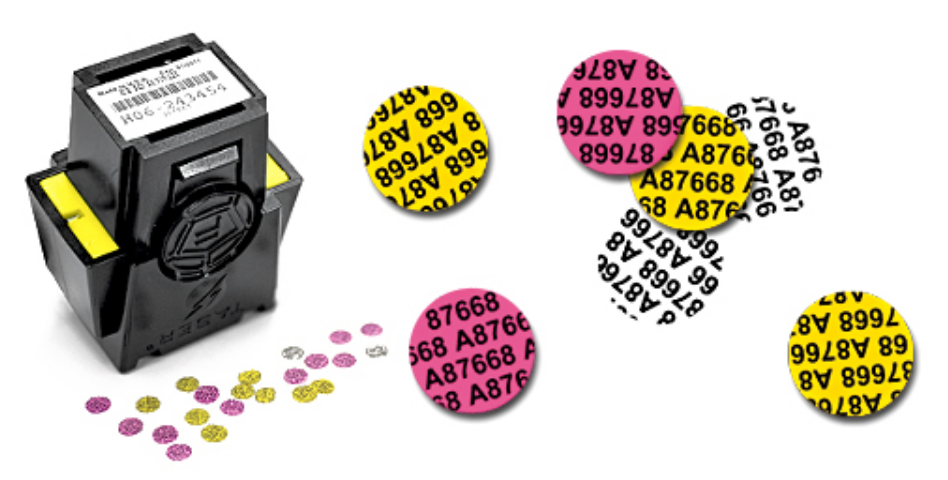
One of the standard tropes in science fiction is some kind of device that can render someone unconscious — you know, like a phaser set to stun. We can imagine times when being aggressively knocked out would lead to some grave consequences, but — we admit — it is probably better than getting shot. However, we don’t really have any reliable technology to do that today. However, if you’ve passed a modern-day policeman, you’ve probably noticed the Taser on their belt. While this sounds like a phaser, it really isn’t anything like it. It is essentially a stun gun with a long reach thanks to a wire with a dart on the end that shoots out of the gun-like device and shocks the target at a distance. Civilian Tasers have a 15-foot long wire, while law enforcement can get longer wires. But did you know that modern Tasers also fire confetti?
A Taser cartridge and some AFIDs
It sounds crazy, and it isn’t celebratory. The company that makes the Taser — formerly, the Taser company but now Axon — added the feature because of a common complaint law enforcement had with the device. Interestingly, many things that might be used in comitting a crime are well-understood. Ballistics can often identify that a bullet did or did not come from a particular weapon, for example. Blood and DNA on a scene can provide important clues. Even typewriters and computer printers can be identified by variations in their printing. But if you fire a taser, there’s generally little evidence left behind.
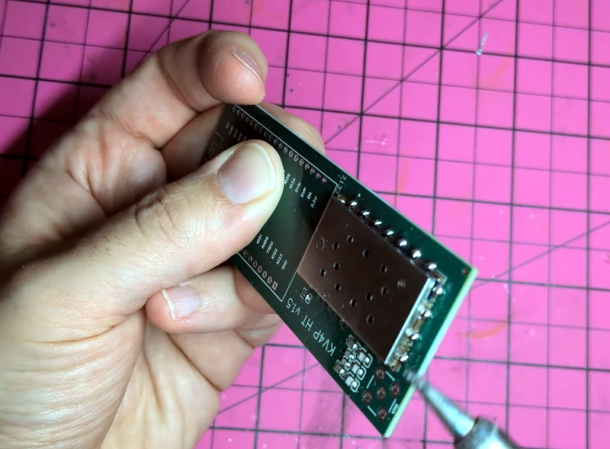
A lot of hams like to carry a VHF radio. Of course, nearly everyone wants to carry a phone. Now, thanks to the kv4p HT, you don’t have to carry both. The open-source device connects to your Android smartphone and turns it into a radio transceiver. You can build it yourself for about $35. Check out the video below.
The device uses an ESP32 and only transmits one watt, but it has lots of features like APRS and scanning.
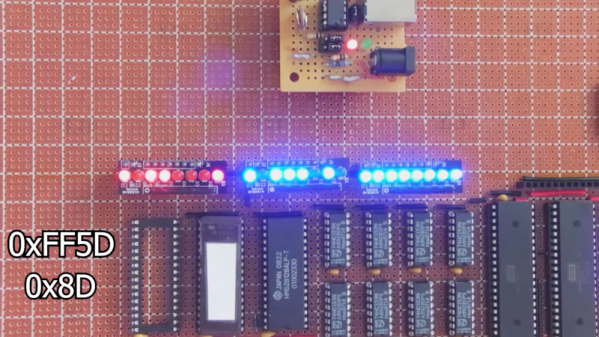
[DrMattRegan] has started a new video series to show his latest recreation of a Commodore VIC-20. The core of the machine is [Ben Eater’s] breadboard 6502 design. To make it a VIC-20, though, you need a “VIC chip” which, of course, is no longer readily available. Many people, of course, use FPGAs or other programmable logic to fake VIC chips. But [Matt] will build his with discrete TTL logic. You can see the first installment of the series below.