Pneumatic Zombie Will Blow Away Trick-or-Treaters

What are you doing for Halloween this year? Just gonna set the candy bowl out on the porch and call it good? That’s a risky one, ’cause if one group of mischievous preteens cleans you out, you might get TP’d by the next one. Best to keep Halloween a tad on the scary side and keep those ghouls in line. Candy is a privilege, not a right.
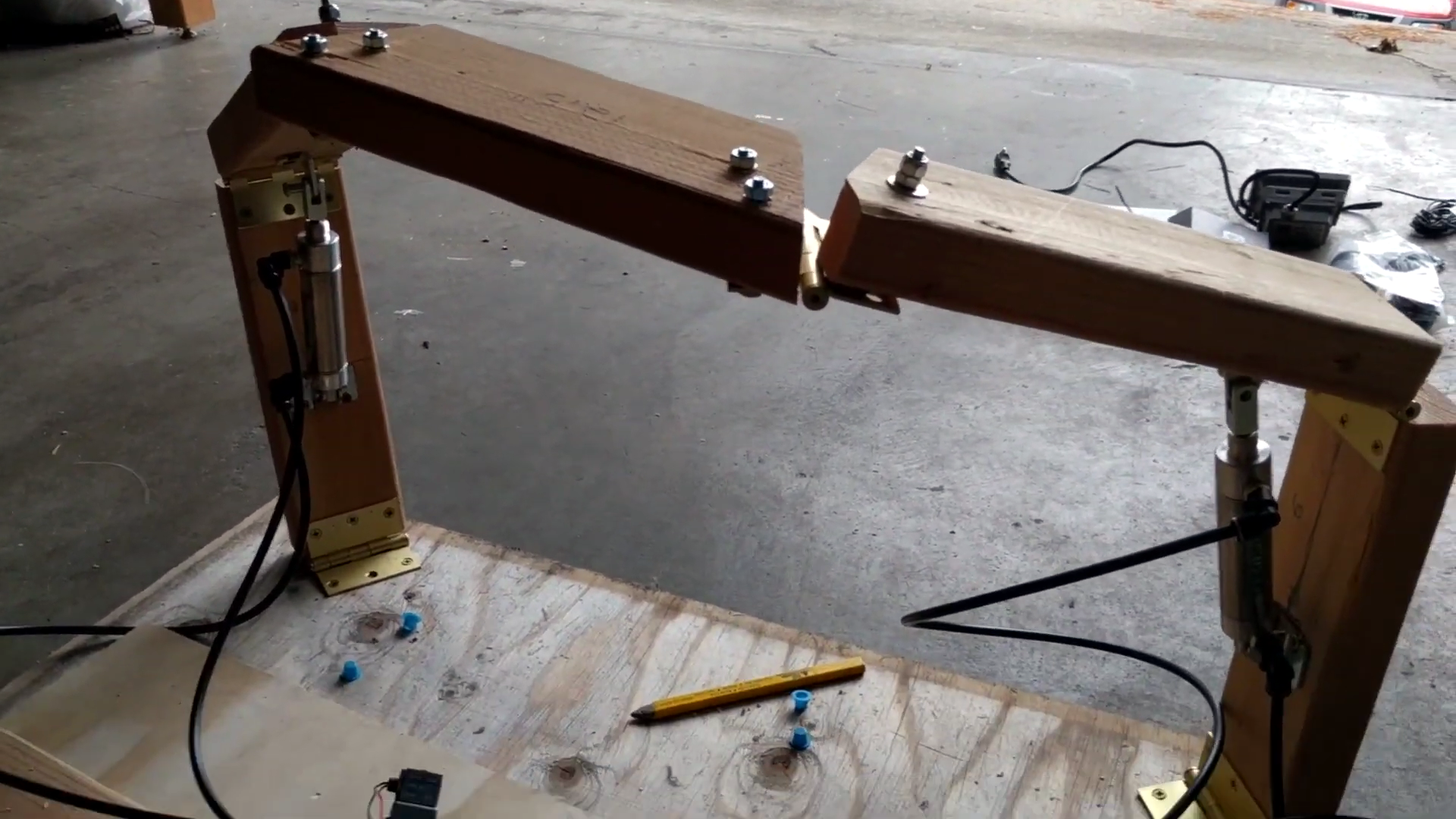
Halloween is a big deal in [trimbandit]’s little burg, and he builds a new attraction for the front yard every year. This year, it’s the dawn of the dead — a fresh zombie rising jerkily from the grave to say hello, world. He moves left, he moves right, he writhes and wrestles, wedged between worlds.

His life force comes from a pneumatic system designed for props. The cylinders connect to a controller with built-in relays that makes programming frightfully easy. Then it was just a matter of adding a foam head, skinning it with a scary mask, and fitting him for a suit from Goodwill. Drag yourself and your candy bucket past the break for a fun-size demo video and a couple of bonus goodies.

We bet [trimbandit] is already wondering how to step up his game for next year. He seems to have conquered the ground, so why not take to the skies for fright and delight?

Continue reading “Pneumatic Zombie Will Blow Away Trick-or-Treaters”

Maker Spirit Alive And Well At The Philly Maker Faire

For many of us, it’s difficult to imagine a world without Maker Faire. The flagship events in California and New York have served as a celebration of the creative spirit for a decade, giving hackers and makers a rare chance to show off their creations to a live audience numbering into the hundreds of thousands. It’s hard to overstate the energy and excitement of these events; for anyone who had the opportunity to attend one in person, it’s an experience not soon forgotten.

Unfortunately, a future without Maker Faire seemed a very real possibility just a few months ago. In May we first heard the events were struggling financially, and by June, we were saddened to learn that organizer Maker Media would officially be halting operations. It wasn’t immediately clear what would happen to the flagship Maker Faires, and when Maker Media reluctantly admitted that production of the New York Faire was officially “paused”, it seemed we finally had our answer.

But as the recent Philadelphia Maker Faire proved, the maker movement won’t give up without a fight. While technically an independent “Mini” Faire, it exemplifies everything that made the flagship events so special and attracted an impressive number of visitors. With the New York event left in limbo, the Philadelphia Faire is now arguably the largest event of its type on the East Coast, and has the potential for explosive growth over the next few years. There’s now a viable option for makers of the Northeast who might have thought their days of exhibiting at a proper Maker Faire were over.

We’ll be bringing you detailed coverage of some of the incredible projects that were on display at the Philadelphia Maker Faire over the coming days, but in the meantime, let’s take a quick look at some of the highlights from this very promising event.

Continue reading “Maker Spirit Alive And Well At The Philly Maker Faire”

Making A Robot Cleaner Even Smarter

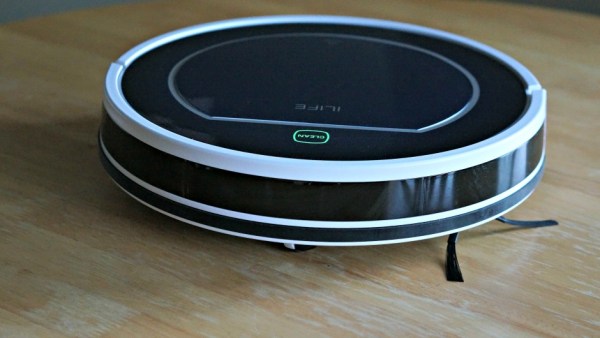
Some electric cleaners are effective and some hardly even seem to make a difference. The ILIFE V7s may be a robot cleaner, but even with its cleaning modes and anti-collision system, it still requires IR signals to complete any tasks. Tired of having to be physically in the same place as his robot cleaner, [pimuzzo] decided to take matters into his own hands and build a RESTful remote control to send IR signals from afar.

The program uses the ESP8266WebServer and IRremoteESP8266 libraries for handling HTTP requests and sending and receiving infrared signals. The remote also respond to Actions on Google for controlling the robot over a Google Assistant.

The IR signals are a bit funky – as one user highlighted, finding the IR protocol is a nontrivial task that can be accomplished by recording the IR signals from the original remote with a IR receiver and matching the marks, spaces, and carrier frequency with those of known protocol codes. [Oitzu] was able to match the timing to the NEC 32 bit protocol and find the exact codes on an oscilloscope, which simplified the translation of the codes for the remote.

Sometimes when life gives you a robot cleaner, it’s your job to make it smarter.

Humanoid Robot Has Joints That Inspire

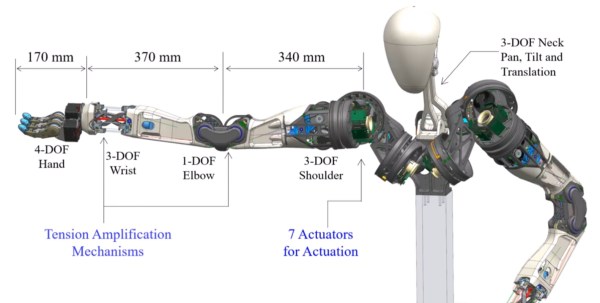
One of the challenges with humanoid robots, besides keeping them upright, is finding compact combinations of actuators and joint mechanisms that allow for good range of smooth motion while still having good strength. To achieve that researchers from the IRIM Lab at Korea University of Technology and Education developed the LIMS2-AMBIDEX robotic humanoid upper body that uses a combination of brushless motors, pulleys and some very interesting joint mechanisms. (Video, embedded below.)

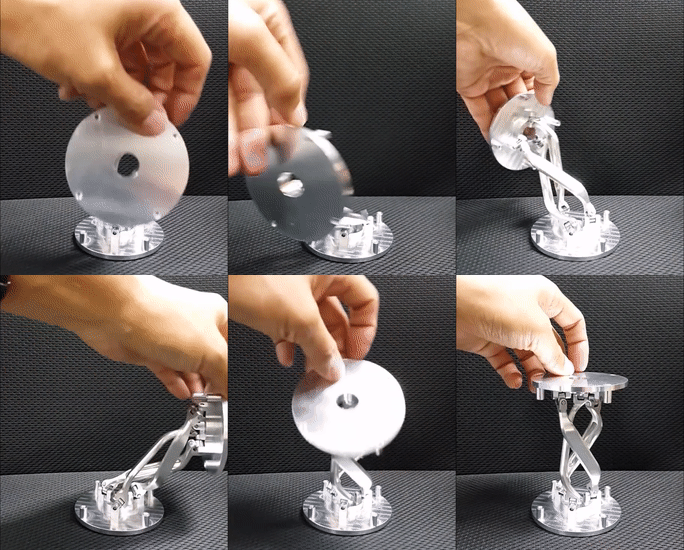
The wrist mechanism. Anyone willing to tackle a 3D printed version?

From shoulder to fingers, each arm has seven degrees of freedom which allows the robot to achieve some spectacularly smooth and realistic upper body motion. Except for the wrist rotation actuator, all the actuators are housed in the shoulders, and motion is transferred to the required joint through an array of cables and pulleys. This keeps the arm light and its inertia low, allowing the arms to move rapidly without breaking anything or toppling the entire robot.

The wrist and elbow mechanisms are especially interesting. The wrist emulates rolling contact between two spheres with only revolute joints. It also allows a drive shaft to pass down the centre of the mechanism and transfer rotating motion from one end to the other. The elbow is a rolling double jointed affair that allows true 180 degrees of rotation.

We have no idea why this took two years to end up in our YouTube feed, but we’re sure glad it finally did. Check out some of the demo videos after the break. Continue reading “Humanoid Robot Has Joints That Inspire”

MIT Mini Cheetah Made And Improved In China

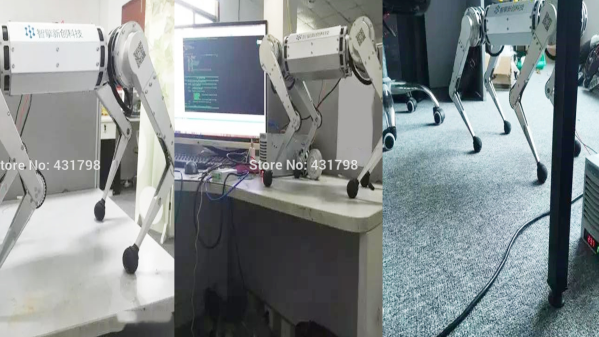
We nearly passed over this tip from [xoxu] which was just a few links to some AliExpress pages. However, when we dug a bit into the pages we found something pretty surprising. Somewhere out there in the wild we…east of China there’s a company not only reverse engineering the Mini Cheetah, but improving it too.

We cover a lot of Mini Cheetah projects; it’s a small robot that can do a back-flip after all. When compared to the servo quadruped of not so many years ago it’s definitely exciting magic. Many of the projects go into detail about the control boards and motor modifications required to build a Mini Cheetah of your own. So we were especially interested to discover that this AliExpress seller has gone through the trouble of not just reverse engineering the design, but also improving on it. Claiming their motors are thinner and more dust resistant than what they’ve seen from MIT.

To be honest, we’re not sure what we’re looking at. It’s kind of cool that we live in a world where a video of a research project and some papers can turn into a $12k robot you can buy right now. Let us know what you think after the break.

Name A Hacker Camp

Many of us look forward to visiting a summer hacker camp, as an opportunity to immerse ourselves in some of the coolest and most stimulating stuff that comes out of our community. The names trip off the tongue, ToorCamp, CCCamp, EMFcamp, BornHack, and more.

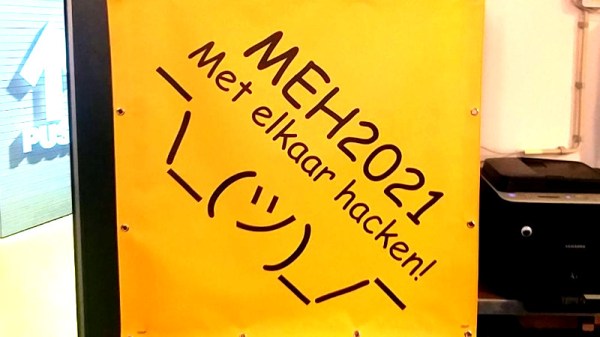
There’s one major event that doesn’t trip off the tongue in the same way though, because though it’s one of the oldest in our calendar it doesn’t have the same name every time. Since the end of the 1980s the Netherlands has seen a sequence of  hacker camps with three letter names such as HAR, OHM, and SHA. Every four years these events delight and amaze us, and every four years they need a new name. Do you think you can help them pick one for 2021?

There are a few ground rules to observe, for the would-be coiner of a new moniker. The tradition is of a three-letter acronym, usually one with a meaning somewhere in technology, and so far always containing the letter H somewhere to stand for “Hack” in some form. The idea is that it should somehow encapsulate the spirit of hacker camp culture rather than simply be three words containing “Hack”. HAR for example was Hacking At Random, OHM was Observe Hack Make, and SHA was Still Hacking Anyway. So if you can dream up a TLA within those parameters, there is a group of hackers in the Netherlands who might like to hear from you. We suspect that HAD is already taken.

If you want to know more about the Netherlands camps, read our review of SHA, in 2017.

Header image: [Renze]. “Met Elkaar Hacken” means something close to “Hack together”.

Storm Cloud Lamp Brings The Weather Inside

The humble lamp is a common build for a hacker looking to express themselves creatively. Often, nature can serve as an inspiration, as was the case for [Michael Pick]’s Storm Cloud. (Video, embedded below.)

Electronically, the build is straightforward, consisting of an Arduino Uno, an MP3 shield, and a string of WS2801 LEDs. These are driven slightly differently than the more-common WS2812B type, but Adafruit libraries make it easy for even the beginner. There’s also an RF keyfob fitted for remote control of the device, and a voice synth that serves as a user interface.

The video also covers the construction of the body of the lamp. Cardboard forms are created, then covered in tape to create a rough 3D ovaloid shape. This mold is then fiberglassed to create two shells, which are later joined together with bolts. This allows the LEDs and electronics to be neatly mounted inside. Spray adhesive is then used to affix what appears to be cotton wool or polyfill stuffing to the outside to create the cloud effect.

The final result is rather aesthetically pleasing. There’s the usual soft-glowing rainbows as you’d expect, but the real highlight is storm mode, which causes flickers of lighting to scatter across the surface of the cloud. The accompanying sound effects from the MP3 shield help add to the drama.

We’ve seen other takes on a cloud lamp before, too. Video after the break.

Continue reading “Storm Cloud Lamp Brings The Weather Inside”