Google Unveils API To PowerMeter

Google’s tentacles continue to wrap around every portion of our lives with the addition of an API for their PowerMeter software. The PowerMeter tool works with smart electricity meters to monitor and display power usage in the home. This will allow manufacturers (and hackers alike) to design new devices with the Google interface in mind.

We’ve got an old-fashioned power meter with a spinning dial and no blinking LED. This means we can’t monitor that blink to add our own PowerMeter interface. But if you do have an easy way to grab data from your meter you can design a home system that takes full advantage of Google’s tools.

Ok, who’s going to be the first to have their Google PowerMeter-compatible hack featured on Hackaday?

[Thanks Juan]

Using Mindflex To Shock The Heck Out Of People

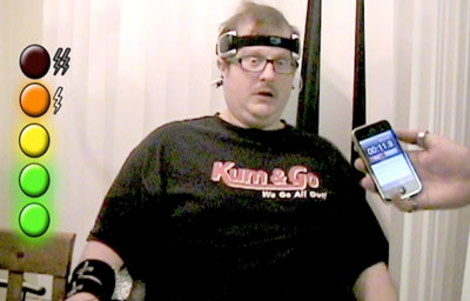
We love to see eloquent hacks but this isn’t one of them. [Aaron] and his fellow sadists are using a Mindflex game with an electric shocker. If your brain is idle you’ll be fine, but too much activity inside the noggin and you’re in for nasty shock to the arm. Take a look at the video (bleeped but probably NSFW) after the break.

We’ve seen the Mindflex before, they’re using its interface in the same ways we’ve seen the Force Trainer used, by tapping into the LEDs. The shocks are provided by a Qkit, so hopefully there’s enough engineering behind it to keep the ‘contestant’ safe.

Hey, isn’t that the Tron Guy?

Continue reading “Using Mindflex To Shock The Heck Out Of People” →

Home Cinema 3D (or Just Tick Off Theatergoers)

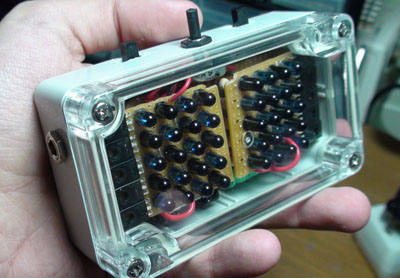
After a visit to the local theater and discovering the use of IR 3D glasses (for films such as Avatar), the team over at Furrtek wondered how they worked, and more importantly, how the glasses could be manipulated to tick off audience members. While the original intentions seem a bit childish, they did mention that their final setup could also be used for a home cinema with IR 3D glasses.

Onto the good stuff: the glasses receive IR light pulses timed with the movie to black out the appropriate eye with the appropriate frame and producing a 3D effect. With the use of IR Investigator the team grabbed said timings; it was then simply a matter of building their own IR projector, and bringing it back to the theater to annoy the crowd setting it up for their 3D home cinema.

Monocle Fixes Webcam Farsightedness

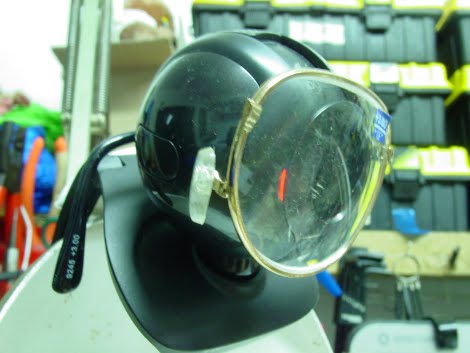
[Vik Oliver] came up with a webcam focus fix that is so quick and simple we never would have thought of it. He received the webcam as a gift and mounted on an articulated lamp so that it could easily be positioned around his projects. The problem is the camera lacks a focus adjustment so the close-up shots were blurry.

In what we consider a eureka moment, he sourced a pair of dollar store reading glasses to fix the optics. The glasses came with their own mounting bracket. He clipped them in half and wrapped the wire ear support around the camera body. Great hacks don’t have to be complicated, and we need to do a better job of looking at the dollar store for project parts!

Build Your Own Lightweight Flash Tripod

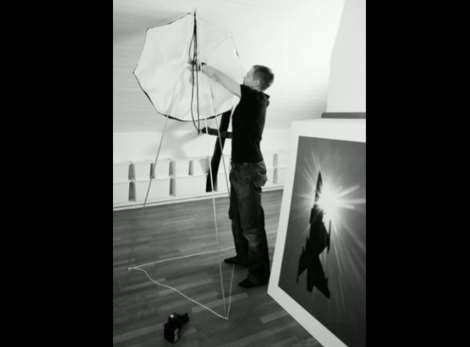
[Peter Karlsson] is a commercial photographer who wanted some ultralight, portable supports for multiple flashes. What he came up with meets those goals; measuring 16 inches long when folded and weighing just 14 ounces. They set up just like a tent because they’re made from tent poles. Like the portable habitats, the tripods have bungee cords running through each section which holds them rigid but allows them to fold for transport. This is a great sister project to the flash synchronizer from yesterday. See the demo and the building instructions after the break.

Continue reading “Build Your Own Lightweight Flash Tripod” →

IPhone Case Rehabilitation

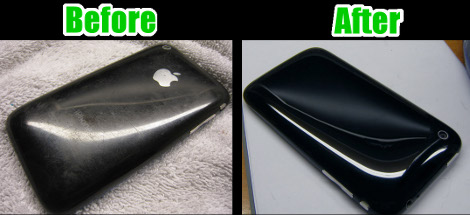
[Richard Cabrera’s] iPhone was scratched from years of use. A big part of the appeal of Apple products is the dose of sexy that comes with them, so he set out to remedy this abomination. His iPhone case rehabilitation guide walks you through the miraculous transformation. One of the tools he uses is a headlight lens restoration kit from 3M because its polishing pads include graduated levels of grit for the transition from rough sanding to buffing. As you can see, the logo and text have been buffed off but that’s a small price to pay for what looks like a shiny new device.