Nodeblinky, Rechargeable And Full Of Blink

[youtube=http://www.youtube.com/watch?v=Si—o0fEto&hl=en&fs=1]
Over 2500 unique patterns and up to 25 hours of winky blinky fun, that’s what you get with Nodeblinky. This contraption was designed by the Image Node crew as a learning platform and a way to raise money for their upcoming Burning Man display.

The kit measures 4″ square and has 28 LEDs spread across its surface. An AVR ATmega168, rechargeable 9 volt battery, and two LED drivers power it. One section of their site states that it has over 2500 unique patterns, while another area says 5000 combinations of patterns. Either way, its pretty trippy as you can see in the video above. There are 4 brightness levels as well as 4 running modes to keep you amused. The kit can be purchased for $40 or the assembled unit for $80. They do freely give out all the details though, so if you really felt like building one yourself, you probably could.

Should You Get A Seedbox For Your Bittorrent Needs?


Torrentfreak offers up a few reasons why you should get a seedbox if you’re a bittorrent user who likes to share a lot of files. A seedbox is a dedicated private server used exclusively for torrent transfers. [sharky] discusses a few pros and makes a few claims that we think might be a little overblown. Although the seedbox will speed up your downloads and allow you to bypass ISP limits on your bandwith, we’re a little leery of the claims that the seedbox is completely safe and secure, or that it’ll protect you from getting sued by the RIAA or MPAA. As pointed out in the comments, paying for a dedicated hosting service and paying for cable is no different. Of course, the seedbox also costs money, so you’ll have to weigh whether you’d rather have speed or risk getting throttled by your ISP. Torrentfreak does list a few hosting solutions that may be reasonably priced.

[photo: nrkbeta]

Maximize The IPhone 3G’s Battery Life


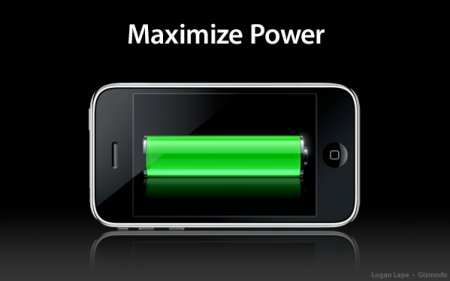
Gizmodo has posted a guide for extending the battery life of your shiny new iPhone 3G. Apple is notorious for pushing products with unimpressive battery life, and the new iPhone is no different. The battery isn’t user-replaceable, which means you can’t keep a spare, and the energy needs of the 3G chipset adds to the problem. Apple provides some useful tips on maximizing battery life for your iPhone. The tips include common sense advice that applies to nearly all electronic devices – turning down the brightness on your LCD screen, turning off radios not in use like Bluetooth, WiFi, GPS, and 3G, and setting Auto-lock to a minute or less will keep your devices running smoothly for longer.

We like to carry an extra USB battery like this one; you can also make your own like this one with an Altoids tin.

XBox Controller USB Labotomy


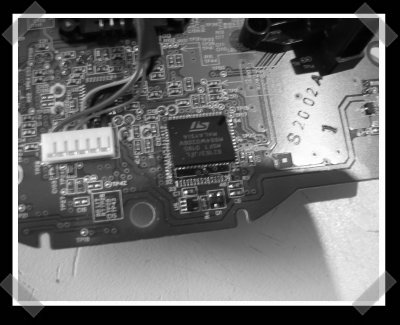
[sprite_tm]’s back with one of his excellent Atmel projects. This time he decided to turn an original XBox controller (cause he likes ’em) into a standard USB HID device. He gutted the custom USB chip that Microsoft installed and replaced it with an Atmel ATMega88. The ATMega required a few changes to the board, but nothing too off the wall.

Machine Embroidered LED Matrix


Our favorite electric textiles expert, [Leah Buechley], put together this machine embroidered LED matrix proof of concept. For the vertical rows, the top thread is conductive, while the thread on the underside (the bobbin) is not. For the horizontal rows, the the thread is swapped and the fabric acts as an insulator between the two layers of wiring. You can see a small brown bunch of thread next to each LED: this is the via to wiring on the backside of the fabric. The matrix is being controlled by a LilyPad Arduino. This is an interesting idea and has the potential to make prototyping wearable projects much faster. Here are two more pictures of the project.

NYC Soldering Championships


[Matt] let us know about the New York City Soldering Championships. They’ll be happening during the Ignite talks on July 29th at 7pm. 25 people will race head to head to assemble a fully functional electronics kit. Participants have to register in advance and are encouraged to bring their own iron. The kit hasn’t been chosen yet so people can’t practice. We hope they at least consider using a few SMD parts just to keep things interesting. Shout out if you’re planning to attend or compete!

[photo: Nick Bilton]

Tennis For Two Resurrected


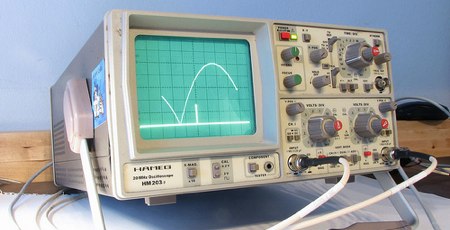
The first video game every created is attributed to physicist William Higinbotham. Tennis for Two is played on an oscilloscope using two controllers. Each one has a knob that controls the trajectory and a button to hit the ball. The fine folks at Evil Mad Scientist Laboratories have recreated the game so you can play it on any oscilloscope. An ATmega168 is used to control everything. It takes user input from the paddles and outputs an the X and Y analog signals for the scope. An R-2R style DAC is used for the output stage which gives a 256×256 resolution. Everything is built on top of one of their business card sized project boards-which really shows how useful such a simple board can be. The source code is free and the write up includes plenty of detail. We’d love to see what modifications people come up with since the base game doesn’t even have scoring. There’s a video of EMSL’s system embedded below.

Continue reading “Tennis For Two Resurrected” →