[basjoos] modded [via] the body of his ’92 Honda Civic – and managed to improve his fuel efficiency from 50-60MPG up to 95MPG for about $400. Even more interesting is the SuperMID (Translated) that he added to the car to monitor his fuel efficiency. It’s based on an ATMega8 that reads the CAN bus and displays realtime MPG information an a character LCD. The SuperMID is popular for Prius modders because the on-board display maxes out at a paultry 99MPG. If micro-controller’s aren’t your thing, [Atilla] put together his own CAN bus decoder and ported his code to a Zaurus SL-C700. He even added voice feedback notification for certain data events.
DIY Rotomolding
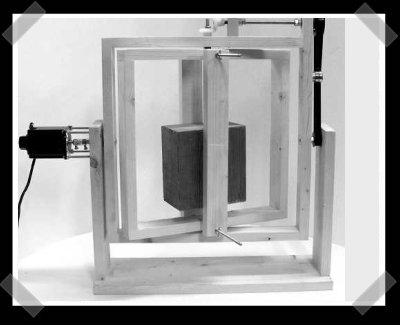
Rotomolding is used to create hollow forms by slowing rotating a mold while the material covers and hardens to the shape of the mold. [ds] built this version using a stepper motor to drive the assembly and a belt drive link An extreme version is used to form whitewater kayaks and other plastics. This thread over at cnczone has a rotisserie oven version that looks ideal for small plastic or wax molding.
24C3 Mifare Crypto1 RFID Completely Broken
Another highlight for us at CCC was [Karsten Nohl] and [Henryk Plötz] presenting how they reversed Philips crypto-1 “classic” Mifare RFID chips which are used in car keys, among other things. They analyzed both the silicon and the actual handshaking over RF. Looking at the silicon they found about 10K gates. Analyzing with Matlab turned up 70 unique functions. Then they started looking “crypto-like” parts: long strings of flip-flops used for registers, XORs, things near the edge that were heavily interconnected. Only 10% of the gates ended up being crypto. They now know the crypto algorithm based on this analysis and will be releasing later in the year.
The random number generator ended up being only 16-bit. It generates this number based on how long since the card has been powered up. They controlled the reader (an OpenPCD) which lets them generate the same “random” seed number over and over again. This was actually happening on accident before they discovered the flaw.
One more broken security-through-obscurity system to add to the list. For more fun, watch the video of the presentation.
Happy New Year Extra

Goodbye 1167627600 –1199167140 1199163540.
[Justin] is having fun telling everyone that an exploit has been found for the Archos 605 media player. The hack gets you remote root access on the player… need I say more?
[Gene] sent in his polar coordinate based LEGO 3d printer. He’s still working on the driver end, but it’s an interesting project.
[Kyle] sent in the gutting of his flip video camera.
Need some new storage? [forrest] sent in his price/GB price comparison script. It scrapes New Egg and graphs out the results.
Despite the link on our old post being dead, [Txoof] built his own CCFL macro light from a dead laptop LCD.
[Dan] sent in his LED cube matrix. The LEDs are wired in a matrix, so he can actually address them individually.
Frostbot: CNC Cookie Frosting
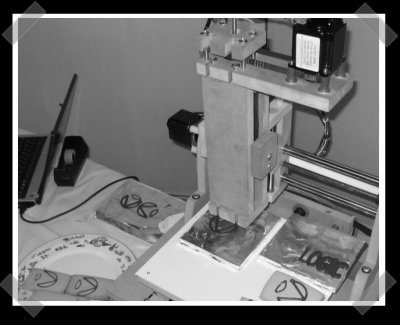
[Brian Schmalz] sent in his Frostbot. It’s a fun CNC bot project that he built to frost cookies for his latest holiday party. He (wussed out a bit) and started with a kit based CNC machine, but he made up for it by driving it with his own control hardware (that sparkfun happens to have for sale). His USB bit wacker interface certainly looks interesting – I might consider adding it in front of the stepper controllers on my cnc mill. Especially interesting is the HPGL interpreter software that converts graphics to stepper commands via the bit whacker interface.
24C3 Toying With Barcodes
[FX] from Phenoelit gave an entertaining talk about barcode security. He covered both how the systems are implemented and how they’ve been exploited. The first example was a parking garage in Dresden that issues non unique barcodes for the unlimited passes that hotels give out. Anyone code print out an image of that particular code and park for free. German grocery stores have automated machines that refund you for your empty beer bottles. The barcode generated just states the refund amount (5 digits) that you’ll get at the register. Just stick the barcode under something like a six pack and it’ll scan even without the cashier seeing it.
Check out the video to find out more silliness involving DVD rentals, boarding passes, asset management, and SQL injection via the scanner. You can even find higher res versions in the 24C3 media archives.
Raid Your Network File Shares
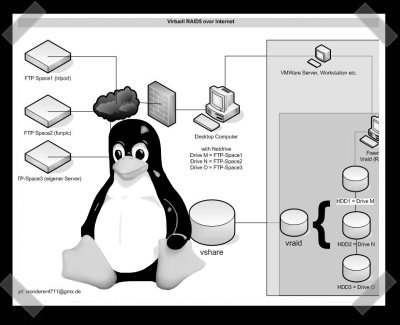
[Motoma] sent in his take on the virtual RAID 5 post. He didn’t like the layered system requirements, so he put together a proof of concept that only requires a Linux box. For his proof, he used a NFS share, a SMB share and did everything from the command line. He didn’t cover FTP, but the Gentoo wiki has a nice cheat sheet for mounting FTP and folders over SSH if you want some alternatives. He uses some very interesting partition tricks to make things happen. If you need some help to get things rolling, the Ubuntu forums software raid how-to is a good place to start.