Students Build A 3D Printed Plane

3d printed plane

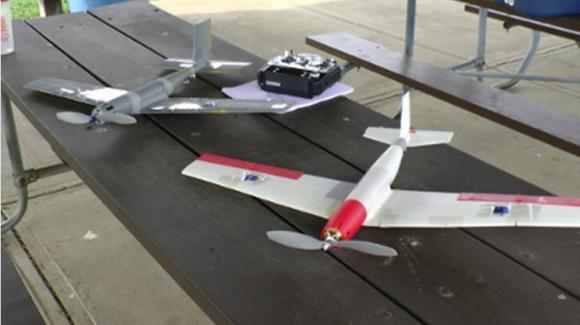
A student team has successfully designed, built, and flown a 3D printed RC plane using only $16 of plastic with a consumer-grade 3D printer (Makerbot), plus the necessary electronics and motor.

The folks over at the Wright Brothers Institute (WBI) have a great program called the AFRL Discovery Lab which brings teams of students, businesses, researchers, and government together to work on a specific challenge or opportunity.

One of the programs this year was the Disposable Miniature Air Vehicle, or DMAV for short. The student interns [Nathan, Ben, and Brian] spent the first 5 weeks at Tec^Edge designing the plane. The team went through 5 revisions before they settled on a design they believed could fly. The final plane weighed 1.5 pounds, and on its first flight… plummeted into the ground. Good thing they printed a second copy! After some more practice [Stephen] got the hang of it and was able to fly and land the plane successfully.

According to the WBI, this is the first functional aircraft that has been fully 3D printed (sans electronics) using FDM technology, and the first low wing 3D printed plane to be flown. Hate to burst their bubble, but 3D printed quadcopters have been around for quite a while!

Test flight video is after the break.
Continue reading “Students Build A 3D Printed Plane”

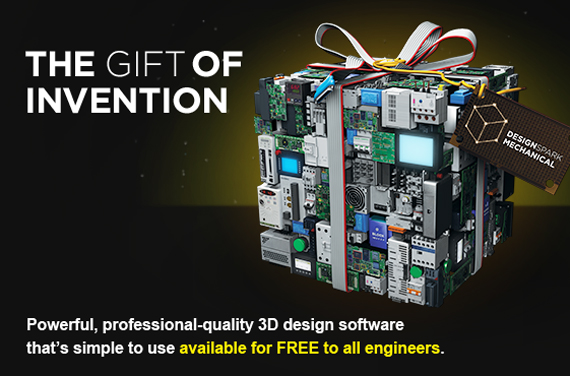
DesignSpark Mechanical – The Gift Of Invention

Ever heard of DesignSpark? They are releasing a powerful CAD package on September 16th — for free!

The company is owned by RS Components, a distributor of electronics and maintenance products. They offer a large library of 3D models of parts that they sell, dubbed the ModelSource. So if you are wondering how they are giving out software for free, that’s how. They also have free PCB designing software, and something called DesignShare which hosts open-source project collaboration, sharing and discussions.

By the looks of the demo video, DesignSpark Mechanical is a well laid out CAD package that is rich in features. The software allows for the import and export of several file types, and it looks like ECAD, OBJ, Sketchup, STEP, DXF and STL are all there, as well as the native file types. While it looks like you can import any files, we are willing to bet adding ModelSource files are by far the easiest and most convenient because of the integrated ModelSource library. But we think that’s a small price to pay for an alternative to SketchUp. After all, the component models will be useful for assemblies, even if you don’t order through them. Oh, and it’s perfect for making free models for 3D printing as it includes the ability to export STL files.

Watch the software demo after the break.

Continue reading “DesignSpark Mechanical – The Gift Of Invention”

3-Sweep: Turning 2D Images Into 3D Models

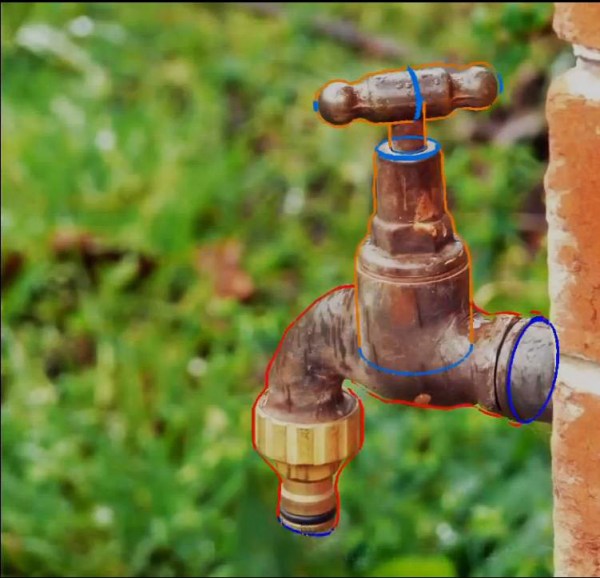
As 3D printing continues to grow, people are developing more and more ways to get 3D models. From the hardware based scanners like the Microsoft Kinect to software based like 123D Catch there are a lot of ways to create a 3D model from a series of images. But what if you could make a 3D model out of a single image? Sound crazy? Maybe not. A team of researchers have created 3-Sweep, an interactive technique for turning objects in 2D images into 3D models that can be manipulated.

To be clear, the recognition of 3D components within a single image is a bit out of reach for computer algorithms alone. But by combining the cognitive abilities of a person with the computational accuracy of a computer they have been able to create a very simple tool for extracting 3D models. This is done by outlining the shape similar to how one might model in a CAD package — once the outline is complete, the algorithm takes over and creates a model.

The software was debuted at Siggraph Asia 2013 and has caused quite a stir on the internet. Watch the fascinating video that demonstrates the software process after the break!

Continue reading “3-Sweep: Turning 2D Images Into 3D Models”

Rubicon Gives The Makerbot Digitizer A Run For Its Money

rubicon

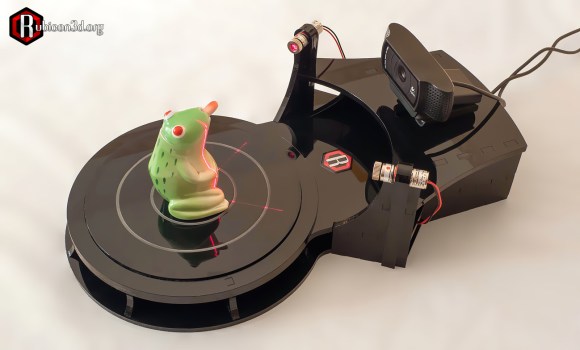
Look out MakerBot, there’s a new 3D scanner on the block and it’s about 10% of the cost of the Digitizer. Enter the Rubicon 3D Scanner which just hit Indiegogo, a device much closer to being worth its price $199.

Just like the pricey Makerbot Digitizer it’s a very simple design made up of a webcam, two laser lines, and a stepper motor controlled turn table. Still very easy to make yourself, but at $199, it’s not a bad price for an all-in-one kit, especially compared to the Digitizer. The newcomer claims a much faster scan time (3 minutes versus 12), and the same stepper rotation (800 steps or 0.45 degrees per step). There are no details about making the design open source, but after some digging in the RepRap forums we found some discussion on that topic from designer [Robert].

It scans objects up to 160mm in diameter and 250mm tall, however it has the ability to scan marginally larger objects if the camera is moved farther back. The funding for the Indiegogo campaign will go towards a custom arduino-esq PCB with a motor driver built in – personally we would be interested in just getting the PCB and 3D printing the rest of the scanner ourselves!

More information is found in the video after the break. Continue reading “Rubicon Gives The Makerbot Digitizer A Run For Its Money”

3D Printed Prosthetic Hand

hand

3D printing – with the promise of low-scale manufacturing and custom parts – is ideal for the prosthetic industry, but so far prosthetic hands have been a very, very hard nut to crack. [Joel] has been working on the Open Hands Project, a project that aims to make robotic prosthetics accessible to makers, researchers, and amputees alike.

Even though the mechanisms inside the hand are fairly simple – DC gear motors retracting steel cable ‘tendons’ – [Joel] was able to pack all this equipment into a very small volume that isn’t much bigger than real, meat-based hands. To actuate the mechanical muscles in the hand, the user simply flexes a few muscles in their forearm. These electrical signals are picked up by a suite of custom electronics and tell the Open Hand what to do

In [Joel]’s Indiegogo video, he goes over what makes his robohands work with a little help from [Liam Corbett], hand amputee. Aesthetically, the Open Hand is a big improvement over [Liam]’s two-pronged hook, and with the dexterity demonstrated in the video, possibly a lot more capable.

Continue reading “3D Printed Prosthetic Hand”

Use Your New-timey Printer To Make An Old-timey Camera

3d-printed-pinhole-camera

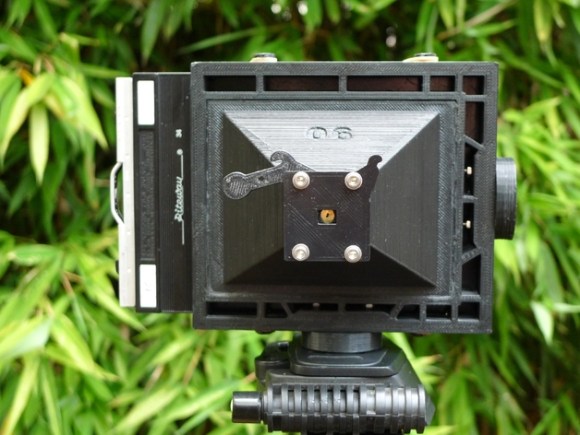
Here’s something to show people who don’t realize the power of 3D printing. This pinhole camera has one moving part which reveals the pinhole, letting in light to expose the 4×5 film inside.

It’s a near perfect roundup of all the qualities a 3D printer has to offer. The build centers around a 4×5 film holder which can be acquired used or as surplus. This drives home the concept of having the power to replace parts (in this case the entire camera) that fit with existing pieces (the film holder). The picture above is big enough that you can see the layers on the pyramid shape, but the structural pieces around the frame also let the uninitiated see that you can print more than just solid blocks. And finally, since it’s up for download on Thingiverse its a good example of how the printing community shares and builds on each others’ work.

Does it take quality photos? We have no idea. So far we didn’t see any example pictures. But really, if you’re looking for top quality you might want to build your own digital camera. Here’s one that uses a 14 megapixel sensor.

3D Printering: Electronics Boards

If you’re gearing up to build a 3D printer, one of the first things you’ll need to look at is your options for electronics boards. Whether you decide to optimize for cost or capability, the choices you make during the planning stages of your build will drastically affect what the final project will look like and how it will behave.

There are a ton of electronics boards out there, so for this installation of 3D Printering, we’re going to take a look at what’s available. Hit the link below to give Hackaday more pageviews read the rest.

Continue reading “3D Printering: Electronics Boards”