New Artemis Plan Returns To Apollo Playbook

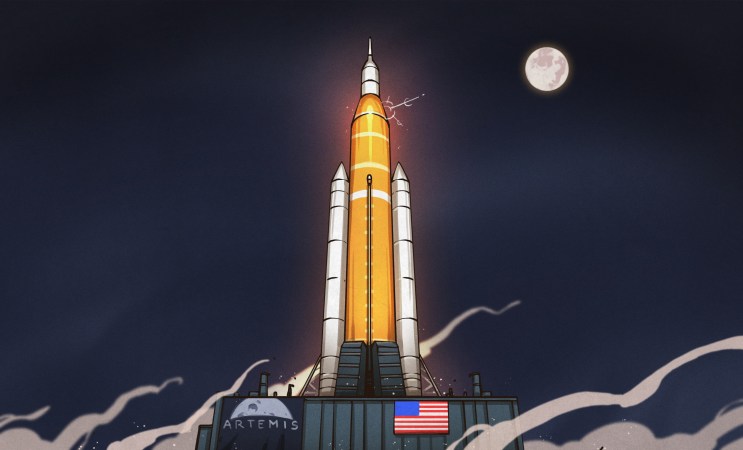
In their recent announcement, NASA has made official what pretty much anyone following the Artemis lunar program could have told you years ago — humans won’t be landing on the Moon in 2028.

It was always an ambitious timeline, especially given the scope of the mission. It wouldn’t be enough to revisit the Moon in a spidery lander that could only hold two crew members and a few hundred kilograms of gear like in the 60s. This time, NASA wants to return to the lunar surface with hardware capable of setting up a sustained human presence. That means a new breed of lander that dwarfs anything the agency, or humanity for that matter, has ever tried to place on another celestial body.

Unsurprisingly, developing such vehicles and making sure they’re safe for crewed missions takes time and requires extensive testing. The simple fact is that the landers, being built by SpaceX and Blue Origin, won’t be ready in time to support the original Artemis III landing in 2028. Additionally, development of the new lunar extravehicular activity (EVA) suits by Axiom Space has fallen behind schedule. So even if one of the landers would have been ready to fly in 2028, the crew wouldn’t have the suits they need to actually leave the vehicle and work on the surface.

But while the Artemis spacecraft and EVA suits might be state of the art, NASA’s revised timeline for the program is taking a clear step back in time, hewing closer to the phased approach used during Apollo. This not only provides their various commercial partners with more time to work on their respective contributions, but critically, provides an opportunity to test them in space before committing to a crewed landing.

Continue reading “New Artemis Plan Returns To Apollo Playbook”

Creating An Ultra-Stable Lunar Clock With A Cryogenic Silicon Cavity Laser

Phase-coherent lasers are crucial for many precision tasks, including timekeeping. Here on Earth the most stable optical oscillators are used in e.g. atomic clocks and many ultra-precise scientific measurements, such as gravitational wave detection. Since these optical oscillators use cryogenic silicon cavities, it’s completely logical to take this principle and build a cryogenic silicon cavity laser on the Moon.

In the pre-print article by [Jun Ye] et al., the researchers go through the design parameters and construction details of such a device in one of the permanently shadowed regions (PSRs) of the Moon, as well as the applications for it. This would include the establishment of a very precise lunar clock, optical interferometry and various other scientific and telecommunication applications.

Although these PSRs are briefly called ‘cold’ in the paper’s abstract, this is fortunately quickly corrected, as the right term is ‘well-insulated’. These PSRs on the lunar surface never get to warm up due to the lack of an atmosphere to radiate thermal energy, and the Sun’s warm rays never pierce their darkness either. Thus, with some radiators to shed what little thermal energy the system generates and the typical three layers of thermal shielding it should stay very much cryogenic.

Add to this the natural vacuum on the lunar surface, with PSRs even escaping the solar wind’s particulates, and maintaining a cryogenic, ultra-high vacuum inside the silicon cavity should be a snap, with less noise than on Earth. Whether we’ll see this deployed to the Moon any time soon remains to be seen, but with various manned missions and even Moon colony plans in the charts, this could be just one of the many technologies to be deployed on the lunar surface over the next few decades.

NASA Uses Mars Global Localization As GNSS Replacement For The Perseverance Rover

Unlike on Earth there aren’t dozens of satellites whizzing around Mars to provide satellite navigation functionality. Recently NASA’s JPL engineers tried something with the Perseverance Mars rover that can give such Marsbound vehicles the equivalent of launching GPS satellites into Mars orbit, by introducing Mars Global Localization.

Although its remote operators back on Earth have the means to tell the rover where it is, it’d be incredibly helpful if it could determine this autonomously so that the rover doesn’t have to constantly stop and ask its human operators for directions. To this end the processor which was originally used to communicate with its Ingenuity helicopter companion was repurposed, reprogrammed to run an algorithm that compares panoramic images from the rover’s navigation cameras with its onboard orbital terrain maps.

Much like terrain-based navigation as used in cruise missiles back on Earth, this can provide excellent results depending on how accurate your terrain maps are. This terrain mapping process used to be done back on Earth, but for the past years engineers have worked to give the rover its own means to perform this task.

Continue reading “NASA Uses Mars Global Localization As GNSS Replacement For The Perseverance Rover”

Accidental Climate Engineering With Disintegrating Satellites

For many decades humankind has entertained the notion that we can maybe tweak the Earth’s atmosphere or biosphere in such a way that we can for example undo the harms of climate change, or otherwise affect the climate for our own benefit. This often involves spreading certain substances in parts of the atmosphere in order to reflect or retain thermal solar radiation or induce rain.

Yet despite how limited in scope these attempts at such intentional experiments have been so far – with most proposals dying somewhere before being implemented – we have already embarked on a potentially planet-wide atmospheric reconfiguration that could affect life on Earth for centuries to come. This accidental experiment comes in the form of rocket stages, discarded satellites, and other human-made space litter that burn up in the atmosphere at ever increasing rates.

Rather than burning up cleanly into harmless components, this actually introduces metals and other compounds into the upper parts of the atmosphere. What the long-term effects of this will be is still uncertain, but with the most dire scenarios involving significant climate change and ozone layer degradation, we ought to figure this one out sooner rather than later.

Continue reading “Accidental Climate Engineering With Disintegrating Satellites”

Miranda, as imaged by Voyager 2 on Jan. 24, 1986.

Miranda’s Unlikely Ocean Has Us Asking If There’s Life Clinging On Around Uranus

If you’re interested in extraterrestrial life, these past few years have given an embarrassment of places to look, even in our own solar system. Mars has been an obvious choice since before the Space Age; in the orbit of Jupiter, Europa’s oceans have been of interest since Voyager’s day; the geysers of Enceladus give Saturn two moons of interest, if you count the possibility of a methane-based chemistry on Titan. Even faraway Neptune’s giant moon Triton probably has an ocean layer deep inside. Now the planet Uranus is getting in on the act, offering its moon Miranda for consideration in a kinda-recent study in the Planetary Science Journal.

Continue reading “Miranda’s Unlikely Ocean Has Us Asking If There’s Life Clinging On Around Uranus”

Practice Makes Perfect: The Wet Dress Rehearsal

If you’ve been even casually following NASA’s return to the Moon, you’re likely aware of the recent Wet Dress Rehearsal (WDR) for the Artemis II mission. You probably also heard that things didn’t go quite to plan: although the test was ultimately completed and the towering Space Launch System (SLS) rocket was fully loaded with propellant, a persistent liquid hydrogen leak and a few other incidental issues lead the space agency to delay further testing for at least a month while engineers make adjustments to the vehicle.

This constitutes a minor disappointment for fans of spaceflight, but when you’re strapping four astronauts onto more than five million pounds of propellants, there’s no such thing as being too cautious. In fact, there’s a school of thought that says if a WDR doesn’t shake loose some gremlins, you probably weren’t trying hard enough. Simulations and estimates only get you so far, the real thing is always more complex, and there’s bound to be something you didn’t account for ahead of time.

Continue reading “Practice Makes Perfect: The Wet Dress Rehearsal”

Forget Waldo. Where’s Luna 9?

Luna 9 was the first spacecraft to soft-land on the moon. In 1966, the main spacecraft ejected a 99-kg lander module that used a landing bag to survive impact. The problem is, given the technology limitations of 1966, no one is exactly sure where it is now. But it looks like that’s about to change.

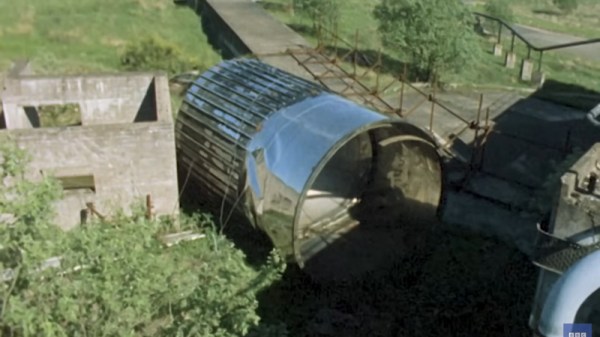
A model of the Luna 9 lander with petals deployed.

We know that the lander bounced a few times and came to rest somewhere in Oceanus Procellarum, in the area of the Reiner and Marius craters. The craft deployed four stabilizing petals and sent back dramatic panoramas of the lunar surface. The Soviets were not keen to share, but Western radio astronomers noticed the pictures were in the standard Radiofax format, so the world got a glimpse of the moon, and journalists speculated that the use of a standard might have been a deliberate choice of the designers to end run against the government’s unwillingness to share data.

Several scientists have been looking for the remains of the historic mission, but with limited success. But there are a few promising theories, and the Indian Chandrayaan-2 orbiter may soon confirm which theory is correct. Interestingly, Pravda published exact landing coordinates, but given the state of the art in 1966, those coordinates are unlikely to be completely correct. The Lunar Reconnaissance Orbiter couldn’t find it at that location. The leading candidates are within 5 to 25 km of the presumed site.

The Luna series had a number of firsts, including — probably — the distinction of being the first spacecraft stolen by a foreign government. Don’t worry, though. They returned it. Since the Russians didn’t talk much about plans or failures, you can wonder what they wanted to build but didn’t. There were plenty of unbuilt dreams on the American side.


Featured Art – 1:1 model of the Luna 9, Public Domain.