DSLR Bellows-mounted Lens Retrofit

dslr_lens_retrofit

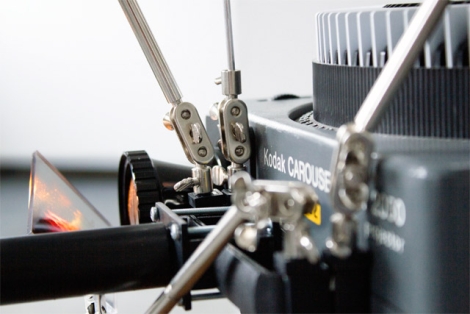
While digging through a pile of old camera equipment, [Jake] stumbled upon a camera that belonged to his grandfather and was curious to see what sorts of images the old lens would produce. He wasn’t interested in messing around with a film-based camera for his experiments, so he needed to find a way to mount the vintage lens on his newer Canon DSLR.

After considering several options including custom machined adapters and mounting rings built from old Canon lenses, he found a much cheaper solution. He purchased a lens adapter made to mount a particular type of lens to a modern DSLR, and then modified it to fit his lens. It worked perfectly, though he admits the resulting images are not that different than those taken with his regular lens.

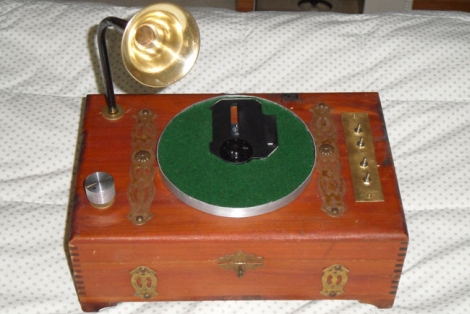
Underwhelmed with the images, he decided to mount the lens on a set of bellows he picked up at the local dump. It looks pretty neat, but he has yet to get a chance to take any pictures with his new setup. Hopefully we’ll see some test shots soon.

If anyone has experience with using bellows lenses on a modern DSLR, we’re always up for seeing some sample pictures. In the meantime, check out this other DSLR/bellows hybrid project we featured a short while back.

[via BoingBoing]

Old School LED Light Show

programmable_lightshow

Building LED arrays that can display all sorts of different patterns is pretty easy these days. Hook up an Arduino, do some charlieplexing, and off you go. When [Viktor] was younger he didn’t have all those fancy schmancy microcontrollers and circuit simulation software you kids have these days. In fact, last we heard, he had to walk to school uphill both ways – in the snow.

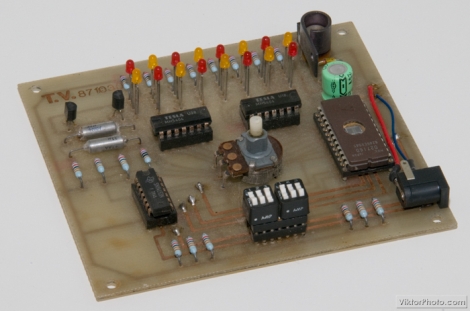
That didn’t stop him from building this gem of a project back in 1987. His LED chaser/light show does not use any microcontrollers at all, rather it relies on an EPROM to store predefined display programs. A series of switches are installed on the front of the flasher, allowing him to easily switch between the programs, and a pot is mounted to the front of the device to control the speed of the LEDs.

His light show is pretty slick, even for a project built over 20 years ago. Sometimes you just can’t beat a good, old-school hack.

Continue reading for a video demonstration of [Viktor’s] programmable light show.

Continue reading “Old School LED Light Show”

2-bit Full Adder Using Just Thirty Six 555 Timers

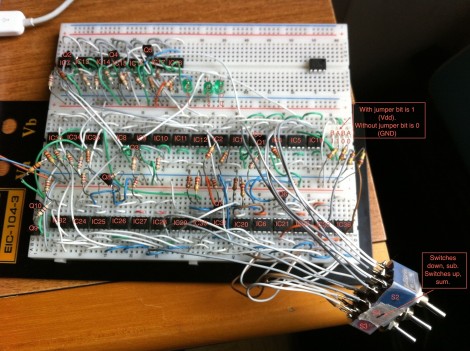
This 2-bit adder was a lot of work to build. It uses a total of thirty-six 555 timers and it does have the option of adding or subtracting numbers. It’s a rather unorthodox use of the part, depending more on the chip as an inverter and taking advantage of the fact that there’s an NPN transistor built into it. [cpu86] did use some PNP transistors to give him the ability to turn off some of the 555’s to get everything working correctly.

He explains the use of two’s complement in the subtracting feature but the process is just touched on very quickly. Luckily there’s a huge eagle schematic available with his project writeup so that you can follow along and really grasp how this thing works. We’ve generated a PNG and embedded it after the break for your convenience. You’ll find it just after the two videos of the device in action.

Continue reading “2-bit Full Adder Using Just Thirty Six 555 Timers”

Analog Robotic Concepts

Everyone’s getting on board with the 555 timer projects. But [Tom] didn’t just come up with one project, he shared a slew of ideas related to analog robotics. They’re center around servo motor control. You can see in the video after the break he has a pleasing way of sharing a lot of details while also making an easy to view demonstration video. He’ll put up a schematic for about one second and then move on, saving those that don’t care about the details by not droning on.

The first schematic that flashes by is the main circuit for controlling the servo motor. The rest of the concepts build from this circuit, using light, sound, flex, and other sensors as inputs. For instance, the setup above is using a light sensor. When the ball blocks the light the servo moves that vertical rod hitting it out of the way. When it swings back the process repeats. It’s striking how lifelike the reactions are, reminding us of insect movements. But this is really just the tip of the iceberg as he’s got a lot of future video ideas that we can’t wait to see.

Continue reading “Analog Robotic Concepts”

DIY Lightning Special Effects

Halloween may have come and gone but thats no reason not to take a look at this neat little special effects setup.  Basically it uses an analogue circuit to monitor an audio signal and triggers some camera flashes using 5V relays.  The idea is that you can play lightning strikes and other spooky sounds, and the system will trigger camera flashes to coincide with the lightning strikes. Adding in some color organs in addition to the camera flashes will dim your lights to help achieve a thunder like effect. Unfortunately there aren’t any schematics for the color organs (which technically might be just light organs) but that doesn’t detract from the seemingly well designed analogue signal processing. Check it out in action after the break.

Continue reading “DIY Lightning Special Effects”

Hear That? It’s A 555 Timer AM Radio

555_timer_am_radio

[Eric] recently built an AM radio based on a 555 timer, and posted a few pictures to the Hack-a-Day Flickr pool. He used the 555 timer as an AM demodulator and power amplifier in order to drive the speaker. A hand-wound inductor is used to tune the signal which is then superimposed over the ramp signal produced by the circuit he built. [Eric] points out that he chose a CMOS 555 timer because of its superior performance in this particular application since the timer is used in a bit of a nontraditional manner. He shared his circuit diagram as well as a great video walking through each part of his design, finishing off with a demonstration of the radio, which can be seen below.

This is yet another great project that will be entered in the 555 Design Contest – simple and elegant. We love seeing these, so keep them coming!

If you want to see more cool projects made by Hack-a-Day readers, be sure to check out our Flickr pool as well as the forums.

Continue reading “Hear That? It’s A 555 Timer AM Radio”

Machine Pushes Cellphone Buttons From Anywhere In The World

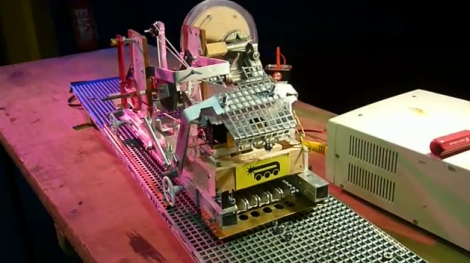
[Mok Young Bacq] works on the weekends for mobile game monitoring service. He has three cellphones that he uses for work, and although you would think this means he could work from anywhere in the world, the roaming charges are a killer. His solution was to build an incredibly intricate machine that can use three different cellphones (PDF) on his behalf.

Above you can see it perched underneath the apex of the ladder, but you’re definitely going to want to watch the video after the break. This interface method uses a camera to look at each phone. It’s hung pointing downward and moves like a pendulum to look at one of the three screens at a time. Each phone has one servo motor for each button, which uses a flexible cable as an actuator. Now he can take trips abroad, just checking in over the Internet for his two 17-hour weekend shifts (10am to 3am the next morning) working the phones.

This reminds us of the cellphone endurance tests. What happens when a button stops working?

Continue reading “Machine Pushes Cellphone Buttons From Anywhere In The World”