Selling Everything, Moving To Asia, And Setting Up A Company

Today I don’t have a hack for you. I have a story, one that I hope will prove useful to a few of you who are considering a move to Asia to chase opportunities here.

Seven years ago, I was a pretty stereotypical starving hacker. I had five jobs: A full-time dead-end job in biotech, and four part-time or contract gigs that were either electronic hardware design or programming. I worked perhaps 50 hours a week, and was barely past the poverty line – I was starting to wonder why I spent so much time in school. I saw the economic growth in Asia as an attractive but risky opportunity.

Check out that image above…France? No, this is Shenzhen and let’s face it: many exciting things are made there (even the copies). After a short visit to the region, I decided to take that risk but not in Shenzhen. I sold everything I owned and moved from Canada to Vietnam and started a company. Over the last seven years things have worked out well, although I certainly wish I had known more about the process before I got on a plane. This article is about the general path I took to get where I am. Obviously I don’t know the legal framework of every country in Asia, but speaking in generalities I hope that I can cover some interesting points for the curious and adventurous.

Continue reading “Selling Everything, Moving To Asia, And Setting Up A Company” →
Feeling The Heat Of High-Frequency Trading

It’s high summer here in North America, and for a lot of us, this one has been a scorcher. Media reports have been filled with coverage of heat wave after heat wave, with temperature records falling like dominoes.

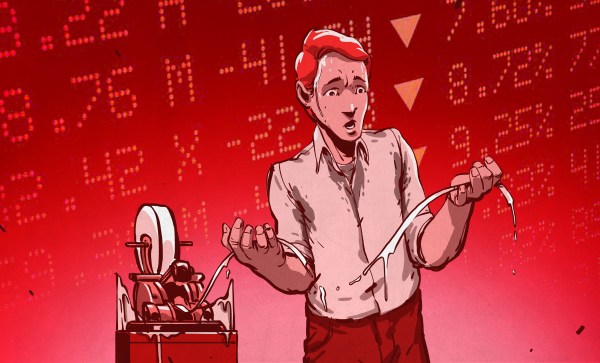
But as they say, it’s not the heat, it’s the humidity, and that was painfully true in the first week of July as a slug of tropical air settled into the northeast United States. With dewpoints well into the 70s (25°C plus) and air temperatures pushing the century-mark (38°C), people suffered and systems from transportation to the electrical grid strained under the load. But as punishing as such soupy conditions are for people, there are other effects that are less well known but of critical importance to financial markets, where increased humidity can lead to billion-dollar losses for markets. Welcome to the weird world of high-frequency trading.

Continue reading “Feeling The Heat Of High-Frequency Trading” →

What To Expect When You’re Expecting – A Trademark

A trademark represents a brand, so it can be words like “Apple”, including made up words like “Kleenex”. It can be symbols, like the Nike swoosh. It can also be colors, like UPS brown, and even scents like the flowery musk scent in Verizon stores. Filing a trademark in the United States is surprisingly easy. With a couple hundred dollars and a couple hours, you can be well on your way to having your very own registered trademark and having the right to use the ® symbol on your mark. You don’t need a lawyer, but you should know some of the hangups you might run into. The USPTO has a fantastic primer on trademarks, but we’ll TL;DR it for you. Continue reading “What To Expect When You’re Expecting – A Trademark” →

Life On Contract: Lowering Your Cost Without Dropping Your Price

Last time in Life on Contract, I discussed ways to figure out a starting point on how much to charge for your services. However, sometimes you and a client may wish to work together but for some reason they cannot (or do not wish to) pay what you have decided to charge. If you are inexperienced, it can be tempting to assume you have overpriced yourself and discount down to what they are willing to pay. But if your price is a number you have chosen for reasons you can explain, dropping it is not something you should do unless you have thought about it carefully.

Instead of just agreeing to do the same work but for less money, it is often possible to offer a lower overall cost without cheapening the value of your work. I’ll share a process I use to find opportunities to make this happen.

It Should be Win-Win, Not Hard Sell

The best case scenario is a client wants your service, your cost is within their budget, and everyone agrees to work together. Tragically, the process isn’t always that smooth. If cost is an issue, the alternative to lowering your price is to fine-tune what you provide to better fit the actual needs. To do that, you will need two things:

  1. A detailed understanding of your own time and costs for the work.
  2. Knowledge of what things your client considers most important.

By intimately knowing your own costs, you can figure out where to make savings without scrimping on the things your client considers important.
Continue reading “Life On Contract: Lowering Your Cost Without Dropping Your Price” →

Global Resistor Shortage, Economics, And Consumer Behavior

The passive component industry — the manufacturers who make the boring but vital resistors, capacitors, and diodes found in every single electronic device — is on the cusp of a shortage. You’ll always be able to buy a 220 Ω, 0805 resistor, but instead of buying two for a penny like you can today, you may only get one in the very near future.

Yageo, one of the largest manufacturers of surface mount (SMD) resistors and multilayer ceramic capacitors, announced in December they were not taking new chip resistor orders. Yageo was cutting production of cheap chip resistors to focus on higher-margin niche-market components for automotive, IoT, and other industrial uses, as reported by Digitimes. Earlier this month, Yaego resumed taking orders for chip resistors, but with 15-20% higher quotes (article behind paywall, try clicking through via this Tweet).

As a result, there are rumors of runs on passive components at the Shenzhen electronics market, and several tweets from members of the electronics community have said the price of some components have doubled. Because every electronic device uses these ‘jellybean’ parts, a decrease in supply or increase in price means some products won’t ship on time, margins will be lower, or prices on the newest electronic gadget will increase.

The question remains: are we on the brink of a resistor shortage, and what are the implications of manufacturers that don’t have the parts they need?

Continue reading “Global Resistor Shortage, Economics, And Consumer Behavior” →

Accident Forgiveness Comes To GPLv2

Years ago, while the GPLv3 was still being drafted, I got a chance to attend a presentation by Richard Stallman. He did his whole routine as St IGNUcius, and then at the end said he would be answering questions in a separate room off to the side. While the more causal nerds shuffled out of the presentation room, I went along with a small group of free software aficionados that followed our patron saint into the inner sanctum.

When my turn came to address the free software maestro, I asked what advantages the GPLv3 would have to a lowly hacker like myself? I was familiar with the clause about “Tivoization“, the idea that any device running GPLv3 code from the manufacturer should allow the user to be able to install their own software on it, but this didn’t seem like the kind of thing most individuals would ever need to worry about. Was there something in the new version of the GPL that would make it worth adopting in personal or hobby projects?

Yes, he really dresses up like this.

Interestingly, a few years after this a GPLv2 program of mine was picked up by a manufacturer and included in one of their products (never underestimate yourself, folks). So the Tivoization clause was actually something that did apply to me in the end, but that’s not the point of this story.

Mr. Stallman responded that he believed the biggest improvement GPLv3 made over v2 for the hobbyist programmer was the idea of “forgiveness” in terms of licensing compliance. Rather than take a hard line approach like the existing version of the GPL, the new version would have grace periods for license compliance. In this way, legitimate mistakes or misunderstandings of the requirements of the GPL could be resolved more easily.

So when I read the recent announcement from Red Hat that said they would be honoring the grace period for GPLv2 projects, I was immediately interested. Will the rest of the community follow Red Hat’s lead? Will this change anyone’s mind when deciding between the GPL v2 and v3? Is this even a good idea? Join me below as I walk through these questions.

Continue reading “Accident Forgiveness Comes To GPLv2” →

Life On Contract: How Much Do I Charge?

If you’re comfortable with the technical side of becoming a consultant or contractor but are unsure what to charge for your services, you’re not alone. “How much do I charge?” is a tough question, made even tougher by the fact that discussing money can be awkward, and at times virtually taboo.

As a result it’s not uncommon for the issue to get put off because it’s outside one’s comfort zone. Technical people in particular tend to suffer from an “if you build it, they will come” mentality; we get the technical side of things all figured out and just sort of assume that the rest — customers, money, and so forth — will fall into place afterward. If you’re lucky, it will! But it’s better to do some planning.

The short and simple answer of how much to charge is a mix of “it depends” and “whatever the market bears” but of course, that’s incredibly unhelpful all by itself. It’s time to make the whole process of getting started a bit less opaque.

A stubborn determination to solve my own problems has given me plenty of opportunity to make mistakes and commit inefficiencies over the years; I’ve ended up with a process that works for me, but I also happen to think it is fairly generally applicable. Hopefully, sharing the lessons I’ve learned will help make your own process of figuring out what to charge easier, or at least make the inevitable blunders less costly.

Continue reading “Life On Contract: How Much Do I Charge?” →