Inside A Circuit Breaker With MikesElectricStuff

High voltage is  not something we usually tinker with at home. In fact, most of us are more comfortable working with non-lethal, low current, low voltage DC signals. When we do venture into the world of high voltage, we prefer to do it vicariously thru someone with more safety training and/or experience.

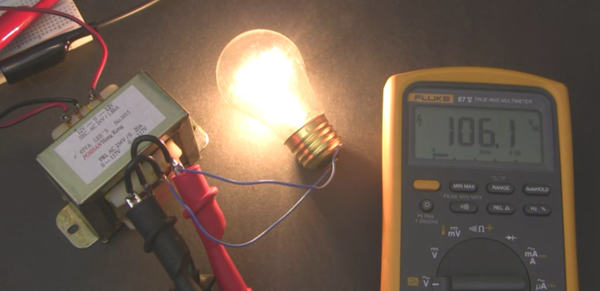
[Mike] shows us the inner workings of a 240VAC circuit breaker and explains how the different safety features in the device work. In proper MikesElectricStuff form, [Mike] finds out what it takes to destroy the device. Or in this case multiple devices, [Mike] uses his “Destruct-o-tron” to create catastrophic failure in more than one breaker. You can check out the video embedded after the break to learn a bit about how a circuit breaker works, and of course witness the carnage.

Continue reading “Inside A Circuit Breaker With MikesElectricStuff”

Samsung ARTIK Dev Boards Start To Ship

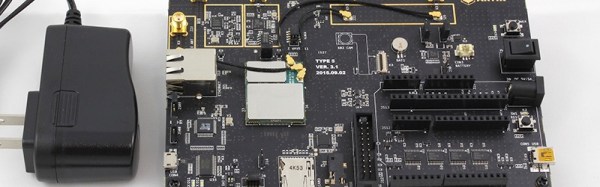
Another week’s news, another single board computer aimed at Internet of Things applications is launched. This time it’s Samsung’s Artik 5, a platform they’ve been talking about for a while now but which you can now buy as a dev board from Digi-Key for $99.99. For that you get Wi-Fi, Bluetooth and Zigbee connectivity, a dual-core ARM Cortex A7 running at 1GHz, 512MB of memory, and 4GB of eMMC storage. There are the usual plethora of interfaces: GPIO, I2C, SPI, UART, SDIO, USB 2.0, JTAG, and analogue.

The single board computer marketplace is starting to look rather crowded, and with so many competitors to choose from at more reasonable prices you might ask yourself why the ARTIK could be of interest to a maker. And given that Samsung are positioning it in their literature on its increased security for use in commercial  applications such as IoT hubs, IP cameras and industrial and commercial lighting systems, you’d probably be on to something. If you were to make a very rough analogy with the Raspberry Pi range this has more in common with the Compute Module when it comes to intended marketplace than it does with the Pi Zero.

One answer to that question though could be that it is one of the first devices to support the Thread networking protocol for IoT devices. Thread is a collaboration between Google and a range of other interested parties that has been designed to deliver reliable and secure mesh networking for IoT devices in connected homes. As with all new connectivity protocols only time will tell whether Thread is the Next Big Thing, but it is interesting to note in this board nevertheless.

The ARTIK hasn’t made many waves as yet, though we covered the story when it was announced last year. It is worth mentioning that the ARTIK 5 is only the first of three platforms, the ARTIK 1 will be a tiny board with Bluetooth LE aimed at portable and wearable applications while the ARTIK 10 will be an octo-core powerhouse aimed at mulitmedia processing and network storage applications.

Hacked Turntable Rotates Humans For 3D Scanning

If you are from the 70’s, you’ll probably remember the Disco Body Shaper or the Aerobic Body Shaper exerciser devices that were the rage of the day. Basically, Lazy Susan turntables on which humans could stand and twist away to burn fat. The results were suspect, but [Daniel Kucera] thought one of them would be ideal in 2016 to build a heavy-duty turntable to allow full body scanning.

He had already tried a few other ideas and failed, so it was worth giving this a shot, since it cost just 10 bucks to buy one. The plan was to use a motor to provide friction drive along the circumference of the turntable platform. For this, he used a high torque motor with a gear on the output shaft. From the looks of it, he attached a Meccano plate to the base, and mounted the motor to this plate. A large spring keeps the motor pressed against the rim of the turntable. A strip of rubber scavenged from a bicycle tube was glued along the side of the turntable to provide some friction to the gear drive. The turntable is placed on two thick pieces of foam, to provide clearance for the motor. We aren’t sure if a toothed gear is the best choice to drive this thing, but a hacker’s gotta use what he’s got. He’s clocking 190 seconds for a full rotation, but he still hasn’t posted any scan results from the Android scanner software that he is working on. This one, for sure, doesn’t qualify for a “it’s not a hack” comment.

8-bit Computer Made Solely From NAND Gates

As an electronics rookie, one of the first things they tell you when they teach you about logic gates is, “You can make everything from a combination of NAND gates”. There usually follows a demonstration of simple AND, OR, and XOR gates made from NAND gates, and maybe a flip-flop or two. Then you move on, when you want a logic function you use the relevant device that contains it, and the nugget of information about NAND gates recedes to become just another part of your electronics general knowledge.

Not [Alexander Shabarshin] though. He’s set himself the task of creating an entire CPU solely from NAND gates, and he’s using 74F00 chips to give a hoped-for 1MIPS performance.  His design has an 8-bit data bus but a 4-bit ALU, and an impressive 2-stage pipeline and RISC instruction set which sets it apart from the computers most of us had when 74-series logic was a much more recent innovation. So far he has completed PCBs for a D-type flip-flop and a one-bit ALU, four of which will work in parallel in the final machine

Unsurprisingly, we have maintained a keen interest in TTL computers here at Hackaday for a very long time. You might say that we have featured so many for the subject to deserve a review article of its own. There is the ASAP-3, the Magic-1, the Duo Basic, the Apollo181, the unnamed CPU made by [Donn Stewart], the BMOW, and a clone of the Apollo Guidance Computer. But what sets [Alexander’s] project aside from all these fine machines is his bare-metal NAND-only design. The other 74-series CPU designers have had the full range of devices such as the 74181 ALU at their disposal. By studying the building blocks at this most fundamental level a deeper understanding can be gained of the inner workings of parts normally represented just as black boxes.

One of the briefs for writing a Hackaday article is that if the subject makes the writer stop and read rather than skim over it then it is likely to do so for the reader too. This project may not yet have delivered a working CPU, but its progress so far is interesting enough for an in-depth read. Definitely one to watch.

Anti-Cogging Algorithm Brings Out The Best In Your Hobby Brushless Motors

Cheap, brushless motors may be the workhorses behind our RC planes and quadcopters these days, but we’ve never seen them  in any application that requires low-speed precision. Why? Sadly, cheap brushless motors simply aren’t mechanically well-constructed enough to offer precise position control because they exhibit cogging torque, an unexpected motor characteristic that causes slight variations in the output torque that depend rotor position. Undaunted, [Matthew Piccoli] and the folks at UPenn’s ModLab have developed two approaches to compensate and minimize torque-ripple, essentially giving a cheap BLDC Motor comparable performance to it’s pricier cousins. What’s more, they’ve proven their algorithm works in hardware by building a doodling direct-drive robotic arm from brushless motors that can trace trajectories.

Cogging torque is a function of position. [Matthew’s] algorithm works by measuring the applied voltage (or current) needed to servo the rotor to each measurable encoder position in a full revolution. Cogging torque is directional, so this “motor fingerprint” needs to be taken in both directions. With these measured voltages (or currents) logged for all measurable positions, compensating for the cogging torque is just a matter of subtracting off that measured value at any given position while driving the motor. [Matthew] has graciously taken the trouble of detailing the subtleties in his paper (PDF), where he’s actually developed an additional acceleration-based method.

Hobby BLDC motors abound these days, and you might even have a few spares tucked away on the shelf. This algorithm, when applied on the motor controller electronics, can give us the chance to revisit those projects that mandate precise motor control with high torque–something we could only dream about if we could afford a few Maxon motors. If you’re new to BLDC Motor Control theory, check out a few projects of the past to get yourself up-and-running.

Continue reading “Anti-Cogging Algorithm Brings Out The Best In Your Hobby Brushless Motors”

Waiting For China To Re-Open, From Huaqiangbei

The Chinese New Year is something we keep in mind at least half of the year, and probably still don’t plan for properly. In case you’re new to the situation: The Chinese New Year celebration empties out Shenzhen of its more than 12 million residents for the better part of a month. It’s the one time of year that manufacturing sector workers (and everyone that supports that ecosystem) travels home to visit family.

For those involved in manufacturing goods in Shenzhen, this part of the year leaves us cut off from one of our vices and we count the days until our tracking numbers and order confirmations start to show signs of life. It’s an inconvenience of an entirely different nature if you are one of the lonely few that stays in the city during the holiday. [Ian] over at Dangerous Prototypes wrote a blog post from his office in Huaqiangbei which is a sub-district of Shenzhen, China to share the experience with us.

Shenzhen is uniquely a migrant-worker city, and when emptied of the factory employees there are not enough people to patronize local services like markets and restaurants so they also shut down. But an empty city offers its own interesting entertainment like wicked fireworks sessions. As always, [Ian] does a great job of sharing this peculiar part of Shenzhen culture. He also kindly points out some of the offensive offers that come through the inter-webs from desperate customers who have poorly planned around the holiday.

Bench Testing A Switch Mode Drop In Replacement For The LM7805

Throwing a 5V regulator like the LM7805 at our projects can become habit forming, after all they’re dirt cheap and the circuit is about as basic as they come with only two external components, an input and output cap. As this is a good enough solution to most of our 5V circuits we can come into some issues if we aren’t paying attention. Linear regulators can only dissipate so much power in the form of heat before they need a heat sink and/or active cooling. Even if they can produce a cleaner output, in an embedded system, large power losses to heat are less than ideal to say the least.

[Daniel] needed an efficient solution to use in the place of an LM7805, after looking at the drop-in replacement switching solutions available on Adafruit’s website, he headed to DigiKey for a similar and less expensive part. [Daniel] collected some data and found the regulator to be 92% efficient with a 12V input, which is not quite the claimed 97% but a good solution nonetheless.

Switching voltage regulators are nothing new, so don’t even act like we just jumped on this switch-mode bandwagon! But it pays to give a little thought to your power supply. And while you’re in the mood, have an extremely thorough look inside the LM7805.