Gum Ball Maze Updated… Now With Robots!

In what is surely becoming an ever-growing Rube Goldberg machine, [Dan] updated his gum ball dispenser to include a robot arm. We looked in on this human lab-rat experiment that rewards successful maze navigation with bubble-gum just about a year ago. As you can seen in the video after the break he’s added several new features to delight users. The original had a maze actuated by an accelerometer and that remains the same. But when the device fires up, the wooden ball is moved to the start of the maze by a Lynxmotion robotic arm. That arm is mounted on rails so it can also move to deliver the gum ball after a successful run. There’s also an anti-jamming feature that shakes the gum ball dispenser to ensure you don’t come up empty.

Whether playing chess or being controlled by a mouse the Lynxmotion has been quite popular lately. [Dan’s] solution uses a vacuum pump to grab onto the spheres (both wooden and gum), similar to the method used with the CNC pick and place from a while back.

Continue reading “Gum Ball Maze Updated… Now With Robots!”

Step By Step Antique Radio Repair And Upgrade

I actually have a 3 very similar radios. I think I need to do this.[M3talhead] takes us through a very informative repair of an old tube radio. In this case, his radio was from the late 30s. He was able to find the original data from Radiomuseum.org. He painstakingly dismantles the radio components and the cabinet. Instead of completely modernizing the internals, he replaces the bad parts and brings it back to functionality. He wanted to do an MP3 upgrade, but rather than wire directly into the radio, he built an AM transmitter for his mp3 player.

Racing Sim Cockpit Stores Inside An Ottoman

[Lyscho] built a racing simulator cockpit based on a PVC frame but it took up a lot of space when not in use. His second generation is built inside the frame of an ottoman, meaning it can be stored right under your feet.

The pedals are fixed in place, with some padding below to rest your heels on. The cockpit chair and steering wheel are both adjustable to suit different drivers. They use a routed groove along with wing nuts and bolts, making it easy to slide them for adjustments. The ottoman itself is [Lyscho’s] own creation, which just needs power and USB when in use, and has a padded top when not in use.

If you can’t use a real car as the simulator this is fantastic alternative.

[via Make]

Ignore UOP On The OSX Dvd Player

If you’ve been frustrated by the inability to skip past parts of DVDs on OSX the here is one solution. It’s a patch script that uses some binary hacking to remove the User Operation Prohibition locks from DVD playback software. Using UOP flags is a way to force users to watch trailers or warnings as part of the DVD experience. This script can patch Tiger, Leopard, and Snow Leopard systems. It also has the ability to generate diagnostic information for other installations that will lead to expanded support in the future.

PC Game Controller With A Touch Of Class

The above is a specially designed game controller made by [Giorgos] solely for the RTS game Men Of War (now that’s dedication to a game). [Giorgos] started off with a rough breadboard and 11 buttons. Slowly overtime he included a joystick, countdown timers, and the wonderfully lit case. Under the hood is a couple of PIC microcontrollers multiplexing the switches, LEDs, timers, and also interfacing with the computer via how is it not dead yet PS/2 port. The build log is a very detailed read and well worth it, even if you’re not planning on making a custom controller. [Ben Heck] better watch out, there is a new controller making enthusiast on the loose.

Hacking TVs In 1954

shaddap already!

This gem was published in Mechanix Illustrated magazine in may of 1954. AT that time, a remote control was the stuff of science fiction. This article shows the modern man how to modify his television to include a fancy button to stop all noise. This button, affectionately labelled the “SHADDAP” was marketed as a way to relieve the pain of long winded commercials. Basically, it cut the connection to the speaker, nothing super fancy. Is that an altoids tin as an enclosure?

[via BoingBoing]

Mini Pinball Is All-pixels

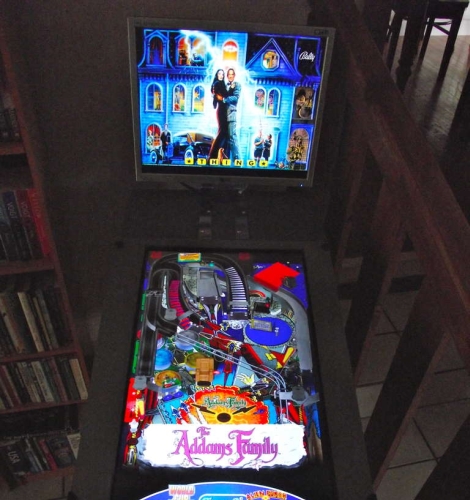
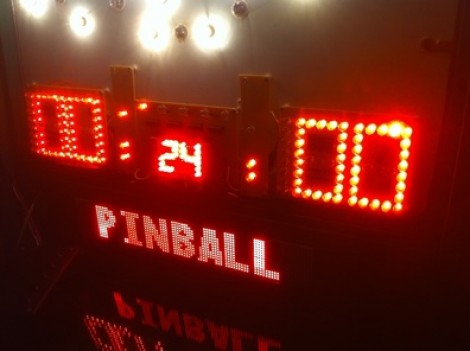
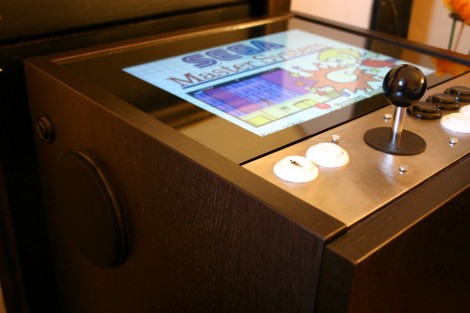
You won’t find those familiar steel balls inside this mini-pinball cabinet. That’s because [Luis’] latest creation is a fun way to play virtual pinball. The playing field is a 10″ LCD screen with an accompanying 8″ screen in the marquee. Inside the well-crafted case you’ll find a mini-ITX motherboard running HyperPin, a frontend software suite for LCD-based virtual pinball. He’s also using PinMame for the score board that was often provided by a gas plasma display on newer mechanical machines. There’s video after the break, and take a moment to check out [Luis’] other mini-cabinet builds.

What’s that you say? No substitute for the real thing? That’s exactly what [Ben Heck] thinks too.

Continue reading “Mini Pinball Is All-pixels”