Web Based Automation Courtesy Of Raspberry Pi

web-based-automation-via-rpi

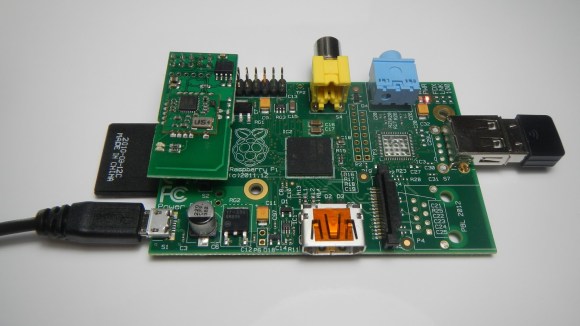
This project is a great example of the Raspberry Pi’s ability to eclipse Arduino when it comes to interaction. [Fall Deaf] mentions that he used to use an Arduino board with an Ethernet shield to add extensible interactivity to his project. But this one, which is a home automation lamp project, uses a Raspberry Pi instead. The concepts end up being very similar. But the cost of the hardware is less and the coding work is arguably orders of magnitude easier.

Don’t get us wrong, the hardware is fundamentally different. When you move from Arduino to RPi you lose some I/O pins and the low level control of them isn’t quite as straight-forward. But you also don’t have to program the thing in C. The Linux kernel handles the low level control which means you can write your scripts using Python. Because Python is an interpreted language the testing and debugging is much faster — no need to flash new code, just run the script again.

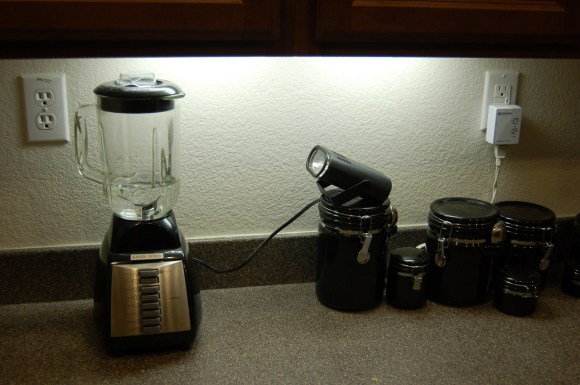
This project used the RPi GPIO to drive a strip of LEDs which use the WS2801 protocol. The board includes a NIC which makes it a snap to use as a web server. The smart phone controls seen above are served up from the Pi using jQuery. Right now there’s a cord running out of the lamp. But there should be plenty of room to use a screw-in outlet adapter and to hide the RPi and its PSU inside.

The board still has enough juice to drive other automation features too, like acting as a web radio server.

Continue reading “Web Based Automation Courtesy Of Raspberry Pi”

3D Printed Dispenser Flings Treats At Your Pets

internet-connected-dog-treat-dispenser

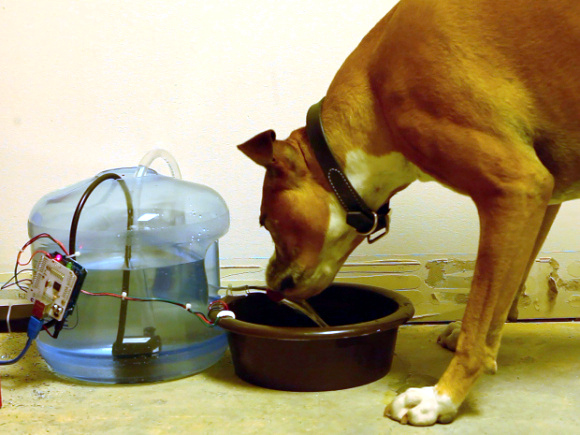
If you’re stuck in the virtual world like [Kevin Flynn] you can still make sure your pup is rewarded for good behavior. Just follow [Jwarp’s] design for this Internet connect dog treat dispenser.

We were actually a bit surprised by the demo video. It shows that the compact unit is more than capable of reliably dispensing one treat at a time. It started as a wood prototype which allowed him to tweak how the servo motors worked before laying out all of the 3D parts in Sketch Up. Two motors cooperate to get the job done. The first allows one treat to exit that shoot coming from the center of the hopper. The other stirs the remaining inventory to both position the next treat and loosen any jams.

Continue reading “3D Printed Dispenser Flings Treats At Your Pets”

Teardrop Camper Combines Simplicity, Style, And Function

teardrop-camper

They needed a place to stay on road trips and at music festivals. This teardrop camper certainly fits the bill. And it’s got a look that will make you proud to unfold yourself into the parking lot every morning.

Starting from a flat frame the camper skeleton was built up using plywood sides and cross pieces to help support the sweeping roof. It was then covered with 1/4″ Birch plywood which has enough flexibility to follow the contour. Inside you won’t find much in the way of frills, but the entire floor is a 4″ thick foam mattress which is a lot better that camping out. There’s a dome on top which can opens for ventilation and a hatch on the rear to carry some extras along on your adventure.

[via Reddit]


A Custom Cooler, Sewing Not Required

soduh

When you go to the beach or on a camping trip this summer, notice how you pack your cooler. Your beverages already come in a box, yet you remove them and put them in a larger, insulated box. [Jason] thought it would be a great idea to just add insulation to a case of soda (or other beverages, we assume) and ended up making a custom soda cooler.

The fabrication of this cooler is actually pretty simple. A layer of flexible foam is sandwiched between two layers of waterproof vinyl with spray glue. After tracing out a pattern, [Jason] then cut this fabric into panels and glued them together into a soda box-sized cooler. Simple, elegant, and something even hackers that didn’t take home ec can put together in a few hours.

As an aside, we at Hackaday seem to forget the ‘softer’ builds of fabric, foam, and paper far too often. That doesn’t mean we eschew these projects; I have a barely post-war Singer 15 sewing machine right above my workbench. Send us a tip if you have one of these soft hacks. We’d love to see it.

Video of the build below.

Continue reading “A Custom Cooler, Sewing Not Required”

Pull-out Pantry Fills Space Next To Refrigerator

pull-out-pantry


Your refrigerator needs a few inches of space on the hinge side in order for the door to open fully. If there’s a wall on that side it means you leave a gap. A bit of lumber and some inexpensive hardware can turn that gap into a pull-out pantry.

This picture is from [Ratmax00’s] pantry project. He had a 6.5″ gap to work with and started the build by making a wooden frame using pocket screws for the butt joints. Four casters were added to the bottom to make it roll in and out easily. He needed a handle and a way to make sure commodities didn’t fall off the shelves. He chose to use a 3D printer for brackets that hold the fence dowels and a custom handle. If you don’t have that just hit the cabinet hardware aisle at your local home store.

We wonder if it would have been possible to use full-extension draw rails mounted above and below the cabinet in addition to a couple of wheels? This would help keep the pantry from scraping against the fridge or the wall.

While you’re building bookshelf sized things why not get to work on a hidden door as well?

Perfect Wall-mounted Tablet Integration

There’s a building downtown built about ten years ago that has tablet-sized LCD screens next to the entrance of each large meeting room. They’re never on and we always wonder why they didn’t just use one of those things that holds a sheet of printer paper to label what’s happening in the meeting space? Now this is a similar idea but with much better execution. Instead of just displaying data the in-wall tablet mount makes your room interactive.

[Tim’s] been working on it for a couple of years. He started out trying to house an iPod Touch behind a junction box cover plate. There are some pictures of that at the top of his build album. That didn’t quite take so keep scrolling to see the path to the finished product shown above. He cut a hole in the drywall and figured out how to mount a tablet dock that includes inductive charging. It holds the tablet in place with the small ledge and a few magnets, keeping its battery charged without a need for wires. Once tested he mudded, sanded, textured, and painted for a perfect finished product.

Deep Woods Cabin; One Man, His Tools, And A Camera On A Tripod

We remember watching Alone in the Woods years ago on Public Television. It’s a story of a self-sufficient man named [Dick Proenneke] who loved the outdoors and decided to live alone in the Alaskan wilderness. It’s a remarkable story made more so by the film footage he made to document his experience. That teaser doesn’t do it justice, so check out the web page summaries as well and consider picking up a copy of the films for yourself.

The films include hiking, hunting, observing nature, and building this sweet pad which even [Steve] would be proud of. The first summer he left his native Iowa and scouted for cabin locations near Twin Lakes, Alaska. After finding a suitable location he felled enough trees to build the entire 11′ by 14′ structure and headed back home for the winter.

The next summer he packed in the tools seen above, and got to work. His build includes a stone fire-place as well as a door, windows, and a moss-covered roof. He did return to the continental US one more time, but ended up going back to Alaska to spend another 30 years in the cabin.

Continue reading “Deep Woods Cabin; One Man, His Tools, And A Camera On A Tripod”