Carbon Nanotube Transistors Are On The Passing Lane

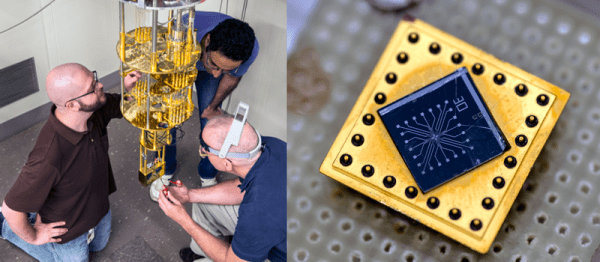
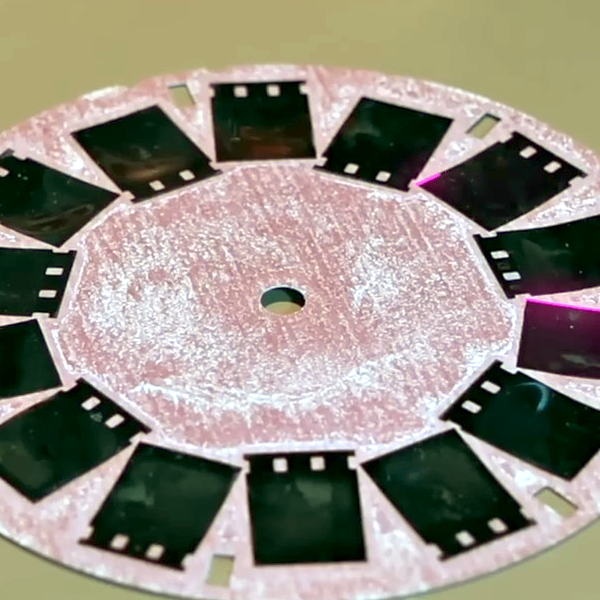
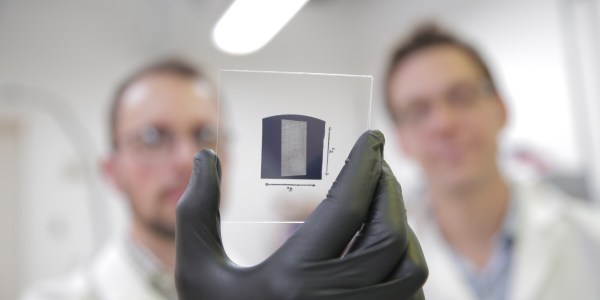
There are many obstacles in the way to turning carbon nanotubes into something useful. Materials engineers at the University of Wisconsin-Madison have now brought carbon nanotubes (CNTs) one step closer to becoming practically applicable for semiconductor electronics. In particular, the team managed to assemble arrays of carbon nanotube transistors that outperform their silicon-based predecessors.

Continue reading “Carbon Nanotube Transistors Are On The Passing Lane”

Inventables Releases Improved X-Carve CNC Router

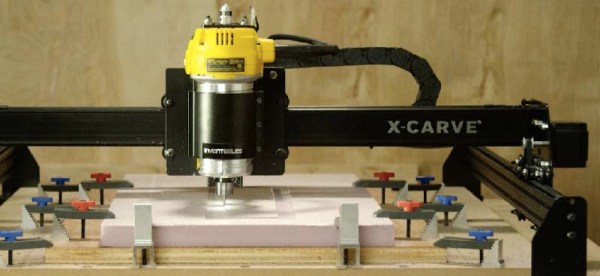
Introduced last year as an improvement on the very popular Shapeoko CNC router, the X-Carve by Inventables has grown to be a very well-respected machine in the community. It’s even better if you throw a DeWalt spindle on there, allowing you to cut almost everything that’s not steel. With a recent upgrade to the X-Carve, it’s even more capable, featuring the best mods and suggestions from the community that has grown up around this machine.

The newest iteration of the X-Carve features higher power drivers, better rigidity, and a heat sink for the spindle. That last item is an interesting bit of kit – routing takes time, and a 1¼HP motor will turn electricity into heat very effectively.

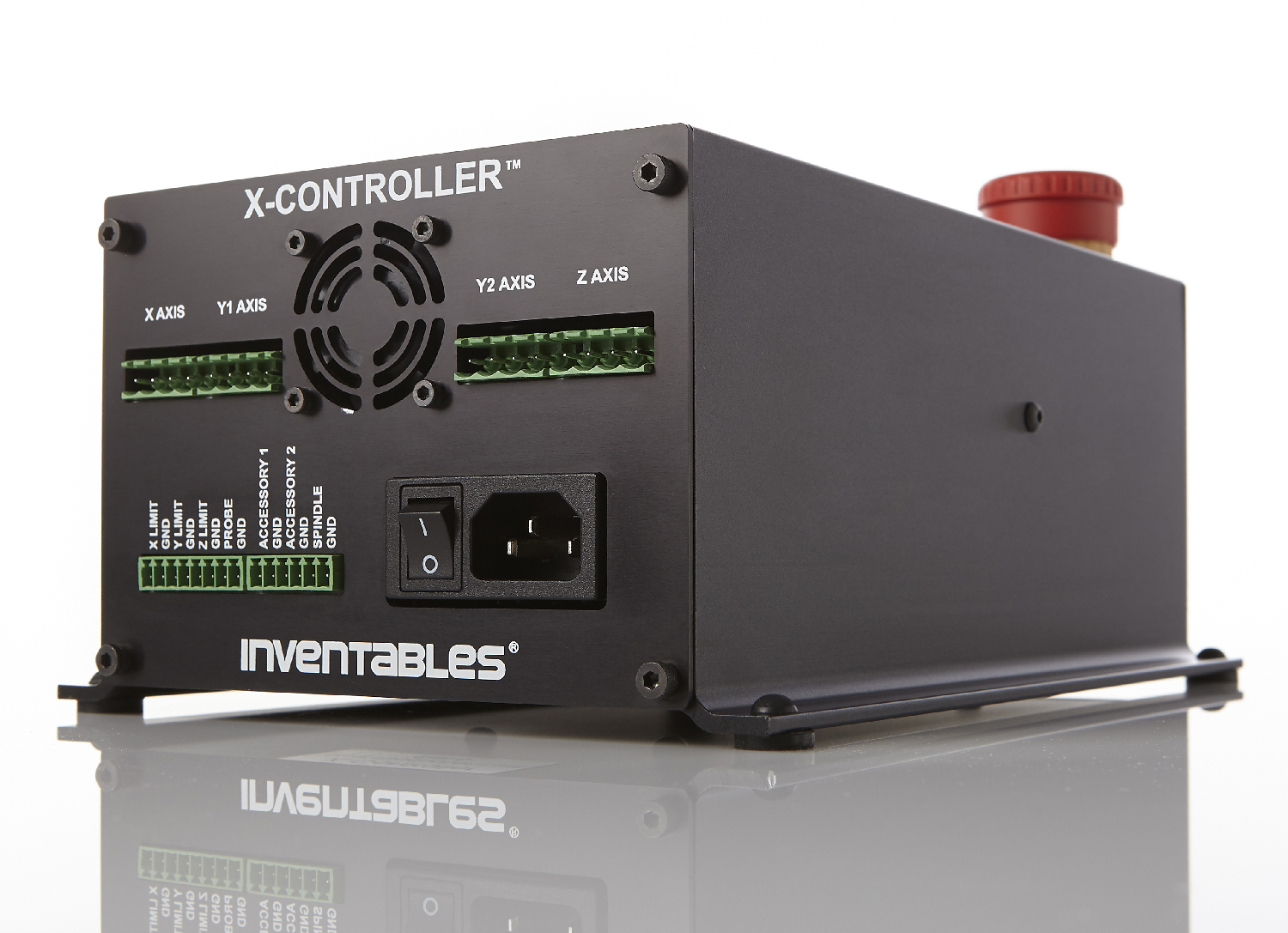
X-CarveIn addition to the 500mm square and 1000mmm square routers previously available, there’s a new, 750mm square machine available. All machines feature a new electronics box for the X-Carve, the X-Controller. This ‘brain box’ is a combined power supply, stepper driver, and motion controller built into a single box. The stepper drivers are able to supply 4A to a motor, is capable of 1/16 microstepping, and has connections for limit switches, spindle control speed, a Z probe, and outputs for vacuums or coolant systems. The underlying controller is based on grbl, making this brain box a very solid foundation for any 3-axis CNC build. The ‘brain box’ format seems to be the way the hobbyist CNC market is going, considering the whispers and rumors concerning Lulzbot selling their Taz6 brainbox independently from a 3D printer.

The new X-Carve is available now, with a fully-loaded 1000mm wide machine coming in at about $1400. That’s comparable to many other machines with the same volume, unlike the Chinese 3040 CNC machines, you don’t need to find an old laptop with a parallel port.

Citizen Scientist Radio Astronomy (and More): No Hardware Required

We sometimes look back fondly on the old days where you could–it seems–pretty easily invent or discover something new. It probably didn’t seem so easy then, but there was a time when working out how to make a voltage divider or a capacitor was a big deal. Today–with a few notable exceptions–big discoveries require big science and big equipment and, of course, big budgets. This probably isn’t unique to our field, either. After all, [Clyde Tombaugh] discovered Pluto with a 13-inch telescope. But that was in 1930. Today, it would be fairly hard to find something new with a telescope of that size.

However, there are ways you can contribute to large-scale research. It is old news that projects let you share your computers with SETI and protein folding experiments. But that isn’t as satisfying as doing something personally. That’s where Zooniverse comes in. They host a variety of scientific projects that collect lots of data and they need the best computers in the world to crunch the data. In case you haven’t noticed, the best computers in the world are still human brains (at least, for the moment).

Their latest project is Radio Meteor Zoo. The data source for this project is BRAMS (Belgian Radio Meteor Stations). The network produces a huge amount of readings every day showing meteor echoes. Detecting shapes and trends in the data is a difficult task for computers, especially during peak activity such as during meteor showers. However, it is easy enough for humans.

Continue reading “Citizen Scientist Radio Astronomy (and More): No Hardware Required”

Fixing The Ampere: Redefining The SI Unit

We all know that it’s not the volts that kill you, it’s the amps. But exactly how many electrons per second are there in an amp? It turns out that nobody really knows. But according to a press release from the US National Institute of Standards and Technology (NIST), that’s all going to change in 2018.

The amp is a “metrological embarrassment” because it’s not defined in terms of any physical constants. Worse, it’s not even potentially measurable, being the “constant current which, if maintained in two straight parallel conductors of infinite length, of negligible circular cross-section, and placed 1 meter apart in vacuum, would produce between these conductors a force equal to 2 x 10⁻⁷ newton per meter of length.” You can’t just order a spool of infinite length and negligible cross-section wire and have it express shipped.

So to quantify the exact number of electrons per second in an amp, the folks at NIST need an electron counter. This device turns out to be a super-cooled, quantum mechanical gate that closes itself once an electron has passed through. Repeatedly re-opening one of these at gigahertz still provides around a picoamp. Current (tee-hee) research is focused on making practical devices that push a bit more juice. Even then, it’s likely that they’ll need to gang 100 of these gates to get even a single microamp. But when they do, they’ll know how many electrons per second have passed through to a few tens of parts per billion. Not too shabby.

We had no idea that the amp was indirectly defined, but now that we do, we’re looking forward to a better standard. Thanks, NIST!

Thanks [CBGB123B] for the tip!

Police Baffled? Send For The Radio Amateurs!

The police force in Evanston, Illinois had a problem on their hands. A mystery transmitter was blocking legal use of radio devices, car key fobs, cellphones, and other transmitters in an area of their city, and since it was also blocking 911 calls they decided to investigate it. Their first call for help went to the FCC who weren’t much use, telling them to talk to the manufacturers of the devices affected.

Eventually they approached the ARRL, the USA’s national amateur radio organisation, who sent along [Kermit Carlson, W9XA] to investigate. He fairly quickly identified the frequencies with the strongest interference and the likely spot from which it originated, and after some investigation it was traced to a recently replaced neon sign power supply. Surprisingly the supply was not replaced with a fault-free unit, its owner merely agreeing to turn it off should any further interference be reported.

The ARRL are highlighting this otherwise fairly unremarkable case to draw attention to the problem of devices appearing on the market with little or no pretence of electromagnetic compatibility compliance. In particular they are critical of the FCC’s lacklustre enforcement response in cases like this one. It’s a significant problem worldwide as huge numbers of very cheap switch-mode mains power supplies have replaced transformers in mains power applications, and in any center of population its effects can be readily seen with an HF radio in the form of a significantly raised RF noise floor. Though we have reported before on the FCC’s investigation of the noise floor problem we’d be inclined to agree with the ARRL that it is effective enforcement of EMC regulations that is key to the solution.

City of Evanston police vehicle picture, [Inventorchris] (CC BY-NC 2.0) via Flickr.

Intel Releases The Tiny Joule Compute Module

At the keynote for the Intel Developers Forum, Intel CEO Brian Krzanich introduced the Intel Joule compute module, a ‘maker board’ targeted at Internet of Things developers. The high-end board in the lineup features a quad-core Intel Atom running at 2.4 GHz, 4GB of LPDDR4 RAM, 16GB of eMMC, 802.11ac, Bluetooth 4.1, USB 3.1, CSI and DSI interfaces, and multiple GPIO, I2C, and UART interfaces. According to the keynote, the Joule module will be useful for drones, robotics, and with support for Intel’s RealSense technology, it may find a use in VR and AR applications. The relevant specs can be found on the Intel News Fact Sheet (PDF).

This is not Intel’s first offering to the Internet of Things. A few years ago, Intel partnered up with Arduino (the Massimo one) to produce the Intel Galileo. This board featured the Intel Quark SoC, a 400MHz, 32-bit Intel Pentium ISA processor. It was x86 in an Arduino format. This was quickly followed by the Intel Edison based on the same Quark SoC, which was followed by the Intel Curie, found in the Arduino 101 and this year’s DEF CON badge.

We’ve seen plenty of Intel’s ‘maker’ and Internet of Things offerings, but we haven’t seen these platforms succeed. You could spend hundreds of thousands of dollars in market research to determine why these platforms haven’t seen much success, but the Hackaday comments will tell you the same thing for free: the documentation for these platforms is sparse, and nobody knows how to make these boards work.

Perhaps because of the failures of Intel’s IoT market, the Joule differs significantly from previous offerings. Although it can be easily compared to the Raspberry Pi, Beaglebone, and a hundred other tiny single board computers, the official literature for the Joule makes a comparison between it and the Nvidia Jetson easy. The Nvidia Jetson is a high-power, credit card-sized ‘supercomputer’ meant to be a building block for high-performance applications, such as drones and anything that requires video or a very fast processor. The Joule fits into this market splendidly, with demonstrated applications including augmented reality safety glasses for Airbus employees and highway patrol motorcycle helmet displays. Here, the Joule might just find a market. This might even be the main focus of the Joule – it can be integrated onto Gumstix carrier boards, providing a custom single board computer with configurable displays, connectors, and sensors.

The Intel Joule lineup consists of the Joule 570x and 550x, with the 550x being a bit slower, a Gig less RAM, and half as much storage. They will be available in Q4 2016 from Mouser, Newegg, and other Intel reseller partners.

Google’s New OS Will Run On Your Raspberry Pi

According to reports from Android Police and ZDNet, you may soon have a new operating system from Google to run on your Raspberry Pi. Details are still extremely sparse, the only description on the GitHub page is “Pink + Purple == Fuchsia (a new Operating System)”. But, here’s what we do know:

The new OS, called Fuchsia, will be based on Magenta, which is in turn built on LittleKernel. That means that, surprisingly, Google will not be using a Linux kernel for the new OS but something more like an embedded RTOS. Although Google is targeting embedded systems, the possibility of being able to run it on a desktop has been mentioned, so it may not be too minimalistic.

Google’s Travis Geiselbrecht has named the Raspberry Pi 3 specifically as one system it will run on, and said that it’ll be available soon. But, it seems Google is aiming to make it run on a variety of ARM devices (both 32 bit and 64 bit), as well as 64 bit PCs. This is a direct effort to compete against other commercial embedded operating systems that are currently available, and especially on IoT devices.

If you’re eager to see what this is all about, you can follow Google’s quick start recipes and see what you can come up with, although details are still sketchy enough that we’re just going to wait a bit.