The Solar System Is Weirder Than You Think

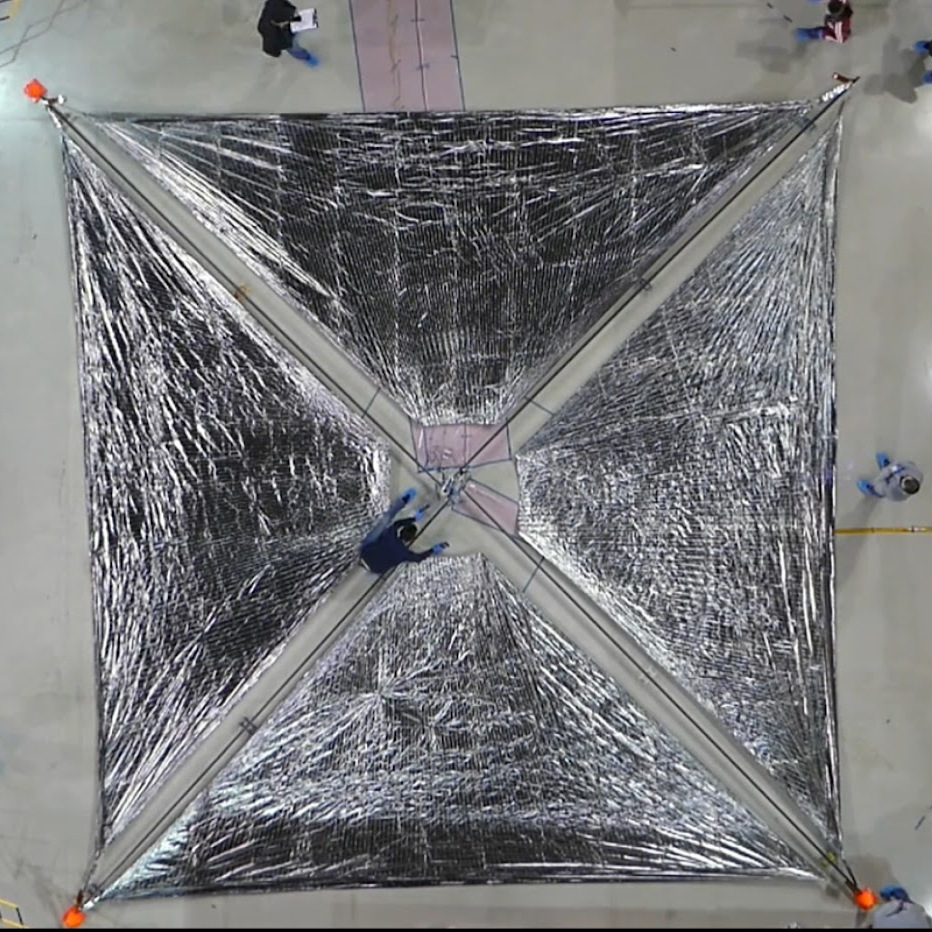
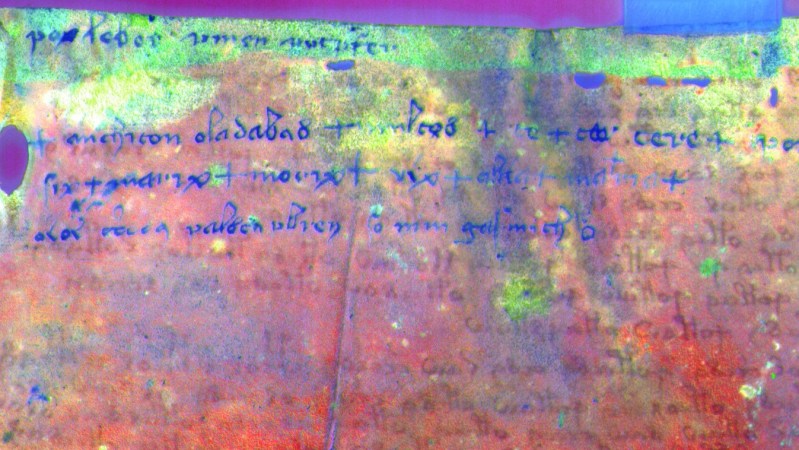
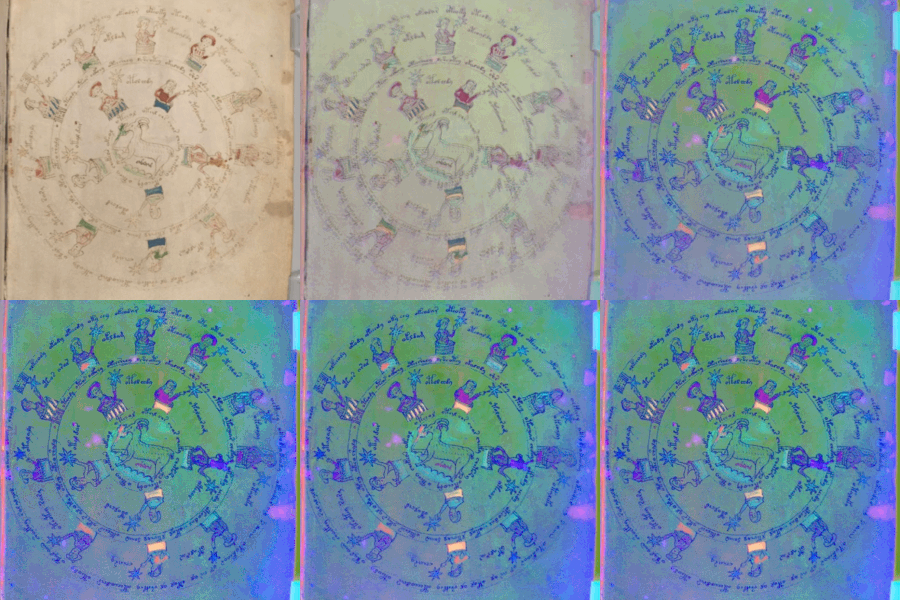
When I was a kid, the solar system was simple. There were nine planets and they all orbited in more-or-less circles around the sun. This same sun-and-a-handful-of-planets scheme repeated itself again and again throughout our galaxy, and these galaxies make up the universe. It’s a great story that’s easy to wrap your mind around, and of course it’s a great first approximation, except maybe that “nine planets” thing, which was just a fluke that we’ll examine shortly.

What’s happened since, however, is that telescopes have gotten significantly better, and many more bodies of all sorts have been discovered in the solar system which is awesome. But as a casual astronomy observer, I’ve given up hope of holding on to a simple mental model. The solar system is just too weird.

Continue reading “The Solar System Is Weirder Than You Think”

Bidirectional Data Transfer Through Mud?

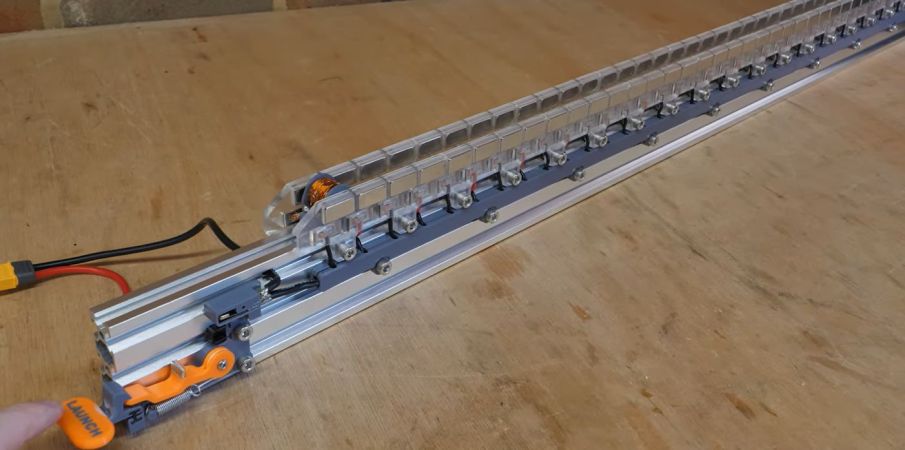
We take easy communications for granted these days. It’s no bother to turn on a lightbulb remotely via a radio link or sense the water level in your petunias, but how does a drilling rig sense data from the drill head whilst deep underground, below the sea bed? The answer is with mud pulse telemetry, about which a group of researchers have produced a study, specifically about modelling the signal impairments and strategies for maintaining the data rate and improving the signal quality.

If you’re still confused, mud pulse telemetry (MPT) works by sending a modulated pressure wave vertically through the column of mud inside the drilling tube. It’s essential to obtain real-time data during drilling operations on the exact angle and direction the drill bit is pointing (so it can be corrected) and details of geological formations so decisions can be made promptly. The goal is to reduce drilling time and, therefore, costs and minimize environmental impact — although some would strongly argue about that last point.

Continue reading “Bidirectional Data Transfer Through Mud?”

A Compact Electrohydrodynamic Pump Using Copper And TPU

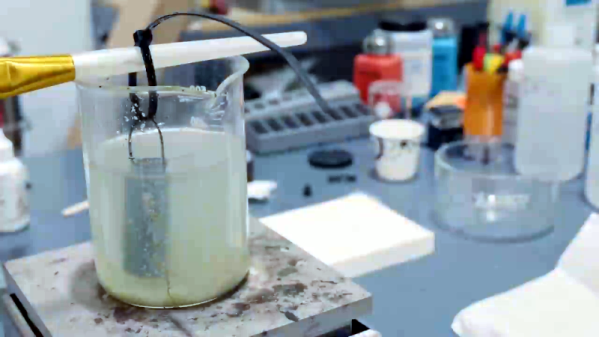
Electrohydrodynamics (EHD) involves the dynamics of electrically charged fluids, which effectively means making fluids move using nothing but electric fields, making it an attractive idea for creating a pump out of. This is the topic of a 2023 paper by [Michael Smith] and colleagues in Science, titled “Fiber pumps for wearable fluidic systems”. The ‘fiber pumps’ as they call the EHD pumps in this study are manufactured by twisting two helical, 80 µm thick copper electrodes around a central mandrel, along with TPU (thermoplastic polyurethane) before applying heat. This creates a tube where the two continuous electrodes are in contact with any fluids inside the tube.

For the fluid a dielectric fluid is required to create the ions, which was 3M Novec 7100, a methoxy-fluorocarbon. Because of the used voltage of 8 kV, a high electrical breakdown of the fluid is required. After ionization the required current is relatively low, with power usage reported as 0.9 W/m, with one meter of this pump generating a pressure of up to 100 kilopascals and a flowrate of 55 mL/minute. One major limitation is still that after 6 days of continuous pumping, the copper electrodes are rendered inert due to deposits, requiring the entire system to be rinsed. Among the applications the researchers see artificial muscles and flexible tubing in clothing to cool, heat and provide sensory feedback in VR applications.

While the lack of moving parts as with traditional pumps is nice, the limitations are still pretty severe. What is however interesting about this manufacturing method is that it is available to just about any hobbyist who happens to have some copper wiring, TPU filament and something that could serve as a mandrel lying around.

Thanks to [Aaron Eiche] for the tip.

Fourier, The Animated Series

We’ve seen many graphical and animated explainers for the Fourier series. We suppose it is because it is so much fun to create the little moving pictures, and, as a bonus, it really helps explain this important concept. Even if you already understand it, there’s something beautiful and elegant about watching a mathematical formula tracing out waveforms.

[Andrei Ciobanu] has added his own take to the body of animations out there — or, at least, part one of a series — and we were impressed with the scope of it. The post starts with the basics, but doesn’t shy away from more advanced math where needed. Don’t worry, it’s not all dull. There’s mathematical flowers, and even a brief mention of Pink Floyd.

The Fourier series is the basis for much of digital signal processing, allowing you to build a signal from the sum of many sinusoids. You can also go in reverse and break a signal up into its constituent waves.

We were impressed with [Andrei’s] sinusoid Tetris, and it appears here, too. We’ve seen many visualizers for this before, but each one is a little different.

Mechanic Prince Of Tides

Lord Kelvin’s name comes up anytime you start looking at the history of science and technology. In addition to working on transatlantic cables and thermodynamics, he also built an early computing device to predict tides. Kelvin, whose real name was William Thomson, became interested in tides in a roundabout way, as explained in a recent IEEE Spectrum article.

He’d made plenty of money on his patents related to the telegraph cable, but his wife died, so he decided to buy a yacht, the Lalla Rookh. He used it as a summer home. If you live on a boat, the tides are an important part of your day.

Today, you could just ask your favorite search engine or AI about the tides, but in 1870, that wasn’t possible. Also, in a day when sea power made or broke empires, tide charts were often top secret. Not that the tides were a total mystery. Newton explained what was happening back in 1687. Laplace realized they were tied to oscillations almost a century later. Thomson made a machine that could do the math Laplace envisioned.

We know today that the tides depend on hundreds of different motions, but many of them have relatively insignificant contributions, and we only track 37 of them, according to the post. Kelvin’s machine — an intricate mesh of gears and cranks — tracked only 10 components.

In operation, the user turned a crank, and a pen traced a curve on a roll of paper. A small mark showed the hour with a special mark for noon. You could process a year’s worth of tides in about 4 hours. While Kelvin received credit for the machine’s creation, he acknowledged the help of many others in his paper, from craftsmen to his brother.

We actually did a deep dive into tides, including Kelvin’s machine, a few years ago. He shows up a number of times in our posts.

Can You Hear Me Now? Try These Headphones

When you are young, you take it for granted that you can pick out a voice in a crowded room or a factory floor. But as you get older, your hearing often gets to the point where a noisy room merges into a mishmash of sounds. University of Washington researchers have developed what they call Target Speech Hearing. In plain English, it is an AI-powered headphone that lets you look at someone and pull their voice out of the chatter. For best results, however, have to enroll their voice first, so it wouldn’t make a great eavesdropping device.

If you want to dive into the technical details, their paper goes into how it works. The prototype uses a Sony noise-cancelling headset. However, the system requires binaural microphones so additional microphones attach to the outside of the headphones.

Continue reading “Can You Hear Me Now? Try These Headphones”

The Genius Of Slide Rule Precision

Most people have heard of or seen slide rules, with older generations likely having used these devices in school and at their jobs. As purely analog computers these ingenious devices use precomputed scales on slides, which when positioned to a specific input can give the output to a wide range of calculations, ranging from simple divisions and multiplications to operations that we generally use a scientific calculator for these days. Even so, these simple devices are both very versatile and can be extremely precise, as [Bob, the Science Guy] demonstrates in a recent video.

Slide rules at their core are very simple: you got different scales (marked by a label) which can slide relative to each other. Simple slide rules will only have the A through D scales, with an input provided by moving one scale relative to the relevant other scale (e.g. C and D for multiplication/division) after which the result can be read out. Of course, it seems reasonable that the larger your slide rule is, the more precision you can get out of it. Except that if you have e.g. the W1 and W2 scales on a shorter (e.g. 10″) slide rule, you can use those to get the precision of a much larger (20″) slide rule, as [Bob] demonstrates.

Even though slide rules have a steeper learning curve than punching numbers into a scientific calculator, it is hard to argue the benefits of understanding such relationships between the different scales, and why they exist in the first place.

Continue reading “The Genius Of Slide Rule Precision”