HaD Links – Quakepocalypse Edition: August 23, 2011

Well, if you hadn’t noticed the news there has been a little bit of a shakeup on the east coast. I just arrived home after being evacuated due to a 30 second rumble the likes of which has not been felt on the east coast in something like 114 years. In lieu of the not so devastating but earth shaking event we thought we’d put together a few earthquake related links for you.

Earthquake-proof Wine Rack

First off instructables user [jofish] has a quick remedy if earthquakes are constantly destroying all the wine on your wine rack. He researched some existing commercial products and simply copied them by stapling cheap O rings to the front of the rack. We assume the back of the wine rack is secured to the wall as well.

Vertical Seismometer
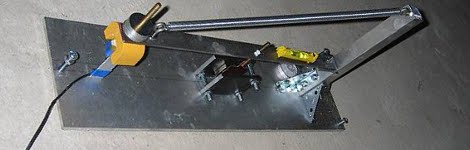
Next up is a vertical seismometer from [Mike] over at mikesense.com. This was in response to a slightly more threatening 7.2 earthquake he experienced in Baja California last year. A vertical seismometer measures the movement of a weight either electronically or mechanically, and then damps the motion of the oscillation by a magnet or some other means. This particular design is known as the AS-1 developed by [Jeff Batten]. Matt’s page has links to everything you’d need to know including build videos.

Predict Seismic Activity with Hard Drives

If you are looking for some non-conventional ways of tracking seismic activity we have a pair of articles that detail earthquake tracking using your disk drive’s accelerometer. [Michael Stadler] realized the potential for all these sensors and released a program that creates a peer-to-peer network compiling data from the sensors. We are not too comfortable with the prospect of somebody tracking every time we drop or kick (or drop-kick) our laptops but 2500 users in Asia downloaded the software in ’06. The second article details an effort lead by IBM to monitor the fixed hard drives in server racks which generally remain far more stationary.

Simple DIY Earthquake Simulator
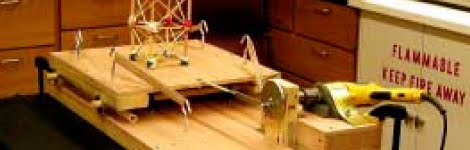
Finally for those of you who want to cause (miniature) earthquakes, we dug up this MTU project using plywood, an electric drill, rubber bands and some bearings to fabricate a DIY shake table (PDF warning). We are sure there are tons of improvements that can be made but this is a pretty fun project if you have a bunch of CNC parts lying around (we wish we did).

MIDI Air Drums Let You Play Anywhere

[Maayan Migdal] wrote in to share a really cool drum kit he constructed that has one special twist – no drums at all. Using a simple MIDI device and an Arduino, his “Air Drums” look pretty sweet.

The hack makes use of a pair of garden rakes, which serve as his drum sticks. The rakes were cut down and modified to allow the addition of accelerometers and some USB cables. The left stick contains a single accelerometer for registering hi-hat hits, while the right stick is armed with a pair of the modules, which are used to trigger snare and crash symbol strikes. He modified a pair of sandals to fit better while drumming before adding a sensor to each shoe. The left sandal contains an accelerometer to register bass drum hits, while the right shoe uses a light sensor to simulate the use of a hi-hat pedal.

We think that the results are awesome, but feel free to check out the video below to see what we mean. If Guitar Hero wasn’t dead in the water on hiatus, we think this sort of setup would make a great replacement for the flimsy drum set that comes with the game.

Continue reading “MIDI Air Drums Let You Play Anywhere”

DIY Segway Recycles Broken Electric Scooters

[Petter] built himself a DIY Segway out of a couple of cheap electric scooters. We’ve seen a couple of very nice Segway builds in the past like the all analog Segway, or the creepy walking version, [Petter]’s Segway build seems like it would be a useful human transport device.

The motors, chains, gears, and wheels are scavenged from a pair of electric scooters. Steering left and right is accomplished by tilting the handlebars left and right. The handlebars themselves are attached to the joint at a base that allows them to be taken on and off. We’re thinking this would be great for throwing a [Petter]’s Segway in the trunk of a car – a design feature the original Segway doesn’t have.

Continue reading “DIY Segway Recycles Broken Electric Scooters”

Pass The Bomb Electronic Drinking Game

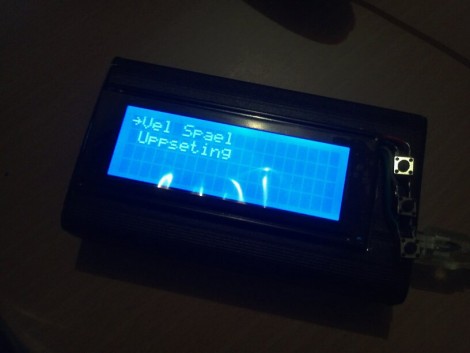
[Ragnar] and his friends were getting tired of the usual Friday night drinking games. They went through dice games, card game, and TV show based games before [Ragnar] retired to his workbench to whip up an electronic solution that would randomly pick a player and assign a certain number of drinks. That’s a novelty at first but not really a game. After letting the project sit for some time he revisited it and came up with a more advanced solution. The box seen above is his second attempt; a game called pass the bomb.

The case is a black aluminum project box. The user interface includes a 20×4 character LCD and three buttons. Check the video after the break for the menu system as well as english translations. Once turned on you can set the sensitivity for the accelerometer and choose the game. For now, pass the bomb is the only option – a game that counts down to a digital explosion. Carefully pass the device to the next player without upsetting the accelerometer or it’ll go BOOM and you’ll have to drink.

We’d prefer to enjoy a nice frothy beverage rather than searching for reasons to throw back some shots, but whatever floats your boat.

Continue reading “Pass The Bomb Electronic Drinking Game”

All About Accelerometers

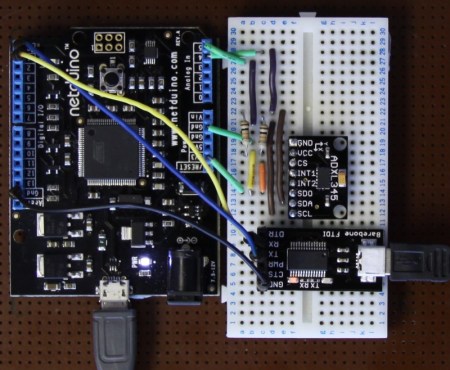
If you’ve ever wondered about the use of or theory behind or the use of accelerometers, this tutorial by Love Electronics is a very good resource. In this article, Love takes one through how to hook up an ADXL345 accelerometer and use it with a Netduino processor. Before the subject of hooking everything up is broached, a very good discussion is given on the general theory and operation of accelerometers.

Information is given about installing all the required software and libraries. Additionally, a mini tutorial about writing a “hello” application using the .NET framework is given. Finally, the application gives the [Windows Presentation Foundation] tools necessary to visualize the raw data that the Netduino produces.

One could really start using this processor and accelerometer from scratch with this tutorial and some basic electronics knowledge.  This could add a great new feature to your next robot or allow measurement that couldn’t be done with simpler sensors.

Red Bull Creation Contest Results

72 hours of hacking came to a head with the completion of the Red Bull Creation. This years challenge was to build something out of junk that moves a human. It’s hard to pull all the aspects of the event together in one place, so here’s some links you’ll want to check out if you weren’t able to attend.

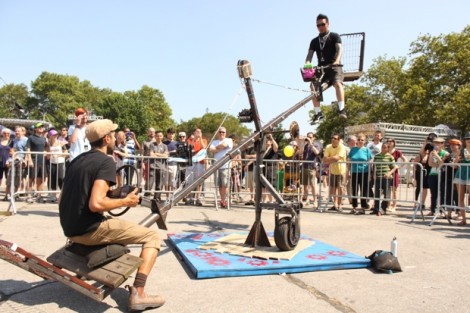
Tech Crunch has an overview of all the event winners. One of our favorites is pictured above. The spinning see-saw is not your average playground toy. Its built-in accelerometer waits for the forces to peak, then snaps a picture for later enjoyment. Techshop, a San Francisco hackerspace, took the team prize for their work on it. Don’t miss the video after the break

The overall winner was a team from Minneapolis called 1.21 Jigawatts. They produced a human-sized hamster wheel that pulled a small follower behind it. As you walk, the follower prints incoming text messages on the sidewalk, kind of like the chalkbot. We searched around for video of it, the best we could find is this one.

Continue reading “Red Bull Creation Contest Results”

On-dash G-meter Project Is Another Way To Distract Drivers

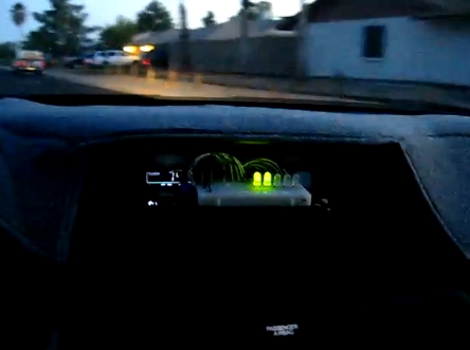
[PJ Allen] built a meter to display gravitation force in an easy to read way. Good thing it’s easy to read, because he’s added it to the dashboard of his car. That way he gets instant feedback when he puts the pedal to the metal. We’re hoping this encourages safe driving practices. But since it appears that not only is he watching the meter while he drives, he’s also holding a camera at the same time, we’d say this makes him a menace on the road.

But we do like the hardware concept. He used five Red/Green LEDs to show what the accelerometer is sensing. A green display reflects acceleration, while a red display shows deceleration. Inside the project box you’ll find a Parallax 2-axis accelerometer and an SX28 micrcontroller. This is an 8-bit Parallax chip family that was discontinued a few years back.