Meet The Teensy 3.0

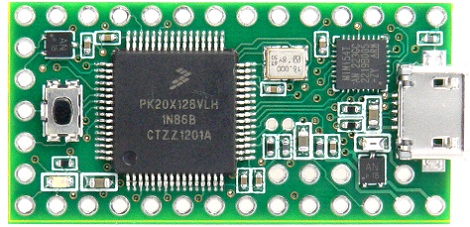
[Paul Stoffregen], the brains behind the popular and very capable Arduino-compatible Teensy development board, has offered his contribution to the explosion of ARM-powered boards with the Teensy 3.0.

The original Teensy is an AVR-based development board that goes far beyond the official Arduino offerings. The new and improved Teensy 3.0 improves upon an already wonderful platform with a 32 bit ARM Cortex-M4 microcontroller running at 48 MHz. There’s also a lot of pins available for whatever project you have in mind: the Teensy 3.0 supports 14 analog inputs, 10 PWM outputs, a USB host mode, and an I2S audio interface that will be very useful when accessing the microcontroller’s DSP functions.

There are a couple neat features on the Teensy 3.0 [Paul] somehow managed to work in. In addition to supporting a real-time clock, there are also a few extra IO pins in the middle of the board. [Paul] says the extra pins are due to Kinetis not releasing a 48 pin version of the microcontroller in time for production. It may not be what [Paul] originally had in mind, but we’ll take the upgraded board just the same.

Of course the Teensy 3.0 will be compatible with the Teensyduino Arduino IDE add-on, so if you’d like to run your Arduino sketches on a very powerful piece of hardware, this will be the board to use.
Building A PDA From Scratch

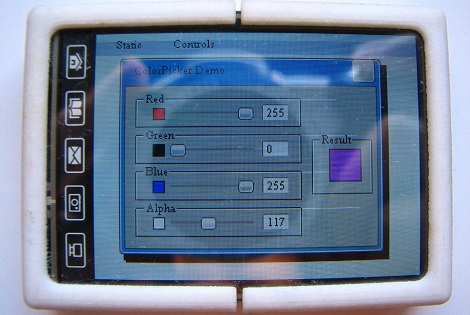
Extremely powerful ARM microcontrollers have been around for ages now, but only recently have they been available for just a few dollars with a good enough toolchain for some serious development work. [Jose] wanted to develop something awesome with an ARM chip he had lying around, so he built a PDA (Spanish, translation) that can be used as a game console, an oscilloscope, a clock, or a wristwatch. Basically, it’s a portable homebrew computer that can do just about anything.

The hardware is built around an ARM Cortex M4 chip clocked at 170MHz. Included on the PCB is an SD card slot, a JTAG interface, a USB port (only used for charging the battery at this point), and a touch screen LCD controller.

After designing the PCB and enclosure, [Jose] looked around the Internet for a decent GUI library without much success. He eventually found Gwen, a lightweight library for programming GUIs that is easily ported to [Jose]’s hardware.

So far, [Jose] has a few GUI demos up and running on his homebrew PDA, but nothing very useful yet. Still, the fact that [Jose] can get a full-featured ARM tablet-like piece of hardware off the ground without a team of developers brings a smile to our face. We can’t wait to see the state of homebrew ARM devices in a few years when everyone has the requisite hardware and software knowledge.

Preorder TI’s ARM Cortex-M4 Launchpad For $5 Delivered

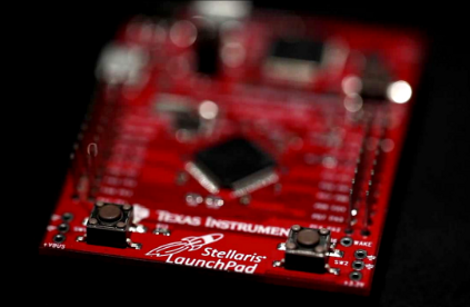
Texas Instruments just open preorders for the new Stellaris LaunchPad. The boards won’t ship until the end of September, but if you don’t mind the wait you can get one for $4.99 including delivery (we’d wager non-U.S. addresses have to pay for delivery, but leave a comment if you know for sure several readers have reported that international shipping is free).

We routinely pay more in shipping for parts orders so we already jumped at the opportunity and put in our own order. Earlier in the month we heard the first murmurs about the device. We’re glad to see they hit the $4.99 target price, but the TI website mentions that this is a promotional price that will be available for a limited time only. The board boasts an ARM Cortex-M4 processor, the Stellaris LM4F120H5QR. It includes 256 KB of flash memory, 32 KB of SRAM, and more peripherals than you can shake a stick at. To get you up and running quickly they’ve included two user buttons and an RGB LED. As with the 16-bit Launchpad, the board acts as its own programmer. It has a microUSB jack, but they’ve included a micro B to USB A cable in the kit to make sure you don’t need to also put in a cable order.

We’ll give a follow-up post once we finally get our hands on the board. We hope this will be easy to get working with a Linux box!

[Thanks Chris]

ARM-based Debugging Tool Aims To Improve On The Bus Pirate Performance

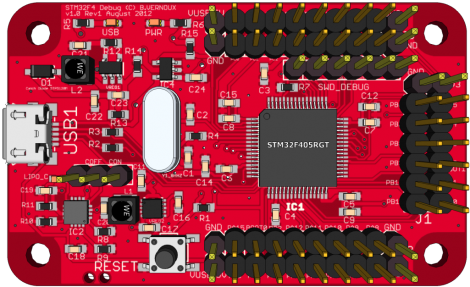
The Bus Pirate is a fantastic development tool. It does an amazing job at a lot of different things. And as it has matured, community support has driven it to new areas beyond the original design. This is where its hardware holds back performance a little bit. For instance, as an I2C or SPI sniffer it has limited capture speed. That’s the type of thing that this board could improve upon. It’s a debugging tool based on an STM32 F4 microcontroller. That’s an ARM Cortex-M4 chip which runs at 168 MHz, and has 192 KB of SRAM.

[TitanMKD] has been working on the design but it is still just in digital form. Since there’s no prototype there is also no firmware for the device. That’s a tall mountain to climb and it’s one of the reasons we’re featuring the project now. [Titan’s] plan is to model this after the Bus Pirate interface. We think it’s a good idea since a lot of folks have already learned the syntax. We didn’t see a contact form on his site, but if you’re interested in contributing to the project you might want to leave a comment here or on his project page (linked above).

USB Business Card Packs An ARM Processor

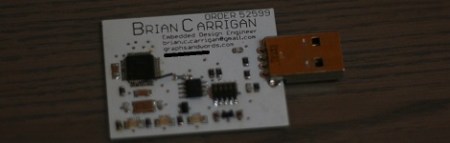
Over on the Hackaday forums, [Brian] introduced himself by showing off his new business card. Given his expertise is creating unique circuit boards, we can’t imagine a better way to show off his skills than an ARM-powered business card.

[Brian] posted a more detailed write-up on his blog that covers his development process. He decided to use a 48-pin LPC1343 ARM Cortex M3 as a USB Mass Storage Class device. All the heavy lifting for instantiating a USB storage device is handled by the microcontroller, so all [Brian] had to do was wire up a Flash memory chip and access it over an SPI interface.

The finished business card functions just like a USB thumb drive with a whopping 1 Megabyte of storage. That’s not a lot of storage, but it has more than enough room for [Brian]’s resume, a link to his website, and the full source code for his card.

The Coming Age Of ARM Chips For The Hobbyist

The days of the 8 bit Arduino may be quickly coming to a close. Sure, there will always be a place for AVRs in blinking LEDs and turning on relays, but for doing anything cool – playing MP3s, driving LCD displays, or running a CNC machine – you need the power of a 32 bit chip. [Brian Carrigan] put up a great tutorial on getting started with these bigger, more powerful micros and moving beyond what is possible with an 8 bit PIC or AVR.

These new 32 bit chips are much more powerful, but aren’t exactly hobbyist friendly. Most of the ARM chips we’ve found are stuffed into very fine pitch QFN or QFP packages that require a reflow oven to solder to a board. In fact, we can only find one through-hole Cortex M0 chip that is suited for breadboard development. This doesn’t make it easy to whip up a circuit in a few hours, so builders needing a very powerful microcontroller will be more dependent on dev boards.

Already there are a good number of ARM-based 32 bit dev boards available including the offerings from Leaf Labs, the extremely inexpensive STM Discovery boardKinetis KL25Z Freedom Board, the outrageously powerful BeagleBone, and the perpetually delayed Arduino (over) Due.

None of these boards are particularly new developments; they’ve all been around the block once or twice. However, there are many more options for 32 bit development than the current 8 bit PIC and AVR holy war. We’re going to turn the comments over to Hackaday readers with the following questions: what supersized dev board are you rolling with? What’s good for a beginner, and what should they watch out for?

TI’s Inexpensive Piccolo And Stellaris Dev Boards

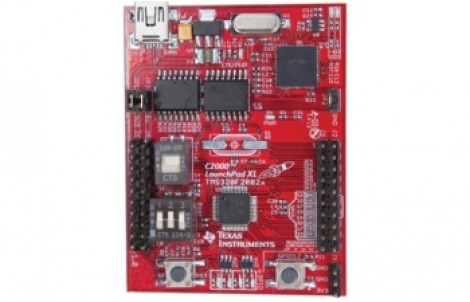
Texas Instruments is trying to take the success it had with the LaunchPad and apply it to other chip architectures. The board seen above is their new C2000 Piccolo LaunchPad. It’s a development board for the F28027 chip. This 32-bit offering is a part we know nothing about. A first look shows a clock speed between 40 and 60 MHz, 64k of Flash memory, and a JTAG programming interface. It sounds like an unrestricted copy of Code Composer Studio is also available to use as the development environment. At $17 won’t break the bank, but we also don’t feel that welling of excitement to get in on one of these units.

What does get us excited is the Stellaris LaunchPad offering. It’s not available yet (which always makes us want it more), but you can enter a drawing to get a free one when they are released. Be warned, with only 25 up for grabs the odds are against you. There are no details, other than a target price of $4.99 for the ARM development board. We’ve had a lot of fun with the STM32 ARM board, and this might be a new adventure to undertake.

[Thanks Máté]