How Would A Field Sequential Home Computer Have Worked?

The early history of colour TV had several false starts, of which perhaps one of the most interesting might-have-beens was the CBS field-sequential system. This was a rival to the nascent system which would become NTSC, which instead of encoding red, green, and blue all at once for each pixel, made sequential frames carry them.

The Korean war stopped colour TV development for its duration in the early 1950s, and by the end of hostilities NTSC had matured into what we know today, so field-sequential colour became a historical footnote. But what if it had survived? [Nicole Express] takes into this alternative history, with a look at how a field-sequential 8-bit home computer might have worked.

The CBS system had a much higher line frequency in order to squeeze in those extra frames without lowering the overall frame rate, so given the clock speeds of the 8-bit era it rapidly becomes obvious that a field-sequential computer would be restricted to a lower pixel resolution than its NTSC cousin. The fantasy computer discussed leans heavily on the Apple II, and we explore in depth the clock scheme of that machine.

While it would have been possible with the faster memory chips of the day to achieve a higher resolution, the conclusion is that the processor itself wasn’t up to matching the required speed. So the field-sequential computer would end up with wide pixels. After a look at a Breakout clone and how a field-sequential Atari 2600 might have worked, there’s a conclusion that field-sequential 8-bit machines would not be as practical as their NTSC cousins. From where we’re sitting we’d expect them to have used dedicated field-sequential CRT controller chips to take away some of the heartache, but such fantasy silicon really is pushing the boundaries.

Meanwhile, while field-sequential broadcast TV never made it, we do have field-sequential TV here in 2026, in the form of DLP projectors. We’ve seen their spinning filter disks in a project or two.


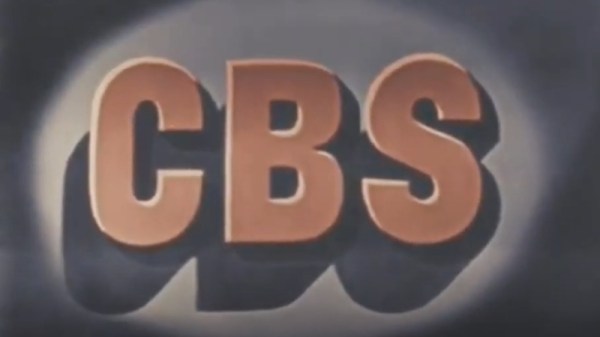
1950 CBS color logo: Archive.org, CC0.
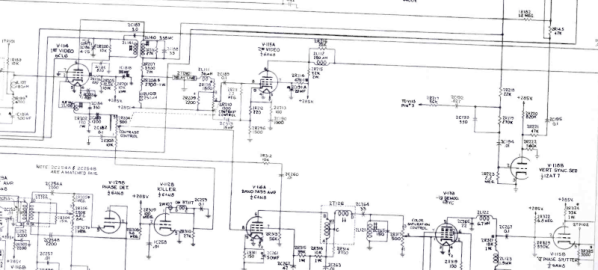
The Long Strange Trip To US Color TV

We are always fascinated when someone can take something and extend it in a clever way without changing the original thing. In the computer world, that’s old hat. New computers improve, but can usually run old software. In the real world, the addition of stereo to phonograph records and color to photography come to mind.

But there are few stories as strange or wide-ranging as the path to provide color TV. And it had to be done in a way that a color set could still get a black and white picture and black and white sets could still watch a color signal without color. You’d think there would be a “big bang” moment where color TV burst on the scene — no pun involving color burst intended. But there wasn’t. Instead, there was a long, twisted path with many competing interests and ideas to go from a world in black and white to one tinted with color phosphor.

Background

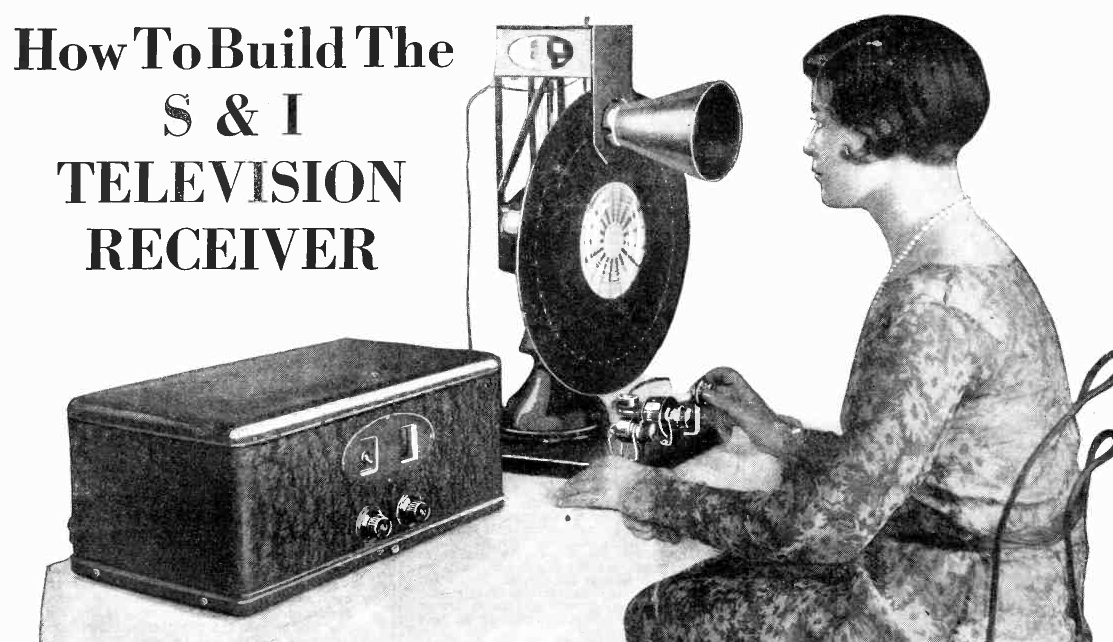
In 1928, Science and Invention magazine had plans for building a mechanical TV (although not color)

It is hard to imagine, but John Logie Baird transmitted color images as early as 1928 using a mechanical scanner. Bell Labs had a demonstration system, also mechanical, in 1929. Baird broadcast using his system in 1938. Even earlier, around 1900, there were attempts to create mechanical color image systems. Those systems were fickle or impractical, though.

Electronic scanning was the answer, but World War II froze most consumer electronics development. Baird showed an electronic color system in late 1944. However, it would be 1953 before NTSC (the National Television System Committee) adopted the standard color TV signal for the United States. It would be almost 20 years later before SECAM and PAL were standardized in other parts of the world.

Of course, these are all analog standards. The world’s gone digital now, but for nearly 50 years, analog color TV was the way people consumed TV in their homes. By 1941, NTSC produced a standard in the United States, but not for color TV. TV adoption didn’t really take off until after the war. But by 1950, the US had some 6 million TV sets.

This was both a plus — a large market — and a negative. No one wanted to obsolete those 6 million sets. Well, at least, the government regulators and consumers didn’t. But most color systems would be incompatible with those existing black and white sets. Continue reading “The Long Strange Trip To US Color TV”

Brandt Kuykendall ISP

One Man’s Journey To Becoming His Own ISP

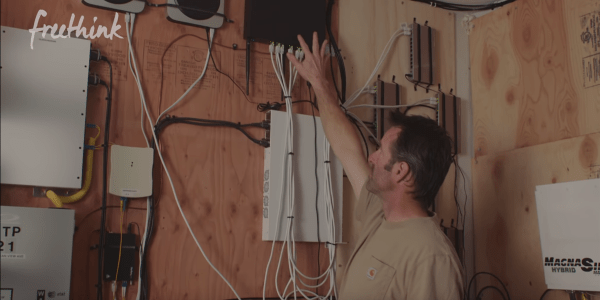
America is a BIG country. There are pockets all across the land where broadband Internet is slow-to-nonexistent, and many individuals are left with wireless cell service as their only means of internet connection. This is the situation [Brandt Kuykendall] found himself in upon moving his family to Dillon Beach, CA. So he started up his own fiber ISP. (YouTube, embedded below.)

“Cell phone service was really our only option, but that proved to be extremely expensive. My wife came home with the bill (of) $707, and that was the last straw.”

Despite being a mere two hours from the technological hub of San Francisco [Brandt] found himself dissatisfied with the level of service he was receiving from his provider. However, instead of shredding his current contract altogether he decided to go directly to the source. He tracked down the location of the AT&T cell tower in his area and made every call he could in order to find out who was in charge of “opening up the taps”. Months of negotiation between AT&T and [Brandt] ensued and eventually resulted in a fiber line being installed directly into his garage.

The story didn’t stop there, because [Brandt] took it upon himself to spread the wealth by providing his neighbors with Wi-Fi access to the fiber optic line in exchange for a small monthly fee. Employing the use of industrial-grade small cell transmitters he essentially created a point-to-point network along his neighbors’ roofs. [Brandt’s] garage serves as the network monitoring hub enabling him to diagnose any traffic issues. What began as one man seeking decent internet speeds burgeoned into a journey to becoming his own ISP which now serves over 100 other residents of the Dillon Beach area.

Continue reading “One Man’s Journey To Becoming His Own ISP”

Have Some Candy While I Steal Your Cycles

Distributed computing is an excellent idea. We have a huge network of computers, many of them always on, why not take advantage of that when the user isn’t? The application that probably comes to mind is Folding@home, which lets you donate your unused computer time to help crunch the numbers for disease research. Everyone wins!

But what if your CPU cycles are being used for profit without your knowledge? Over the weekend this turned out to be the case with Showtime on-demand sites which mined Monero coins while the users was pacified by video playback. The video is a sweet treat while the cost of your electric bill is nudged up ever so slightly.

It’s an interesting hack as even if the user notices the CPU maxing out they’ll likely dismiss it as the horsepower necessary to decode the HD video stream. In this case, both Showtime and the web analytics company whose Javascript contained the mining software denied responsibility. But earlier this month Pirate Bay was found to be voluntarily testing out in-browser mining as a way to make up for dwindling ad revenue.

This is a clever tactic, but comes perilously close to being malicious when done without the user’s permission or knowledge. We wonder if those ubiquitous warnings about cookie usage will at times include notifications about currency mining on the side? Have you seen or tried out any of this Javascript mining? Let us know in the comments below.

Monome Mainstream: Performance On Letterman

monome_played_on_letterman

The monome was spotted being used in a performance by Imogen Heap on Late Night with David Letterman. Imogen uses the monome 256 model connected to a laptop sitting on the piano. In her performance she uses a combination of live samples and pre-recorded loops proving how great this product is in the hands of an accomplished artist.

Although not identified by name (or function), Letterman does notice the monome at the end of the performance. To see this kind of exposure for an innovative open source product is wonderful. Check out the Letterman clip as well as a monome bonus after the break. Continue reading “Monome Mainstream: Performance On Letterman”

CBS To Advertise Using Video-in-Print Technology

[youtube=http://www.youtube.com/watch?v=fgJ6DA50thw]
In what seems like another move to blur the line between digital and print media, CBS has announced that they will be introducing something called Video-in-Print technology in next month’s issue of Entertainment Weekly. Video-in-Print, or ViP, technology consists of a small LCD screen and circuit board that can be inserted into print media and play video and audio content. CBS is using the ViP technology to promote their fall prime-time television lineup. Video-in-Print technology is the brainchild of Americhip, a company that claims to specialize in multisensory marketing. The ViP player in next month’s issue of Entertainment Weekly incorporates a 320×240 resolution TFT LCD screen and a rechargeable battery lasting 50-60 hours. The battery can be recharged via the player’s on-board mini USB port. While this isn’t the first time that we’ve seen a magazine do something like this, as far as we know this is the first time that anyone has put a video player into a magazine. That being said, there seems to be no indication whether or not CBS will make it easy for us to modify the ViP player’s software like Esquire did with their e-ink display. We’re not entirely sure what we’re going to do with the ViP player, but the fact that it has a mini USB port gives us some interesting ideas. Juicebox, anyone?