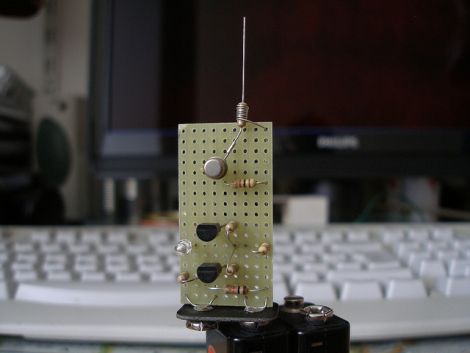
DIY Ultrasonic Range Finder For $5

After finding some ultrasonic transducers online for a dollar each [Kerry Wong] decided to create an ultrasonic range finder. The result is much like parallax’s PING))) sensor but much cheaper. His post is not only a good way to save some money, but also does a good job of explaining how ultrasonic sensors work.  The transmit circuit is essentially an H-bridge, much like what you would use to control a motor. To listen to the returning echo he uses a pair of high gain/low noise op-amps to filter and amplify the signal.  The board he uses to test the range finder (not included in the cost) is an ATMega328 running the Arduino boot loader.  He also provides lots of example code to boot.

Ride Fly: Segway DIY

[vimeo http://vimeo.com/4317930%5D

The video above is the final working DIY Segway from [sb-scooter]. The website and build log don’t have a lot of information at the moment, but you can still gawk at several pictures of the construction (and a picture is worth 1000 German words).

For those looking for the nitty gritty, with some quick math we figure its two 500 watt motors, powered by 12Ah batteries, will last about 90 minutes. If you’re looking for more details or to build your own, you’re as lost as we are.

[Thanks Panikos]

Humble Homes, Simple Shacks

[Derek] puts the “hack” into the word shack.  We really enjoyed his “little yellow house” videos and shared them with you. After that, we discovered that he has published a book. No, he didn’t have it published, he published it. This guy is DIY through and through. “Humble Homes, Simple Shacks, Cozy Cottages, Ramshackle Retreats, Funky Forts (And Whatever The Heck Else We Could Squeeze In Here)” was hand produced by [Derek] himself.  It includes plans for a number of different shacks, ranging in size from too tiny for an adult to large enough to house a family. Not all of them are completely practical, but there are several that would make perfect workshops.

We got a copy of the book and have been getting lost in the seemingly endless illustrations. We highly recommend that you do so as well, if you have any interest in building from scrap, or unique structures. Even if you aren’t that interested in construction, the eclectic style and humorous rants about waste might just be enough to keep this book around.

How-to: DIYDTG

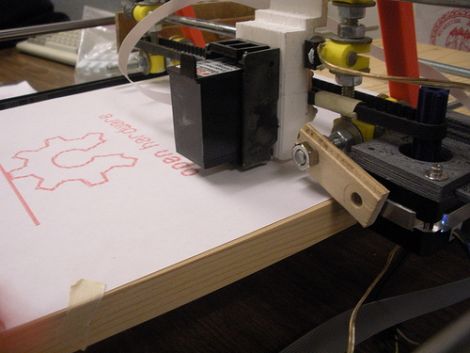
For those unaware, the little acronym above stands for Do-It-Yourself-Direct-To-Garment printing. In layman’s terms, printing your own shirts and designs. Commercial DTGs can cost anywhere from $5,000 to $10,000 which for the hobbyist who only wants a few shirts is ridiculous. So you would think this field of technology would be hacked to no end, but we’ve actually only seen one other fully finished and working DIYDTG. So we took it upon ourselves to build a DIYDTG as cheaply and as successfully as possible. Continue reading “How-to: DIYDTG”

DIY Circuit Etching Video Tutorial

toner-paper

Circuit-bending blog GetLoFi has posted the best tutorial yet on home-made printed circuit boards using the toner transfer method.

We’ve covered homebrew PCB fabrication techniques about a billion times before. What sets this tutorial apart is that it collects many bits of knowledge otherwise scattered all about the web, and then depicts the entire process on video, from initial printing to cut PCB…because reading about it versus seeing it done are two different things entirely. They give a number of immensely useful tips throughout: choice of materials and where to get them, tools and techniques, and dispelling several myths about these methods (for example, they’re adamant about not using acetone to clean toner from the PCB). Well worth the 30 minutes to watch. If that’s too much and you’ve been stuck on just one part of the process, the tutorial is in three segments.

Trimming finished boards on a paper cutter? Who would’ve guessed?

[via Make]

Well Engineered Diy Segway

diy-segway

[Mark] wanted a Segway but why buy something if you can have more fun building it? His end product is an amazing homemade version of the self-balancing transportation package. We’ve seen several projects that include auto-balance, but this one is large enough to ride on and has a bit of an advantage in the design. The motors, batteries, and other components are mounted below the wheel hubs and are weight balanced. This means that the device wants to find balance naturally, even when the electronics are switched off.

The frame was modeled in CAD and then welded together. For propulsion [Mark] has installed two 750 Watt motors which will use sprockets and chains to turn the wheels. The machine balances based on data from both a gyroscope and an accelerometer, with the entire packaged tied together using an Arduino.

[Mark’s] build log is well laid out and details each part of the build with a different post. His two most recent entries include video of the unit balancing and of him riding the 95% completed project. A big thanks to [Mark] for taking the time to document this so that we can share in the excitement of a well-executed project.

Snega2usb Preorder Now Available

[youtube=http://www.youtube.com/watch?v=ySs4cRVzPAY]

We’ve been watching the development of the snega2usb since it’s debut on Hackaday. Now it’s grown up and is ready to be manufactured. In the low quality video above [Matthias] shows some of the latest high quality additions to the board. It now has a case, shiny new firmware,  production made PCB, and game pad ports.  The snega2usb is shipping this December for those who preorder now.