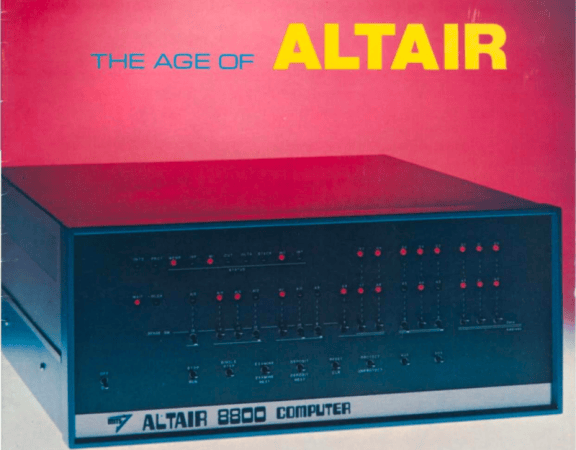
The Age Of Altair

I recently got the Amazon Christmas toy book in the mail, and it is definitely the modern version of the Sears Christmas Wish Book for last century’s youth. Or at least the majority of last century’s youth. For the true hacker, we had a different set of wishes. Recently, I found something I’ve clung to for over 50 years: the 1975 “The Age of Altair” catalog from MITS. Now that was a wish book!

The poor thing has been dragged around for decades and, I’m sad to say, it looks it. It isn’t totally trash, but I decided I should scan it. Then I realized that Bitsavers has already done it for me and with a much nicer copy, too. The images in this post are from their scan instead.

About the Altair
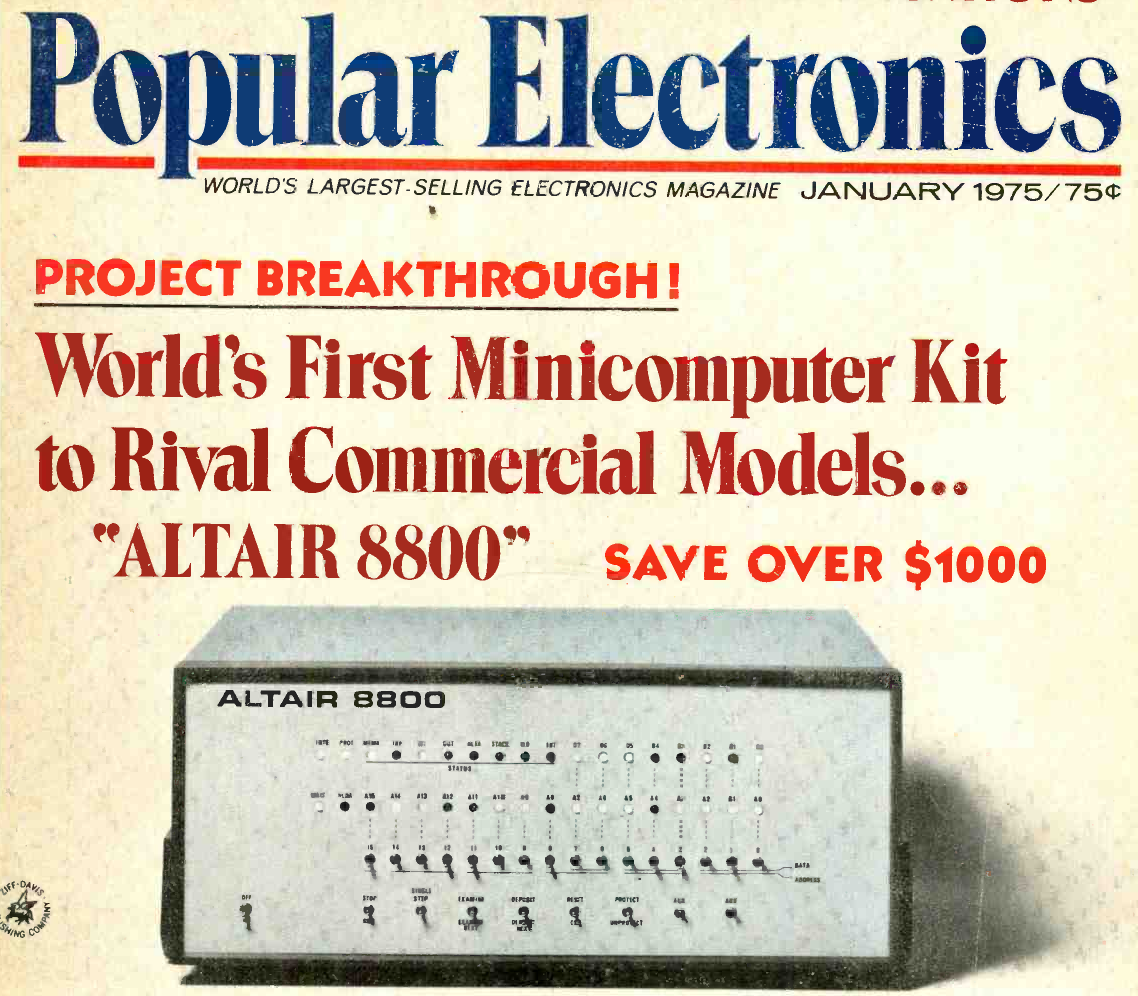
The magazine that started it all (World Radio History).

If your first computer ran Windows, you might not get the significance of the Altair. Back in 1974, the idea of having your own computer was practically ludicrous. Sure, Radio Electronics had published plans for the Mark 8 in July of that year. But it used an anemic 8008 CPU, and it wasn’t easy to get all the parts you’d need to build one. Other limited computers, like the Kenbak-1 or the occasional surplus minicomputer, ended up in personal hands. But you couldn’t just decide you wanted a real computer, plunk down some money, and have one delivered unless you had extremely deep pockets.

To stay on magazine stands longer, old print mags would come out earlier than their cover date suggested. The January 1975 Popular Electronics arrived, actually, in December of 1974 — just in time for the holidays. It showed a computer you could buy as a kit or assembled: the Altair 8800. Many of us were mesmerized by the idea of owning an actual useful computer.
Continue reading “The Age Of Altair” →

COSMAC Elf Turns 50

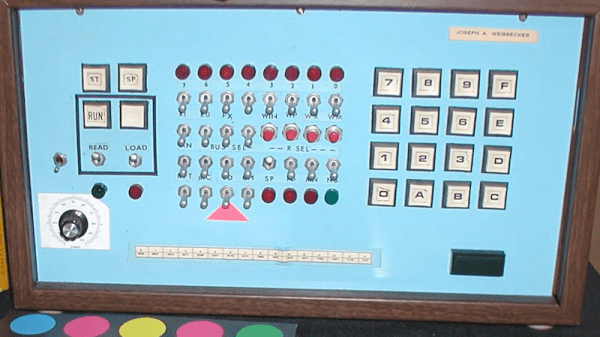
If you were interested in computers in the early 1970s, you struggled to get time on real computers since owning your own was all but impossible. In the middle of the decade, though, you could get a few computers: the Mark VIII, the Altair, the Apple I, and several others. Those were still pretty expensive, though. But in late 1976, an article in Popular Electronics said you could build a “powerful, expandable” computer for $80. The article in question was by [Joseph Weisbecker], who, unknown to most of us at the time, was actually the RCA employee behind the CPU — an RCA 1802. [Tech Time Traveler] takes a close look at the spunky little computer’s history in the video you can see below.

The 1802 was actually the second generation of the CPU, but the first that was all-in-one chip. [Weisbecker] started building the CPU as a personal project. He’d been a hacker even in high school, building relay-based tic-tac-toe games, among other things.

The first incarnation in his lab was “Fred,” with 100 TTL chips, and his idea was to have the computer be at least partially used as a video game — an interesting point, with Pong being very popular at the time.

Continue reading “COSMAC Elf Turns 50” →

VCF: Popular Electronics And Southwest Technical Products Corporation

Hackaday owes a lot to the hobbyist electronics magazines of yesteryear. Back in the day, Popular Electronics and Radio-Electronics would publish projects and articles about DIY electronics – more or less the same editorial purview we hold today. Some of these projects would become full-fledged products, and you need only look at the Altair for what can happen at this confluence of publishing and engineering.

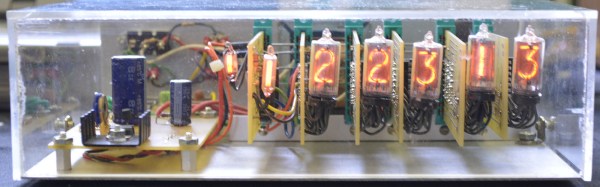
One of the more popular companies to come out of these hobbyist trade magazines was SWTPC, or Southwest Technical Products Corporation. This was the company that brought one of the first microcomputers to the masses with the SWTPC 6800. This wasn’t just a homebrew microcomputer company – there were Nixie clocks, test gear, and stereo preamplifiers – all things that could easily find a place on the pages of Hackaday today.

This year at the Vintage Computer Festival East, [Michael Holley] brought out the test gear he’s been collecting for the past few decades. These are machines that wouldn’t be out of place on any DIY electronics blog today. This is by all accounts the pre-history of the maker movement.

Continue reading “VCF: Popular Electronics And Southwest Technical Products Corporation” →

Vintage COSMAC Elf Is Pretty Close To Original

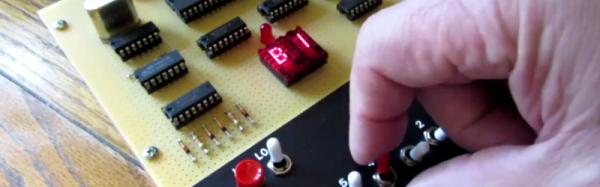
Popular Electronics was famous for the article introducing the Altair 8800 back in 1975 (well, the cover date was 1975; it really came out in late 1974). That was so popular (no pun intended), that they ran more computer construction articles, including the SWTPC 680 late in 1975. But in 1976 a very popular article ran on building a very simple computer called the COSMAC ELF. [Youtubba] had an Altair, but always wanted a “cute” COSMAC ELF. Now, forty-something years later, he finally got around to it. He made the very detailed video about his experience, below.

Surprisingly, he didn’t have to look very hard for too many of the components as most of them were available from Digikey. He had to get compatible RAM chips, the 1802 CPU and LED displays. He also couldn’t find a look-alike crystal, so he used a fake one and a hidden oscillator. The result looks awfully close to the original. He even did a nice front panel using Front Panel Express.

Continue reading “Vintage COSMAC Elf Is Pretty Close To Original” →

Vintage Electronics Magazines Predicted Our Current Future

Do you remember the magazine Popular Electronics? What about Radio Electronics? These magazines were often the first exposure we had to the world of hacking. In December we learned that Americanradiohistory.com has gone to the trouble of scanning nearly every copy of both, and continues to add many many others — posting them online for us to enjoy once more. Since then we’ve been pouring through the archive pulling out some of the best in terms of nostalgia, entertainment, and fascinating engineering.

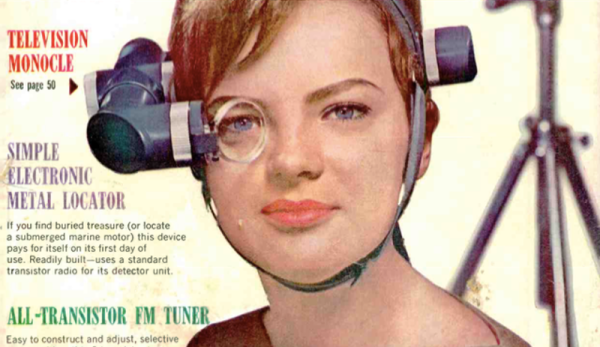
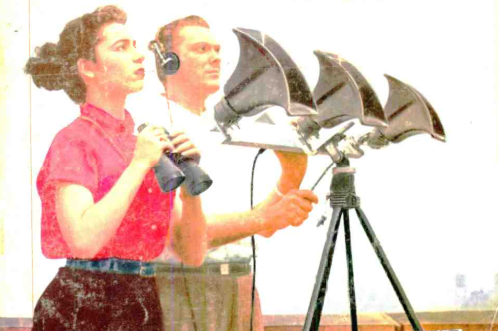
Yes much of this material is very dated; CB Radios, all-mighty computers, phasors, stun guns, levitating machines, overly complex circuits for simple tasks, and aviator eyeglasses. But found among all of this, many innovative mixed-signal circuits and other interesting ideas that have been developed into our tech-centric world. Many of those modern inventions you’ve welcomed into your life actually started long-long ago in the forward-thinking hacks shown off in these publications. The Google Glass precursor seen above is but one example. Keep reading to see the early roots of the tech we tend to think of as “new”.

Continue reading “Vintage Electronics Magazines Predicted Our Current Future” →

Popular Electronics Magazine Archive Online

They began publishing Popular Electronics magazine in 1954, and it soon became one of the best-selling DIY electronics magazines. And now you can relive those bygone days of yore by browsing through this archive of PDFs of all back issues from 1954 to 1982.

Reading back through the magazine’s history gives you a good feel for the technological state of the art, at least as far as the DIYer is concerned. In the 1950s and 1960s (and onwards) radio is a big deal. By the 1970s, hi-fi equipment is hot and you get an inkling for the dawn of the digital computer age. Indeed, the archive ends in 1982 when the magazine changed its name to Computers and Electronics magazine.

It’s fun to see how much has changed, but there’s a bunch of useful material in there as well. In particular, each issue has a couple ultra-low-parts-count circuit designs that could certainly find a place in a modern project. For example, a “Touch-Controlled Solid State Switch” in July 1982 (PDF), using a hex inverter chip (CD4049) and a small handful of passive components.

But it’s the historical content that we find most interesting. For instance there is a nice article on the state of the art in computer memory (“The Electronic Mind — How it Remembers”) in August 1956 (PDF).

Have a good time digging through the archives, and if you find something you really like, let us know in the comments.