Peeling Fruit With The Power Of Steam

Steam power is a staple of the steampunk aesthetic, thermodynamics, and a checkpoint for the budding mechanical engineer studying heat cycles. But because food is largely made of water, steam is also common in the culinary arts. So it’s no surprise that when thermodynamics is applied to cooking, exciting things can happen. 

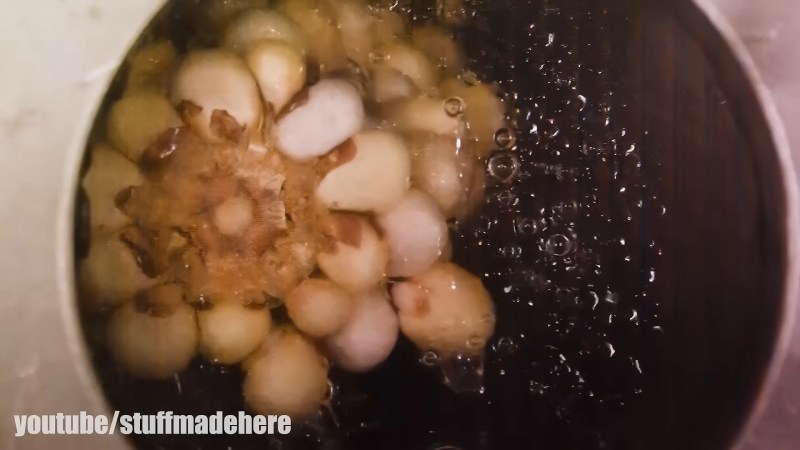
This particular example of steam-powered culinary happenings is inspired by industrial potato-peeling machines. By adding high-pressure, high-temperature steam to a pressure vessel with potatoes inside, heat can transfer more easily to the inside of the potatoes. Because the pressure is so high, however, the water in the skin won’t boil. This is fundamentally the same concept as a pressure cooker. However, what’s different is that instead of a pressure cooker’s slow release, these industrial peeling machines rely on explosive decompression, flash boiling the water underneath the potato’s skin. This rapidly expanding steam rips away the skin in a nice clean sheet.

But, to [Stuff Made Here’s] disappointment, there were no videos of the process on the internet. But, fortunately for us, being an engineer of complicated machines means that there is one now that you can watch below.
Continue reading “Peeling Fruit With The Power Of Steam”

R/C Bot Takes Your Strawberries Away

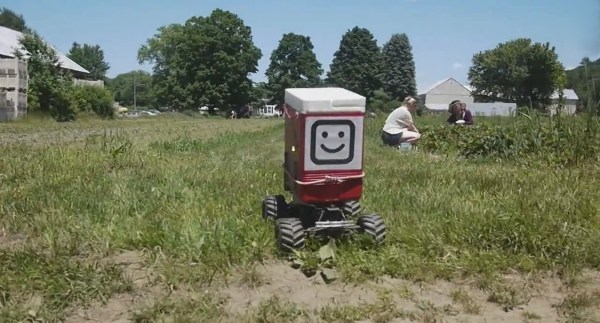
Don’t let the friendly smile on this RC cart fool you, it will take your strawberries away — though that’s kinda the point. It’s an RC car that [transistor-man] and a few friends modified for carrying freshly picked strawberries at strawberry fields so that you don’t have to.

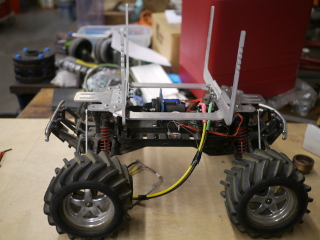
RC strawberry carrying robot before putting on the cooler
RC strawberry carrying robot – WIP

They started with an older Traxxas Emaxx, a 4-wheel drive RC monster truck. The team also bought a suitable sized water cooler at a local hardware store. A quick load test showed that 5lbs collapsed the springs and shock absorbers, causing the chassis to sink close to the ground. The team had two options: switching to stronger springs or locking out the springs altogether. They decided to replace one set of shocks with metal plates effectively locking them. After that it was time for some CAD work, followed by the use of a water jet to cut some aluminum plate. They soon had a mounting plate for the water cooler to sit in. This mounting plate was attached to 4 posts which originally held the vehicle’s Lexan body. A bungee cord wrapped around the cooler and posts on the mounting plate holds the cooler in place.

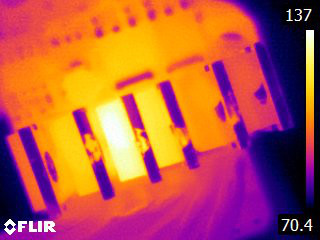
Thermal image of bad MOSFET

Some initial testing showed that the vehicle moved too fast even in low gear and tended to tip over, as you can see in the first video below. Some practice helped but a 3:1 reduction planetary gearbox brought the vehicle down to walking speed, making a big difference. A trip was arranged to go to local strawberry picking field at Red Fire Farms, but not without some excitement first. At 1AM the UNIK 320A High Voltage Speed controller emitted some magic smoke. A quick check with a thermal-camera found the culprit, one of the MOSFETs had failed, and after swapping it with one that was close enough they were back in business.

As you can see in the second video below, testing in the strawberry field went very well, though it wasn’t without some tipping. Kids also found it a fun diversion from picking strawberries, alternating between mock fright and delight.

Continue reading “R/C Bot Takes Your Strawberries Away”

Hydroponic Strawberries Sweeten Up Winter Dolldrums

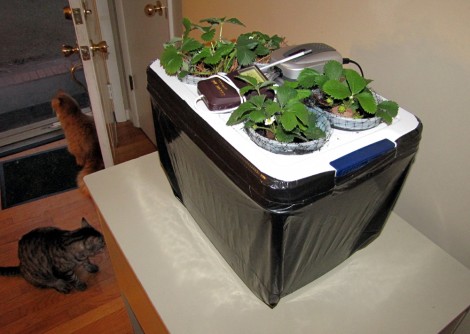
Add some fruit to your indoor bounty with this hydroponic strawberry farm. [Dino] whipped this up as his 45th hack a week episode (getting pretty close to his year-long goal). He used parts you probably already have sitting around the house somewhere. But even if you bought everything and used it once you still wouldn’t be out much.

A plastic storage container serves as the base. [Dino] also grabbed four identical plastic containers (large yogurt containers would work here) to host the plants. He cut off the bottom half and inserted some netting to keep the plant from falling through. After tracing the size of the container on the enclosure’s lid he cut out holes which will host each plant. This provides a way to dangle the roots into the nutrient solution which is kept oxygen rich with an aquarium pump and two air stones. It certainly deserves a place next to that salad farm you threw together. Don’t miss [Dino’s] build video after the break.

Continue reading “Hydroponic Strawberries Sweeten Up Winter Dolldrums”