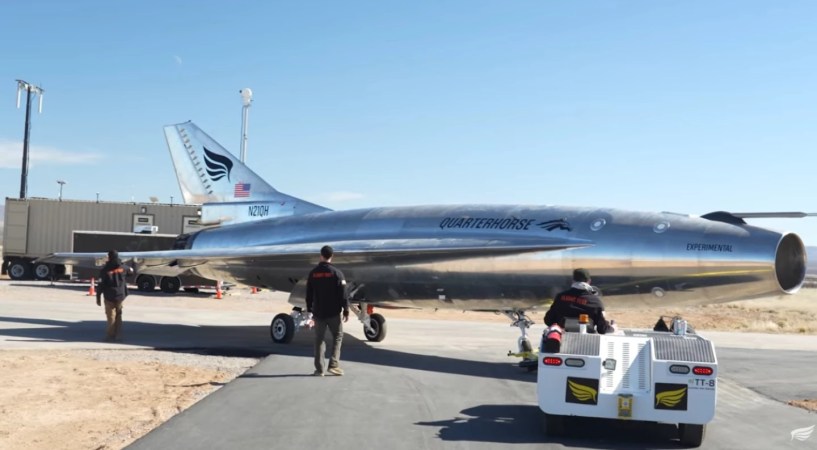
The Quarterhorse 2.1, looking fast even on the ground.

Quarterhorse Vs Blackbird: Hermeus’ Flight Puts Them One Step Closer To Record

You’ve got to be ambitious to target a legend. If there’s one thing the folks at Hermeus Aerospace are, though, it’s ambitious: not only do they plan on their Quarterhorse unmanned aerial vehicle (UAV) to outfly the SR-71 blackbird, they’re hoping to do it in record time. They took one big step closer to that goal in March 2026, when Quarterhorse 2.1 took off for the first time from Spaceport America.

The F-16-sized prototype is actually the second first flight Hermeus can brag of in the past year– version one first flew in May 2025. They’re iterating fast. Version 2.1 is hoped to prove a key part of the engine design for v2.2, which is the plane Humerus hopes to use to break the SR-71’s air-breathing speed record of Mach 3.3 from 1976. They’re hoping the next prototype can actually hit mach 5, which would be amazing if they pulled it off. Of course when exactly v2.2 will fly will depend largely on how this current model does in its test envelope.

This Quarterhorse hasn’t yet broken the sound barrier, but it certainly will. With the same F100 engine as the F-15 and F-16 fighters, it’s got the thrust, and one look tells you it has the aerodynamics. Of course an F100 can’t fly at Mach 5 — not on its own — but the F100 isn’t purely stock. It’s actually a component in Hermeus’ Chimera engine, which combines the F100 with a pre-chiller to actively cool the incoming supersonic air so the engine doesn’t melt at high speeds, and a ramjet stage that bypasses the engine entirely. That would make the Chimera a turboramjet engine; starting with an old and well-known turbine stage seems like a good move and is arguably a hack.

It would work like this: the engine takes off on turbine, the chiller kicks in when the aircraft goes supersonic, and the turbine is bypassed completely at high mach. This is how they hope to break the SR-71’s record: as well-designed as the J-58 engine was in that plane, it only pushed bleed air into the afterburner, rather than bypassing its turbine stage entirely, so was limited by the need to not melt said turbines. In some ways, the Chimera reminds us of a cheaper, simpler SABER engine. Of course as ambitious as breaking a 50 year old speed record might be, Hermeus’ goals are downright humble compared to the single-stage-to-orbit dreams the SABRE was meant to allow.

It remains to be seen just how fast Quarterhorse 2.1 will be able to go. Notably, at least as it was first unveiled, the aircraft doesn’t have any kind of shock cone on the inlet. It’s unlikely that the pre-chiller makes that unnecessary; it is more likely that either 2.1 is going to be restricted to low mach numbers where such things aren’t necessary, or it will be fitted later. Either way, we look forward to following the test program, at least as much as it is made public. Check out footage from the test flight in the video embedded below.

Continue reading “Quarterhorse Vs Blackbird: Hermeus’ Flight Puts Them One Step Closer To Record”

Supersonic Flight May Finally Return To US Skies

After World War II, as early supersonic military aircraft were pushing the boundaries of flight, it seemed like a foregone conclusion that commercial aircraft would eventually fly faster than sound as the technology became better understood and more affordable. Indeed, by the 1960s the United States, Britain, France, and the Soviet Union all had plans to develop commercial transport aircraft capable flight beyond Mach 1 in various stages of development.

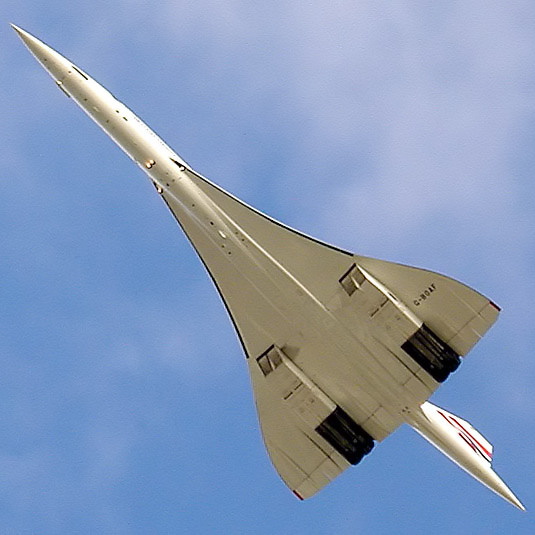
Concorde on its final flight

Yet today, the few examples of supersonic transport (SST) planes that actually ended up being built are in museums, and flight above Mach 1 is essentially the sole domain of the military. There’s an argument to be made that it’s one of the few areas of technological advancement where the state-of-the-art not only stopped moving forward, but actually slid backwards.

But that might finally be changing, at least in the United States. Both NASA and the private sector have been working towards a new generation of supersonic aircraft that address the key issues that plagued their predecessors, and a recent push by the White House aims to undo the regulatory roadblocks that have been on the books for more than fifty years.

Continue reading “Supersonic Flight May Finally Return To US Skies”

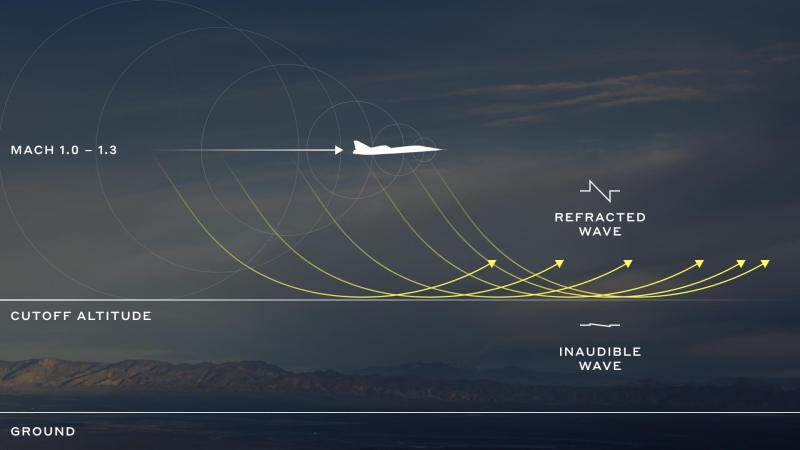
Mach Cutoff: Bending The Sonic Boom

Supersonic air travel is great if you want to get somewhere quickly. Indeed, the Concorde could rush you from New York to London in less than three and a half hours, over twice as fast as a conventional modern airliner. Despite the speed, though, supersonic passenger service has never really been sustainable thanks to the noise involved. Disruption from sonic booms has meant that supersonic travel over land is near-universally banned. This strictly limits the available routes for supersonic passenger jets, and thus their economic viability.

Solving this problem has been a hot research topic for some time. Now, it appears there might be a way forward for supersonic air travel over land, using a neat quirk of Earth’s atmosphere.

Continue reading “Mach Cutoff: Bending The Sonic Boom”

Cold War Spying And The Questionable Use Of Smuggled Blueprints In Developing Supersonic Airliners

Although spying is a time-honored tradition, the sheer scope of it reached a fever pitch during the Cold War, when everyone was spying on everyone, and conceivably for both sides at the same time. In an era where both McCarthyism and the character of James Bond enjoyed strong popularity, it should come as no surprise that a project of geopolitical importance like the development of the world’s first supersonic airliner would come amidst espionage, as well as accusations thereof.

This is the topic of a documentary that recently aired on Channel 4 in the UK called Concorde: The Race for Supersonic, yet what is the evidence that the Soviet Tu-144 truly was just a Concorde clone, a derogatory nicknamed ‘Concordski’?

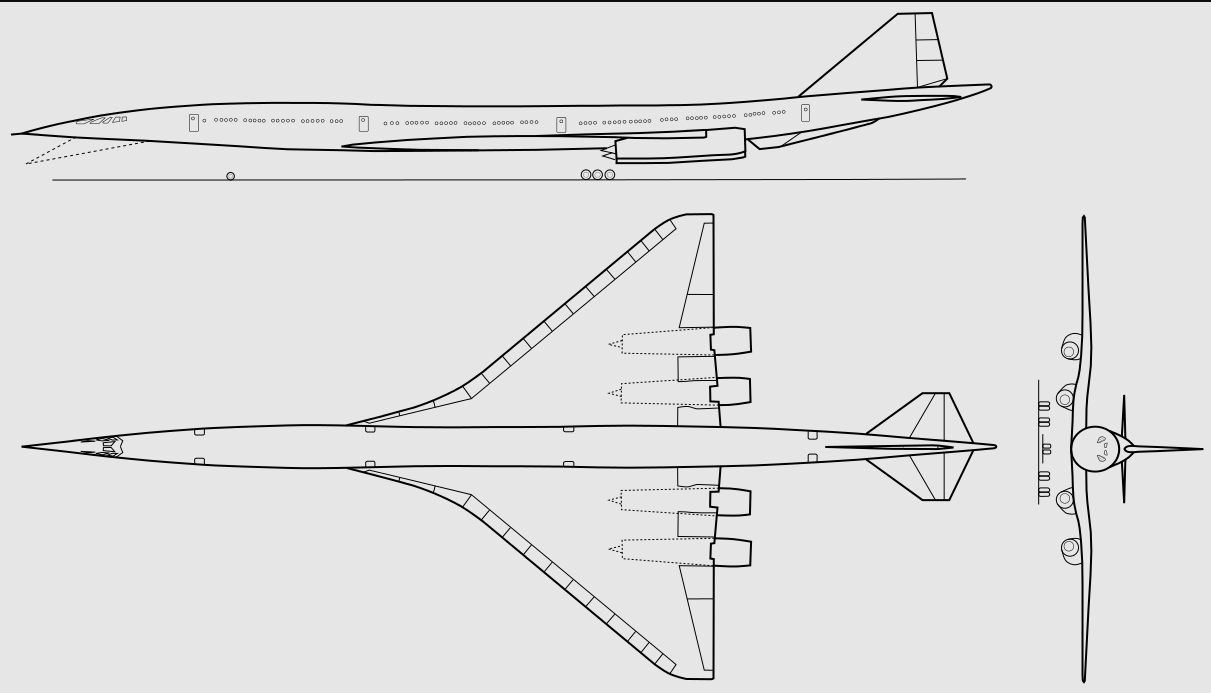
Three views of a Boeing 2707-300.

At the time that the Concorde was being developed, there wasn’t just the competition from the Tu-144 team, but also the Boeing 2702 (pictured) and Lockheed L-2000, with the latter two ultimately being cancelled. Throughout development, all teams converged on a similar design, with a delta wing and similar overall shape. Differences included the drooping nose (absent on Boeing 2707-300) and use of canards (present on Tu-144 and 2707-200), and wildly different engines, with the production Tu-144S requiring an afterburner on its Kuznetsov NK-144A engines just like the Concorde, before the revised Tu-144D removing the need for afterburners with the Koliesov RD36-51 engines.

Although generally classified as a ‘failure’, the Tu-144’s biggest issues appear to have been due to the pressure on the development team from Soviet leadership. Once the biggest issues were being fixed (Tu-144D) it saw continued use for cargo use and even flying missions for NASA (Tu-144LL) until 1999. Although Soviet spies were definitely caught with Concorde blueprints, the practical use of these for the already overburdened Tu-144 development team in terms of reverse-engineering and applying it to the Tu-144’s design would be limited at best, which would seem to be reflected in the final results.

Meanwhile, although supersonic airliners haven’t been flying since the Concorde retired in 2003, the Lockheed Martin X-59 Quesst supersonic airplane that is being built for NASA looks set to fix the sonic boom and fuel usage issues that hampered supersonic flight. After the L-2000 lost to Boeing so many decades ago, it might be Lockheed that has the last laugh in the race towards supersonic flight for airliners.


Top image: Tu-144 with distinctive droop nose at the MAKS-2007 exhibition)