Amazingly Cheap Dual Channel Scope

[Jacques] sent us this little project he has been working on. It is an amazingly cheap USB 2 chanel scope. The total cost of the project was around 5 Euros.  It is based off of an Atmel Tiny45, has 2 analog inputs, and can supply 5 Volts to a breadboard. He has listed the bill of materials as well as downloads for the source code, plans, and display software.

USB Switched Power Strip


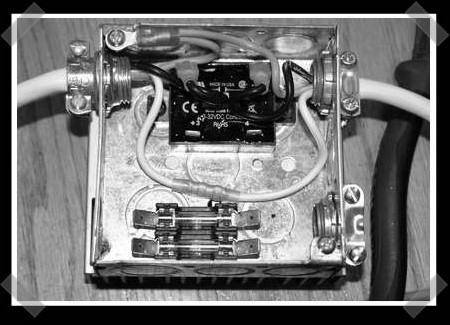
[toymotorhead] pieced together this USB controlled power strip to help with his electrical bill. His goal was to be able to have devices turned off automatically when he shut down his computer as well as powered on when he turned his computer on. Another requirement was that the USB be isolated to protect the motherboard from spikes.

The cost of the parts in total were less than $30, and consisted of a solid state relay, some fuses, and some transient voltage surge suppressing diodes. The unit only switches power off or on depending on whether or not the computer is powered up, it doesn’t control the outlets via software. He goes pretty in depth as to how everything works as well as showing nice diagrams and pictures. This should be a fairly quick and simple project, as long as you take the proper precautions for working with high voltage.

Make A Stretchy Fabric USB Cable

Stretchy fabric USB cable
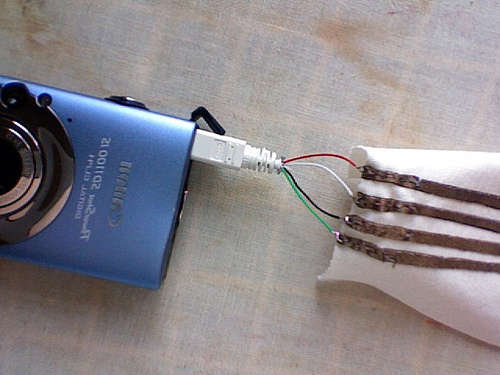
If you’ve been puzzled over a discreet, durable way to sew wiring into your clothing, then puzzle no more: [Plusea] has put together a writeup detailing how to make a USB cable partly out of stretchy cotton fabric. Although the design as detailed doesn’t give much practical use for the invention, we can think of several very effective ways of exploiting this toy. Imagine, for example, placing a USB battery pack into one pocket of a jacket, a portable digital audio recorder in the other, and a lavalier microphone in the lining, thus enabling dozens of hours of covert audio surveillance.

USB Wall Charger


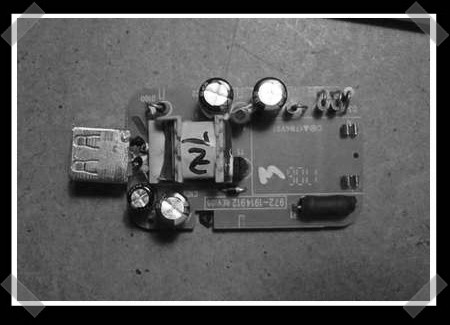
[rbhays] did this sweet little hack back in 2006. He took a Motorola cellphone wall charger and modified it into a USB wall charger. He needed to charge his iPod, but misplaced the original charger. A replacement would have cost him $30. So he did what any respectable hacker would do, he cut up something else to make it work for him.

He had one sitting around that was equipped with a mini USB end. He checked it out and it was the perfect voltage. Some commenters below the project noted that their motorola charger had a higher voltage rating than his. Those would still work, but would require some extra steps to bring the voltage down.

After some careful soldering, and a bit of super glue, he’s left with a perfectly good wall charger. He can charge most things that only use the juice from the wall. Some things refuse to charge though, such as Zunes. There was another project by [Cvesey] that claims to charge Zunes as well. While wall chargers may be available fairly cheaply now, many of us have some of these cellphone chargers just sitting around. Now we have a use for them.

StickDuino, USB Stick Arduino Clone


The Arduino hardware clones keep rolling in. This weeks entry into the modern dev board’s roster is the StickDuino. The board is designed to be fully hardware compatible and plugs directly into your USB port. The StickDuino uses all SMD components. The creators know that this can make assembly more difficult so they’ve space the components out, opted for larger pads, and collected some links to SMD tutorials. The board feature two more analog inputs than the Diecimila and it has a jumper so you can switch it to 3.3V. All around it looks like a great product; frankly we love anything with full board layouts.

Shell Case Your Flash Drive


[Aki] sent in his collection of projects. We like his bullet shell cased USB flash drive and his take on our friend, the simple parallel port based logic analyzer. The flash drive uses a B style USB connector, mounted inside a big freakin’ bullet shell. The logic analyzer is the classic version, but uses a rather nice unix compatible piece of software that supports up to 1mhz sampling rates.

SONAR Controlled USB Missile Launcher


Check out this add on for that cheap USB missile launcher we know you bought last year. It uses ultrasonic sensors to provide sonar feedback for the aiming system. A PIC 18F455 drives a servo to aim the sensor and massage the signal from the sensor. It still depends on a PC application to put everything together. If you’d rather play with faster hardware, keep your eyes open for this years defcon bots contest.