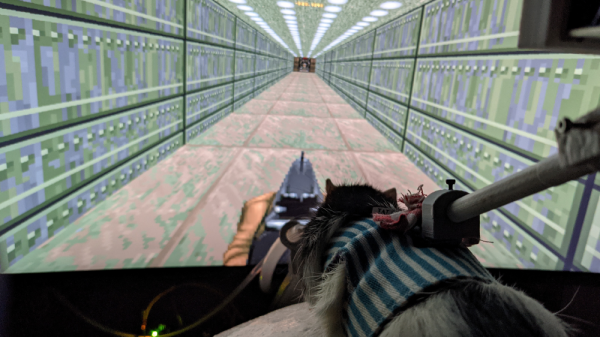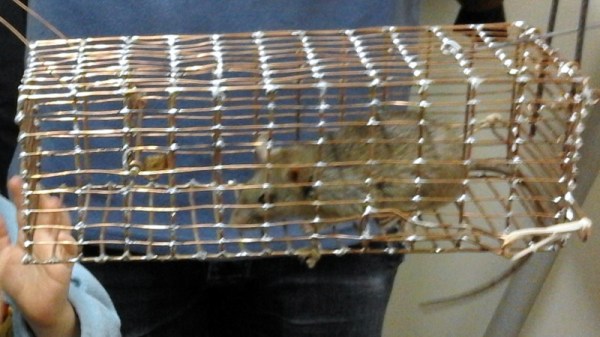
Rats are often seen as pests and vermin, but they can also do useful jobs for us, like hunting for landmines. To aid in their work, [kjwu] designed the RatPack, a wearable device that lets these valiant rats communicate with their handlers.
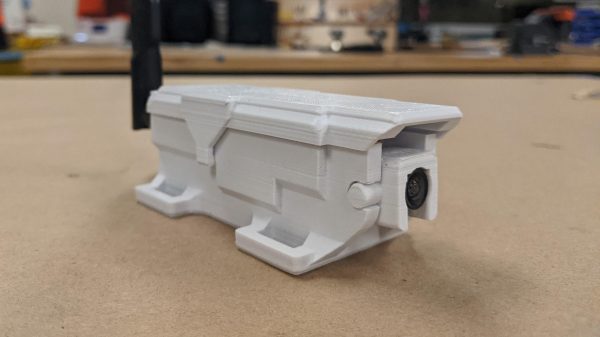
The heart of the build is an ESP32-CAM board, which combines the capable wireless-enabled microcontroller with a small lightweight camera. It’s paired with a TinyML machine learning board, and it’s all wrapped up in a 3D printed enclosure that serves as a backpack to fit African Giant Pouched rats.
The RatPack can provide a live video feed. However, its main purpose is to track the rat’s movements through the use of an accelerometer. This data is then fed to the machine learning subsystem, which analyzes it to detect certain gestures the rats have been trained to make. The idea is that when the rat identifies an object of interest, such as a landmine, it will perform a predetermined gesture. The RatPack would then detect this, and transmit a signal to the rat’s handlers. Given a rat’s limbs are all on the bottom of its body, this approach is useful. It’s kind of hard to ask a rat to press a button on its own back, after all.
Finding and carefully disposing of unexploded ordnance is a problem facing many societies around the world. We’re lucky in many cases that the rats are helping out with this difficult and dangerous job.