The Future Of Cyberattacks

[Dino A. Dai Zovi] gave a talk in the earlier part of 2010 where he shares his thoughts on the future of malicious exploits. You can watch it on Ustream and he’s also posted a set of slides (PDF) that goes along with it. We find the 48 minute video to be quite interested. Instead of going into mundane detail, he covers the broader picture; what has been done in the past, what will happen in the future, and how are we currently ill-equipped to respond to future threats? That last question is covered throughout the video, but seems to come back to the concept that we are stuck in a rut of terminology and past practice that is impeding our ability to innovate security strategies at the same rate that the bad guys are coming up with the next nasty thing to come down the pipeline.
MIDI Input For The Kaossilator

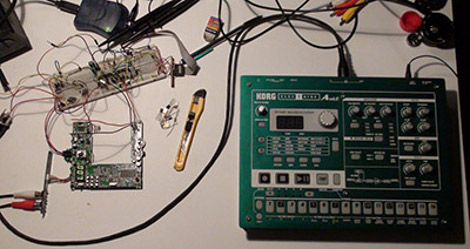
This isn’t strictly a MIDI input hack; [Furrtek] pulled off an alternate input hack for the Kaossilator that he’s currently using with a MIDI connection. In its unhacked form the Kaossilator is a small touchpad-based sound manipulation tool. [Furrtek] sniffed out how the touchpad data is read and used on the little device. He then purposed an ATtiny2313 as the core of a circuit that spoofs those signals. The microcontroller now listens for incoming MIDI data, looks up the proper signal translations in a table, then outputs them to the Kaossilator.

In the video after the break you can see that it works perfectly, with no lag or noticeable problems. As we alluded to at the top, there could be so much more done with this. Since the ATtiny2313 is merely translating MIDI into touchpad signals, the input could be anything. The first thing that comes to mind is a dance floor that changes the music based on how many people are out there tearing it up. Continue reading “MIDI Input For The Kaossilator”

CNC Milled Docking System For Droid

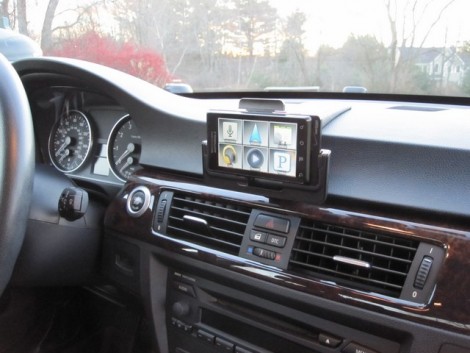
[Steve] wanted a dock for his Droid phone but couldn’t bear to put cheap-looking parts in his nice BMW. He decided to build his own in order to satisfy his functional and stylistic needs. His main goal was to have a dock with no wires showing, but it also needed to be removable and have the ability to work with different devices (GPS, Droid, etc.).

The hardest part of a build like this is matching the bracket system to the car’s interior. [Steve] sidestepped the problem by starting with a commercial mounting bracket made specifically for the BMW E90 series. From there he added the female half of a mounting bracket he milled himself. The male half connects to this part using an edge connector, passing signals and power between the car and whichever device is currently installed. This way he can design brackets for different devices and not change what’s in the car.

To get a closer look, check out the video after the break. The system he came up with looks wonderful and works great.

Continue reading “CNC Milled Docking System For Droid”

Shotgun Blast Lights Up Your Controller

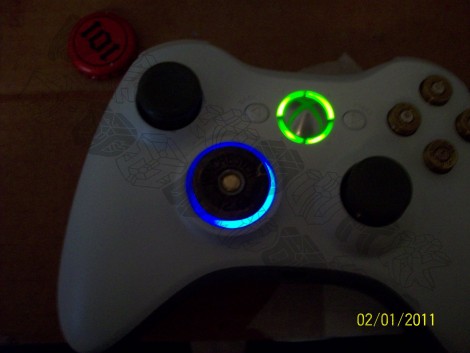
[Jrfhoutx] makes gaming in the dark a bit easier with this backlight shotgun shell d-pad for an Xbox 360 controller. He’s building on another tutorial he posted showing how to use the brass base of a shotgun shell to replace the stock plastic direction pad. That hack uses most of the original plastic part, cutting it down a bit and capping it off with the shell base. But now he’s detailing the process used to add LEDs around the base. He picked surface mount 0603 packages which are first chained together, then held in place using hot glue. While you’re in there, give this rapid-fire mod a try as well.

A Briefing On Integrated Circuits

Although technology is constantly racing to faster / smaller / more, so many of the fundamentals of how it is made remains similar, if not the same. This interesting 30 minute video clip [thanks to The Computer History Museum] was made in 1967 by Fairchild Semiconductor as a briefing on integrated circuits, and shows the different steps to produce ICs including:

Design, making the photo masks, manufacturing the silicon ingots, preparing the wafers, building of the circuit and its components (like transistors, resistors, and capacitors), testing, and final packaging. Add in some other cool items of interest such as a 1960’s pick n place machine, wave soldering, an automatic wirewrap machine, and toss in some retro computer action and it’s surely a video worth watching, with something for everyone.

So join us after the break, kick back and enjoy the show!

Continue reading “A Briefing On Integrated Circuits”

USB Controller For Multiple Servos

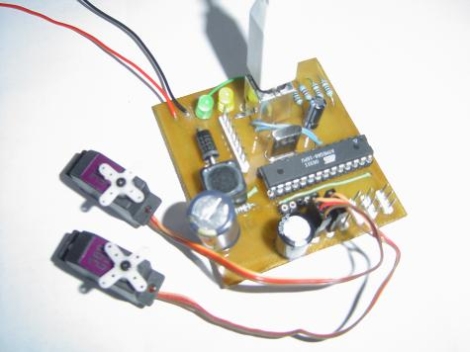
USB_controller_for_6_servos

[dunk] constructed an easy to use AVR-based USB controller with the ability to drive up to six R/C hobby servos at once.  While the USB-powered Atmega8 he used supplies the necessary PWM signaling for all of the servos, an external power supply rated up to 30v at 3A is necessary to provide the 5v of power each servo requires.  His project is an extension of the USB servo controller built by [Ronald Schaten] and includes several significant upgrades.  The addition of 5 more servos aside, [dunk] switched to AVRlib routines for multi-servo control and PWM management, as well as added the aforementioned power supply to prevent an excessive current draw on the USB port.  His tutorial includes a complete parts list, Eagle PCB schematic, the required USB servo source code, as well as a sampling of commands that can be issued to the servo controller.

Remote Camera Trigger Built From Air Freshener Parts

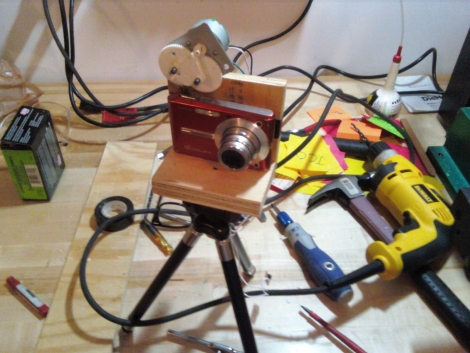
Remote camera trigger assembled front view

[jcopro] took a look at a Glade automatic air freshener he had sitting around and couldn’t help but open it up to determine how the mechanism worked.  After taking it apart, he found that the automated system was comprised of a 3v motor, a series of gears, and a mechanical arm.  When actuated, this arm simply pressed the spray nozzle of the air freshener canister contained within the device.  After some consideration, he decided that the components would make a great remote trigger for his Casio point and shoot camera.  He fabricated a small plywood rig including both the camera and air freshener components, which was able to be mounted on a tripod.  [jcporo] also mentions that the air freshener has the ability to be triggered by a built-in timer.  Although the presets are locked at 9, 18, and 36 minutes, he suggests that a 555 timer could easily be used to add some custom timing intervals when wired to the manual trigger.  Be sure to check out his video of the remote trigger in action.