This Week In Security: Flatpak Fixes, Android Malware, And SCADA Was IOT Before IOT Was Cool

Rowhammer attacks have been around since 2014, and mitigations are in place in most modern systems, but the team at gddr6.fail has found ways to apply the attack to current-generation GPUs.

Rowhammer attacks attach the electrical characteristics of RAM, using manipulation of the contents of RAM to cause changes in the contents of adjacent memory cells. Bit values are just voltage levels, after all, and if a little charge leaks across from one row to the next, you can potentially pull a bit high by writing repeatedly to its physical neighbors.

The attack was used to allow privilege escalation by manipulating the RAM defining the user data, and later, to allow reading and manipulation of any page in ram by modifying the system page table that maps memory and memory permissions. By 2015 researchers refined the attack to run in pure JavaScript against browsers, and in 2016 mobile devices were shown to be vulnerable. Mitigations have been put in place in physical memory design, CPU design, and in software. However, new attack vectors are still discovered regularly, with DDR4 and DDR5 RAM as well as AMD and RISC-V CPUs being vulnerable.

The GDDR6-Fail attack targets the video ram of modern graphics cards, and is able to trigger similar vulnerabilities in the graphics card itself, culminating in accessing and changing the memory of the PC via the PCI bus and bypassing protections.

For users who fear they are at risk — most likely larger AI customers or shared hosting environments where the code running on the GPU may belong to untrusted users — enabling error correcting (ECC) mode in the GPU reduces the amount of available RAM, but adds protection by performing checksums on the memory to detect corruption or bit flipping. For the average home user, your mileage may vary – there’s certainly easier ways to execute arbitrary code on your PC – like whatever application is running graphics in the first place!

Continue reading “This Week In Security: Flatpak Fixes, Android Malware, And SCADA Was IOT Before IOT Was Cool”

Making A Virtual Machine Look Like Real Hardware To Malware

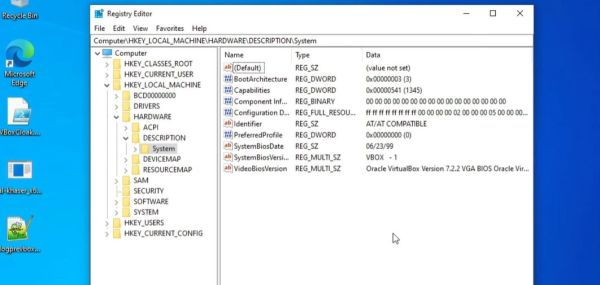
Running suspicious software in a virtual machine seems like a basic precaution to figure out whether said software contains naughty code. Unfortunately it’s generally rather easy to detect whether or not one’s software runs inside a VM, with [bRootForce] going through a list of ways that a VirtualBox VM can be detected from inside the guest OS. While there are a range of obvious naming issues, such as the occurrence of the word ‘VirtualBox’ everywhere, there many more subtle ways too.

Demonstrated is the PoC ‘malware’ application called Al-Khaser, which can be used to verify one’s anti-malware systems, such as when trying to unleash a debugger on a piece of malware, run it inside a VM, along with many more uses. Among its anti-virtualization features are specific registry key names and values, file system artefacts, directory names, MAC addresses, virtual devices, etc.

In order to squeeze by those checks, [bRootForce] created the vbox_stealth shell script for Bash-blessed systems in order to use the VirtualBox Manager for the renaming of hardware identifier, along with the VBoxCloak project’s PowerShell script that’s used inside a Windows VirtualBox guest instance to rename registry keys, kill VirtualBox-specific processes, and delete VirtualBox-specific files.

Theoretically this should make it much harder for any malware to detect that it’s not running inside Windows on real hardware, but as always there are more subtle ways that are even harder to disguise.

Continue reading “Making A Virtual Machine Look Like Real Hardware To Malware”

Investigating USB-to-Ethernet Dongles With “Malware” Claims

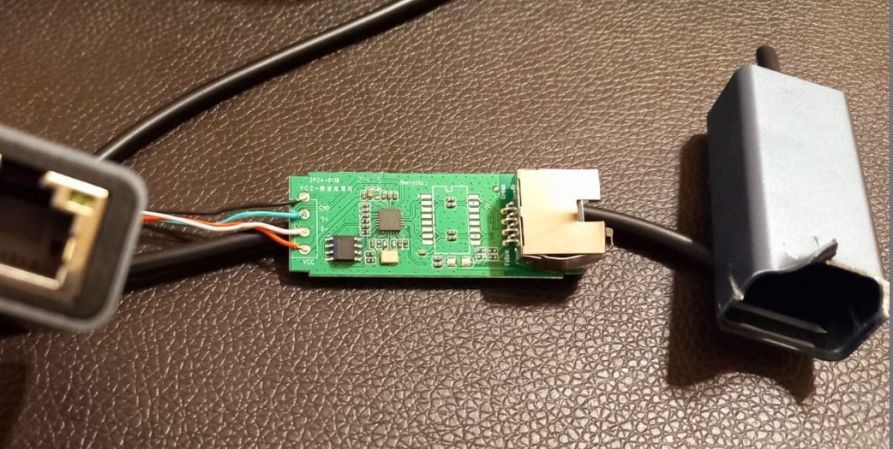
Recently a video surfaced from someone claiming that certain USB-to-Ethernet dongles contained ‘malware’ among other big claims. Basically these dongles were said to be designed by China (and Russia) to spy on users and so on, but how much of this is actually grounded in reality? When [lcamtuf] dove into the topic, what he found was not so much a smoking gun, but rather a curious relic from the era when drivers-on-CD were being phased out.

The item that the video went bananas about was namely an additional SPI Flash chip on the PCB alongside the USB 2.0 – Ethernet IC, with many conspiracy theories being floated as to what it would be used for. After some digging, [lcamtuf] found that the IC used in these dongles (SR9900) is by a company called CoreChips Shenzhen, with a strong suggestions that it is a clone of the (2013-era) Realtek RTL8152B.

Both chips have an external SPI Flash option, which is used with the USB side to present a ‘virtual CD drive’ to the user when the dongle is plugged in. This was borne out with the SR9900 Windows system mass production tool that [lcamtuf] obtained a copy of. Included with the flashing tool is a 168 kB ISO image (containing the SR9900 driver package) which happily fits on the 512 kB Flash chip.

Although it’s always possible for chips and firmware to contain backdoors and malware, in this particular case it would appear to be that it’s merely a cruel reminder that 2013 is now already vanishing into the realm of ‘retro computing’ as us old fogies cling to our driver installation floppies and CDs.

Hackaday Links Column Banner

Hackaday Links: June 2, 2024

So you say you missed the Great Solar Storm of 2024 along with its attendant aurora? We feel you on that; the light pollution here was too much for decent viewing, and it had been too long a day to make a drive into the deep dark of the countryside survivable. But fear not — the sunspot that raised all the ruckus back at the beginning of May has survived the trip across the far side of the sun and will reappear in early June, mostly intact and ready for business. At least sunspot AR3664 seems like it’s still a force to be reckoned with, having cooked off an X-class flare last Tuesday just as it was coming around from the other side of the Sun. Whether 3664 will be able to stir up another G5 geomagnetic storm remains to be seen, but since it fired off an X-12 flare while it was around the backside, you never know. Your best bet to stay informed in these trying times is the indispensable Dr. Tamitha Skov.

Continue reading “Hackaday Links: June 2, 2024”

Liberté, égalité, Fraternité: France Loses Its Marbles On Internet Censorship

Over the years we’ve covered a lot of attempts by relatively clueless governments and politicians to enact think-of-the-children internet censorship or surveillance legislation, but there’s a law from France in the works which we think has the potential to be one of the most sinister we’ve seen yet.

It flew under our radar so we’re grateful to [0x1b5b] for bringing it to our attention, and it concerns a proposal to force browser vendors to incorporate French government censorship and spyware software in their products. We’re sure that most of our readers will understand the implications of this, but for anyone not versed in online privacy and censorship  this is a level of intrusion not even attempted by China in its state surveillance programme. Perhaps most surprisingly in a European country whose people have an often-fractious relationship with their government, very few French citizens seem to be aware of it or what it means.

It’s likely that if they push this law through it will cause significant consternation over the rest of the European continent. We’d expect those European countries with less liberty-focused governments to enthusiastically jump on the bandwagon, and we’d also expect the European hacker community to respond with a plethora of ways for their French cousins to evade the snooping eyes of Paris. We have little confidence in the wisdom of the EU parliament in Brussels when it comes to ill-thought-out laws though, so we hope this doesn’t portend a future dark day for all Europeans. We find it very sad to see in any case, because France on the whole isn’t that kind of place.

Header image: Pierre Blaché CC0.

two USBValve devices on a table, both with a USB cable plugged in. The top one with a long narrow OLED display and the bottom one with a 128x64 OLED display.

Sleuth Untrusted USB Communication With USBValve

USB devices are now ubiquitous and, from an information security standpoint, this is a terrifying prospect as malicious software can potentially be injected into a system by plugging in a compromised USB stick. To help get some piece of mind, [Cesare Pizzi] created USBValve to help expose suspicious USB activity on the fly.

The idea behind USBValve is to have the onboard microcontroller advertise itself as a storage device, pretending to have a filesystem with some common files available. When an unknown USB device is first inserted into the USB port on the USBValve tool, USBValve displays usage information, via the attached OLED screen, on whether the USB device is accessing files it shouldn’t be or immediately trying to write to the filesystem, which is a clear sign of malicious behavior.

The USBValve hardware is a straight forward composition of a Raspberry Pi Pico, an tiny I2C OLED screen and an optional PCB carrier board with a 3D printed spacer. The software uses Adafruit’s Tiny USB library along with the SSD1306AsciiWire library to drive the OLED display. And it’s all open source, including the code and PCB design files.

There’s a lot of security fun to be had with USB, from DIY dirt cheap Rubber Duckies to open source hardware Rubber Duckies, to discussions on the BadUSB exploits. The simplicity of the USBValve project allows it to be low cost, easy to use and can provide concise, critical information for a variety of real world threats.

After the break, be sure to check out [Cesare Pizzi]’s talk about USBValve at the SCC Insomnihack conference which has a wealth of information on how it fares against some known malware attacks, discussions on some of its shortcomings and potential avenues for improvement.

Thanks to [watchdog] for the tip!

Continue reading “Sleuth Untrusted USB Communication With USBValve”

An artistic representation of a red Moon, hovering over the Earth

Is That The Moon Worming Its Way Into Your BIOS?

When facing a malware situation, the usual “guaranteed solution” is to reinstall your OS. The new developments in malware world will also require you to have a CH341 programmer handy. In an arguably inevitable development, [Kaspersky Labs] researchers have found an active piece of malware, out in the wild, that would persist itself by writing its bootstrap code into the BIOS chip. It doesn’t matter if you shred the HDD and replace it with a new one. In fact, so-called MoonBounce never really touches the disk at all, being careful to only store itself in RAM, oh, and the SPI flash that stores the BIOS code, of course.

MoonBounce is Microsoft-tailored, and able to hook into a chain of components starting from the UEFI’s DXE environment, through the Windows Loader, and finishing as a part of svchost.exe, a process we all know and love.

This approach doesn’t seem to be widespread – yet, but it’s not inconceivable that we’ll eventually encounter a ransomware strain using this to, ahem, earn a bit of extra cash on the side. What will happen then – BIOS reflashing service trucks by our curbsides? After all, your motherboard built-in BIOS flasher UI is built into the same BIOS image that gets compromised, and at best, could be disabled effortlessly – at worst, subverted and used for further sneaky persistence, fooling repairpeople into comfort, only to be presented with one more Monero address a week later.

Will our hardware hacker skills suddenly go up in demand, with all the test clip fiddling and SOIC-8 desoldering being second nature to a good portion of us? Should we stock up on CH341 dongles? So many questions!

This week’s installment of “threat vectors that might soon become prevalent” is fun to speculate about! Want to read about other vectors we might not be paying enough attention to? Can’t go wrong with supply-chain attacks on our repositories! As for other auxiliary storage-based persistence methods – check out this HDD firmware-embedded proof-of-concept rootkit. Of course, we might not always need the newfangled ways to do things, the old ways still work pretty often – you might only need to disguise your malicious hardware as a cool laptop accessory to trick an average journalist, even in a hostile environment.

Continue reading “Is That The Moon Worming Its Way Into Your BIOS?”