[Bill Porter] Repairs A Science Museum Exhibit

For those who are unfamiliar, “Freeze Frame” is the name of a common display in science museums. It is a small dark room with a single wall covered in phosphorescent material. Opposite of this wall is a flash on a timer. You enter the room, strike a pose and wait for the flash, then view your shadow preserved on the wall behind you.

[Bill] was saddened to see the display at his local science museum had been decommissioned long ago. All that was left was a dark room with a phosphorescent coated wall. Some industrious employees had rigged up some LED pens for people to “draw with light”, but in [Bill’s] opinion this wasn’t as impressive.  He promptly volunteered to rebuild the display himself and we commend him, both on the fantastic job he did as well as his service to his local community. Great job [Bill], keep up the good work.

Waterproofing An RC Plane

A few years ago, the EasyStar RC plane took the remote control community by storm, launching dozens of clone ready to fly planes that found their way onto many fields, rooftops, and trees. [hammydude] wanted to take his EasyStar with him while also playing around with his jetski, so he did the reasonable thing: he waterproofed his remote control plane.

The EasyStar is made of foam, but that doesn’t mean it’s ready to land on a lake. To prevent any damage to the electronics, servos, and pushrods, [hammy] slightly modified the fuselage of his plane and potted the electronics in silicone glue. Now this excellent RC plane is capable of landing on calm water with a slow self-destruction.

[hammy] has flown his EasyStar seaplane in salt water, but that is a terrible environment for the exposed brushless motor. Before packing it in for the day, [hammy] pours a bit of fresh water over the motor and throttles up for a minute or two. This seems to be good enough for the bearings in the motor; in the video after the break, you can see [hammy] submerge his plane in the water and take it for a short test flight. There’s some great in-flight shots taken from the EasyStar – surely an awesome way to enjoy a trip to the shore.

Continue reading “Waterproofing An RC Plane”

Hackerspace Intro: Foothills Community Workshop In Granite Falls NC


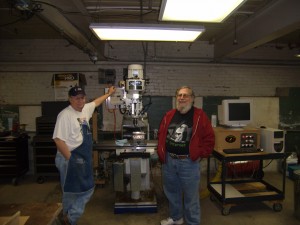
[Rich Goldner] sent in this walkthrough of the Foothills Community Workshop in Granite Falls N.C. Taken during their open house, [Rich] gives us the grand tour showing off the different areas including the HAM station, electronics station, collective work areas, the machine shop, and wood shop.

Though you can see some of the areas are still being put together, their space looks really cool. They have about 3,500 square feet in an old mill. They started with four very enthusiastic individuals who rented the space and set out to build a workshop. Since then, they’ve added 17 more people. Not too bad considering the town population there is only about 5,000.
Continue reading “Hackerspace Intro: Foothills Community Workshop In Granite Falls NC”

One Console To Rule Them All

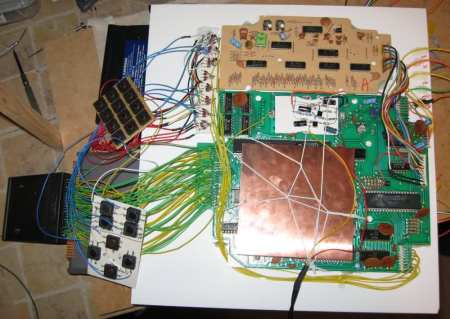
[Bacteria] retro console modder extraordinaire, is back at it with a rather massive project. “Unity”(originally Dubbed Alpha Omega), this will be a single unit that can play games from 20 different console systems. It will run from one power supply, have one video output, and strangely enough, one controller.

[Chris Downing] was nice enough to tip us off to a video of the Unity controller in action.  The controller isn’t quite as bulky as we would have assumed with the extensive list of consoles it has to support, but that could be, in part, due to the fact that you actually swap out the brains for the controller for each system’s compatibility.

Continue reading “One Console To Rule Them All”

Hackaday Links: June 3, 2012

When pigs fly…. close enough.

There are too many jokes to be made about this one. It’s a quadcopter made out of a dead cat. [Bert Jansen], the artist behind this, calls him Orville. He died from natural causes, and what better way to remember a feline friend that liked chasing birds?

Refurbishing an Apple ][

That thirty year old computer in your parent’s attic isn’t going to clean itself, is it? [Todd] put up a series of videos tearing down a 1982 Apple ][ plus, cleaning everything along the way, and doing a very nice demo of AppleSoft BASIC. This is where the revolution started, people.

Ohm sweet Ωhm

Cross stitch isn’t for grandmothers anymore. Adafruit put up a cross stitch tutorial to go along with their resistor color code cross stitch kit. Now down to Hobby Lobby to find black cross stitch cloth and make the ‘ol skull ‘n wrenches.

Welcome! To the world of yesterday!

Boing Boing found an amazing cyberpunk photo spread that appeared in the Mondo 2000 ‘zine back around 1992 or 1993. Even when keeping in mind that this is a self-parody, it’s still incredible. Hackers have laser pointers? And pagers?

Making Arduino projects smaller

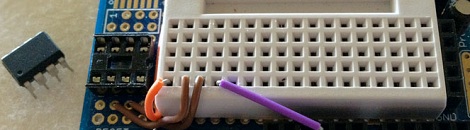
[Scott] caught wind of a way to shrinkify Arduino projects, so he turned an Arduino protoboard into an ATtiny85 programmer. As a neat bonus, [Scott] can use the attached breadboard to build circuits around the ’85.


Copying Complex Objects In Wood

[Matthias], eminent woodworker he is, designed and built an awesome machine to make copies of just about any object imaginable. With a few scrap 2x4s, and a few bolts, screws, and skateboard bearings, you too can copy anything into a solid block of wood.

The theory of operations for [Matthias]’ copy carver is mounting a router and ‘follower’ to the same piece of wood. Put that on an XY table with a rotation axis, and just about any object can be copied in wood or plastic. It’s not too dissimilar to a Dulplicarver, a routing machine meant to copy everything from gun stocks to guitar and violin bodies.

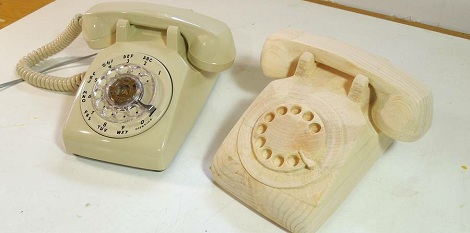
So far, [Matthias] has copied a rotary phone and a sadly non-functional wrench.  It’s the perfect follow-up for [Matthias]’ 3 axis pantograph router that can copy and enlarge any random flat object you can throw at it.

via Make

Piping Micrometer Data To A VGA

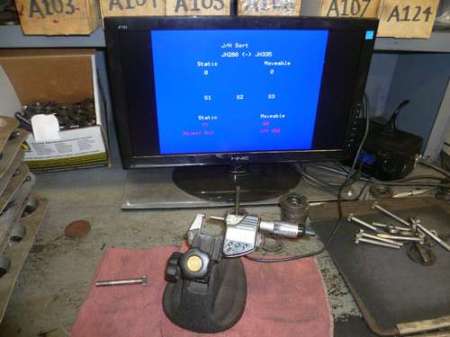
[sspence] found himself in need of a way to push the data from his digital micrometer to a VGA panel for easy display. His micrometer had a data port, so he figured he could plug it into a micro controller and have that push data to a VGA. The micrometer spits out a 52 character data stream in reverse order, so he had to reassemble it in the correct order in software. After a bit of reverse engineering the funky data stream, he had an Arduino pulling the serial data. All that was left was the addition of a VGA shield for output.

He wanted to extend this a bit further though, so he added a foot switch and finger switch to allow for taking multiple measurements and display an average. In the end, he was left with a nice huge display for his micrometer that gave him exactly what he wanted.

We expect that someone will ask why he chose to use an arduino and a shield instead of designing a custom circuit with less components and cost. Our guess would be that his goal was to “generate bin numbers for gear sets” and he just needed an upgraded tool. His goal wasn’t to research design and implement the most efficient circuit. That being said, if anyone feels like designing a smaller package for this, feel free to share with the rest of us!