Need A Reactalyser?

We’ve noticed a recent surge in people recreating old projects from vintage electronics magazines, and we approve. After all, parts and PCBs are easier to get than ever, so other than replacing obsolete parts, it is usually much easier to build these projects now compared to when they first appeared. The latest one we’ve noticed was [Anthony Francis-Jones’] build of the “Reactalyser” from a 1968 edition of Practical Electronics. Check it out in the video below.

You may ask yourself what a reactalyser could be. We did too. Our guess was extremely far off, since we thought it might have to do with reactance.

We liked the retro-look radio that [Anthony] used as a case. He changed the circuit to use an OC71 PNP transistor and replaced a mechanical part of the device with more electronics. So this isn’t a totally faithful reproduction, but it does keep the spirit of the device.

This might seem like an odd circuit for something that would be totally trivial to make with a microcontroller. However, these kinds of circuits were very common prior to simple-to-use computers.

If you like these old retro builds, check out some of the ones we’ve featured from [Bettina Neumryr]. We need a name for this activity. We’ll suggest retromagging. Give us your entry in the comments. Continue reading “Need A Reactalyser?”

Printed Sleeve Gives Keys Some Grip

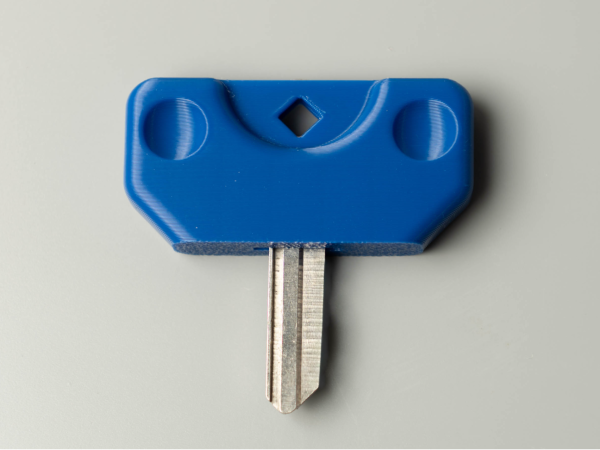
[Enginerd]’s chonky key handle is a beautiful use of 3D printing that helps people help themselves. The large wings, indented faces, and beefed-up grip make a typical house key much easier for someone with arthritis or difficulty gripping those brass slivers. Bright filaments in different colors can also help someone with vision limitations. The thing that will not improve is the space in your pocket or purse.

The design only requires a tiny bit of plastic, prints without supports, and what sets it apart from similar models is that you do not need any double-sided tape or bolts, only a keyring, so someone may have to assemble it for the user. The author is clever enough to use an uncut blank in the project photo so that no one will be decoding and copying their house key. We would wager they have read Hackaday if they are so prepared.

Some of the people who purchased early consumer 3D printers already need these kinds of builds, and there is no shortage of intelligent people creating remarkable open-source designs.

Continue reading “Printed Sleeve Gives Keys Some Grip”

TurboQuant: Reducing LLM Memory Usage With Vector Quantization

Large language models (LLMs) aren’t actually giant computer brains. Instead, they are effectively massive vector spaces in which the probabilities of tokens occurring in a specific order is encoded. Billions of parameters, times N bits per parameter, equals N-billion bits of storage required for a full model. Since increasing the number of parameters makes the models appear smarter, most effort on reducing the storage they require has been on reducing the size of the parameters themselves.

Vector quantization (VQ) is a new method that can compress the vectors calculated during inference to take up less space without significant loss of data. Google’s recently published pre-print paper on TurboQuant covers an LLM-oriented VQ algorithm that’s claimed to provide up to a 6x compression level with no negative impact on inference times.

The tokens aren’t directly encoded in the vector space, but their associated key value is, which along with the single token per inference process creates the need for a key-value (KV) cache, the size of which scales with the size of the model. Thus by compressing the KV cache using VQ, it will reduce its size and correspondingly speed up look-ups due to the smaller size in memory. One catch here is that VQ is due to the nature of quantization some accuracy will be lost. The trick here is thus to apply VQ in such a way that it does not affect this accuracy in a noticeable manner.

Other aspects that had to be taken into account by the TurboQuant algorithm was fast computation to keep up with real-time requirements, along with compatibility with so-called ‘AI accelerator’ hardware.

Continue reading “TurboQuant: Reducing LLM Memory Usage With Vector Quantization”

The Brits Made A Rocket. What Happened To It?

Like many long-established broadcasters, the BBC put out a selection of their archive material for us all to enjoy online. Their most recent may be of interest to Hackaday readers and has more than a bit of personal interest to your scribe, as it visits the Spadeadam rocket test range on the event of its closure in 1973. This marked the final chapter in the story of Blue Streak, the British intercontinental missile project that later became part of the first European space launcher.

It’s possible citizens of every country see their government as uniquely talented in the throwing away of taxpayer’s money, but the sad story here isn’t in Blue Streak itself which was obsolete as a missile by the time it was finished. Instead it lies in the closure of the test range as part of the ill-advised destruction of a nascent and successful space industry, just as it had made the UK the third nation to have successfully placed a satellite in orbit.

We normally write in the third person in our daily posts here at Hackaday, but for now there’s a rare switch into the first person. My dad spent a large part of the 1950s working as a technician for de Haviland Propellers, later part of Hawker Siddeley, and then British Aerospace. He was part of the team working on Blue Streak at Spadeadam and the other test site at RAF Westcott in Buckinghamshire, and we were brought up on hair-raising tales of near-disasters in the race to get British nukes flying. He’s not one of the guys in the video below, as by that time he was running his metalwork business in Oxfordshire, but I certainly recognise the feeling of lost potential they express. Chances are I’ll never visit what remains of the Spadeadam test stands in person as the site is now the UK’s electronic warfare test range, so the BBC film represents a rare chance for a closer look.

In a related story, the trackers for the same program in Australia were saved from the scrapheap.

Continue reading “The Brits Made A Rocket. What Happened To It?”

WolfIP Doesn’t Allocate

For some types of embedded systems — especially those that are safety-critical — it’s considered bad form to dynamically allocate memory during operation. While you can usually arrange for your own code to behave, it’s the libraries that get you. In particular, it is hard to find a TCP/IP stack that doesn’t allocate and free memory all over the place. Unless you’ve found wolfIP.

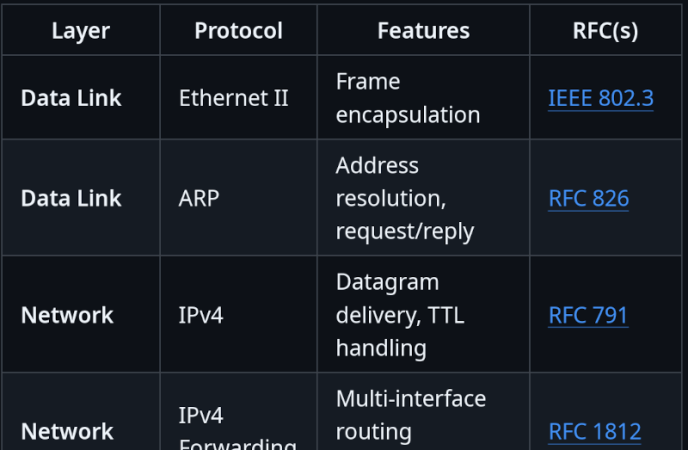
The library supports a BSD-like non-blocking socket API. It can act as an endpoint, but can also support multiple interfaces and forwarding if you were building something like a router. It doesn’t appear to be bare-bones either. In addition to the normal things you’d expect for IPv4, there’s also ICMP, IPSEC, ARP, DHCP, DNS, and HTTP with or without SSL TLS. There is also a FIPS-compliant implementation of WireGuard for VPN, although it is not directly compatible with standard WireGuard, only with other instances of itself (known as wolfGuard). There is a Linux kernel module for WolfGuard, though.

The code should be fairly easy to port, and it includes a binding for FreeRTOS already. If you’ve used wolfIP, let us know in the comments.

If you want to really get down to the low-level, try this project. Of, if you want a refresher on basics, we can help with that, too.