Reverse Engineering An ATM Card Skimmer

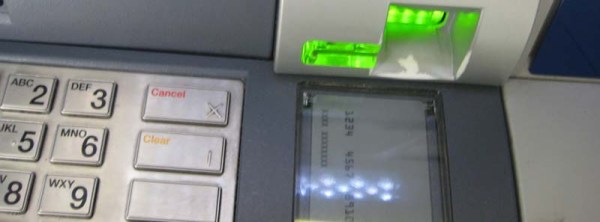
While vacationing in Bali, [Matt South] walked into a nice, secure, air-conditioned cubicle housing an ATM. Knowing card skimmers are the bane of every traveller, [Matt] did the sensible thing and jiggled the card reader and the guard that hides your PIN when punching it into the numeric keypad. [Matt] found the PIN pad shield came off very easily and was soon the rightful owner of a block of injection molded plastic, a tiny camera, and a few bits of electronics.

The first thing that tipped [Matt] off to the existence of electronics in this brick of plastic was a single switch and a port with four contacts. These four pins could be anything, but guessing it was USB [Matt] eventually had access to a drive filled with 11GB of video taken from inside this PIN pad shield.

An investigation of the videos and the subsequent teardown of the device itself revealed exactly what you would expect. A tiny pinhole camera, probably taken from a ‘spy camera’ device, takes video whenever movement is detected. Oddly, there’s an audio track to these videos, but [Matt] says that makes sense; the scammers can hear the beeps made by the ATM with every keypress and correlate them to each button pressed.

Of course, the black hats behind this skimmer need two things: the card number, and the PIN. This tiny spy cam only gets the PIN, and there wasn’t a device over or in the card slot in the ATM. How did the scammers get the card number, then? Most likely, the thieves are getting the card number by sniffing the ATM’s connection to the outside world. It’s a bit more complex than sticking a magnetic card reader over the ATM’s card slot, but it’s harder to detect.

Detecting Beetles That Kill Trees, Make Great Lumber

All across southern California there are tiny beetles eating their way into trees and burrowing into the wood. The holes made by these beetles are only about 1mm in diameter, making them nigh invisible on any tree with rough bark. Trees infested with these beetles will eventually die, making this one of the largest botanical catastrophes in the state.

AmbrosaMaple
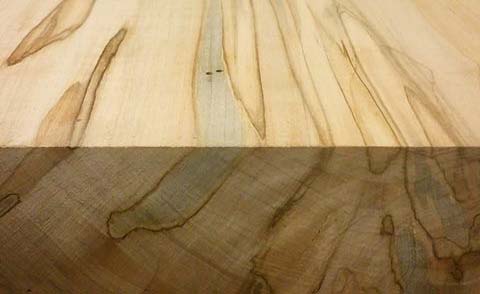
Ambrosia maple, the result of these beetles boring into maple trees. Although ambrosia maple is arguable prettier, it is significantly cheaper than hard maple, making trees infested with beetles less valuable. Image source: [ironoakrva]
For [Joan]’s project for the 2016 Hackaday Prize, she’s working on a project to detect the polyphagous shothole borer, the beetle that drills into trees and eats them from the inside out. This is a surprisingly hard problem – you can’t look at the inside of a tree without cutting it down – so [Joan] has turned to other means of detecting the beetle, including listening for the beetle’s mastications with a stethoscope.

Although these ambrosia beetles will burrow into trees and kill them, there is another economic advantage to detecting these tiny, tiny beetles. The fungi deposited into these beetle bore holes make very pretty wood, but this wood is less valuable than lumber of the same species that isn’t infested with beetles. It’s a great project for the upcoming Citizen Science portion of the Hackaday Prize, as the best solution for detecting these beetles right now is sending a bunch of grade school students into the woods.

The HackadayPrize2016 is Sponsored by:

These 20 Projects Won $1000 In The Hackaday Prize

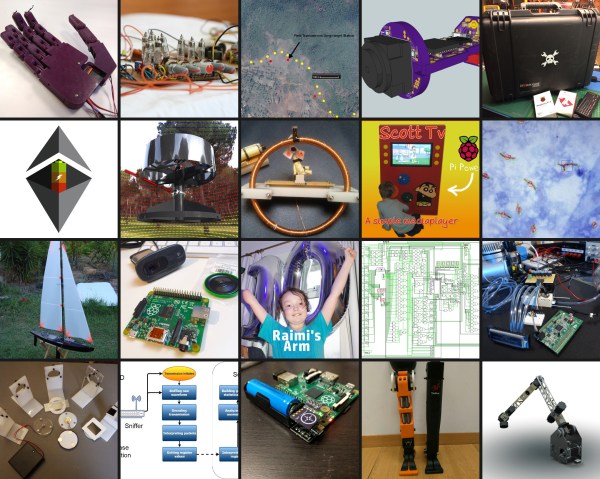
Since March, hundreds of hardware hackers around the globe have been hard at work designing and planning their entry into this year’s Hackaday Prize. The second challenge is now under way, a brand new chance for you to enter your own project. For inspiration, here are the top twenty entries from the first part of the Hackaday Prize.

The first challenge, Design Your Concept had 555 entries which we’ve spent the past week poring over. Now it’s time to reward the best of that first round with $1000 and a chance at winning the Hackaday Prize – $150,000 and a residency at the Supplyframe Design Lab in Pasadena.

The winners of Design Your Concept, in no particular order, are:

These twenty projects continue on to compete in the last phase of the Hackaday Prize. Congrats! Now get to work: you have a lot to do before the Hackaday Prize finals in October.

If your project didn’t make the cut – or you haven’t started one yet – don’t worry. Until the end of May we’re running the second challenge for this year’s Hackaday Prize. Anything Goes in this round and we’re looking for the craziest, most ostentatious, and most nonconformist project out there. Want to put the Internet of Socks on the blockchain? This challenge is right up your alley.

Anything Goes is a brand new challenge to solve a problem with technology and Build Something That Matters. Until the end of May, we’re opening up the gates for hackers, designers, and engineers to build whatever they want.

If you don’t have a project up on Hackaday.io, you can start one right now and submit it to The Hackaday Prize. If you already have a project up, add it to the Anything Goes challenge using the dropdown menu on the left sidebar of your project page.

The HackadayPrize2016 is Sponsored by:

Upgrading A 20 Year Old PDA

Before we had our iDevices and Androids, even before Blackberry, we had PDAs. The most famous of these mid-90s computing appliances are the Apple Newton and the Palm products, but the world of 90s PDAs was significantly more diverse than these two devices. Palm had a competitor in Handspring who released a cheaper and better version of a Palm OS device with the Visor. HP made hardware at one point, and you could run Windows – including Excel and Word – on a handheld device in 1998.

A company name Psion made PDAs with a clamshell design and a keyboard back then, too. Disregarding the operating system, these little clamshell PDAs could arguably be called the forerunners of yesterday’s netbooks and today’s Surface tablets. [RasmusB] is turning his Psion 5 PDA into something modern by replacing all the important bits while still keeping the clean design of this 20-year-old PDA.

The goal of this project is to completely replace the electronics of the Psion 5, while keeping all of the mechanics. That means the keyboard will stay the same, the device will run off of two AA batteries, and all the switches and ports will work. This effort began by making the Psion keyboard Arduino compatible by reverse engineering the keyboard matrix with a pencil and paper, and turning the keyboard into a USB keyboard.

Efforts to turn this Psion into a modern device are ongoing, but at least the outline of the main board is now in KiCad, with a microcontroller to decode the keyboard, switches for the lid and other buttons, and the correct space for the CompactFlash card and battery contacts. The next step is selecting a microprocessor and designing a circuit, but [Rasmus] is off to a great start to make this ancient PDA a modern computing device.

The HackadayPrize2016 is Sponsored by:

Hackaday Links: May Day, 2016

Humble Bundle is a great way to fill up your Steam library – just pay what you want, and get some indie video games. The Humble Bundle is much more than video games, because No Starch Press just put up a bundle of books on hacking. No, there are no books about wearing balaclavas and using laptops with one hand. I haven’t written that book yet. There’s some choice books in this bundle, including [Bunnie]’s Hacking the XboxAutomate the Boring Stuff with Python, and Practical Malware Analysis.

The Raspberry Pi camera – the $25 add-on webcam that plugs directly into the Pi – is getting an upgrade. The original camera was a five Megapixel sensor that was EOL’d at the end of 2014. The Raspberry Pi foundation bought up a lot of stock, but eventually there would be a replacement. The new sensor is a Sony IMX219 eight Megapixel deal, available at the same price. We assume a NoIR version without the IR filter will be released shortly.

Here’s a little hardware review that doesn’t quite merit a full post. The Raspberry Pi Zero is great, and will be even better once production ramps up again and stock lands in warehouses. One problem with the Zero is the lack of USB ports, leading to at least two Hackaday posts with the exact same headline, ‘Yet Another Pi Zero USB Hub‘. Obviously, there’s a market for an easy to use USB hub for the Zero, and this company is stepping up to fill the need. The killer feature here is the use of pogo pins to tap into the USB differential lines, power and ground pads on the bottom of the Pi Zero. The USB hub is based on the popular FE 1.1 4-port USB hub controller, giving the Pi Zero four USB 2.0 ports. Does it work? Yeah, and it’s only $10. A pretty neat little device that will be very useful when Pi Zeros flood workbenches the world over.

It was announced in 2014, released in 2015, but the STM32F7 hasn’t seen a lot of action around these parts. A shame, because this is the upgrade to the famously powerful STM32F4 microcontroller that’s already capable of driving high-resolution displays through VGA, being an engine control unit for a 96 Ford Aspire, and being a very complex brushless motor driver. The STM32F7 can do all of these and more, and now ST is cutting prices on the F7’s Discovery Board. If you’re looking for a high-power ARM micro and don’t need to run Linux, you won’t do better elsewhere.

Need to reflow a board, but don’t have a toaster oven? Use a blowtorch! By holding a MAPP blowtorch a foot away from a board, [whitequark] was able to successfully reflow a large buck converter. There’s a lot of water vapor that will condense on the board, so a good cleaning afterward is a good idea.

A few weeks ago, [Mr. LeMieux] built a 360 degree, all-metal hinge. He’s been up to something a little more dangerous since then: building piles of mini table saws. Small table saws are useful for miniatures, models, and the like. [Mr. LeMieux]’s table saw is a piece of CNC’d aluminum, with a bearing and saw arbor that attaches to an electric drill. Dangerous, you say? Not compared to the competition. Behold the worst forty dollars I’ve ever spent. This Horror Freight mini table saw is by far the worst tool I’ve ever used. The bed was caked with streaky layers of paint, uneven, the blade wasn’t set at 90 degrees, and the whole thing was horrifically underpowered. Trust me when I say the CNC electric drill version is safer.

The MakerBot Obituary

MakerBot is not dead, but it is connected to life support waiting for a merciful soul to pull the plug.

This week, MakerBot announced it would lay off its entire manufacturing force, outsourcing the manufacturing of all MakerBot printers to China. A few weeks ago, Stratasys, MakerBot’s parent company, released their 2015 financial reports, noting MakerBot sales revenues have fallen precipitously. The MakerBot brand is now worth far less than the $400 Million Stratasys spent to acquire it. MakerBot is a dead company walking, and it is very doubtful MakerBot will ever be held in the same regard as the heady days of 2010.

How did this happen? The most common explanation of MakerBot’s fall from grace is that Stratasys gutted the engineering and goodwill of the company after acquiring it. While it is true MakerBot saw its biggest problems after the acquisition from Stratasys, the problems started much earlier.

Continue reading “The MakerBot Obituary”

The Open Source Hacker’s Laptop

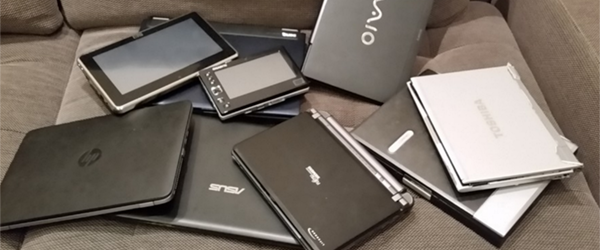
[Tsvetan Usunov] has been Mr. Olimex for about twenty five years now, and since then, he’s been through a lot of laptops. Remember when power connectors were soldered directly to the motherboard? [Tsvetan] does, and he’s fixed his share of laptops. Sometimes, fixing a laptop doesn’t make any sense; vendors usually make laptops that are hard to repair, and things just inexplicably break. Every year, a few of [Tsvetan]’s laptops die, and the batteries of the rest lose capacity among other wear and tear. Despite some amazing progress from the major manufacturers, laptops are still throwaway devices.

Since [Tsvetan] makes ARM boards, boards with the ~duino suffix, and other electronic paraphernalia, it’s only natural that he would think about building his own laptop. It’s something he’s been working on for a while, but [Tsvetan] shared his progress on an Open Source, hacker’s laptop at the Hackaday | Belgrade conference.

Continue reading “The Open Source Hacker’s Laptop”