Make Any Shape Board In Eagle

circuit2

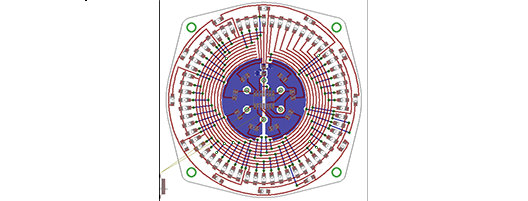
[Bryan] has been working on a very nice analog LED clock circuit, but when it came time to lay out the parts in Eagle, he was somewhat miffed by the inability to create designs in his Eagle boards. Eagle is a fine tool for laying out circuits, but when it comes to making strangely shaped PCBs, Eagle just isn’t the right tool.

The solution to this problem was to create the board outline in OpenSCAD. The desired shape of [Bryan]’s clock was easily designed, but importing the shape into an Eagle layer was another matter entirely.

OpenSCAD, though, can output 2D shapes to the DXF format. Getting the DXF board into Eagle required [Bryan] to write a script that outputs Eagle WIRE commands. Pasting these commands into the command line gave [Bryan] a perfectly shaped PCB.

Since DXF is supported by every drawing package on the planet, [Bryan]’s 20 line script could also be used for much more intricate designs. If you have an incredibly complex Illustrator drawing that deserves to be a PCB, it doesn’t get much easier than tossing it through a script.

VFD Display Becomes An Amplifier

Born well into the transistor era of the late 80s, [Fernando] missed out on all the fun you can have with high voltage and vacuum tubes. He wanted to experience this very cool tech, but since you won’t find a tube checker down at the five and dime anymore, where exactly do you get a vacuum tube to play around with? [Fernando]’s solution was to rip apart the vacuum fluorescent display from an old radio (Google Translate) and use that as a triode.

Inside every VFD is a filament, grid, and cathode – three simple elements also found in the triodes of just about every tube amp ever made. By applying a small voltage to the filament, a larger voltage to the cathode, and sending an audio signal to the grid, this triode amplifies the electrical signal coming from a stereo or guitar.

[Fernando] built his circuit on a breadboard, and with a little tweaking managed to get a fairly respectable amount of gain from parts salvaged from a radio. While using VFDs as amplifiers is nothing new – we’ve seen it a few times before, tube builds are always great to see, and bodged up electronics even more so.

Transmitting Data With A Pi And RTL-SDR

Sometimes the best builds aren’t anything new, but rather combining two well-developed hacks. [Marc] was familiar with RTL-SDR, the $30 USB TV tuner come software defined radio, but was surprised no one had yet combined this cheap radio dongle with the ability to transmit radio from a Raspberry Pi. [Marc] combined these two builds and came up with the cheapest portable radio modem for the Raspberry Pi.

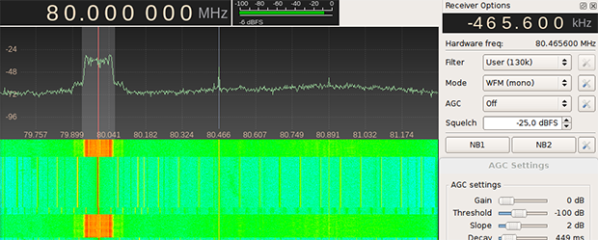
Turning the Raspi into a transmitter isn’t really that hard; it only requires a 20cm wire inserted into a GPIO pin, then toggling this pin at about 100 MHz. This resulting signal can be picked up fifty meters away, and through walls, even.

[Marc] combined this radio transmitter with minimodem, a program that generates audio modem tones at the required baud rate. Data is encoded in this audio stream, sent over the air, and decoded again with an RTL-SDR dongle.

It’s nothing new, per se, but if you’re looking for a short-range, low-bandwidth wireless connection between a computer and a Raspberry Pi, this is most certainly the easiest and cheapest method.

3D Printed Velcro

Velcro

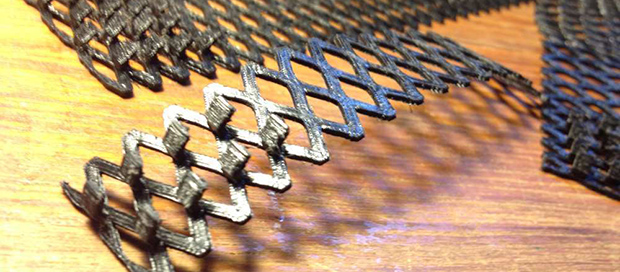
With new materials comes new possibilities in fabrication, and with 3D printers, this observation is no different. In the past year or so, there have been a few very interesting new filaments that have come into mainstream use – a printable sandstone, high impact polystyrene, and a flexible PLA. When [Rich] saw a bike light that had an integrated hook-and-loop fastener – think Velcro – built in to its enclosure, he thought to himself, ‘I could do that too.’

[Rich]’s “ElastoStraps” are printed with Makergeek’s Flexible PLA, and the entire device works surprisingly similar to other hook and loop fasteners with a registered trademark. The design is up on Thingiverse, and since the object was designed with OpenSCAD, the 3D printed Velcro can also be opened up in the Customizer for hook-and-loop straps that perfectly suit your needs.

Why You Shouldn’t Care About The All-Metal 3D Printed Gun

Solid Concepts, one of the world’s largest rapid prototyping outfits, just printed a gun. Unlike previous 3D printed guns like the Liberator, this 3D printed version of an M1911 is made out of metal. It’s a real gun, with rifling in the barrel – something the Liberator doesn’t have – and has the look and feel of what the US military has been using as a service pistol for decades.

The Solid Concepts 1911 was made using the selective laser sintering process, using a combination of stainless steel and nickel-chromium alloys. Every single part of the gun, save for the spring, was 3D printed without any machining. It’s an impressive feat of rapid manufacturing – firing .45 ACP rounds, this gun will see 20,000 psi every time the gun is fired. It’s already chewed through a few magazines so far, and it apparently shoots pretty well, to boot.

Here’s why you shouldn’t care.

Solid Concepts business is to make things using rapid prototyping. They make everything from plastic baubles, tooling for injection molds, architectural models, and stuff that doesn’t get past the prototype stage. This 3D printed 1911 is simply a demonstration of Solid Concept’s capabilities, nothing more.

The printer used to manufacture this printer is an EOS SLS printer that costs many tens of thousands of dollars. Our limited research can’t pin the price of the printer down more than that, but let’s just say you could buy a very, very nice sports car for the same price, and we’re not talking about that awesome ‘vette down at the Chevy dealership.

This is just a neat little advertisement, that’s it. Someone at Solid Concepts realized if they made a gun using 3D printed parts, it would be picked up by blogs and wire services. They were right. It’s an excellent demo of what Solid Concepts’ capabilities are, but that’s just about it. You’re still not able to manufacture an M1911 on a desktop 3D printer, and even if you could, you could set up a machine shop in your garage and end up with a similar product for less money.

As an aside, and this is just me throwing an idea out there, can we please stop using guns as an example of what 3D printing can do? I respect your right to manufacture, own, and operate a gun, but as I write this paragraph, I’m cringing at the thought of all the pro and anti-gun comments this post will see.

If you’re looking for a way to demonstrate your 3D printing prowess, how about something like an engine? Given the right design, they’re more complicated than a gun, and a really small Wankel engine would be really cool.

Video of the Solid Concepts 1911 available below.

Continue reading “Why You Shouldn’t Care About The All-Metal 3D Printed Gun”

Linux On A Leapster For Classic Video Game Emulation

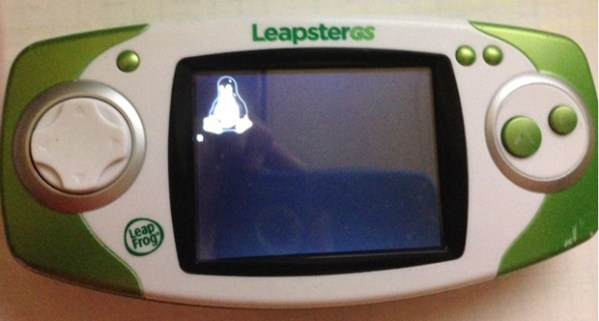
Christmas is coming, and if you have nieces, nephews, or ankle biters of your own roaming your house, you’re probably wondering how you’ll be subsidizing Santa this year. it looks like Toys R Us will be selling the Leapfrog LeapsterGS for $30 on Black Friday this year. It’s a Linux device running on a 550 MHz ARM 9, with 128 MB of RAM and 2 GB of Flash. Overpowered for a children’s toy, but perfect for when the kids forget about it in a month, because now you can replace the firmware with a proper Linux install and run classic emulators.

Putting Linux on these cheap handhelds made for children isn’t anything new; we’ve seen it done with the Leapfrog DIDJ and the Leapfrog Explorer. Those consoles, however, had rather anemic CPUs and not a whole lot of RAM. Moore’s Law finally kicked in for stocking stuffers, it seems, and the Leapster GS is powerful enough to play all those Nintendo, Game Boy and even MAME games.

All that’s needed to flash the new firmware is soldering a few wires onto the LeapsterGS’ board for a serial connection. The new LeapsterGS firmware even has an MP3 and movie player, so even if the recipient of one of these machines grows tired of it in a week, there’s still a lot of life left in it.

Video of the LeapsterGS playing the greatest arcade game below.

Continue reading “Linux On A Leapster For Classic Video Game Emulation”

Remote Control FPV Cockpit

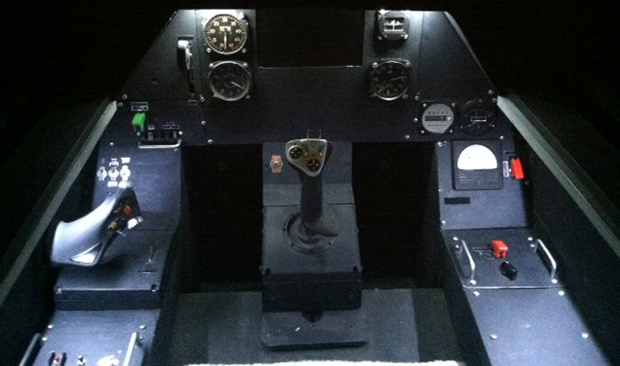
cockpit

FPV flying, for how awesome it actually is, still consists of fiddling around with a remote control transmitter and either wearing video goggles or squinting into a screen. Awesome, yes, but not as cool as [Brett Hays]’s enclosed cockpit ground station. It’s a trailerable flight sim that allows you to have the same experience of flying an aircraft over your local terrain without actually leaving the ground.

The centerpiece for this build is a 42 inch flat screen TV that was picked up for $160. This was placed at the front of a large plywood and 2×2 box along with a computer joystick, throttle, and rudder controls.

The pots inside the controls needed to be switched out to match the resistance of the ones inside an old Futaba transmitter. From there, completing the the cockpit was just a matter of fabricating a few panels for a video switcher, gear retract lever, flaps. and RC radio settings.

It’s a truly amazing build and when placed on a trailer towed by [Brett]’s jeep, has the potential to be the closest thing to flying a manned aircraft you can get without a pilot’s license.

Videos of the cockpit in action below.

Continue reading “Remote Control FPV Cockpit”