Announcing The Next Round Of Remoticon Talks

It’s coming up fast — Hackaday Remoticon 2021 is just a few weeks away, and we’re working around the clock to load up the weekend with awesome and inspiring talks that are bound to get the creative juices racing through your crazy straw brain.

Come and practice your neuroplasticity with us on November 19th and 20th. Remoticon is free-as-in-beer this year, unless you want a t-shirt. Even then, $25 is peanuts, because we’re sure that you’ll find a few talks that are priceless, and you’ll have a cool shirt to remember them by. Grab your ticket right now! We’ll wait.

A few days ago we announced mechanical engineering marvel Jeremy Fielding as our second keynote speaker. Passion is paramount to all projects, and Jeremy’s passion is making things move. He’s a renaissance man with a quiver full of self-taught skills, and is sure to bring enthusiasm to his keynote talk, which focuses on building hardware that moves, and how to handle the mechatronic mysteries that arise when trying to scale things up.

For now, let us indulge you with a preview of the second round of talks and speakers that we’ll be showcasing on November 19th and 20th. There’s plenty more where these came from, and we’ll be serving up fresh samples all the way until Remoticon weekend.

Continue reading “Announcing The Next Round Of Remoticon Talks”

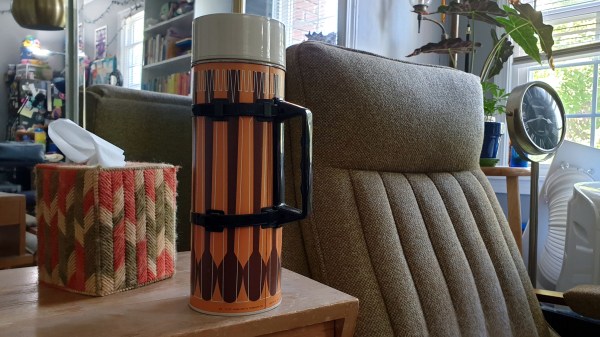
A 1971 Thermos compliments this mid-century corner of my office.

The Incredible Tech Of The Vacuum-Seal Flask

I recently started using a 50-year-old vacuum-seal flask that belonged to my Grandpa so that I don’t have to leave the dungeon as often to procure more caffeine. Besides looking totally awesome on my side desk, this thing still works like new, at least as far as I can tell — it’s older than I am.

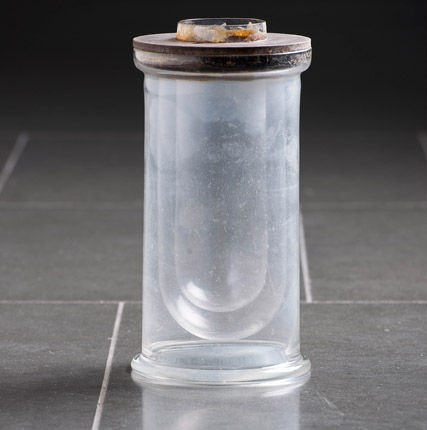
Sir James Dewar's original vacuum-seal flask.
Sir James Dewar’s original vacuum-seal flask. Image via the Royal Institute

Of course this got me to wondering how exactly vacuum-seal flasks, better known in household circles as Thermoses work, and how they were invented. The vacuum-seal flask is surprisingly old technology. It was first invented by Scottish chemist Sir James Dewar and presented to the Royal Institute in 1892. Six years later, he would be the first person to liquefy hydrogen and is considered a founding father of cryogenics. Continue reading “The Incredible Tech Of The Vacuum-Seal Flask”

A homebrew telephone connects home and workshop.

The Calls Are Coming From Inside The House (or Workshop)

Hot on the heels of their carbon microphone build a few years ago, [Simplifier] strung up a two-phone network between the house and the workshop. Both telephones are completely DIY except for the pair of switches on the front. Each side has a bell, a microphone, and an audio transformer. Listening is done through a pair of headphones, and both users speak through a homebrew carbon microphone.

We particularly love the bell, which is made from fence post caps. Sitting between the bells and ready to strike is a ball bearing mounted on a really thick piece of wire that’s driven by an electromagnet. To make a call, you use both switches — the one on the left pulls either the bell or the microphone to ground, while the switch on the left right is used momentarily to send 6 V from the lantern battery down the 50 ft. line to the other phone to ring it. You’ll see what we mean in the demo video after the break. Check out the sound of those fence post caps!

[Simplifier] wound an audio transformer that provides the necessary impedance matching to use regular headphones as receivers. Since the homebrew microphones only need 1.5 V, [Simplifier] split the voltage across two carbon contacts placed in series. That’s still more than necessary, but [Simplifier] was able to make it work.

More recently, [Simplifier] has built a beautiful and even better carbon microphone and even hosted a back-to-basics Hack Chat.

Continue reading “The Calls Are Coming From Inside The House (or Workshop)”

They Milk Cows, Don’t They?

You’ve no doubt heard of the many alternatives to cow’s milk that are available these days. Perhaps you’ve even tried a few of them in your quest to avoid lactose. Some coffeehouses have already moved on from soy milk, offering only oat or almond milk instead of 2% and whole. Their reasoning is that soy milk is a highly processed product that can’t be traced back to a single source, which stands in stark contrast to all those bags of single-origin coffee beans.

These nut-based alternatives kicked off what is known as the milk wars — the dairy industry’s fight against labeling plant-based dairy alternatives as ‘milk’ and so on. Well, now it’s getting even more interesting. A company called Perfect Day is making milk using microorganisms that secrete milk proteins. It may sound kind of gross, but it’s essentially microbial fermentation, which is the normal process by which bread, cheese, yogurt, wine, and beer are made.

To be fair, what Perfect Day and other companies are doing is precision fermentation using genetically engineered microorganisms in a bioreactor, so it’s a bit more involved than what you could probably pull off in the basement. Precision fermentation lies somewhere between two modern extremes — plant-based meat and cultured meat. The latter is actual animal tissue grown from stem cells, and is only available at high-end restaurants for exorbitant prices.

Continue reading “They Milk Cows, Don’t They?”

Hackaday Remoticon: Call For Proposals Extended To October 20th

In just a few short weeks, we’ll all be meeting up online for the second Hackaday Remoticon on November 19th and 20th. This is the year of the Talk, and who better than you, dear reader, to give one? Good news — we’ve extended the deadline for proposals to Wednesday, October 20th. We’ve all got at least one or two subjects that we could happily bloviate about for hours, be it hardware, software, skill sets, or the stuff that inspires you to stop dreaming and start doing. Why not share your wit and wisdom with the rest of the community?

So, what are you waiting for? Submit your talk proposal today! We’re not looking for you to pack the whole talk into the description box, but we would like to know what your talk will be about, and why it’s relevant to an audience of geeks, hackers, and engineers. Talks are typically 30 minutes in length, but we can likely accommodate shorter or longer talks if needed.

Everyone has something worth sharing, and the fact is, we are always looking for first-time speakers to showcase. Just share the things you’re doing that you’re passionate about, and you’re bound to have a great talk that generates excitement all around.

So grab some go-juice and start brainstorming the outline of your talk — give us enough information that we’ll be thirsty for more. Have you got terrible stage fright? Then encourage your outgoing hackerspace buddy to give one and cheer from the sidelines. Although we would rather see all of you in person, moving this conference online comes with the flexibility to hear from hackers all over the world, and no one has to leave home.

A 3D-printed scale model of the mechanism inside a grand piano.

Printed Piano Mechanism Sure Is Grand

Do you know how a piano works? Sure, you press a key and a hammer strikes a string, but what are the finer points of this operation? The intricacy of the ingenious mechanism is laid bare in [Mechanistic]’s 3D-printed scale model of a small section of the grand piano keyboard. The ‘grand’ distinction here is piano length-agnostic and simply refers to any non-upright. Those operate the same way, but are laid out differently in order to save space.

The keys of an acoustic piano are much longer than just the part that shows — they are long levers that do a lot of work, including working their own sound dampeners. The really interesting part is the mechanism that allows a note to be played repeatedly without first releasing the key. This same mechanism also lets the pianist play softly, loudly, or somewhere in between based on the amount of pressure applied.

So you know that the hammer strikes the string (or in this case, the rod), and you can probably figure that it backs off to let the string ring out. But there’s also this whole system that keeps the hammer close by for repeated strikings, as long as the person is holding down the key. Be sure to check it out in the build video after the break.

[Mechanistic] must be going for the standing ovation, because they say in the video’s comments that they will release STL files when they’re finished writing the assembly guide (!). What an encore that will be.

There are many ways to hack an acoustic piano, but don’t go thinking you can sub in guitar strings.

Continue reading “Printed Piano Mechanism Sure Is Grand”

A tiny TV that shows weather, news, and the classic test pattern.

Tiny TV Tells The Temperature Tale

Once upon a time, we would run home from the bus stop to watch Gargoyles and Brady Bunch reruns on the family TV, a late-1970s console Magnavox number that sat on the floor and was about 50% more cabinet than CRT. The old TV, a streamlined white Zenith at least ten years older, had been relegated to the man cave in the basement. It looked so mod compared to the “new” TV, but that’s not the aesthetic my folks were after. They wanted their electronics to double as furniture.

This little TV is a happy medium between the two styles, and for us, it’s all about those feet. But instead of cartoons, it switches between showing the current weather and the top news headlines. Inside that classy oak cabinet is an LCD, an ESP32, and an SD card module. The TV uses OpenWeatherMap and pulls the corresponding weather image from the SD card based on time of day — light images for day, and dark images for night.

We love that it shows the SMPTE color bars, aka the standard American TV test pattern as it switches between weather and news. After showing the top headlines, it automatically switches back to the weather channel. Be sure to check out the short demo video after the break.

Do you like your tiny televisions in strange places? Here’s one you can use to trim your tree this year.

Continue reading “Tiny TV Tells The Temperature Tale”