An Open Source Electromagnetic Resonance Tablet

Drawing tablets have been a favorite computer peripheral of artists since its inception in the 1980s. If you have ever used a drawing tablet of this nature, you may have wondered, how it works, and if you can make one. Well, wonder no longer as [Yukidama] has demonstrated an open source electromagnetic resonance (EMR) drawing tablet build!

The principle of simple EMR tablets is quite straight forward. A coil in the tablet oscillates from around 400 kHz to 600 kHz. This induces a current inside a coil within the pen at its resonant frequency. This in turn, results in a voltage spike within the tablet around the pen’s resonant frequency. For pressure sensing, a simple circuit within the pen can shift its resonant frequency, which likewise is picked up within the tablet. The tablet’s input buttons work in similar ways!

But this is merely one dimensional. To sample two dimensions, two arrays of coils are needed. One to sample the horizontal axis, and one the vertical. The driver circuit simply sweeps over the array and samples every coil at any arbitrary speed the driver can achieve.

Finally, [Yukidama] made a last demo by refining the driver board, designed to drive a flexible circuit containing the coils. This then sits behind the screen of a Panasonic RZ series laptop, turning the device into a rather effective drawing tablet!

If tablets aren’t your style, check out this drawing pen. 

Continue reading “An Open Source Electromagnetic Resonance Tablet”

Playing Factorio On A Floppy Disk Cluster

While a revolutionary storage system for their time, floppy disks are not terribly useful these days. Though high failure rates and slow speeds are an issue, for this project, the key issue is capacity. That’s because [DocJade’s] goal is playing the video game Factorio off floppy disks. 

Storing several gigabytes of data on floppy disks is a rather daunting challenge. But instead of using a RAID array, only a single reader and a custom file system is deployed in this setup. A single disk is dedicated to storing pool information allowing for caching of file locations, reducing disk swaps. The file system can also store single files across multiple disks for storage of larger files. Everything mounts in fuse and is loosely POSIX compliment, but lacks some features like permissions and links.

With the data stored across thousands of disks, the user is prompted to insert a new disk when needed. This ends up being the limiting factor in read and write speeds, rather than the famously slow speeds of floppies. In fact, it takes about a week to load all of Factorio in this manner, even after optimizations to reduce disk swaps. Factorio is also one of the few games that could be installed in this manner, as it loads most of the game into memory at launch. Many other games that dynamically load textures and world maps would simply crash when a chunk is not immediately available.

Not a Factorio fan? No worries, you could always install modern Linux on a floppy!

Continue reading “Playing Factorio On A Floppy Disk Cluster”

Play Games In UEFI…to Access Your Computer

These days, bootstrapping a computer is a pretty straight forward process, at least as far as the user is concerned. But in the olden days, one would have to manually flick switches entering binary code to get the computer to boot. While certainly not as painstaking as manually flipping bits, these games written for UEFI systems hearken back to the days when accessing your computer was a touch more complicated than pressing a power button.

The repository features five games ranging from a falling ball maze to an age verification quiz. The one thing they all have in common is that to complete system boot, you need to win. All are available in UEFI modules which can not only run in QEMU virtual machines, but bare metal if you so choose.

In no particular order, the games featured are a User Evaluation For Ineptness, which presents a simple addition problem for the user to complete. Insult Sword Fighting, which requires the user to select the correct come back to a prompted insult. Fall To Boot, a falling ball maze navigation game. Age Verification, a set of questions about 80s culture to prove the user is old enough to use the computer. And finally, UEFI Says, a simple memory game.

All of these games are fairly simple, but it’s rather fun to see them built using EDK II as a UEFI module. Let us know down in the comments which is your favorite. And if you’re running an ARM computer, you too can join in on the fun!

Thanks [thatsgrand] for the tip!


An RP2040 Powered ADS-B Receiver

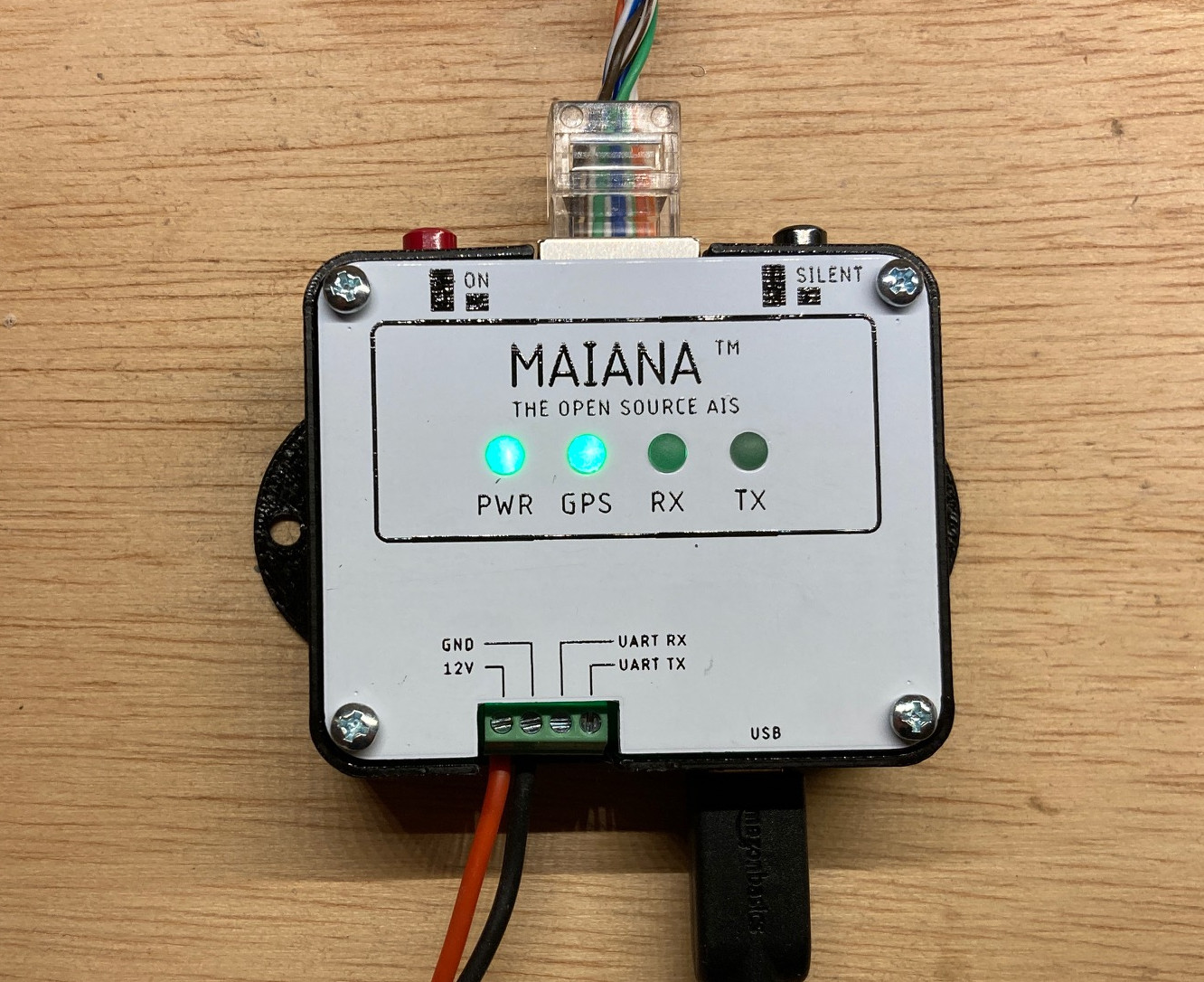
If you’ve ever heard the sound of an aircraft passing overhead and looked at an online plane tracker to try and figure out what it was, then you’ve interacted with ADS-B. It’s a protocol designed to enable easier aircraft monitoring, and it just so happens you can decode it yourself with the right hardware and software — which is how [John McNelly] came to develop ADSBee, an open source ADS-B receiver based around an RP2040.

ADS-B uses on–off keying (OOK) at 1 Mbps, and operates at 1090 MHz. This might seem like a rather difficult protocol to decode on a microcontroller, but the RP2040’s PIO is up to the task. All it takes is a bit of optimization, and a some basic RF components to amplify and digitize the signals.

However, not all aircraft utilize the 1090 MHz ADS-B implementation, and instead use a related protocol called UAT. Operating at 978 MHz, a second receiver is needed for decoding UAT traffic data, which is where the CC1312 comes into play. ADSBee may even be the first open source implementation of a UAT decoder!

What’s quite impressive is the various form factors the module is available in. Ranging from small solder-down modules to weatherproof outdoor base stations, nearly every potential need for an ADS-B receiver is covered. With POE or ESP32 S3 options available, there is no shortage of networking options either!

ADSBees have been placed in numerous locations, ranging from base stations to drones. One user even built out a tiny flight display cluster complete with traffic indicators into an FPV drone.

This isn’t the first time we have seen ADS-B receivers used by drone enthusiasts, but this is certainly the most feature rich and complete receiver we have come across.

Print Pixel Art To A Floppy Disk

Here at Hackaday we love floppy disks. While they are by no means a practical or useful means of storing data in the age of solid state storage, there is something special about the little floppy disc of magnetic film inside that iconic plastic case. That’s why we were so excited to see the tool [dbalsom] developed for printing pixel art in a floppy’s track timing diagrams!

Floppy timing diagrams are usually used to analyze the quality of an individual disk. It represents flux transitions within a single floppy tack as a 2D graph. But it’s also perfectly possible to “paint” images on a floppy this way. Granted, you can’t see these images without printing out a timing diagram, but if you’re painting images onto a floppy, that’s probably the point.

This is where pbm2track comes in handy! It takes bitmap images and encodes them onto floppy emulators, or actual floppies. The results are quite excellent, with near-perfect recreation in floppy graphical views. The results on real floppies are also recognizable as the original image. The concept is similar to a previous tool [dbalsom] created, PNG2disk

If you, too, love the nearly forgotten physical likeness of the save button, make sure to check out this modern Linux on a floppy hack next!

Thanks [gloriouscow] for the tip!

Ray Marching In Excel

3D graphics are made up of little more than very complicated math. With enough time, you could probably compute a ray marching by hand. Or, you could set up Excel to do it for you!

Ray marching is a form of ray tracing, where a ray is stepped along based on how close it is to the nearest surface. By taking advantage of signed distance functions, such an algorithm can be quite effective, and in some instances much more efficient than traditional ray marching algorithms. But the fact that ray marching is so mathematically well-defined is probably why [ExcelTABLE] used it to make a ray traced game in Excel.

Under the hood, the ray marching works by casting a ray out from the camera and measuring its distance from a set of three-dimensional functions. If that distance is below a certain value, this is considered a surface hit. On surface hits, a simple normal shader computes pixel brightness. This is then rendered out by variable formatting in the cells of the spreadsheet.

For those of you following along at home, the tutorial should work just fine in any modern spreadsheet software, including Google Sheets and LibreOffice Calc. It also provides a great explanation of the math and concepts of ray marching, so is worth a read regardless your opinions on Excel’s status as a so-called “programming language.”

This is not the first time we have come across a ray tracing tutorial. If computer graphics are your thing, make sure to check out this ray tracing in a weekend tutorial next!

Thanks [Niklas] for the tip!

How Wind Nearly Took Down Boulder NTP

NTP is one of the most interesting and important, but all too forgotten, protocols that makes the internet tick. Accurate clock synchronization is required for everything ranging from cryptography to business and science. NTP is closely tied around a handful of atomic clocks, some in orbit on GPS satellites, and some in laboratories. So the near-failure of one such atomic clock sparked a rather large, and nerdy, internet debate.

On December 17, 2025, the Colorado front range experience a massive wind storm. The National Center for Atmospheric Reassure in Boulder recorded gusts in excess of 100 mph (about 85 knots or 160 kph). This storm was a real doozy, but gusts this strong are not unheard of in Boulder either. That is no small reason the National Renewable Energy Laboratory (now the National Laboratory of the Rockies) has a wind turbine testing facility in the neighborhood.

Continue reading “How Wind Nearly Took Down Boulder NTP”