Are Apple Trying To Patent The Home Computer 45 Years Too Late?

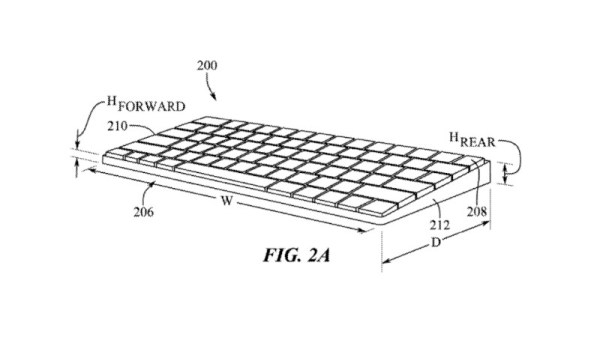
In our recent piece marking the 10th anniversary of the Raspberry Pi, we praised their all-in-one Raspberry Pi 400 computer for having so far succeeded in attracting no competing products. It seems that assessment might be premature, because it emerges that Apple have filed a patent application for “A computer in an input device” that looks very much like the Pi 400. In fact we’d go further than that, it looks very much like any of a number of classic home computers from back in the day, to the extent that we’re left wondering what exactly Apple think is novel enough to patent.
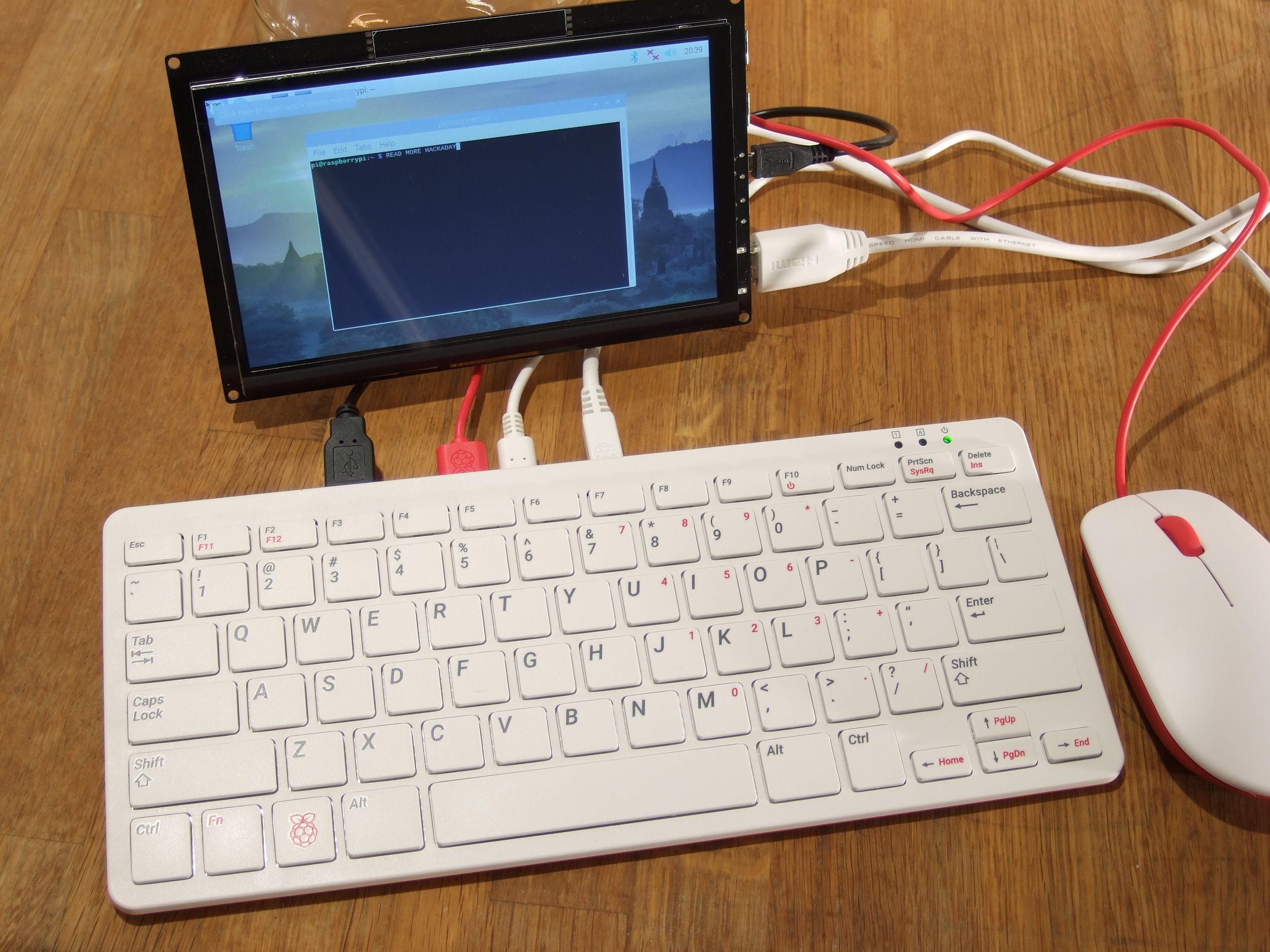
A Raspberry Pi 400 all-in-one keyboard console computer
Looks pretty similar to us.

Reading the patent it appears to be a transparent catch-all for all-in-one computers, with the possible exception of “A singular input/output port“, meaning that the only port on the device would be a single USB-C port that could take power, communicate with peripherals, and drive the display. Either way, this seems an extremely weak claim of novelty, if only because we think that a few of the more recent Android phones with keyboards might constitute prior art.

We’re sure that Apple’s lawyers will have their arguments at the ready, but we can’t help wondering whether they’ve fallen for the old joke about Apple fanboys claiming the company invented something when in fact they’ve finally adopted it years after the competition.

Thinking back to the glory days of 8-bit computers for a moment, we’re curious which was the first to sport a form factor little larger than its keyboard. Apple’s own Apple ][ wouldn’t count because the bulk of the machine is behind the keyboard, but for example machines such as Commodore’s VIC-20 or Sinclair’s ZX Spectrum could be said to be all-in-one keyboard computers. Can anyone provide an all-in-one model that predates those two?

You can read our Raspberry Pi 400 review if the all-in-one interests you.

Via Extreme Tech.
 

The Battlefield That’s 5 KHz Wide

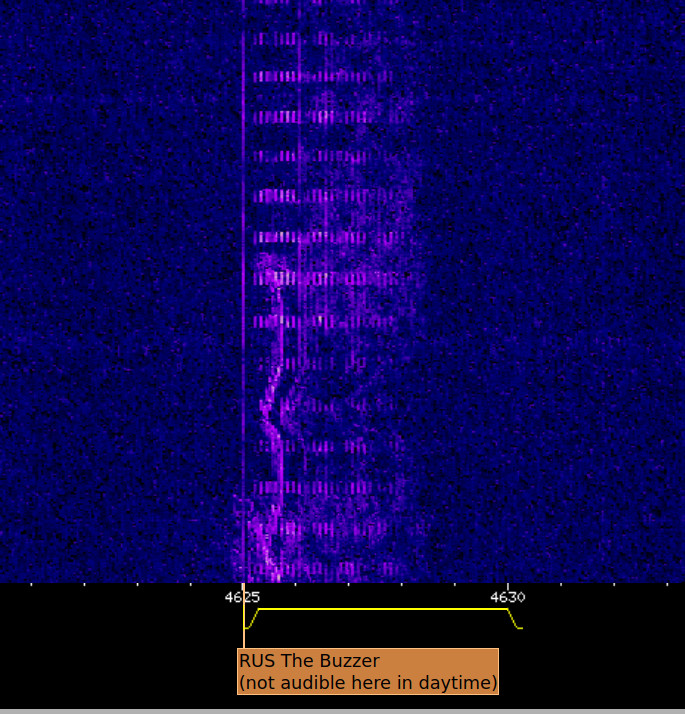
The airwaves are full of news from the battle in Ukraine, with TV and radio journalists providing coverage at all hours. But for those with a bit of patience there’s something else from the conflict that can be found with a radio receiver, the battle over 5 kHz of spectrum starting at 4625 kHz. This has for many years been the location on the dial for “the Buzzer“, a Russian military transmitter whose nickname describes its monotonous on/off buzzing transmission perfectly. As the current Ukrainian situation has taken shape it has become a minor battleground, and the Buzzer now shares its frequency with a variety of other stations broadcasting music, spectrograms, and other radio junk intended to disrupt it.

A spectrogram showing the wavy line of an air raid siren
The air raid siren produces a particularly distinctive spectrogram.

For the curious this can be watched unfolding on a spectrogram or through headphones by anyone within range who has an HF receiver, or for everyone else, with a WebSDR. In Western Europe it’s best listened to in hours of darkness, we suggest you consult the webSDR.org list to see which has the best signal. We’ve heard it on receivers in Poland, Russia, and the ever-reliable uTwente WebSDR in the Netherlands. Over the time we’ve been monitoring it we’ve heard overlaying speech, and music varying from the Soviet and American anthems through dance music and K-pop to 1960s British rock and of course Boney M’s Rasputin, with a few slightly macabre choices such as Final Countdown and an air raid siren. We’ve even heard TV intros from the Benny Hill Show, the A-Team and Mission Impossible, so whoever is doing this has a wide taste.

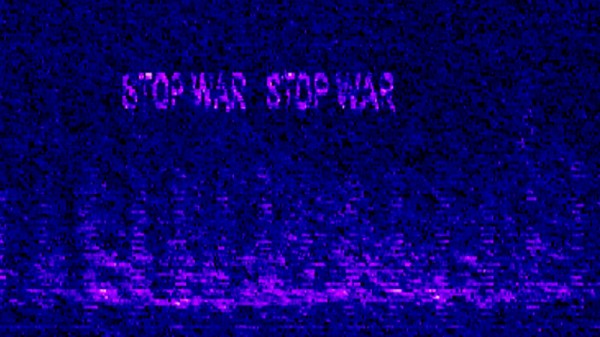
Alongside the music at about 4628kHz meanwhile we’ve watched a series of spectrogram messages scroll past in Ukrainian, Russian, and English, ranging from “Stop war” to lewd suggestions about the Russian President. It’s fair to say that none of these transmissions have obscured the Buzzer, but they have had the effect of significantly increasing the noise on the channel.

To have a listen yourself, point a receiver within range at the appropriate time of day towards 4625 kHz and select USB demodulation and a 5 kHz bandwidth. Meanwhile, for some background on the Cold War HF relics, have a read about numbers stations.

The Antonov An-225 Seems To Have Been Destroyed After All

Something that probably unites most Hackaday readers is a love of machines, particularly unique or interesting ones. In the world of aircraft for example, we’ve run several stories about those which push the edges of the size envelope, be they the Hughes Hercules troop carrier, the Scaled Composites Stratolifter space launcher, or the Antonov An-225 Mriya cargo plane. This last machine has been in the news for all the wrong reasons over the last few days, with reports emerging that it may have been destroyed in the fighting around its base at Hostomel near Kyiv. There has been some uncertainty around this news as it has alternately been claimed to have been destroyed or to have miraculously survived, but now a set of photographs have emerged showing what appears to be the An-225 burning in its damaged hangar.

The An-225 is a unique aircraft not only in the sense that there is no other model quite like it, but also because it was manufactured for the special purpose of being the transport carrier of the Soviet Union’s Buran space shuttle, and thus only one airframe was completed. Its characteristic twin tail served to avoid the turbulence that would have resulted from a Buran mounted on top of its enormous fuselage, and the six engine configuration required to move such a behemoth was in part the clue to identifying it in the photograph. Those readers who were lucky enough to see it take off or land in person will attest to its impressive physical presence, while the rest of us remain sad to have missed that chance.

It seems crass to talk about the destruction of an aircraft when compared to the scale of the unfolding tragedy in Ukraine, but we think perhaps our British and French readers who grew up with Concorde in the sky will understand the power of such a machine as a source of pride. We hope that the Antonov company will return to the design of huge cargo aircraft in peacetime, and Ukranians can again have pride in a monster aircraft that the rest of us will drive for miles just to watch taking off or landing.

The issue of which aircraft is the world’s largest can be a complex one, as we’ve explored in the past.

Header image: Vasiliy Koba, CC BY-SA 4.0.

Where Do You Want To Go Today? Perhaps To A Linux With A Familiar Interface?

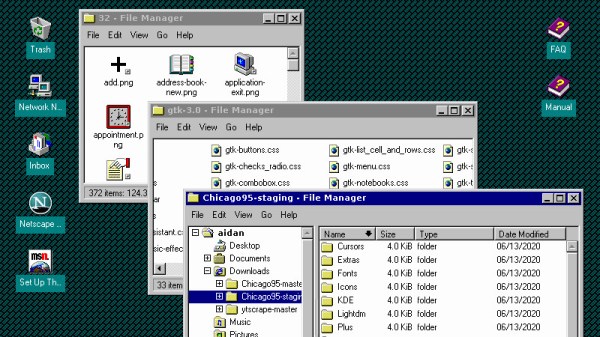
Sometimes we cover works of extreme technological merit here at Hackaday, other times we cover interesting projects that while they might not lie at the bleeding edge are interesting enough that they deserve a wider audience. Sometimes though, we bring you something in this field simply because it amuses us and we think it will you too. Such is the case with [Bryan Lunduke]’s look at making a Linux desktop look like Windows 95. And lest you think that it might be yet another skin to make Windows users transition to Linux a bit easier, the aim and result is to make it look exactly like Microsoft’s mid-90s desktop.

Underneath it all is the relatively familiar xUbuntu distribution, with a deliciously troll-worthy project called Chicago95 atop it. This takes some existing Windows 95 theme and icon projects, and adds GTK themes, an MS-DOS shell theme, the ability to install those cheesy ’90s Plus! themes, and a Microsoft Office 95 theme for LibreOffice. It really does deliver an experience very close to the Redmond original.

So, what’s the point here in 2022? In the first instance it’s an excellent opportunity to troll open-source enthusiast friends with a crusty laptop seemingly running ’95 and showing YouTube videos on Netscape Navigator 3. But beyond the jokes there is a serious use for it. There may be many criticisms that can be leveled at Windows 95, but it’s safe to say that its GUI was a significant success whose echoes can be found in many desktops here in 2022. There are a huge number of people in the world who are completely at home in a Windows 95 environment who might struggle with a Linux desktop, and this gives them a way to be immediately productive.  Would you give your grandmother a Linux box with this desktop?

Squeezing A Wordle Clone Onto The Game Boy

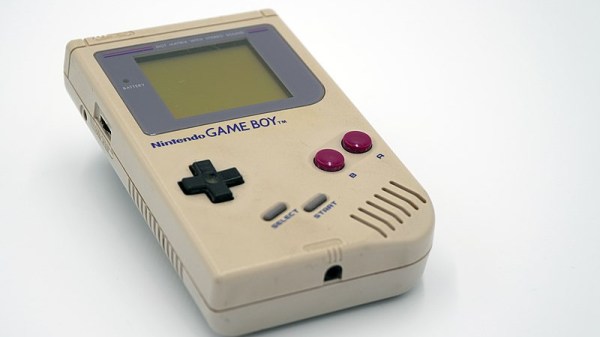
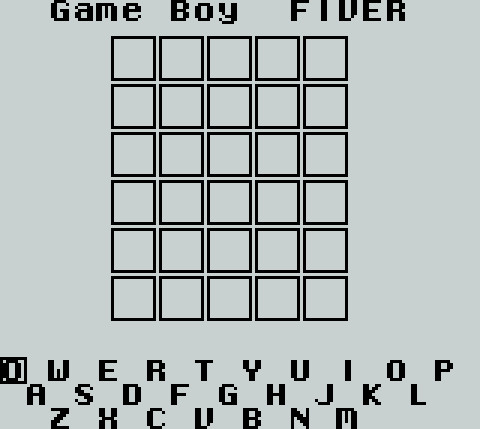
The popular word game Wordle is both an addictive brain teaser for some and a perpetual social media annoyance for others. Its runaway success has spawned a host of clones, among them one created for the Nintendo Game Boy with a reduced vocabulary. [Alexander Pruss] took on the challenge of improving it by fitting the entire 12972-strong 5-letter-word vocabulary as well as the 2315-word answer list into a 32K cartridge along with the code. The challenge in compression on a platform of such meager resources is to devise an algorithm which does not require more computing power or memory than the device has at its disposal. His solution is both elegant and easy to understand.

Starting by dividing the words into lists by first letter such that he can ignore the letter, he can reduce each word to 20 bits as four 5-bit letters. The clever part comes when he organises the words alphabetically, meaning that the 20-bit numbers representing each word are in numerical order.

Thus instead of storing the full number he could store the difference between it and its predecessor. With a few extra tweaks he was able to get the full list down to an impressive 20186 bytes, but was still faced with not enough space. Turning to the Wordle code he found that a library function call could be switched to an alternative with a much more efficient footprint, resulting in a new ROM with all words in place and ready to play.

Of course our community have applied their minds to Wordle and we’ve featured more than one hack based upon it. Mostly they have involved automated solving, so this retro gaming version breaks new ground.

Header image: Sammlung der Medien und Wissenschaft, CC BY 4.0.

It’s Official! The Raspberry Pi Is Now 10!

In any given field there are epoch-defining moments, those events after which nothing was quite the same as it had been before. It’s been a decade since the launch of the first Raspberry Pi single board computer. This was by no means the first inexpensive computer board, nor was it the first to support the GNU/Linux operating system, but it was among the first to promise a combination of those two. Coupled with support from a crop of British 8-bit alumni meant that from when it first gained publicity in early 2011 it garnered a huge buildup of interest.

We were first teased with a USB stick style prototype, which morphed into a much larger Raspberry Pi alpha board and finally into pre-production boards much closer to the model launched at the end of February ten years ago.

How To Disappoint Every Single British Geek At 6 AM

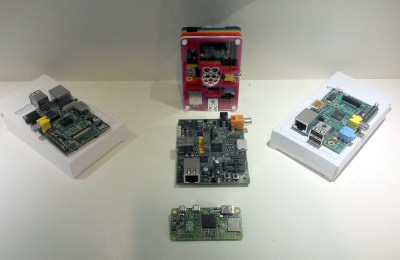
An array of Pi prototype boards pictured on display at the Cambridge University Computer Laboratory.

Pedants will claim that the 10th birthday of the Pi is technically not yet upon us because those first Model B boards went on sale on the 29th of February 2012, a leap day. The two distributors, RS and Farnell, were both putting them on sale with the expectation of selling around 10,000 units — a prediction that proved woefully inadequate, with both websites collapsing under the weight of would-be Pi-purchasers within seconds of opening up at 6 AM.

I was ready to order at 6 AM, and was only able to order mine halfway through the day. That short wait would be just the beginning — because they received so many more orders than anticipated, the bulk of the orders weren’t fulfilled until May. Nobody had imagined how wildly successful the Pi boards would become. Continue reading “It’s Official! The Raspberry Pi Is Now 10!”

Neon, Ukraine, And The Global Semiconductor Industry

On our news feeds and TV channels at the moment are many stories concerning the war in Ukraine, and among them is one which may have an effect on the high-tech industries. It seems that a significant percentage of the world’s neon gas is produced in Ukrainian factories, and there is concern among pundits and electronics manufacturers that a disruption of this supply could be a further problem for an industry already reeling from the COVID-related chip shortage. It’s thus worth taking a quick look at the neon business from an engineering perspective to perhaps make sense of some of those concerns.

As most readers will know from their high school chemistry lessons, neon is one of the so-called inert gasses, sitting in the column at the extreme right of the Periodic table. It occurs in nature as a small percentage of the air we breathe and is extracted from the air by fractional distillation of the liquid phase. The important point from the above sentences is that the same neon is all around us in the air as there is in Ukraine, in other words, there is no strategic neon mine in the Ukrainian countryside about to be overrun by the Russian invaders.

So why do we source so much neon from Ukraine, if we’re constantly breathing the stuff in and out everywhere else in the world? Since the air separation industry is alive and well worldwide for the production of liquid nitrogen and oxygen as well as the slightly more numerous inert gasses, we’re guessing that the answer lies in economics. It’s a bit harder to extract neon from air than it is argon because there is less of it in the air. Since it can be brought for a reasonable cost from the Ukrainians who have made it their business to extract it, there is little benefit in American or Western European companies trying to compete. Our take is that if the supply of Ukrainian neon is interrupted there may be a short period of neon scarcity. After that, air extraction companies will quite speedily install whatever extra plant they need in order to service the demand. If that’s your area of expertise, we’d love to hear from you in the comments.

Here at Hackaday we are saddened beyond words at what has happened in Ukraine, and we hope our Ukrainian readers and those Ukrainian hackers whose work we’ve featured make it through safely. We sincerely hope that this madness can be ended and that we can mention the country in the context of cool hacks again rather than war.

If you are interested in the strategic value of inert gasses, have a read about the global helium supply.

Header image: Lestat (Jan Mehlich), CC BY-SA 3.0.