Coaxial Connectors, Starting With The PL259

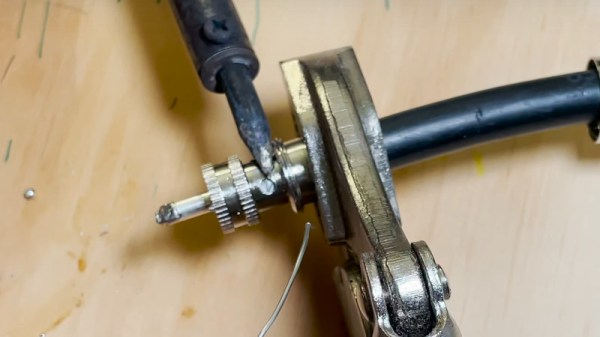
For the casual breadboard experimenter with a microcontroller and a few peripherals, there’s little concern over interconnects as a set of jumper wires will suffice. But as any radio amateur will tell you though, at higher frequencies it’s a very different affair. [Ria Jairam N2RJ] has embarked upon a series of videos exploring co-axial cable and its various connectors, and her first offering features the humble UHF connector, sometimes known as the PL259. Though it’s one of the older choices and its design flaws mean that “UHF” is more of an aspiration for it than a reality, it remains a common connector at the lower end of the amateur radio frequency range.

She starts with a brief history of co-axial cable, before introducing the UHF connector. We’re the introduced to its major flaw, in that it doesn’t present a constant impedance. The resulting mismatch presents a significant problem to a transmitter, especially at higher frequencies. We’re then taken through the various different models of UHF connector, including those with honeycomb dielectric to minimize the mismatch, and the fancy expensive plugs with strain relief. Finally she takes us through the proper fitting of a PL259 plug, something that there’s a bit more to than most of us might think. Altogether it’s an interesting and informative watch from an engaging and knowledgeable host, and we look forward to more.

Meanwhile, the field of RF connectors is something we’ve dipped a to into from time to time ourselves.

Continue reading “Coaxial Connectors, Starting With The PL259”
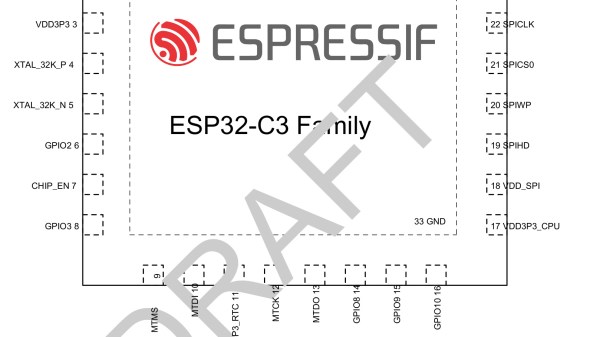
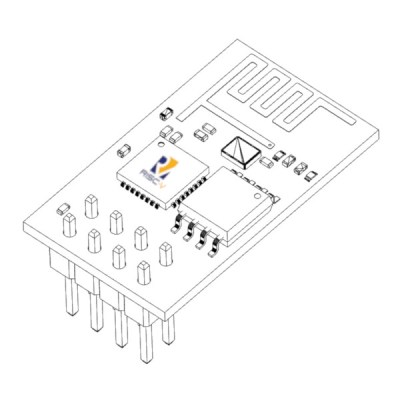
Espressif Leaks ESP32-C3: A WiFi SoC That’s RISC-V And Is ESP8266 Pin-Compatible

Six years on from the emergence of the Espressif ESP8266 we might believe that the focus had shifted to the newer dual-core ESP32. But here comes a twist in the form of the newly-revealed ESP32-C3. It’s a WiFi SoC that despite its ESP32 name contains a RISC-V core in place of the Tensilica core in the ESP32s we know, and uses the ESP8266 pin-out rather than that of its newer sibling. There’s relatively little information about it at the time of writing, but CNX Software have gathered together what there is including a draft datasheet whose English translation is available as a Mega download. As with other ESP32 family members, this one delivers b/g/n WiFi and Bluetooth Low-Energy (BLE) 5, where it differs is the RISC-V 32 Single-core processor with a clock speed of up to 160 MHz. There is 400 kB of SRAM and 384 kB ROM storage space built in.

While there is no official announcement yet, Espressif has been dropping hints. There’s been an OpenOCD configuration file for it in the Espressif repositories since the end of last month. And on Friday, Espressif Software Engineering Manager [Sprite_tm] answered a reddit comment, confirming the RISC-V core.

ESP-01: Kjerish, CC BY-SA 4.0, RISC-V logo: RISC-V foundation, Public domain.

Why they are releasing the part as an ESP32 rather than giving it a series number of its own remains a mystery, but it’s not hard to see why it makes commercial sense to create it in an ESP8266-compatible footprint. The arrival of competing parts in the cheap wireless SoC space such as the Bouffalo Labs BL602 we mentioned recently is likely to be eating into sales of the six-year-old chip, so an upgrade path to a more capable part with minimal new hardware design requirements could be a powerful incentive for large customers to stay with Espressif.

We’re left to guess on how exactly the rollout will proceed. We expect to see similar developer support to that they now provide for their other chips, and then ESP32-C3 powered versions of existing ESP8266 boards in short order. It’s also to be hoped that a standard RISC-V toolchain could be used instead of the device-specific ones for current Espressif offerings. What we should not expect are open-source replacements for the blobs that drive the on-board peripherals, as the new chip will share the same closed-source IP as its predecessors for them. Perhaps if the PINE64 initiative to reverse engineer blobs for the BL602 bears fruit, we might see a similar effort for this chip.

Intel’s Forgotten 1970s Dual Core Processor

Can you remember when you received your first computer or device containing a CPU with more than one main processing core on the die? We’re guessing for many of you it was probably some time around 2005, and it’s likely that processor would have been in the Intel Core Duo family of chips. With a dual-core ESP32 now costing relative pennies it may be difficult to grasp in 2020, but there was a time when a multi-core processor was a very big deal indeed.

What if we were to tell you that there was another Intel dual-core processor back in the 1970s, and that some of you may even have owned one without ever realizing it? It’s a tale related to us by [Chris Evans], about how a team of reverse engineering enthusiasts came together to unlock the secrets of the Intel 8271.

If you’ve never heard of the 8271 you can be forgiven, for far from being part of the chip giant’s processor line it was instead a high-performance floppy disk controller that appeared in relatively few machines. An unexpected use of it came in the Acorn BBC Micro which is where [Chris] first encountered it. There’s very little documentation of its internal features, so an impressive combination of decapping and research was needed by the team before they could understand its secrets.

As you will no doubt have guessed, what they found is no general purpose application processor but a mask-programmed dual-core microcontroller optimized for data throughput and containing substantial programmable logic arrays (PLAs). It’s a relatively large chip for its day, and with 22,000 transistors it dwarfs the relatively svelte 6502 that does the BBC Micro’s heavy lifting. Some very hard work at decoding the RMO and PLAs arrives at the conclusion that the main core has some similarity to their 8048 architecture, and the dual-core design is revealed as a solution to the problem of calculating cyclic redundancy checks on the fly at disk transfer speed. There is even another chip using the same silicon in the contemporary Intel range, the 8273 synchronous data link controller simply has a different ROM. All in all the article provides a fascinating insight into this very unusual corner of 1970s microcomputer technology.

As long-time readers will know, we have an interest in chip reverse engineering.

Ask Hackaday: What Tools Do You Really Need For A Life On The Road?

How do you dispose of an old hard drive? Inventive stories about heat and flame or industrial shredders will no doubt appear in the comments, but for me I just dismantle them and throw the various parts into the relevant scrap bins at my hackerspace. The magnets end up stuck to a metal door frame, and I’m good to go. So a week or so ago when I had a few ancient drives from the 1990s to deal with, I sat down only to find my set of Torx and Allen drivers was missing. I was back to square one.

What A Missing Tool Tells You About Necessities

Clint Eastwood always seemed to have just what he needed, why can I never manage it! Produzioni Europee Associati, Public domain.

Life deals an odd hand, sometimes. One never expects to find oneself homeless and sofa-surfing, nearly all possessions in a container on a farm somewhere. But here I am, and somewhere in one of those huge blue plastic removal crates is my driver set, alongside the other detritus of an engineer scribe’s existence. It’s all very well to become a digital nomad with laptop and hotspot when it comes to writing, but what has the experience taught me about doing the same as a solderer of fortune when it comes to hardware? My bench takes up several large removal crates and there is little chance of my carrying that much stuff around with me, so what makes the cut? Evidently not the tools for hard drive evisceration, so I had to borrow the set of a hackerspace friend to get the job done. Continue reading “Ask Hackaday: What Tools Do You Really Need For A Life On The Road?”

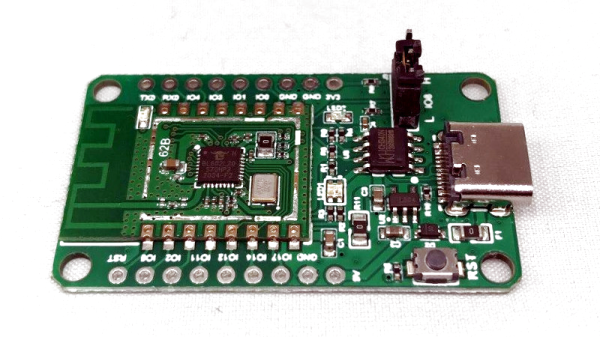
New Part Day: Bouffalo Labs BL602 RISC-V Wi-Fi/Bluetooth SoC

We should all by now be used to microcontrollers with wireless hardware on board, with Espressif or Nordic Labs dominating the hacker scene. There have been several other contenders in this arena over the years that haven’t really caught the attention of our community, usually because of the opacity of their available information.

A new contender should be worth a second look though. The BL602 from Bouffalo Labs is a Wi-Fi- and Bluetooth LE-capable microcontroller with a 32-bit RISC-V derived core. If that doesn’t interest you much, perhaps news that the PINE64 folks are spearheading an effort to reverse engineer it for a fully open-source blob-free wireless implementation might sharpen your attention.

So where can you get your hands on one? Hold your horses, this chip is at an early stage in its gestation. We can see that there are some exciting possibilities in store, but we’re still figuring out the hardware interfaces and other software required to make it work. A community is hard at work reverse engineering it, which leads us back to the PINE64 story we mentioned earlier.

You can find BL602 modules from AliExpress vendors, but the PINE64 folks will offer you a free one if you join their blob reverse engineering effort. Take note though, this offer is for those prepared to show commitment to the project, so don’t spam them in the hope of free stuff if you won’t be helping deliver the goods.

We might see the BL602 gaining an open-source toolchain and internal blobs over the coming months thanks to the efforts of those working on it. Just as the ESP8266 did back in 2014, it’s starting as a black box with a relative scarcity of information. But if this hacking effort pays off, we’ll have a cheap RISC-V Wi-Fi and Bluetooth module with entirely open-source software from the silicon upwards. What a time to be alive!

Thanks [Renze] for the tip.

Easy Device Configuration For Your Pi Projects

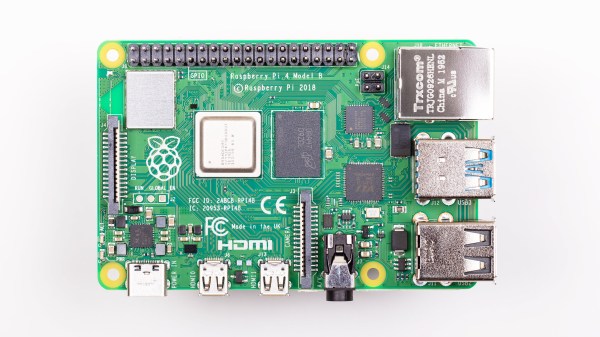
We’re all familiar with a typical configuration sequence for a new mass-market IoT device. Turn it on for the first time and it exposes a temporary Wi-Fi network, connect to that network and open a Web page for device configuration. Wouldn’t it be useful to be able to incorporate that functionality into your own projects without having to write it yourself! Happily now thanks to [Peter Walsh] you can, with his AppDaemon project for the Raspberry Pi.

At its heart is  a set of Perl scripts that run whatever your software is, then monitor a GPIO. A button press toggling the GPIO stops the application and fires up the access point and web server. Handily the code can all be found in a GitHub repository, and there is a run-through of the features in a video that we’ve placed below the break. It’s not something that will appeal to everybody, but for anyone who has to pass their work onto people who can’t dive into a config file and break out the editor, it should be a particularly useful addition to the armoury.

Continue reading “Easy Device Configuration For Your Pi Projects”

The Special Fridges Behind The COVID-19 Vaccine, Why It’s Surprisingly Difficult To Be That Cool

One of the big stories last week was the announcement of results from clinical trials that suggest a new COVID-19 vaccine developed through the joint effort of the American and German companies Pfizer and BioNTech is strongly effective in providing immunity from the virus. In the midst of what is for many countries the second spike of the global pandemic this news has been received with elation as well as becoming the subject of much political manoeuvring.

While we currently have two vaccine candidates with very positive testing results, one of the most interesting things for us is the need to keep doses of the Pfizer/BioNTech vaccine extremely cold until they are administered. Let’s dig into details of the refrigeration problem at hand.

Continue reading “The Special Fridges Behind The COVID-19 Vaccine, Why It’s Surprisingly Difficult To Be That Cool”