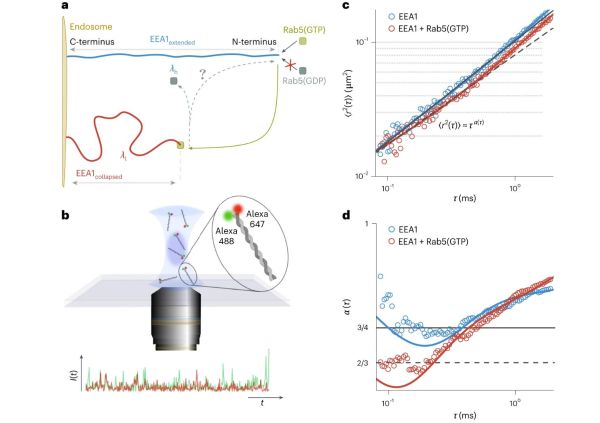
Binding of the Rab5(GTP) to EEA1 triggers a transition of the EEA1 molecule from a rigid, extended state to a more flexible, collapsed state. (Credit: Anupam Singh et al., 2023)

Not Just ATP: Two-Component Molecular Motor Using GTPase Cycle Demonstrates Mechanotransduction

For most of us who haven’t entirely slept through biology classes, it’s probably no secret that ATP (adenosine triphosphate) is the compound which provides the energy needed for us to move our muscles and for our body to maintain and repair itself, yet less know is guanosine triphosphate (GTP). Up till now GTP was thought to be not used for mechanical action like molecular motors, but recent research by Anupam Singh and colleagues in Nature Physics (press release) has shown that two GTPase hydrolase enzymes (Rab5 and EEA1) function effectively as a reversible molecular motor.

Although much of the heavy lifting in the body has shifted to use ATP with ATPases such as myosin and kinesin, GTPases have retained their functional roles in mostly signal transduction (acting as switches or timers), a tethered EEA1 enzyme performs mechanical force when a Rab5 enzyme (in its activated, GTP state) binds to it. Within e.g. a cell this can pull membranes and other structures together. Most importantly, the researchers found that no external influence was necessary for the inactive (GDP) Rab5 enzyme to separate and EEA1 to revert back to its original state, completing a full cycle.

This discovery not only gives us another intriguing glimpse into the inner workings of biological systems, but also increases our understanding of how these molecular motors work, opening intriguing possibilities for constructing our own synthetic structures such as protein engines, where mechanical movement is needed on scales which require such molecular motors.

(Heading image: Binding of the Rab5(GTP) to EEA1 triggers a transition of the EEA1 molecule from a rigid, extended state to a more flexible, collapsed state. (Credit: Anupam Singh et al., 2023) )

Human DNA Is Everywhere: A Boon For Science, While Terrifying Others

Environmental DNA sampling is nothing new. Rather than having to spot or catch an animal, instead the DNA from the traces they leave can be sampled, giving clues about their genetic diversity, their lineage (e.g. via mitochondrial DNA) and the population’s health. What caught University of Florida (UoF) researchers by surprise while they were using environmental DNA sampling to study endangered sea turtles, was just how much human DNA they found in their samples. This led them to perform a study on the human DNA they sampled in this way, with intriguing implications.

Ever since genetic sequencing became possible there have been many breakthroughs that have made it more precise, cheaper and more versatile. The argument by these UoF researchers in their paper in Nature Ecology & Evolution is that although there is a lot of potential in sampling human environmental DNA (eDNA) to study populations much like is done today already with wastewater sampling, only more universally. This could have great benefits in studying human populations much how we monitor other animal species already using their eDNA and similar materials that are discarded every day as a part of normal biological function. Continue reading “Human DNA Is Everywhere: A Boon For Science, While Terrifying Others”

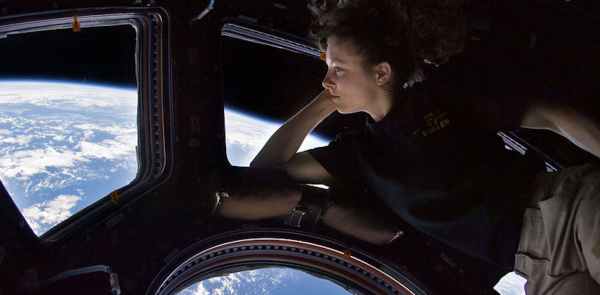
Astronaut Tracy Caldwell in the International Space Station. (Credit: NASA)

Making The Case For All-Female Exploration Missions To Mars And Beyond

A recent study in Nature Scientific Reports by Jonathan P. R. Scott and colleagues makes the case for sending exclusively all-female crews on long-duration missions. The reasoning here is simple: women have significant less body mass, with in the US the 50th percentile for women being 59.2 kg and 81.8 kg for men. This directly translates into a low total energy expenditure (TEE), along with a lower need for everything from food to water to oxygen. On a long-duration mission, this could conceivably save a lot of resources, thus increasing the likelihood of success.

With this in mind, it does raise the question of why female astronauts aren’t more commonly seen throughout Western space history, with Sally Ride being the first US astronaut to fly in 1983. This happened decades after the first female Soviet cosmonaut, when Valentina Tereshkova made history in 1963 on Vostok 6, followed by Svetlana Savitskaya in 1982 and again in 1984, when she became the first woman to perform a spacewalk.

With women becoming an increasingly more common sight in space, it does bear looking at what blocked Western women for so long, despite efforts to change this. It all starts with the unofficial parallel female astronaut selection program of the 1950s.

Continue reading “Making The Case For All-Female Exploration Missions To Mars And Beyond”

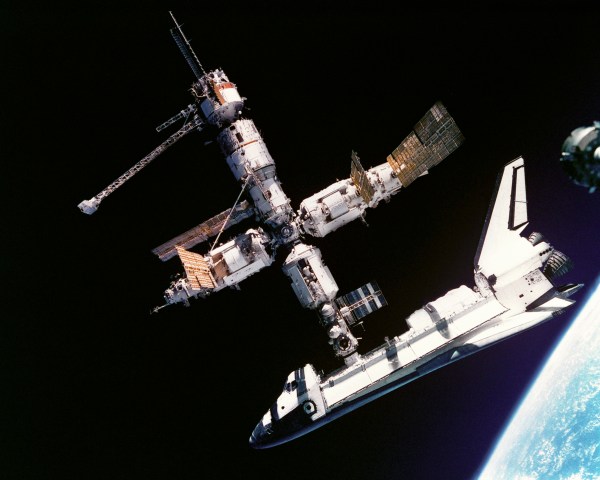
Space Shuttle Atlantis connected to Russia's Mir Space Station as photographed by the Mir-19 crew on July 4, 1995. (Credit: NASA)

The Soviet Space Station Program: From Military Satellites To The ISS

When the Space Race kicked off in earnest in the 1950s, in some ways it was hard to pin down where sci-fi began and reality ended. As the first artificial satellites began zipping around the Earth, this was soon followed by manned spaceflight, first in low Earth orbit, then to the Moon with manned spaceflights to Mars and Venus already in the planning. The first space stations were being launched following or alongside Kubrick’s 2001: A Space Odyssey, and countless other books and movies during the 1960s and 1970s such as Moonraker which portrayed people living (and fighting) out in space.

Perhaps ironically, considering the portrayal of space stations in Western media, virtually all of the space stations launched during the 20th century were Soviet, leaving Skylab as the sole US space station to this day. The Soviet Union established a near-permanent presence of cosmonauts in Earth orbit since the 1970s as part of the Salyut program. These Salyut space stations also served as cover for the military Almaz space stations that were intended to be used for reconnaissance as well as weapon platforms.

Although the US unquestionably won out on racing the USSR to the Moon, the latter nation’s achievements granted us invaluable knowledge on how to make space stations work, which benefits us all to this very day.

Continue reading “The Soviet Space Station Program: From Military Satellites To The ISS”

ESA Juice’s RIME Antenna Breaks Free After Some Jiggling And Percussive Action

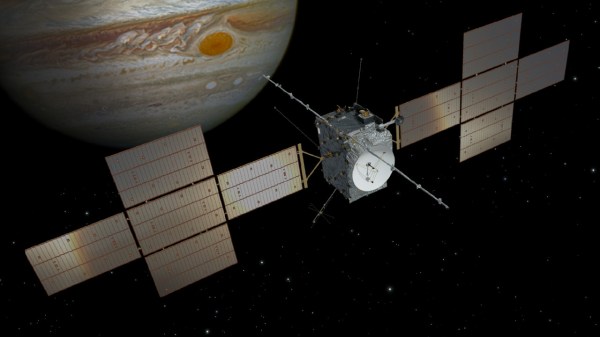
After ESA’s Jupiter-bound space probe Juice (Jupiter Icy Moons Explorer) launched on April 14th of this year, it initially looked as if it had squeezed out a refreshingly uneventful deployment, until it attempted to unfurl its solar panels and antennae. One of these antennae, for the RIME (Radar for Icy Moons Exploration) instrument that uses ice-penetrating radar to get a subsurface look at Jupiter’s moons, ended up being rather stuck. Fortunately, on May 12th it was reported that ESA engineers managed to shock the sticky pin loose.

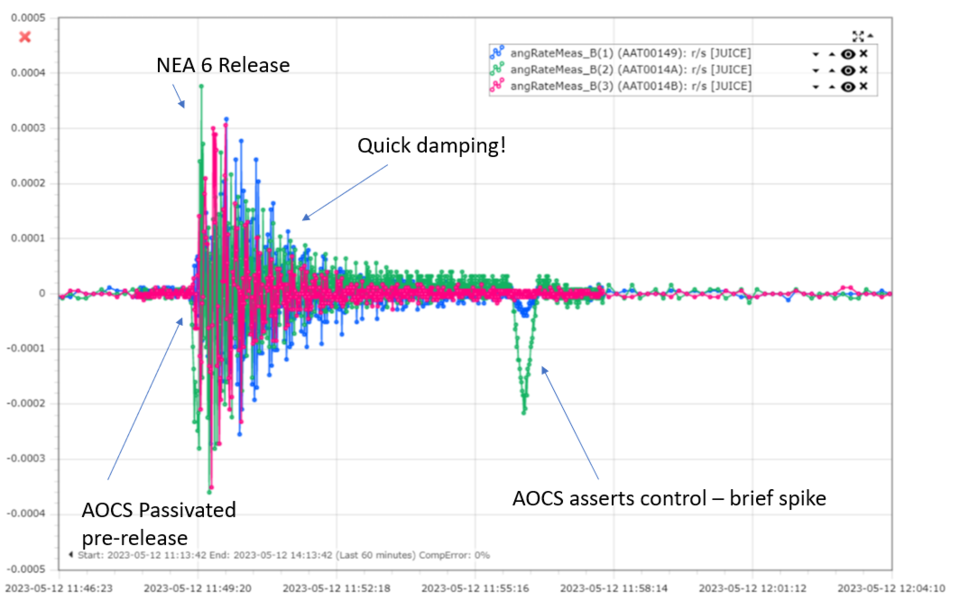
Release of the jammed antenna coinciding with the actuation of the NEA ('NEA 6 Release'). The antenna wobbles about before settling in a locked position. (Credit: ESA)
Release of the jammed antenna coinciding with the actuation of the NEA (‘NEA 6 Release’). The antenna wobbles about before settling in a locked position. (Credit: ESA)

We previously covered the discovery of Juice’s  RIME antenna troubles, with one of the retaining pins that hold the antenna in place in its furled position stubbornly refusing to shift the few millimeters that would have allowed for full deployment. Despite the high-tech nature of the Juice spacecraft, the optimal solution to make the pin move was simply to try and shake it loose.

Attempts were initially made using the spacecraft’s thrusters to shake the whole vehicle, as well as by warming it in sunlight. Each of these actions seemed to help a little bit, but the breakthrough came when a non-explosive actuator (NEA) was actuated in the jammed bracket. This almost fully fixed the problem, leading the team in charge to decide to fire another NEA, which finally allowed the pin to fully shift and the antenna to fully deploy and lock into place.

Assuming no further issues occur during Juice’s long trip through the Solar System, Juice is expected to arrive at Jupiter after four gravity assists in July of 2031. There it will perform multiple science missions until a planned deorbit on Ganymede by late 2035.

Exploiting Hardware-Level Parallelism In The Manticore Hardware-Accelerated RTL Simulator

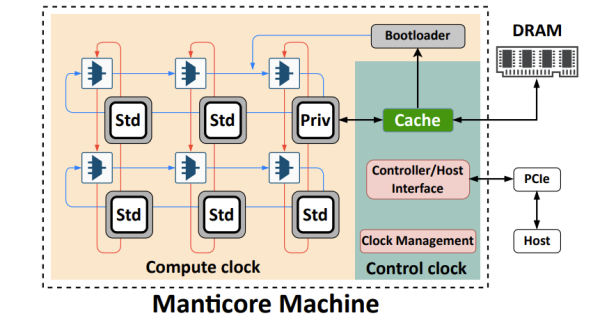
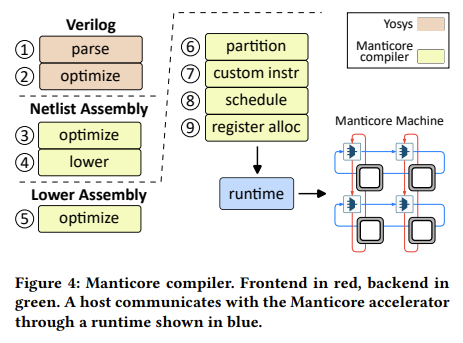
Before a chip design is turned from a hardware design language (HDL) like VHDL or Verilog into physical hardware, testing and validating the design is an essential step. Yet simulating a HDL design is rather slow due to the simulator using either only a single CPU thread, or limited multi-threading due to the requirements of fine-grained concurrency. This is due to the strict timing requirements of simulating hardware and the various clock domains that ultimately determine whether a design passes or fails. In a recent attempt to speed up RTL (transistor) level simulations like these, Mahyar Emami and colleagues propose a custom processor architecture – called Manticore – that can be used to run a HDL design after nothing more than compiling the HDL source and some processing. Continue reading “Exploiting Hardware-Level Parallelism In The Manticore Hardware-Accelerated RTL Simulator”

Giving A Tinge Of Color To The Mars Map Courtesy Of The UAE’s Hope Orbiter

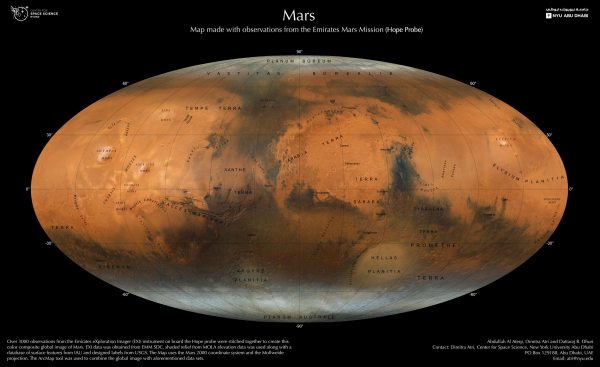
Since the United Arab Emirates’ Hope (“Al-Amal”) orbiter made it safely into orbit around Mars on February 9, 2021, it’s been busy using its onboard instruments to measure everything it could about not only the planet’s atmosphere but also its surface and how both change seasonally. The first months of results of these detailed captures of Mars have now been released in the form of the full-color Mars Atlas website, and a pretty well made PDF version of the Atlas that can be downloaded from the website.

Although the Emirates Mars Mission is not the first to capture the surface or seasons of Mars — with the Mars Reconnaissance Orbiter (MRO)’s Context Camera  (CTX) having gifted us the result of many thousands of captures in a massive monochrome mosaic of Mars’ surface — it’s good to remember that Hope is only just getting started. The current atlas is the result of about 3,000 captures from the Emirates eXploration Imager (EXI) multi-band camera (with better than 8 km spatial resolution), with new images in the pipeline.

Hope has transitioned from a low 1,072 km orbit to a higher, science orbit on March 29, which gives the orbiter a good view of the seasonal transitions on the Red Planet. Along with data from other current Mars orbiters, we should be able to piece together the most detailed atlas yet, even before more helicopters will zip along Mars’ surface.