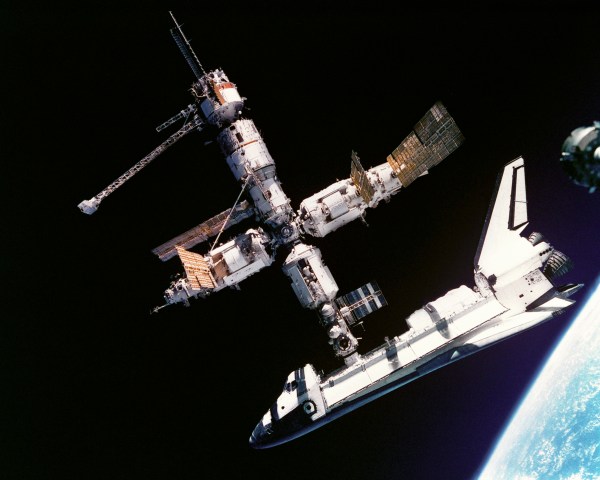
Space Shuttle Atlantis connected to Russia's Mir Space Station as photographed by the Mir-19 crew on July 4, 1995. (Credit: NASA)

The Soviet Space Station Program: From Military Satellites To The ISS

When the Space Race kicked off in earnest in the 1950s, in some ways it was hard to pin down where sci-fi began and reality ended. As the first artificial satellites began zipping around the Earth, this was soon followed by manned spaceflight, first in low Earth orbit, then to the Moon with manned spaceflights to Mars and Venus already in the planning. The first space stations were being launched following or alongside Kubrick’s 2001: A Space Odyssey, and countless other books and movies during the 1960s and 1970s such as Moonraker which portrayed people living (and fighting) out in space.

Perhaps ironically, considering the portrayal of space stations in Western media, virtually all of the space stations launched during the 20th century were Soviet, leaving Skylab as the sole US space station to this day. The Soviet Union established a near-permanent presence of cosmonauts in Earth orbit since the 1970s as part of the Salyut program. These Salyut space stations also served as cover for the military Almaz space stations that were intended to be used for reconnaissance as well as weapon platforms.

Although the US unquestionably won out on racing the USSR to the Moon, the latter nation’s achievements granted us invaluable knowledge on how to make space stations work, which benefits us all to this very day.

Continue reading “The Soviet Space Station Program: From Military Satellites To The ISS”
ESA Juice’s RIME Antenna Breaks Free After Some Jiggling And Percussive Action

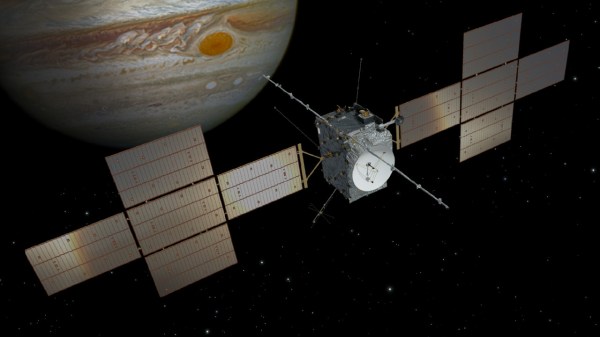
After ESA’s Jupiter-bound space probe Juice (Jupiter Icy Moons Explorer) launched on April 14th of this year, it initially looked as if it had squeezed out a refreshingly uneventful deployment, until it attempted to unfurl its solar panels and antennae. One of these antennae, for the RIME (Radar for Icy Moons Exploration) instrument that uses ice-penetrating radar to get a subsurface look at Jupiter’s moons, ended up being rather stuck. Fortunately, on May 12th it was reported that ESA engineers managed to shock the sticky pin loose.

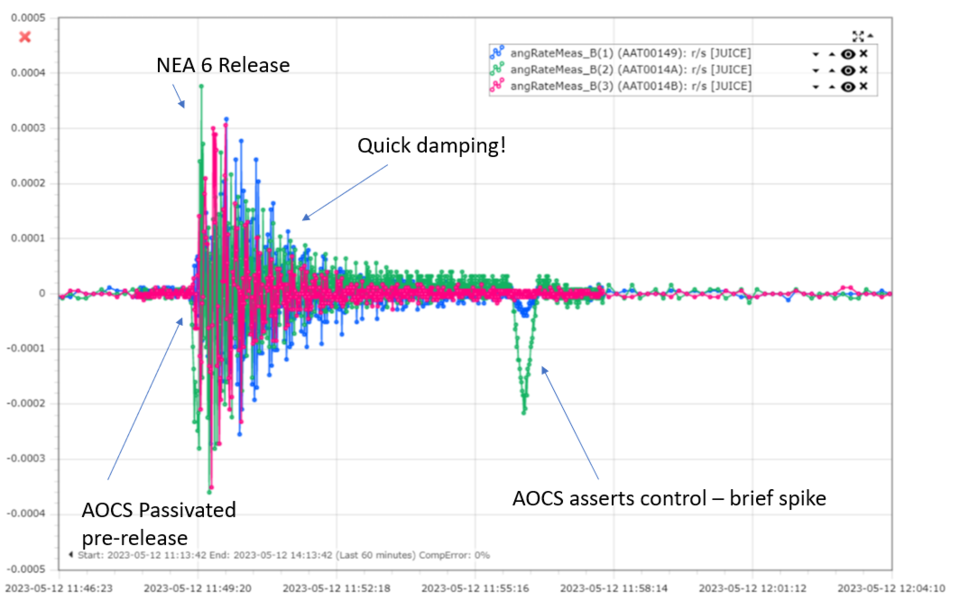
Release of the jammed antenna coinciding with the actuation of the NEA ('NEA 6 Release'). The antenna wobbles about before settling in a locked position. (Credit: ESA)
Release of the jammed antenna coinciding with the actuation of the NEA (‘NEA 6 Release’). The antenna wobbles about before settling in a locked position. (Credit: ESA)

We previously covered the discovery of Juice’s  RIME antenna troubles, with one of the retaining pins that hold the antenna in place in its furled position stubbornly refusing to shift the few millimeters that would have allowed for full deployment. Despite the high-tech nature of the Juice spacecraft, the optimal solution to make the pin move was simply to try and shake it loose.

Attempts were initially made using the spacecraft’s thrusters to shake the whole vehicle, as well as by warming it in sunlight. Each of these actions seemed to help a little bit, but the breakthrough came when a non-explosive actuator (NEA) was actuated in the jammed bracket. This almost fully fixed the problem, leading the team in charge to decide to fire another NEA, which finally allowed the pin to fully shift and the antenna to fully deploy and lock into place.

Assuming no further issues occur during Juice’s long trip through the Solar System, Juice is expected to arrive at Jupiter after four gravity assists in July of 2031. There it will perform multiple science missions until a planned deorbit on Ganymede by late 2035.

Exploiting Hardware-Level Parallelism In The Manticore Hardware-Accelerated RTL Simulator

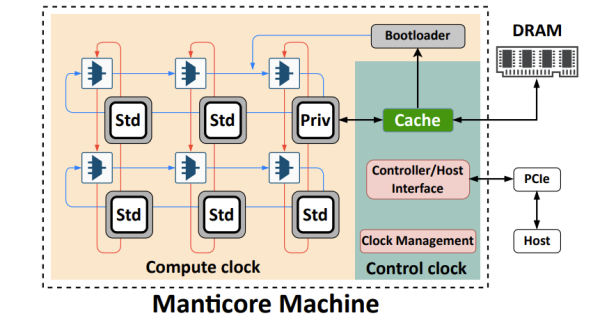
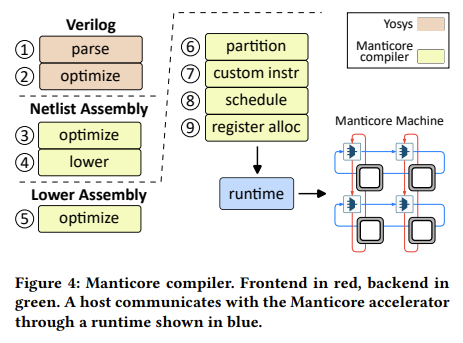
Before a chip design is turned from a hardware design language (HDL) like VHDL or Verilog into physical hardware, testing and validating the design is an essential step. Yet simulating a HDL design is rather slow due to the simulator using either only a single CPU thread, or limited multi-threading due to the requirements of fine-grained concurrency. This is due to the strict timing requirements of simulating hardware and the various clock domains that ultimately determine whether a design passes or fails. In a recent attempt to speed up RTL (transistor) level simulations like these, Mahyar Emami and colleagues propose a custom processor architecture – called Manticore – that can be used to run a HDL design after nothing more than compiling the HDL source and some processing. Continue reading “Exploiting Hardware-Level Parallelism In The Manticore Hardware-Accelerated RTL Simulator”

Giving A Tinge Of Color To The Mars Map Courtesy Of The UAE’s Hope Orbiter

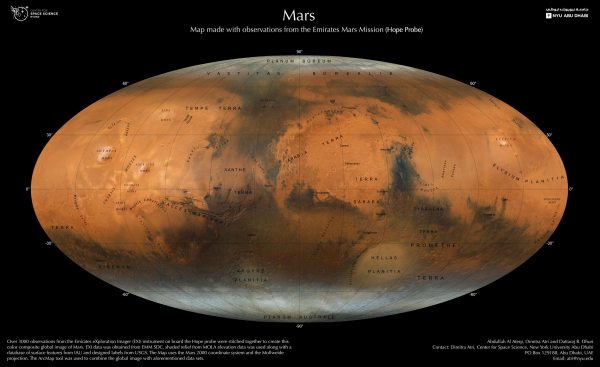
Since the United Arab Emirates’ Hope (“Al-Amal”) orbiter made it safely into orbit around Mars on February 9, 2021, it’s been busy using its onboard instruments to measure everything it could about not only the planet’s atmosphere but also its surface and how both change seasonally. The first months of results of these detailed captures of Mars have now been released in the form of the full-color Mars Atlas website, and a pretty well made PDF version of the Atlas that can be downloaded from the website.

Although the Emirates Mars Mission is not the first to capture the surface or seasons of Mars — with the Mars Reconnaissance Orbiter (MRO)’s Context Camera  (CTX) having gifted us the result of many thousands of captures in a massive monochrome mosaic of Mars’ surface — it’s good to remember that Hope is only just getting started. The current atlas is the result of about 3,000 captures from the Emirates eXploration Imager (EXI) multi-band camera (with better than 8 km spatial resolution), with new images in the pipeline.

Hope has transitioned from a low 1,072 km orbit to a higher, science orbit on March 29, which gives the orbiter a good view of the seasonal transitions on the Red Planet. Along with data from other current Mars orbiters, we should be able to piece together the most detailed atlas yet, even before more helicopters will zip along Mars’ surface.

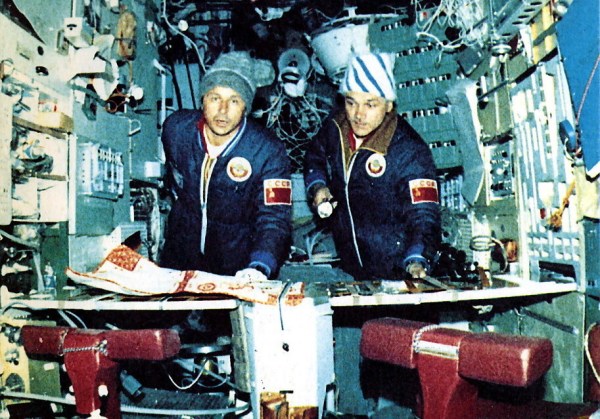
The Forgotten Rescue Of The Salyut 7 Space Station

With only two space stations in orbit around Earth today in the form of the International Space Station and the Chinese Tiangong (‘Sky Palace’) station, it’s easy to forget how many space stations were launched in the previous century. And the Soviet Union launched by far the most, as part of the Salyut (Russian for ‘salute’ or ‘fireworks’) program. Although the program entailed both military (Orbital Piloted Station, or OPS) and civilian (Durable Orbital Station, or DOS) stations, it was the civilian stations that saw the most success, as well as the most daring rescue attempt with the recovering of the Salyut 7 space station.

Salyut 7 (DOS-6) was set to repeat Salyut 6’s success after its launch on April 19th 1982, until disaster struck in February 1985. Due to a series of electrical and other faults ground communication with the space station was cut off, and the at the time unmanned space station began to gradually tumble towards the Earth’s atmosphere. This left those in charge with two options: leave the station to burn up in the atmosphere, or stage a rescue mission.

Ultimately, on June 6th, 1985, Soyuz T-13 launched to rendezvous with Salyut 7. On board were cosmonauts Vladimir Dzhanibekov – who had previously manually docked with Salyut 7 – and Viktor Savinykh. Both men had done all they could to perform a manual docking and attempt to revive the stricken space station. Ultimately they managed to revive the station using what little charge was left in its batteries and the Soyuz’s thrusters, all the while braving freezing temperatures in the dead station’s interior.

Salyut 7 would continue to perform its duties until February 1991, with Mir (DOS-7, launched 1986) as the first modular space station taking over. The final DOS module (DOS-8) that directly traces its lineage to this era is still in orbit today as the ISS’ Zvezda module, keeping the Salyut legacy and the bravery of Dzhanibekov and Savinykh alive.

Leaked Internal Google Document Claims Open Source AI Will Outcompete Google And OpenAI

In the world of large language models (LLM), the focus has for the longest time been on proprietary technologies from companies such as OpenAI (GPT-3 & 4, ChatGPT, etc.) as well as increasingly everyone from Google to Meta and Microsoft. What’s remained underexposed in this whole discussion about which LLM will do more things better are the efforts by hobbyists, unaffiliated researchers and everyone else you may find in Open Source LLM projects. According to a leaked document from a researcher at Google (anonymous, but apparently verified), Google is very worried that Open Source LLMs will wipe the floor with both Google’s and OpenAI’s efforts.

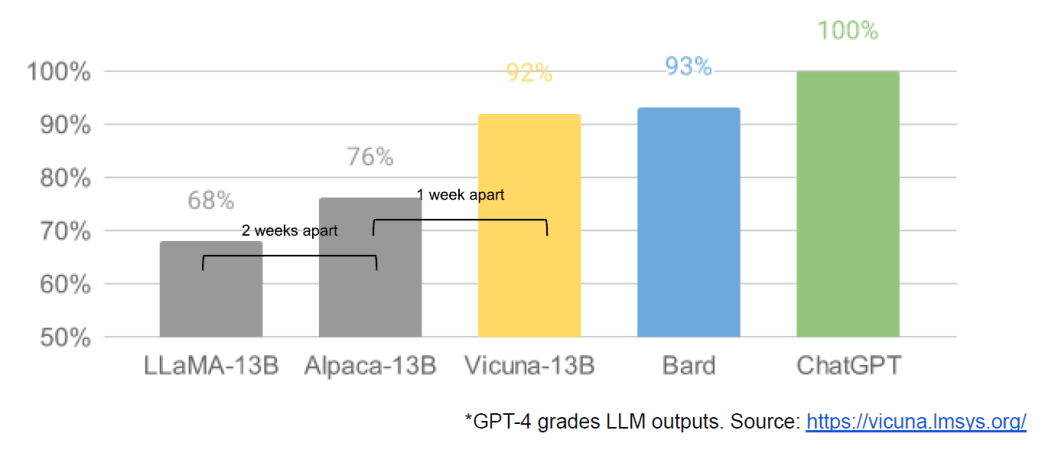
According to the document, after the open source community got their hands on the leaked LLaMA foundation model, motivated and highly knowledgeable individuals set to work to take a fairly basic model to new levels where it could begin to compete with the offerings by OpenAI and Google. Major innovations are the scaling issues, allowing these LLMs to work on far less powerful systems (like a laptop or even smartphone).

An important factor here is Low-Rank adaptation (LoRa), which massively cuts down the effort and resources required to train a model. Ultimately, as this document phrases it, Google and in extension OpenAI do not have a ‘secret sauce’ that makes their approaches better than anything the wider community can come up with. Noted is also that essentially Meta has won out here by having their LLM leak, as it has meant that the OSS community has been improving on the Meta foundations, allowing Meta to benefit from those improvements in their products.

The dire prediction is thus that in the end the proprietary LLMs by Google, OpenAI and others will cease to be relevant, as the open source community will have steamrolled them into fine, digital dust. Whether this will indeed work out this way remains to be seen, but things are not looking up for proprietary LLMs.

(Thanks to [Mike Szczys] for the tip)

Metallurgist working by the blast furnaces in Třinec Iron and Steel Works. (Credit: Třinecké železárny)

We Already Live In A Hydrogen Economy: Steel Production, Generator Cooling, And Welding Gas

Although generally hydrogen is only mentioned within the context of transportation and energy storage, by far the most useful applications are found in industrial applications, including for the chemical industry, the manufacturing of steel, as well as that of methanol and fertilizer. This is illustrated by how today most of all hydrogen produced today is used for these industrial applications, as well as for applications such as cooling turbo generators, with demand for hydrogen in these applications rapidly increasing.

Currently virtually all hydrogen produced today comes from natural gas, via steam methane reformation (SMR), with potentially methane pyrolysis making natural gas-derived hydrogen a low-carbon source. The remainder of hydrogen comes from coal gasification and a small fraction from electrolysis of water. The hydrogen is often produced on-site, especially at industrial plants and thermal power plants. So aside from any decarbonization efforts, there are many uses for hydrogen which the public appears to be generally unaware of.

This leads us to the somewhat controversial hydrogen ladder.

Continue reading “We Already Live In A Hydrogen Economy: Steel Production, Generator Cooling, And Welding Gas”