NASA’s Voyager Space Probe’s Reserve Power, And The Intricacies Of RTG-Based Power Systems

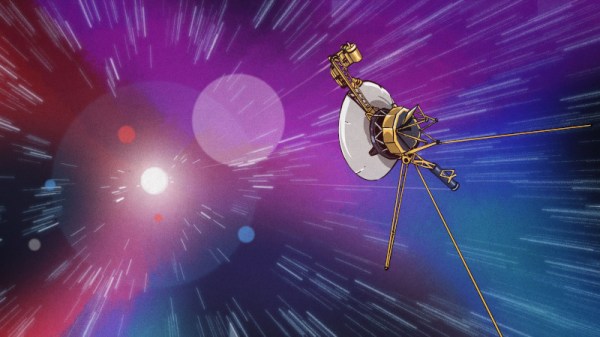
Launched in 1977, the Voyager 1 and 2 space probes have been operating non-stop for over 45 years, making their way from Earth to our solar system’s outer planets and beyond. Courtesy of the radioisotope thermoelectric generators (RTGs) which provided 470 W at launch, they are able to function in the darkness of Deep Space as well as they did within the confines of our Sun-lit solar system. Yet as nothing in the Universe is really infinite, so too do these RTGs wear out over time, both from natural decay of their radioactive source and from the degradation of the thermocouples.

Despite this gradual drop in power, NASA recently announced that Voyager 2 has a hitherto seemingly unknown source of reserve power that will postpone the shutdown of more science instruments for a few more years. The change essentially bypasses a voltage regulator circuit and associated backup power system, freeing up the power consumed by this for the scientific instruments which would otherwise have begun to shut down years sooner.

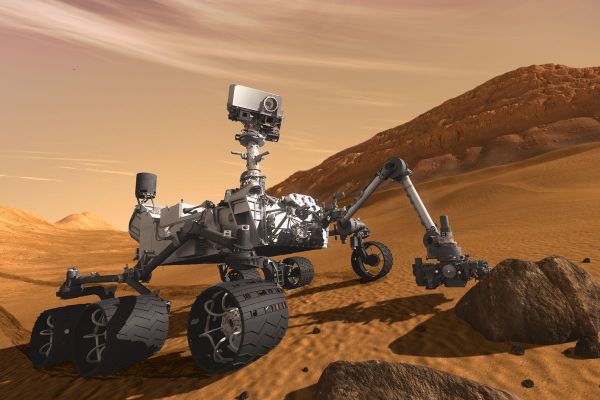
While this is good news in itself, it’s also noteworthy because the Voyager’s 45+ year old Multi-Hundred Watt (MHW) RTGs are the predecessor to the RTGs that are still powering the New Horizons probe after 17 years, and the Mars Science Laboratory (Curiosity) for over 10 years, showing the value of RTGs in long-term exploration missions.

Although the basic principle behind an RTG is quite simple, their design has changed significantly since the US put a SNAP-3 RTG on the Transit 4B satellite in 1961.
Continue reading “NASA’s Voyager Space Probe’s Reserve Power, And The Intricacies Of RTG-Based Power Systems”

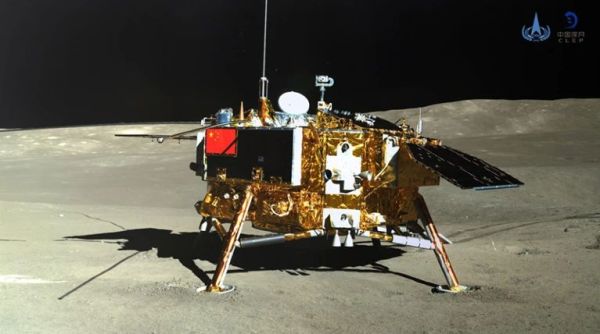
China's Chang'e-4 mission made the first-ever landing on the far side of the Moon in 2019. (Credit: Xinhua/Alamy)

Moon Mission Failures, Or Why Are Lunar Landings So Hard?

Given the number of spacecraft (both crewed and uncrewed) that touched down on the Moon during the Space Race it’s sometimes hard to imagine why today, with all our modern technology, our remotely operated vehicles seem to have so much trouble not smashing themselves to bits on the regolith surface.

This is the focus of a recent article in Nature that explores the aspects which still make soft landings on our closest space body so much harder than the tragic lithobraking as most recently demonstrated by ispace’s M1 lander.

So far only three entities have successfully landed a craft on the Moon’s surface: the government-funded space agencies of the US, USSR, and China. Of them, only China managed to do so on their first try in 2013 (Chang’e-3), and again in 2019 on the far side of the Moon (Chang’e-4). What is the toughest part about a Moon landing is not to get near the Moon, but it’s about getting close to the surface without getting lost. Since there are no navigation satellites beyond those you put up before the landing, and a lot of Moon dust that will be kicked up by any landing rocket engines, it can be tough to gauge one’s exact location and distance to the surface.

In the case of the ispace lander it would appear that it tragically ran out of propellant before it could safely touch down, which is another major concern. Both the US and USSR would smash Moon landers into its surface until the first successful landing in 1966, which makes the manned touchdown by Apollo 11 in 1969 even more impressive.

NASA’s Curiosity Mars Rover Gets A Major Software Upgrade

Although the Curiosity rover has been well out of the reach of human hands since it touched down on Mars’ surface in 2012, this doesn’t mean that it isn’t getting constant upgrades. Via its communication link with Earth it receives regular firmware updates, with the most recent one being the largest one since 2016. In addition to code clean-up and small tweaks to message formats, this new change should make Curiosity both smarter and have its wheels last longer.

The former helps to avoid the long idle times between navigating, as unlike its younger sibling, Curiosity does not have the dedicated navigation computer for more autonomous driving. Although it won’t make the 11-year old rover as nimble as its sibling, it should shorten these pauses and allow for more navigating and science to be done. Finally, the change to reduce wear on the wheels is fairly simple, but should be rather effective: this affects the amount of steering that Curiosity needs to do while driving in an arc.

With these changes in place, Curiosity should be all ready to receive its newest sibling as it arrives in a few years along with even more Mars helicopters.

A Microneedle Vaccine Patch Printer For Thermostable MRNA Vaccines

What if you could get vaccinated with the ease of putting on an adhesive bandage? This is the promise of microneedle patches (MNP), which are essentially what they sound like. These would also have uses in diagnostics that might one day obliviate the need for drawing blood. The one major issue with MNPs is their manufacturing, which has been a laborious and highly manual process. In a recent paper in Nature Biotechnology researchers detail the construction and testing of a MNP printer, or microneedle vaccine printer (MVP) that can print dissolving polymers containing stabilized mRNA vaccine.

These mRNA strands are as usual encapsulated in a liquid nanoparticle container, which is mixed with the soluble and biocompatible polymer. This mixture is then added to a mold and dried, after which it retains the microneedle structure of the mold. On tests involving pig skin, the MNPs were capable of penetrating the skin and delivering the vaccine contained in the needles. Produced patches were shown to be shelf-stable for at least six months, which would make these ideal for vaccine distribution in areas where refrigeration and similar are problematic.

Using MNPs for delivering vaccines has previously been researched for e.g. delivering rotavirus and poliovirus vaccine, and a 2021 study in Nature Biomedical Engineering looked at the viability of using MNPs to rapidly sample protein biomarkers in interstitial fluid, which could make diagnostics for certain biomarkers as uncomplicated as putting on the patch, removing it and examining it, removing the need for drawing blood or sampling large amounts of interstitial fluid for external analysis.

If the concept of the MVP and similar MNP printers can be commercialized, it might make it possible to strongly shorten the supply chain for vaccines in less developed regions, while also enabling diagnostics that are very costly and cumbersome today.

Checking Out And Reviving A Batch Of Used Floppy Disks

With the last manufacturer of 3.5″ floppy disks (FDs) having shut down in 2010, those who are still using this type of storage medium for production and/or retrocomputing purposes have to increasingly rely on a dwindling stack of new old stock, or the used market. With the purported unreliability of this type of magnetic media in mind, what are the chances of a box of used FDs — whether DD or HD format — still working in 2023? That’s the question which [VWestLife] set out to answer in a recent video when he bought a stash of these real-life save icons in 720 kB format from eBay.

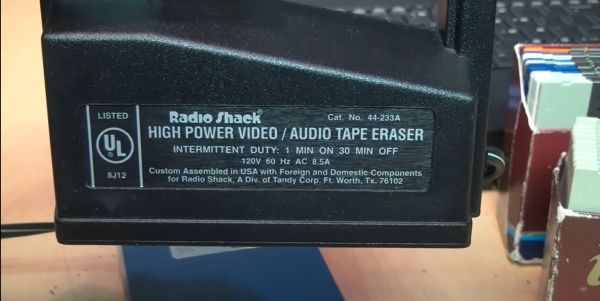
To his delight, he found that he could read most of the disks without issues, revealing contents that had been on there since the 1990s. All but four also could be formatted without issues, the problematic disks reported bad sectors, which was a bit of a bummer. As a practical demonstration of how fun magnetic media is, he then proceeded to try and fix these four disks with a bulk eraser tool. This is a rather brute-force tool that uses a rapidly fluctuating electromagnetic field to scramble the bits on magnetic media.

As the cause of reported bad sectors and other issues can be due to sector alignment issues from years of constant writing by different drives, this may sometimes fix a disk. In this case one of the bad disks was fixed, while a second still showed bad sectors while the remaining two refused to format at all. Assuming one can get a box of old FDs for cheap and has a few hours to kill, it’s not a bad way to refill that stack of empty FDs.

Of course if you can’t fix that old floppy, you can always make an IR filter out of it.

Continue reading “Checking Out And Reviving A Batch Of Used Floppy Disks”

El Caracol observatory at Chichen Itza.

Solving The Mystery Of The Mayan Calendar’s 819-Count Cycle

Mayan Calendar Round. (Source: Chichen Itza)

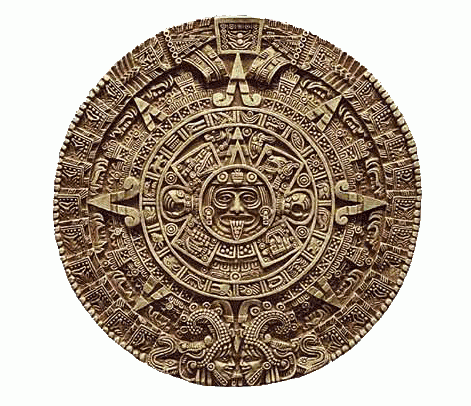
Despite the mysticism that often clouds the Mayan calendar in popular culture, fact remains that the calendar system in use by the Mayans was based on a system used throughout the pre-Columbian Mesoamerican societies, dating back to at least the 5th century BCE. Characteristic of this system is the cyclical nature, with the Mayan calendar featuring three common cycles: the Long Count, Tzolk’in (260-day) and the 365-day, solar-based Haab’. Combined, these three cycles formed what is known as the Calendar Round and which lasts for 52 haab’ (years).

What was less obvious here was the somewhat obscure 819-day count that was found in certain locations in Mayan constructions. Now researchers John H. Linden and Victoria R. Bricker figure that they have discovered how this new cycle matches up with the previously known Calendar Round. In previous reports by e.g. Barbara McLeod and Hutch Kinsman in 2012, they noted the ongoing debate on this 819-day count and its potential purpose. The new insight by Linden and Bricker is that by increasing the calendar length to 20 periods of 819 days, it matches up with all synodic periods of the visible planets, explaining it as a planetary astronomical cycle.

What is interesting here is that the Mayan counting system is base-20 (vigesimal). Whether coincidence or not when it comes to this part of the Mayan calendar, it is good to see that more secrets of the Classical Mayan society are being recovered. With modern day Maya still living where their ancestors once did, these discoveries help them to recover and reconnect to the parts of their history that were so brutally destroyed by the invading Europeans.

(Heading image: El Caracol observatory at Chichen Itza, Mexico)

The Modern WWW, Or: Where Do We Want To Go From Here?

From the early days of ARPANET until the dawn of the World Wide Web (WWW), the internet was primarily the domain of researchers, teachers and students, with hobbyists running their own BBS servers you could dial into, yet not connected to the internet. Pitched in 1989 by Tim Berners-Lee while working at CERN, the WWW was intended as an information management system that’d provide standardized access to information using HTTP as the transfer protocol and HTML and later CSS to create formatted documents inspired by the SGML standard. Even better, it allowed for WWW forums and personal websites to begin to pop up, enabling the eternal joy of web rings, animated GIFs and forums on any conceivable topic.

During the early 90s, as the newly opened WWW began to gain traction with the public, the Mosaic browser formed the backbone of the WWW browsers (‘web browsers’) of the time, including Internet Explorer – which licensed the Mosaic code – and the Mosaic-based Netscape Navigator. With the WWW standards set by the – Berners-Lee-founded – World Wide Web Consortium (W3C), the stage appeared to be set for an open and fair playing field for all. What we got instead was the brawl referred to as the ‘browser wars‘, which – although changed – continues to this day.

Today it isn’t Microsoft’s Internet Explorer that’s ruling the WWW while setting the course for new web standards, but instead we have Google’s Chrome browser partying like it’s the early 2000s and it’s wearing an IE mask. With former competitors like Opera and Microsoft having switched to the Chromium browser engine that underlies Chrome, what does this tell us about the chances for alternative browsers and the future of the WWW?

Continue reading “The Modern WWW, Or: Where Do We Want To Go From Here?”