Exploring Ground-Effect With A Quadcopter

The ground-effect (GE) refers to the almost mystical property where the interaction of the airflow around an aircraft’s wing and the ground massively increases efficiency due to the reduction of lift-dependent drag, perhaps best demonstrated by the Soviet Lun-class “ekranoplans” of the 1980s and 90s. Interestingly, this principle also applies to rotary aircraft, which led the [rctestflight] YouTube channel to wonder what would happen if a quadcopter were to be adapted for GE.
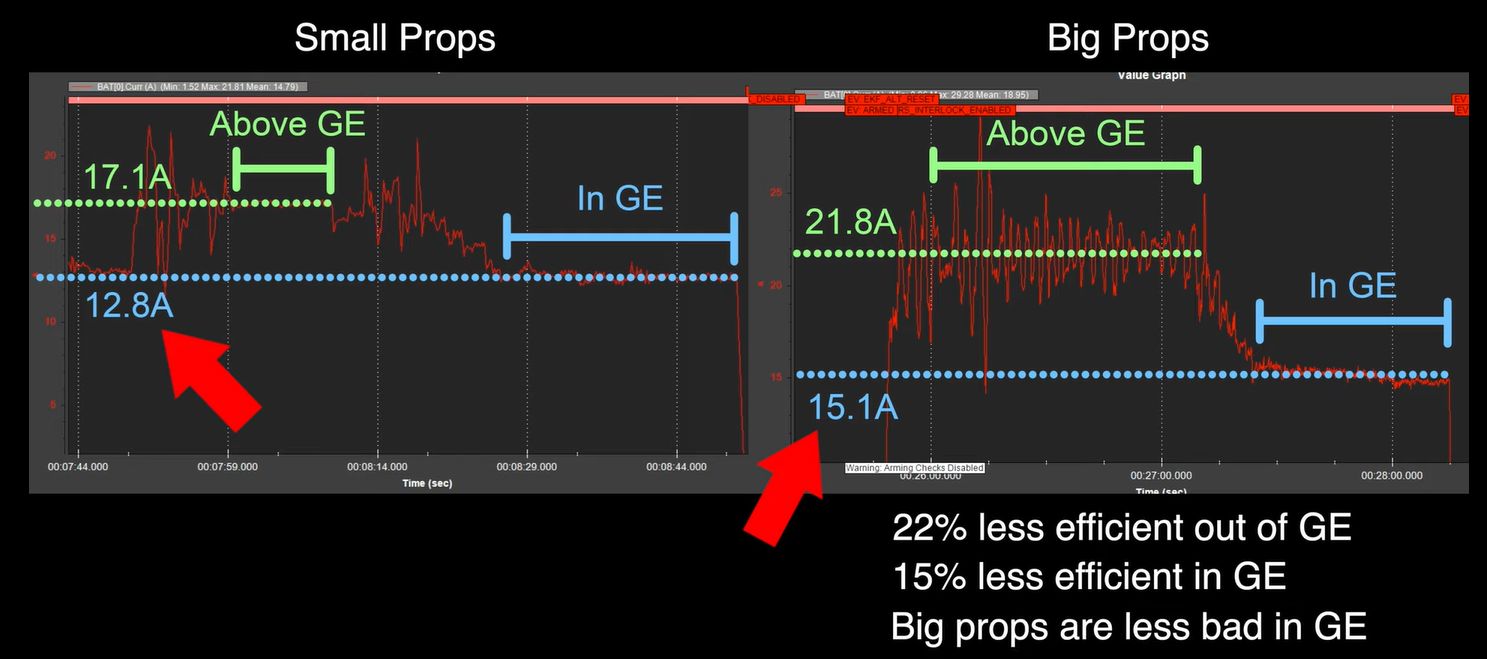
As noted on the Wikipedia entry for Ground-effect vehicle (GEV), it’s essential to have some kind of forward motion. With a rotorcraft like a helicopter or quadcopter this motion is already provided by the spinning propeller, which makes it noticeably easier to get the aircraft into the ground-effect. operating mode. Following the notion that the GE becomes noticeable at an altitude that’s dependent on the length of the aircraft’s wings, this got translated into putting the largest propellers available on the custom inverted-prop (to put them lower to the ground) quadcopter, to see what effect this would have on the quadcopter’s performance. As demonstrated by the recorded current drawn (each time with a fully charged battery), bigger is indeed better, and the GE effect is indeed very noticeable for a quadcopter.

Getting a usable GEV out of the basic inverted-prop quadcopter required some more lateral thinking, however, as it was not very easy to control this low to the ground. Here following design cues from skirtless hovercraft designs helped a lot, essentially drawing on the Coandă effect. Although this improved performance, at this point the quadcopter had been fitted with a fifth propeller for propulsion and was skidding about more like a skirtless hovercraft and less of a quadcopter.

Although great for scaring the living daylights out of unsuspecting water-based wildlife, what this unfortunately demonstrates is that GEVs are still hard, no matter which form they take. At the very least it does make for an excellent introduction into various aspects of aerodynamics.

Continue reading “Exploring Ground-Effect With A Quadcopter” →

Implementing MegaTextures On Real Nintendo 64 Hardware

As amazing and groundbreaking as the Nintendo 64 was, over the years it has also become synonymous with blurry textures and liberal use of Gouraud shading as its most strongly defining visual features. In a recent video, [James Lambert] covers how the system’s minuscule 4 kB texture memory (TMEM) can be circumvented using mipmapping. By loading progressively more detailed textures (each in 4 kB chunks) in a level-of-detail (LoD), the visual fidelity can be maximized while keeping rendering speeds relatively zippy, as the real-time demo proves.

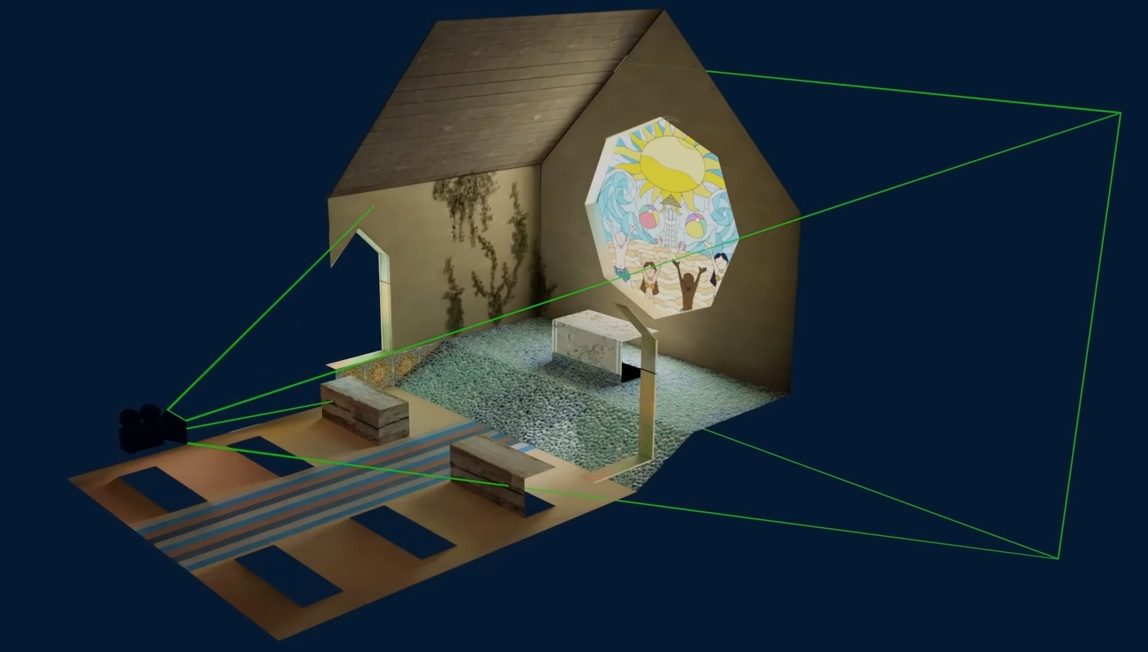
Determining which textures are visible to the player.

This project was made for the N64brew 2023, with the source code available on [James]’s GitHub account. Although impressive, it bears noting that mipmapping was not an unknown approach in 1996, and many approaches were used to work around the N64’s physical limitations.

In the case of mipmapping, [James]’s demo perfectly demonstrates the problematic nature of mipmapping, as it dramatically increases the storage requirements for the textures, hitting 40 MB just for this one single room, for a system that supports up to 64 MB cartridges.

Ultimately, this shows that the 4 kB TMEM was not the only issue with the N64, with the limited (and expensive) mask ROMs for the cartridges proving to be an insurmountable obstacle that systems like Sony’s PlayStation largely did not have to contend with. With roomy 650 MB+ optical storage, the PS1 got instead tripped up by the glacial access and loading speeds of optical media and its soggy-potato-powered GPU.

Seeing demonstrations like these manage to wonderfully highlight the bottlenecks in these old consoles, and makes one wonder about what could have been, even in an era before 1 TB solid-state drives and direct resource streaming between GPU and said storage.

Continue reading “Implementing MegaTextures On Real Nintendo 64 Hardware” →

Simulating A Real Perpetual Motion Device

Perpetual motion and notions of ‘free energy’ devices are some of those pseudo-science topics that seem to perpetually hang around, no matter how many times it is explained how this would literally violate the very fabric of the Universe. Even so, the very notion of a device which repeats the same action over and over with no obvious loss of energy is tempting enough that the laws of physics are employed to effect the impossible in a handy desktop format. This includes the intriguing model demonstrated by [Steve Mould] in a recent video, including a transparent version that reveals the secret.

This particular perpetual motion simulator is made by [William Le] and takes the form of metal balls that barrel down a set of metal rails which turn upward so that each metal ball will land back where it started in the top bowl. To the casual informed observer the basic principle ought to be obvious, with magnetism being a prime candidate to add some extra velocity to said metal ball. What’s less obvious is the whole mechanism that makes the system work, including the detection circuit and the tuning of the parameters that tell the device when its electromagnet should be on or off.

When [Steve] figured that he could just make a transparent version using the guts from the one he purchased, he quickly found out that even with [William]’s help, this wasn’t so easy. Ultimately [William] hand-crafted a transparent version that shows the whole system in its entire glory, even if this is somewhat like demonstrating a magic trick in an easy to follow manner.

Continue reading “Simulating A Real Perpetual Motion Device” →

The Challenge Of Weather Modification In The Face Of Climate Change

Over the past decades we have been able to observe a change in the Earth’s climate, caused by an increasing amount of energy being retained in the atmosphere. This in turn has affected weather systems around the globe, causing more extreme weather. As a result, the prospect of weather control is more relevant than ever for the nations which are most directly impacted by severe rain and winds.  Although the concept of weather modification is not new, it used to be primarily focused on rather limited aspects, such as cloud seeding to increase precipitation.

Recent proposals such as Japan’s weather modification moonshot program seek to find ways to prevent or lessen the impact of torrential rains, typhoons and similar extreme weather events which accompany climate change.  This proposal is part of Japan’s multi-topic Moonshot R&D program which seeks to advance the state of the art in a wide range of fields in a very significant way by 2050. As far as weather modification is concerned, this naturally raises many questions. Clearly we are capable of affecting the climate through emissions of e.g. greenhouse gases and large-scale construction, but are there ways in which humans can affect the climate and weather in a more refined manner that benefits society, or is this something which will remain beyond our grasp for the foreseeable future?

Continue reading “The Challenge Of Weather Modification In The Face Of Climate Change” →

Reverse-engineering The Milwaukee M18 Redlink Protocol

In an ideal world, every single battery pack for power tools would use the same physical interface and speak a clearly documented protocol with chargers. Since we live in a decidedly less-than-ideal world, we get to enjoy the fun pastime of reverse-engineering the interfaces and protocols of said battery packs.

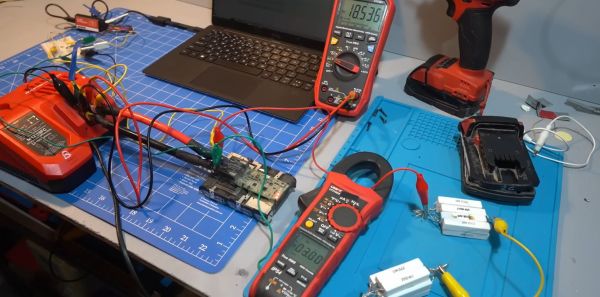
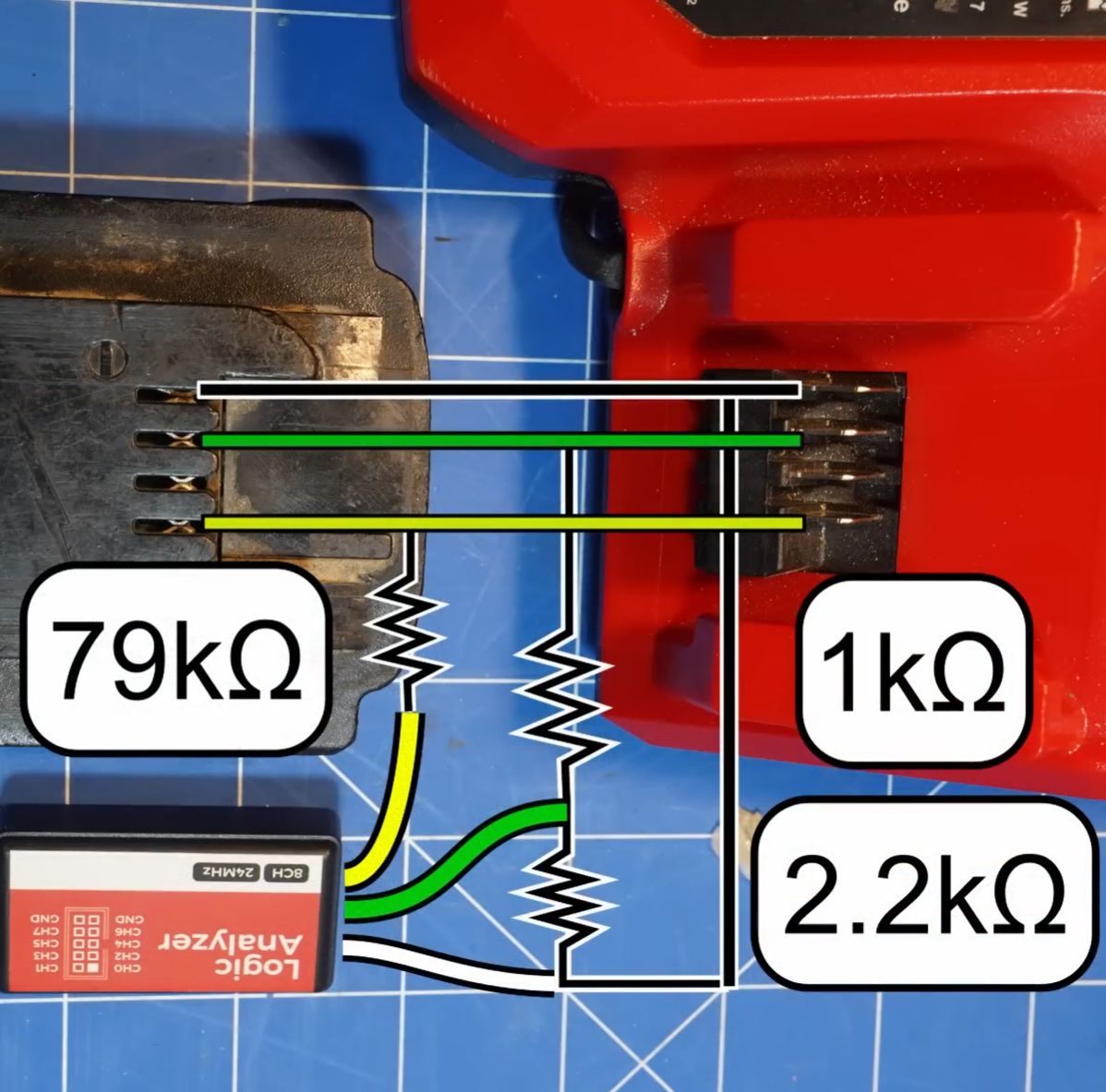
Hooking up a logic analyzer to a M18 battery and charger.

A recent video from the [Tool Scientist] goes over what is already known about the Milwaukee M18 Redlink protocol, used with the manufacturer’s M18-series of batteries, before diving into some prodding and poking of these packs’ sensitive parts to see what comes out of their interface.

Previously, [Buy It Fix It] shared their findings on Reddit, covering the basic protocol, including the checksum method, but without an in-depth analysis of the entire charging protocol. Meanwhile [Quagmire Repair] performed an in-depth teardown and reverse-engineering of the M18 hardware, including the circuitry of the BMS.

Putting these two things together, [Tool Scientist] was able to quickly get some of his M18 packs strapped down into the analysis chair for both passive analysis, as well as the effect of overvoltage, undervoltage, overheating and freezing the battery pack on the output reported by the battery’s BMS.

One of the lists of commands and response messages obtained by [Tool Scientist] on YouTube.
The result is a rather comprehensive list of instructions obtained under these various conditions, including a fault condition (05) returned by the BMS of one pack indicating its likely demise. Overall, it does not appear to be a particularly special (or well-designed) protocol, but it does make for a good reverse-engineering target, while adding to the body of collective knowledge on these widely available battery packs.

Hopefully the same inertia that prevents people from moving outside the designated power tool ecosystem due to the incompatible battery packs will also ensure that this level of  knowledge will remain relevant for the foreseeable future, especially since the manufacturers of knock-off battery packs seem rather unwilling to share the results of their own reverse-engineering efforts.

Continue reading “Reverse-engineering The Milwaukee M18 Redlink Protocol” →

Mistranslation Of Newton’s First Law Discovered After Nearly 300 Years

For hundreds of years, we have been told what Newton’s First Law of Motion supposedly says, but recently a paper published in Philosophy of Science (preprint) by [Daniel Hoek] argues that it is based on a mistranslation of the original Latin text. As noted by [Stephanie Pappas] in Scientific American, this would seem to be a rather academic matter as Newton’s Laws of Motion have been superseded by General Relativity and other theories developed over the intervening centuries. Yet even today Newton’s theories are highly relevant, as they provide very accessible approximations for predicting phenomena on Earth.

Similarly, we owe it to scientific and historical accuracy to address such matters, all of which seem to come down to an awkward translation of Isaac Newton’s original Latin text in the 1726 third edition to English by Andrew Motte in 1729. This English translation is what ended up defining for countless generations what Newton’s Laws of Motion said, along with the other chapters in his Philosophiæ Naturalis Principia Mathematica.

Continue reading “Mistranslation Of Newton’s First Law Discovered After Nearly 300 Years” →

Determining The Size Of The New US Lithium Deposit Amidst Exploding Demand

With demand for lithium in the world market projected to increase by 2040 to as much as eight times the demand in 2022, finding new deposits of this metal has become a priority. Currently most of the world’s lithium comes from Australia, Chile, China and Argentina, with potential new mining sites under investigation. One of these sites is the McDermitt caldera in the US, a likely remnant of the Yellowstone hotspot and resulting volcanic activity. According to a recent study (Chemistry World article) by Thomas R. Benson and colleagues in Science Advances, this site may not only contain between 20 to 40 million tons of lithium in the form of the mineral clay illite, but was also formed using a rather unique process.

This particular group of mineral clays can contain a number of other chemicals, which in this particular case is lithium due to the unique way in which the about 40 meter thick layer of sediment was formed. Although lithium is a very common metal, its high reactivity means that it is never found in its elementary form, but instead bound to other elements. Lithium is thinly distributed within the Earth’s crust and oceans. Incidentally, the Earth’s oceans contain by far the largest amount of lithium, at approximately 230 billion tons.

So how much lithium could be extracted from this new area, and how does this compare to the increasing demand?

Continue reading “Determining The Size Of The New US Lithium Deposit Amidst Exploding Demand” →