Vector Laser Projector Is A Lesson In Design Processes

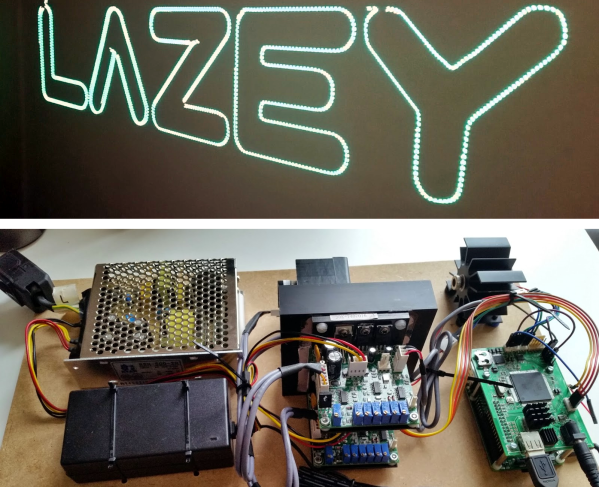
After two years of EE coursework, [Joshua Bateman] and [Adam Catley] were looking for a fun summer project. Instead of limping along with the resources they could put together themselves, they managed to get their school — Bristol University — to foot the bill!

Now Uni’s aren’t in the habit of just forking over funding for no reason, and we thing that’s why the two did such a great job of documenting their work. We’re used to seeing blogs devoted to one project, but this one has a vast portfolio of every piece of work that went into the build. Before any assembly started they drew out design diagrams to form the specification, laid out the circuit and the board artwork, and even worked out how the software would function in order to make sure the hardware met all their needs.

When the parts arrived the work of hand-populating the surface mount boards began. This is reflected in the fast-motion video they recorded including this clip which features a 176 pin LQFP. The driver board is a shield for a Raspberry Pi which drives the Galvanometers responsible for the X and Y movements of the mirror.

The video below shows off their success and the blog makes a great resource to point to when applying for work once a freshly minted diploma is in hand.

What do you think the next step should be? We’d advocate for a trip to crazy-town like this RGB laser projector we saw several years ago. Of course the same classic vector games we saw on Thursday would be equally awesome without alerting this hardware at all.

Continue reading “Vector Laser Projector Is A Lesson In Design Processes”
Stepping Through Code On A Pace 4000 Set Top Box

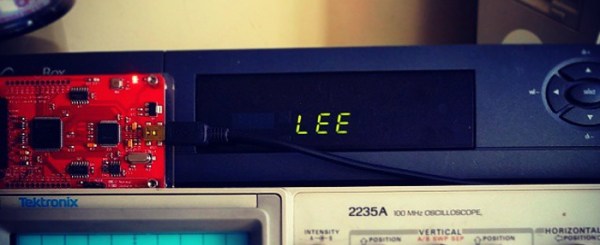
[Lee] wrote in to tell us about a Set Top Box he hacked. Before the cable industry lawyers get out their flaming swords… he’s not stealing cable, or really doing much of anything. This is a hack just for the adventure and thrill of making someone else’s hardware design do your bidding without any kind of instructions.

He posted about the adventure in two parts. The first is finding the JTAG header and identifying the pins. Arduino to the rescue! No really, and this is the type of Arduino use we love. Using a package called JTAGenum the board becomes a quick tool for probing and identifying JTAG connections.

The image above shows a different piece of hardware. From looking at it we’re pretty sure this is a Bus Blaster which is specifically designed for JTAG debugging with ARM processors. This is the beginning of the second part of his documentation which involves code dumping and stepping through lines code (or instructions) using OpenOCD and GDB. It’s a chore to follow all that [Lee] discovered just to write his name to the display of the box. But we certainly found it interesting. The display has a convoluted addressing scheme. We assume that there are cascading shift registers driving the segments and that’s why it behaves the way it does. Take a look for yourself and let us know what you think in the comments.

Experience The “Farmer’s Market” Of Vintage Electronics

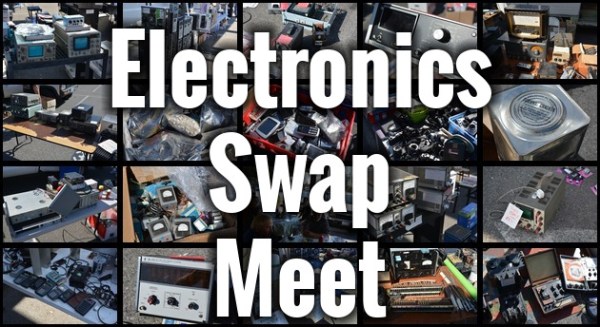
Normally when you think of a Farmer’s Market, fresh produce grown nearby comes to mind. This experience was similar in that much of the produce was conceived locally, but the goal is to be anything but fresh. I had the opportunity last weekend to attend the final Electronics Flea Market of 2014. I can’t speak for everyone, but there is an obvious affinity for vintage electronics equipment in just about any condition. The people you run into are as interesting as the equipment being swapped, and the social outing tends to continue even after the swap meet closes.

Continue reading “Experience The “Farmer’s Market” Of Vintage Electronics”

Hackaday’s 10th: The Celebration Is Imminent

We’re celebrating 10 Years of Hackaday with a day-long event in Pasadena. It’s not too late to get in on the action. If you’re in the LA area on October 4th, 2014, you can attend the mini-conference in the afternoon and the party that evening.

It’s free, but you must secure a ticket for yourself.

A small group of hand-picked hackers will begin the day building alternative gaming controllers for use at the party that evening. The morning will be occupied by a trio of workshops focusing on robot building, lock picking, and LiPo cell charging.

Things start to really pick up steam in the afternoon with a mini-conference. There are a few dozen tickets left so get yours now! As we mentioned in our last post, [Steve Collins] will talk about how early hacking led him to a career with NASA, [Quinn Dunki] will discuss Veronica the 6502 Computer, and [Jon McPhalen] will present the benefits of mult-core embedded development.

To the list of speakers we can now add [ThunderSqueak]. You may remember her CO2 laser build that used a lot of hardware store parts. We’ve asked her to talk about her work on a non-binary computer. We covered the project back in June but this type of through-the-looking-glass subject fares better as a live talk with Q&A.

We hope to announce one more speaker soon, and already have a few lightning talks (one on a Demoscene board and another on hardware dev that ended with a successful Kickstarter). We’ll keep you posted!

Call for Art

We have space for a few pieces of art for the event. We would prefer things that are interactive and ‘glowy’ or self lit as the space will be fairly dark. There are two areas that we would like to fill right now, one is a small room approximately 9′ square with an 8′ ceiling. The other is a much larger space about 24′ square with a very high ceiling. We also have a couple of walls on which we could hang things or do projections. If you have something interactive and fun that you can get to the LA area on the week leading up to October 4th please let us know.

UPDATE: Poster

[Jim K.] asked for the printable version of the posts. Here’s a link to the .ai file. This is the work of our illustrator [Joe Kim]. He really gets us and has a bunch more artwork to be found around here. Some of our favorite is the “story” art he did in the description of the two classic t-shirts, and the original designs for the premium tees.

The Hackaday Store Lives Again!

Once upon a time there was a store where you could find the most amazing Hackaday shirts and other swag. If you managed to get one of the rare Jolly Wrencher adorned shirts back then, it’s probably about worn out by now. Prepare to rejoice, Hackaday has a completely new store packed with T-shirts, tools, and stuff to help you fill up those waking hours with hardware hacking goodness.

We’ve had a little fun over the last couple of days with posts that hint (maybe a bit too subtly?) that this was coming. We always try to have a little bit of fun for those of you who are really paying attention. Now we’re wondering who will be the first to implement the one-time pad as a dedicated piece of hardware… project ideas need to come from somewhere, right?

Take a look around the general store and you’ll see this time we have more than just stuff you wear. Hackers need tools and we’ve selected a small but inspiring group of must-have’s. The kits and toys we’ve selected are surely a rabbit hole of personal challenges and evolving hacks for you. And the best part is that these choices are one more way for us to promote the virtue of Open Design (it is the way). The only question now is what other open hardware do you want to see added to those ranks?

Celebrate Hackaday’s 10th Anniversary: October 4th In Pasadena

We’ve had a bit of fun today with a post about our 10th Anniversary, now here’s the real deal.

If you happen to be in the Los Angeles area on Saturday, October 4th you should join us to help commemorate 10 years of happy hacking. The day-long event comes in many pieces. We’ve put together workshops, a mini-conference, a day-long build, and we’ll cap it all off with a party.

Hackaday is a global community though. If you can’t be there in person you should set the day aside to do some hacking in your lair, or maybe even get the Hackaday readers in your area together and see what comes of it!

Without further ado, here’s what we have planned:

Continue reading “Celebrate Hackaday’s 10th Anniversary: October 4th In Pasadena”

50 Semifinalists Selected For Next Stage Of The Hackaday Prize

thp-semifinalists

Who cares about Open Design and building the next generation of Connected Devices? It turns out a lot of people do!

The Hackaday Prize put out the call for Open, Connected design ideas and around 800 projects were posted over the last few months to answer that call. The cutoff for documenting your concept and making entry to the contest was just before midnight last Wednesday. Since then our crew has been going through the entries to select 50 to move on as Semifinalists. Here’s who made the cut:

Continue reading “50 Semifinalists Selected For Next Stage Of The Hackaday Prize”