Kindle Hack Adds Value To The Wallpaper

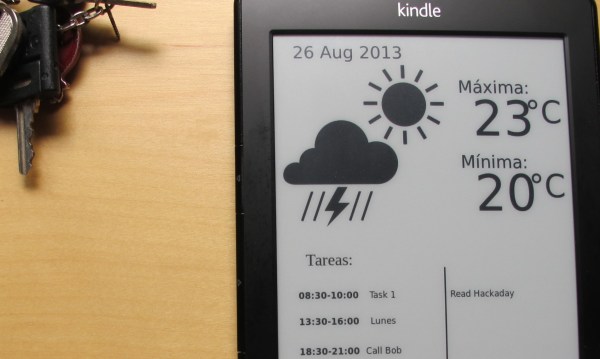
What if your Kindle displayed useful information as the “screensaver”? Now it can thanks to this extension of the Kindle weather display hack we covered a year ago. [Pablo Jiménez Mateo] figured out how to display time, date, weather, and tasks as his Kindle wallpaper while retaining the original functionality of the device as an ePaper reader.

The hack isn’t strictly standalone. Like the Kindle weather station hack on which it is based, you need a computer to act as the server. We see this as a good thing. The server generates a vector graphic which is used as the Kindle screensaver. This process of scraping and packaging the data is just too much for the computing power of the Kindle alone.

Now that [Pablo] got this working without disrupting the normal function of the device, you can remix the hack with your own information sources by working with the server-side code. For those that aren’t familiar with the Linux commands needed to get the Kindle ready, don’t worry. This is reasonably non-invasive. You do need to Jailbreak your device. But once you do, the steps used simply load a small script to grab the images.

A Facelift For The View Out Your Livingroom Window

livingroom-view-facelift

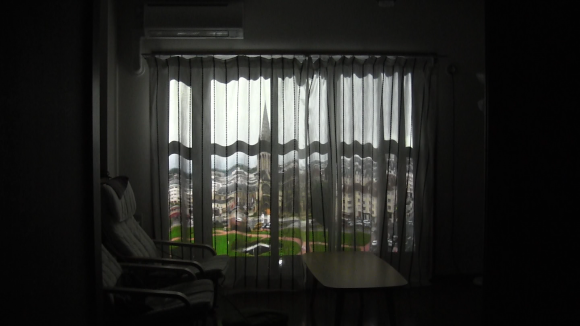
[Ken Kawamoto] turned the rather bland view from his livingroom into that of some high-priced real estate. It only works at night, which is going to seem odd since the image above shows a daytime scene. But it’s still a pretty sweet concept.

The video below shows the actual view from his window. We don’t think it’s all that bad (we once lived in a ground-level apartment looking out on a parking lot… yuck!). But the view of the Abbey of St. Étienne in Caen, France seen above is much better. He simply put a projector on his balcony and closed the light-colored blinds. So far he has to bring it in after each use, but we see this as more of a thing to use only when entertaining anyway.

We’ve seen a few other attempts over the years at hacking your view. Here’s one that adds fake windows using LCD screens. The thing that makes that one work is the ability of the system to track the viewer and change the perspective accordingly.

Continue reading “A Facelift For The View Out Your Livingroom Window”

Retrotechtacular: The 10-year Anniversary Of Plastic

retrotechtacular-plastic-ten-year-anniversary

This footage called Industry on Parade is a unique look back at the golden age of plastics. We also value the footage as a look at America’s manufacturing sector at its height.

We remember a middle-school teacher recalling his father — who was a research scientist working at Dow — bringing home a pair of discs for him to play with. His first ever encounter with plastic. Here we see a snapshot ten years after plastic manufacturing went mainstream. It starts off with a tour of an injection-molding factory. The screenshot seen above is from the second vignette which tours a production line for naval ship models which will be used to train Navy personnel and as props for strategic planning maps. The film wraps up with the production of plastic fabrics starting with raw materials and ending with synthetic bug screen.

Just to prove it’s an authentic blast from the past, hang in there for the last two minutes when you get an anti-communism PSA. Classic.

Continue reading “Retrotechtacular: The 10-year Anniversary Of Plastic”

Milled Water Bottle Rocket Launcher Pushes Plastic Containers To Their Limit

water-bottle-rocket-launcher

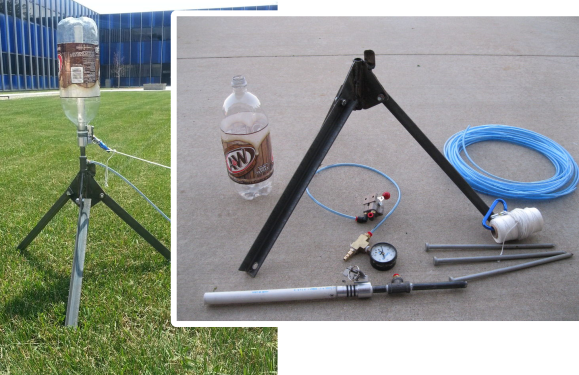
Building this launcher is simple if you already have a mill. It does a remarkable job of pressurizing and launching soda bottles which are partially filled with water. The main component of this is a triple-gasket stopper with a quick release.

The problem with a lot of these water bottle rocket projects is that they leak where the bottle meets the launcher. In most cases this is a good thing as it’s almost impossible to build up enough pressure to cause the bottle to fail. This system has no such built-in safety mechanism, which is why the test launch below is conducted from a safe distance. After seating the partially filled bottle on the launch platform it’s pressurized to around 100 PSI at which point a yank on the string lets it fly.

Most of the time we look on these as casual projects. But we figure this one is much more suited for a rocket club or hackerspace event.

Continue reading “Milled Water Bottle Rocket Launcher Pushes Plastic Containers To Their Limit”

Spoofing WiFi AP Based Geolocation

[Pierre Dandumont] just finished up a little project that will give Google Maps’ location feature a run for its money. It’s a technique that spoofs WiFi networks in order to relocate the positional data reported via WiFi networks.

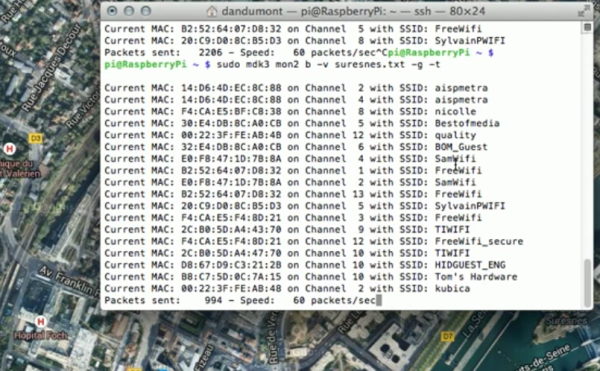
He starts with an explanation of the different ways modern devices acquire location data. GPS is the obvious, and mobile network triangulation is pretty well know. But using WiFi networks may be a new trick for you. We’re not 100% certain but we think Google is able to look up location data based on known IP addresses for WiFi access points (this would be a good comments discussion). To trick the system all you have to do is feed some captured AP data into the computer before Google Maps tried to lock onto a location. The video after the break shows Maps with the legit location displayed. After running a quick script whose output is shown above the map position is changed to the spoofed location.

Continue reading “Spoofing WiFi AP Based Geolocation”

Sony SmartWatch Hack Lets It Tell Time With A Teapot Animation

sony-smartwatch-wireframe

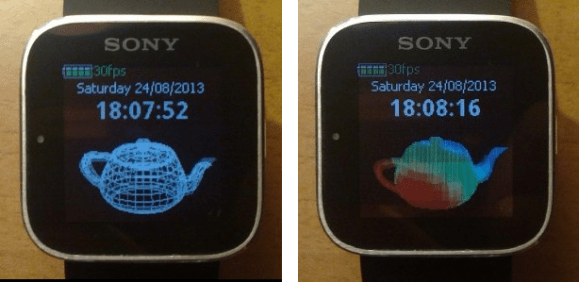
This hack turns the Sony SmartWatch into a wristwatch. Functionally it’s not all that impressive. But the journey to get to this point represents quite a bit more. This example features an animated tea pot using a 3D rendering engine ported over to the device.

[Federico] started work on the project soon after hearing that Sony had released details about developing for the hardware. He dug into the documentation but soon found it lacked the depth he needed to get a handle on bare metal work. He shelved the project for a while until coming across the Astrosmash project we featured in June. That used a wrapper that allows Arduino sketches to run on the watch. After studying how that’s done he had enough background to port this code.

We’re still waiting to see a really innovative hack for the watch. But we’re glad to see progress with each new proof of concept like this one!

Continue reading “Sony SmartWatch Hack Lets It Tell Time With A Teapot Animation”

Logging Two Multimeters At (nearly) The Same Time

log-two-multimeters-at-one-time

It’s pretty common to have at least a couple of meters around to measure different values of a circuit at the same time. Where [Emilio P.G. Ficara] ran into a problem was logging the data from both at once. These Fluke meters have a serial-out, but his computer only has a single serial-in port. He cracked open one of the meters and figured out how to log data from both at the same time.

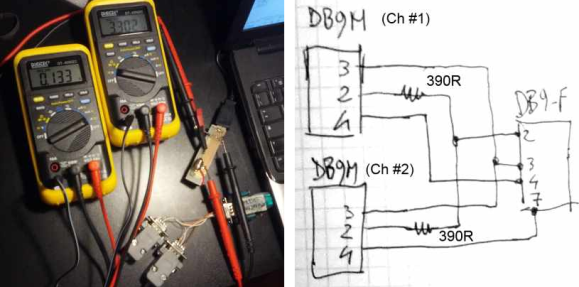
A lot of folks would look to a microcontroller to solve this problem. You use the chip to pull from each meter simultaneously and report back to a computer (or just dump the values onto an SD card). But this solution is a simple mechanical connector and a bit of creative programming. The way the serial output is set up on these meters they won’t interfere with each other as long as they’re read one at a time. [Emilio] wired them up as seen above, using his own software to manage the pins of the serial port. The example output he posted shows readings from the meters taken within about a tenth of second from each other. That should be good enough for most applications.